Childrens Ice Skates
Get your little ones ready to glide across the ice with our collection of children's ice skates. Whether they're hitting the rink for the first time or perfecting their skills, we have a range of sizes and styles to suit almost all young skaters. Designed for comfort, durability, and performance, these ice skates are sure to provide hours of fun on the ice. Browse through our selection and find the perfect pair for your child to enjoy skating this winter season.
Sort


How skate style and fit support growing confidence
Children’s ice skates support everything from a first careful glide beside a parent to skating lessons, recreational hockey, and more confident laps around the rink. The main categories are hockey skates, figure skates, and recreational skates, with adjustable sizing offered in some children’s designs. Each type has a different purpose, so the child’s planned activity matters as much as their age or shoe size. Hockey skates typically have protective boots and curved blades without toe picks, making them suited to the turns, stops, and quick changes of direction used in hockey. Figure skates have longer blades with toe picks at the front, which are used for specific figure skating movements rather than as a general stopping tool. Recreational skates focus on comfortable skating for family outings and casual practice, often combining padded liners with straightforward fastening systems. For a child starting structured lessons, the skating program’s requirements can help clarify which blade and boot style is appropriate. A beginner does not necessarily need the stiffest boot; support should match the child’s size, strength, and intended activity while allowing the knee and ankle movement needed for skating. Adjustable ice skates can accommodate growth within a stated size range, but their fit still needs checking at each setting. The extra adjustment is useful only when the heel stays secure and the foot remains properly supported. Indoor arenas provide opportunities to skate throughout the year, while maintained outdoor rinks bring a different experience, with winter clothing and changing ice surfaces influencing comfort. A child learning to stand, bend their knees, and take short gliding steps has different needs from one practising crossovers or joining hockey drills. Matching the skate to those everyday moments helps keep the focus on the activity itself: finding balance, moving comfortably, and gradually gaining confidence on the ice. The right category is therefore less about appearance and more about how, where, and how often the child expects to skate.
Fit is one of the most important considerations for children’s ice skates because a skate that feels roomy in the shop can allow the foot to move too much on the ice. Skate sizing does not always correspond directly to everyday shoe sizing, and measurements and size charts are more useful than assuming a familiar shoe number will work. Length, width, heel shape, and the space over the top of the foot all influence comfort. A well-fitting boot holds the heel securely, supports the foot without squeezing it, and leaves appropriate toe space according to the manufacturer’s fitting guidance. Buying a much larger size for future growth can compromise control and create rubbing as the foot slides inside the boot. Adjustable designs offer a different approach, provided the selected setting fits properly and the adjustment mechanism locks securely. Trying skates with the socks intended for skating gives a more realistic sense of fit; thick or doubled-up socks can crowd the boot, bunch around the toes, or change how firmly the heel sits. Smooth, well-fitting socks are generally easier to accommodate. Boot construction also affects the feel. Synthetic outer materials and moulded shells can provide structure and resistance to everyday scuffs, while padding and fabric liners cushion contact points around the ankle and tongue. Some figure skate boots use leather or synthetic leather, with stiffness varying according to their intended level of use. Laces allow tension to be adjusted along the foot, while buckles and straps can make fastening simpler for younger children. Any closure still needs to hold securely without creating pressure or restricting circulation. For a child sitting on a rink bench with mittens nearby, an easy-to-manage fastening system can make getting ready less frustrating, although adult help may still be needed. Durability depends on more than the outer shell: stitching, blade attachments, closures, and adjustable components all deserve attention as the skates are used. A supportive boot should remain secure without becoming so rigid that the child struggles to bend into a natural skating position.
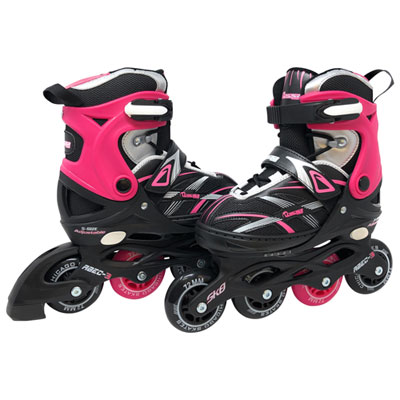
Regular care helps children’s ice skates stay comfortable and keeps their blades ready for the next outing. Steel blades need thorough drying after skating, even when they are made from stainless steel, since moisture left on the surface can still contribute to rust. Hard blade guards protect edges when walking across suitable off-ice surfaces, but they are not ideal for storing damp skates because they can trap water against the metal. Absorbent blade covers are useful for transport after the blades have been wiped dry, and the boots and liners benefit from airing out before being put away. Removable liners can be cared for according to their cleaning instructions; direct heat can damage some boot materials, adhesives, or moulded components. Blade edges also need periodic attention from a qualified skate sharpener. Sharpening needs vary with skating frequency, ice conditions, and the child’s activity, rather than following one fixed schedule for every pair. New blades may need sharpening before their first use, so that detail is worth checking rather than assuming they are ready for the rink. Difficulty holding an edge or unexpected slipping can be reasons to have the blades assessed, although fit and technique also affect how a skate performs. Between outings, checking for loose hardware, worn laces, damaged straps, or a shifting blade helps identify problems before the child steps onto the ice. Fit deserves another check after a growth spurt or a break from skating, especially if the child reports pinching, numbness, or heel movement. Children’s ice skates can be a thoughtful gift for a child who enjoys rink outings or is preparing for lessons, with foot measurements and the intended activity helping make the choice more personal. A properly fitted helmet appropriate to the activity, gloves, and clothing that allows movement complete the practical preparation, alongside any equipment required by the rink or program. For families interested in another form of skating, Kids Roller Skates offer a separate option for suitable paved surfaces, with their own fit, protective equipment, and learning considerations.
Top selling and popular products
-
 Your price for this item is $59.99
-
 Your price for this item is $59.99
-
 Your price for this item is $96.99
-
 Your price for this item is $79.99
-
 Your price for this item is $351.49
-
 Your price for this item is $74.99
-
 Your price for this item is $62.99
-
 Your price for this item is $99.99
Discover more categories related to Childrens Ice Skates

Top Collections:
Pokemon Centers, Best Cameras for Sports Photography, Kindle Devices, Samsung Galaxy Phones, Canon G7X Cameras, Pokémon 30th Celebration Cards, Refurbished Apple Laptops, iPhone 15 Apple, Laptops for Students, Budget Smartphones
Some products may be subject to Environmental Handling Fees
(EHF) depending on your province.
Learn more about EHFs.