Travel Neck Pillows
Whether you're embarking on a long-haul flight or hitting the road for a weekend getaway, comfort is key when it comes to traveling. That's where travel neck pillows come in, providing essential support and relaxation for your head and neck during those hours spent in transit. Designed with convenience and portability in mind, these travel essentials offer a compact solution to help you catch some much-needed rest while on the go.
Sort



What helps your head settle when you doze upright
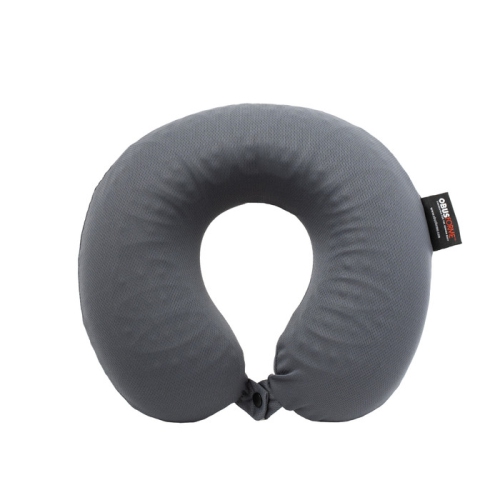
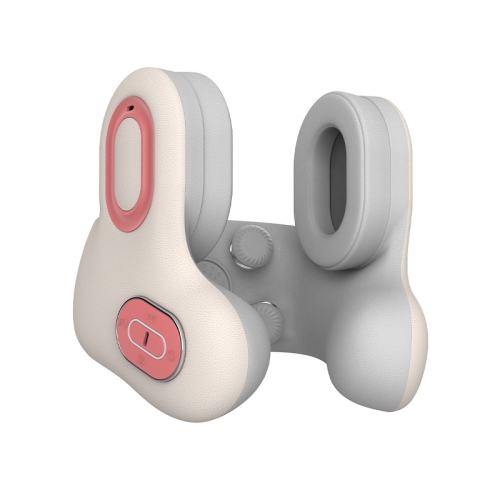
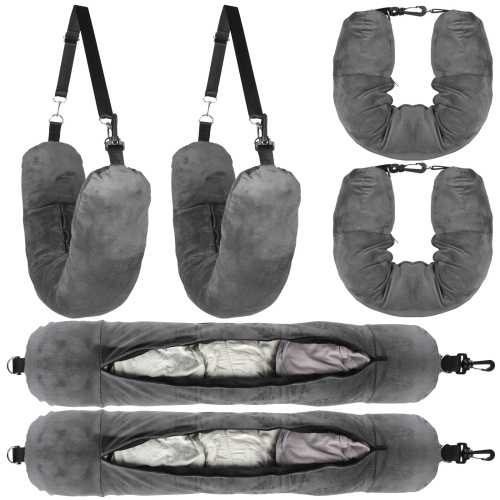
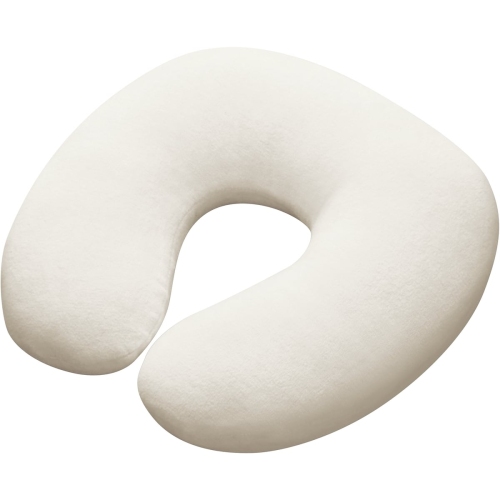
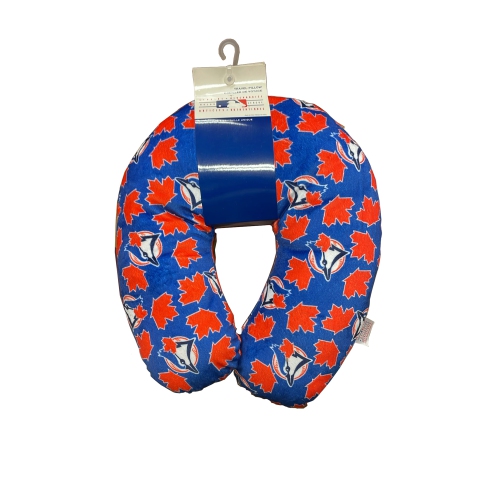
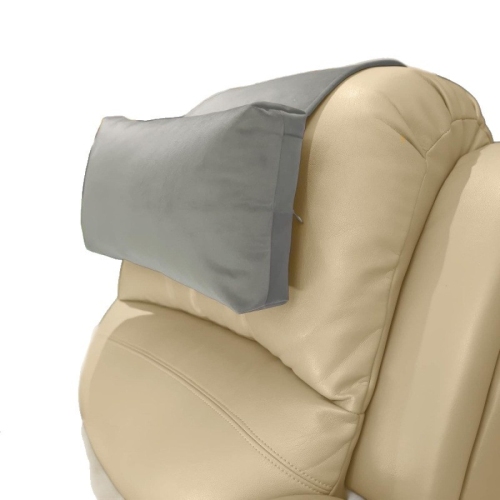
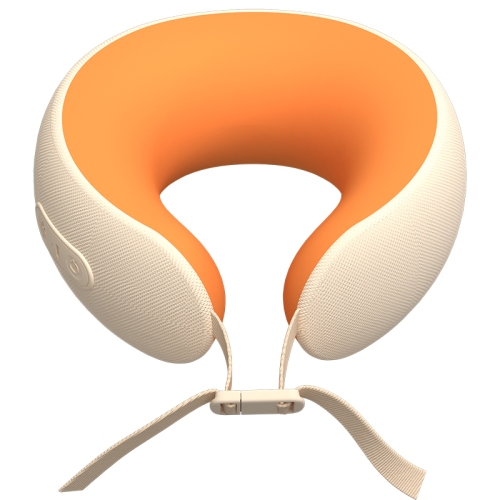
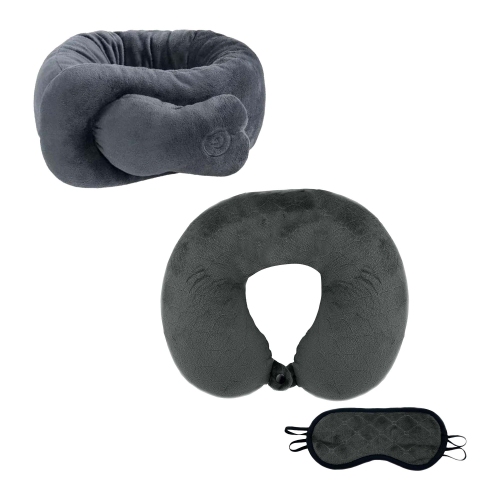
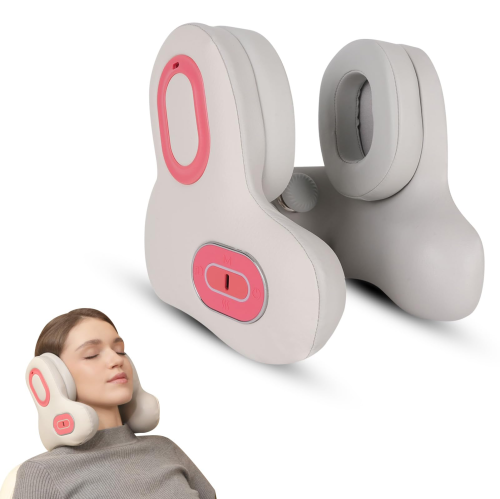
Travel neck pillows support the head and neck while sitting upright, whether on a long flight, a train ride or a road trip as a passenger. The most useful shape depends on which way the head tends to drift when the body relaxes. A traditional U-shaped pillow rests across the shoulders and cushions both sides of the neck, which can be enough for someone who nods off with their head mostly centred. A traveller who consistently leans to one side may prefer a pillow with taller side panels or a wraparound design with a structured insert that gives the jaw somewhere to rest. Wrap styles sit closer to the neck than many padded U-shaped designs, though the height and position of the insert matter more than how snugly the fabric wraps. For someone whose chin tends to drop forward, a design with padding that extends towards the front may be more useful than one that adds bulk behind the neck. A front closure can help keep the ends from spreading apart, but it should still be easy to loosen or open. The seat itself makes a difference, too. On a plane with a pronounced headrest, a thick back panel can push the head farther forward instead of letting it settle against the seat. A flatter back may work better there, while a seat with less cushioning might leave room for a fuller pillow. A window seat offers a surface to lean towards, but in an aisle seat there may be nothing beside the head to brace against. For a side sleeper trying to doze upright, the goal is to meet the natural tilt of the head, not to recreate the position of sleeping on a bed. That distinction can make it easier to choose between soft cushioning that feels pleasant for a short rest and firmer support that stays in place as the head settles.
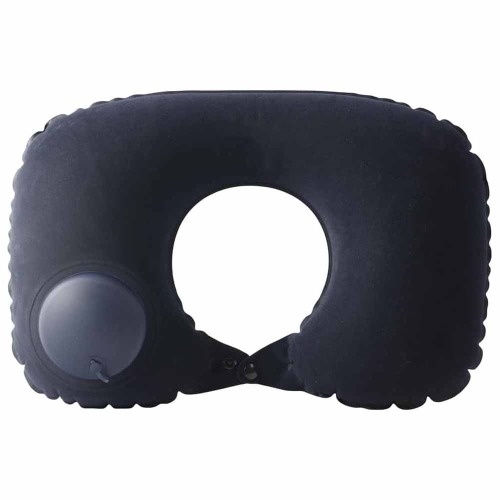
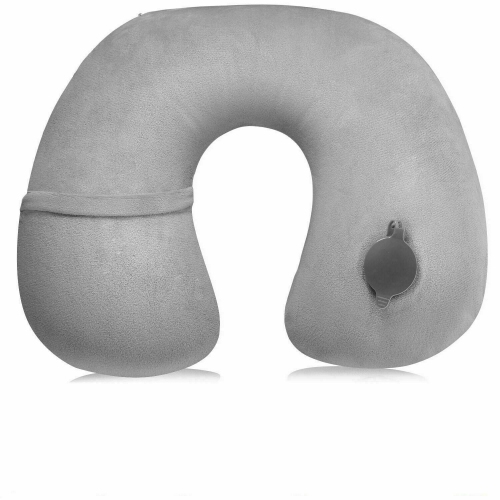
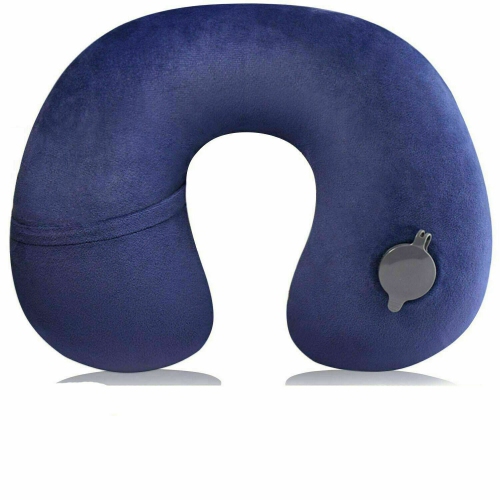
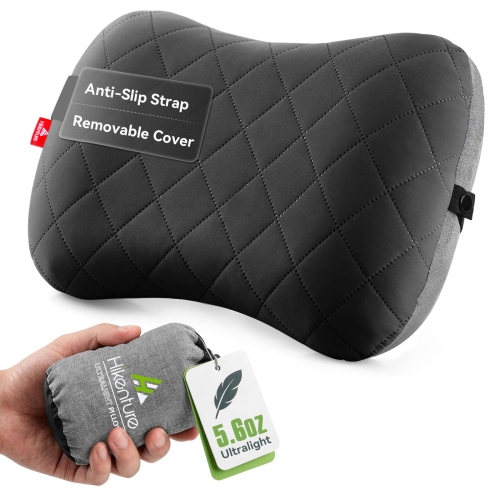
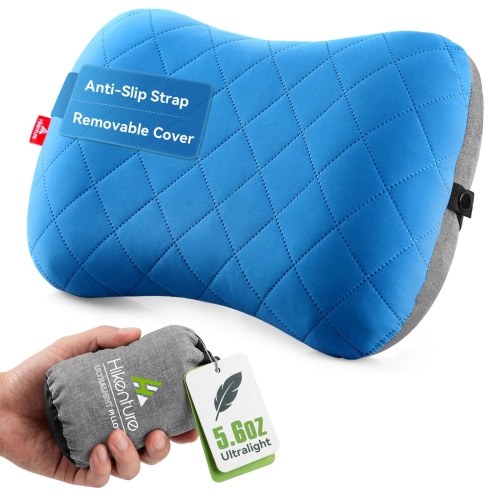
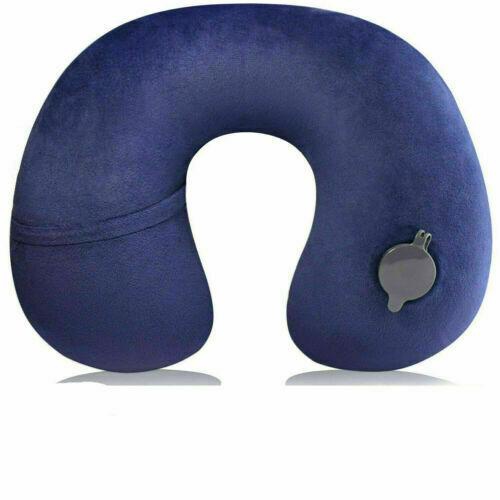
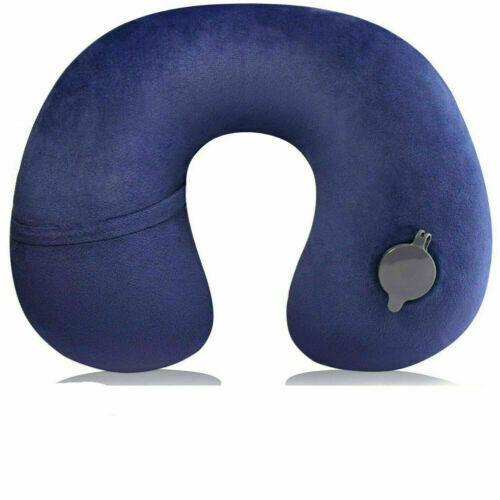
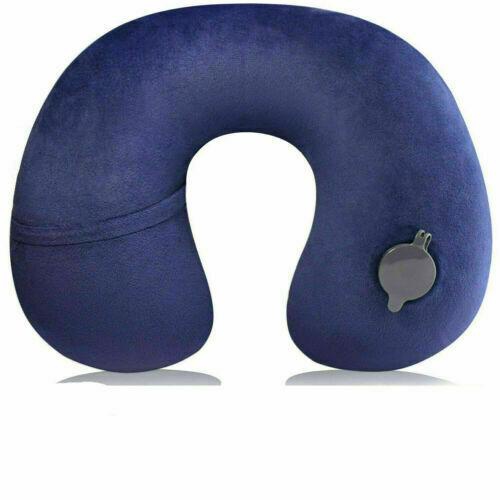
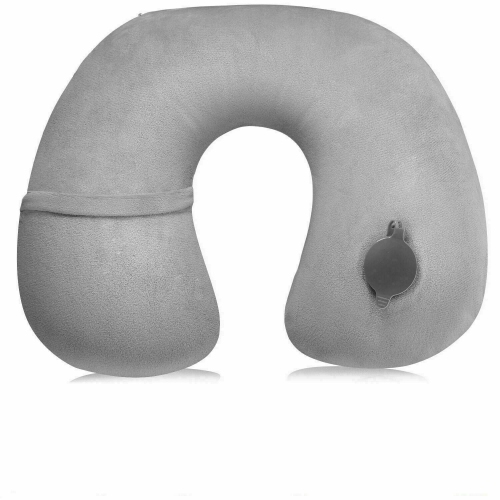
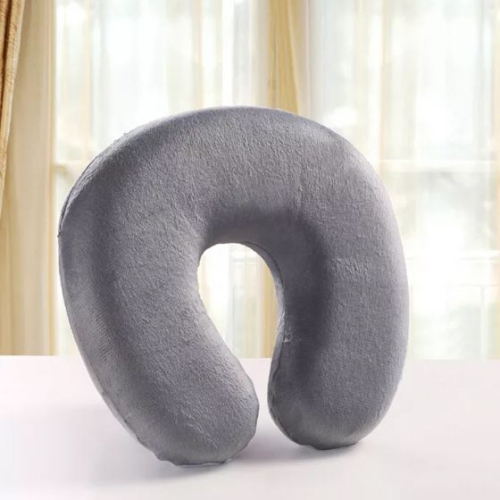
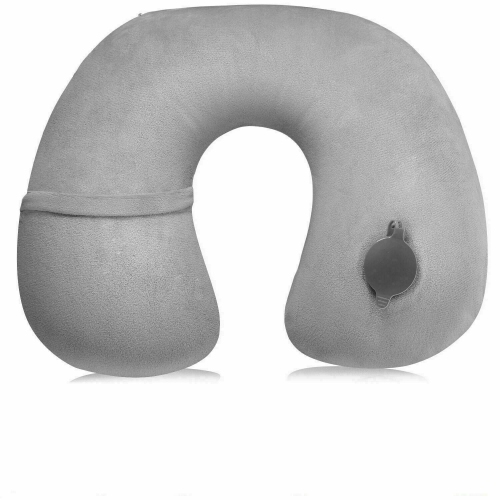
Fit comes down to the space between the shoulders and jaw, the width around the neck and the amount of padding already built into the seat. A tall side panel may feel supportive on a longer neck but press into the lower ear on a shorter one. If the cushion is too low, the head can still tip far enough to pull at the opposite shoulder. A simple fit check is to sit with the back against the seat, let the shoulders drop and relax the jaw. The pillow should meet the side of the head without raising the shoulders, pushing the chin up or holding the head at a forced angle. Travellers who keep over-ear headphones on during a flight may prefer a lower edge that doesn't catch against the ear cups every time they turn. Material changes how a pillow feels over the course of a trip. Memory foam compresses gradually under the weight of the head and tends to have a steadier feel than loose fibre fill, which is often softer and easier to squeeze into a bag. Air-filled designs allow for adjustments: a little less air gives the surface more give, while a firmer fill helps the sides hold their height. Inflatable Neck Pillows for Travel are a practical option when packed size matters, such as on a trip with several connections and only a small carry-on. Valve placement is worth noting, since a valve at the shoulder may be less noticeable than one near the cheek. For foam and fibre pillows, check both the packed size and whether the pillow springs back after being compressed. A clip can save space inside a bag, but a pillow that rides on the outside may pick up lint or brush against seats and luggage racks. If it will spend much of the trip clipped to a bag, a removable cover can make that trade-off easier to live with.
Care matters most where a travel neck pillow touches the skin: along the jaw, at the back of the neck and around the front closure. A smooth knit cover may appeal to someone who dislikes texture against the face, while a plush cover can feel softer where the cheek rests. With either fabric, a raised seam in the wrong spot can be more noticeable after an hour than it is during a quick fit check. A removable cover is handy for frequent travel because the part that touches the face can be cleaned without soaking the filling. Follow the care label rather than assuming the whole pillow is machine washable; many foam cores call for spot cleaning only. Let washed parts dry fully before reassembling the pillow or putting it away. On an inflatable design, pay attention to the seams and valve, and avoid packing the deflated pillow against sharp edges. On a wrap style or a padded pillow with a closure, look at how the fastener is attached and feel for stitching or hardware that might rub. Those small details tend to matter more on a trip that involves repeatedly putting the pillow on, taking it off and tucking it away between stops. A travel neck pillow can also be a useful gift for someone preparing for an overseas visit, a student making regular trips home or a friend who spends long stretches on trains. When the recipient's fit or preferred sleeping position is unknown, an adjustable closure or adjustable firmness offers some room for preference. Someone who likes soft cushioning and travels with room to spare may appreciate the feel of foam or fibre more than a pillow that packs flat. A frequent flyer who keeps everything in one carry-on may make the opposite trade-off. The best match is one that feels comfortable in the seat the traveller actually uses and is easy enough to pack, clean and carry that it comes along on the next trip.
Top selling and popular products
-
 Your price for this item is $54.99
-
 Your price for this item is $50
-
 Your price for this item is $19.99
-
 Your price for this item is $13.79
-
 Your price for this item is $50
-
 Your price for this item is $106.99
-
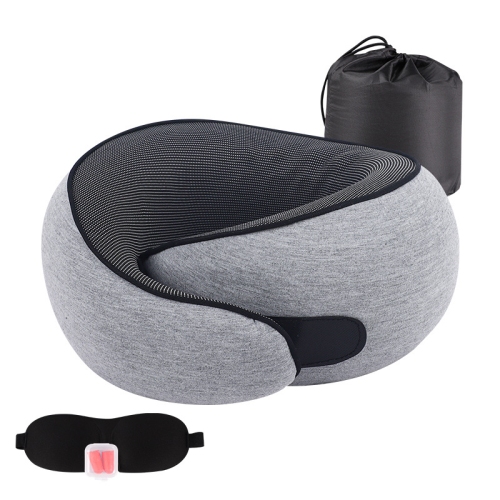 Your price for this item is $43.99
-
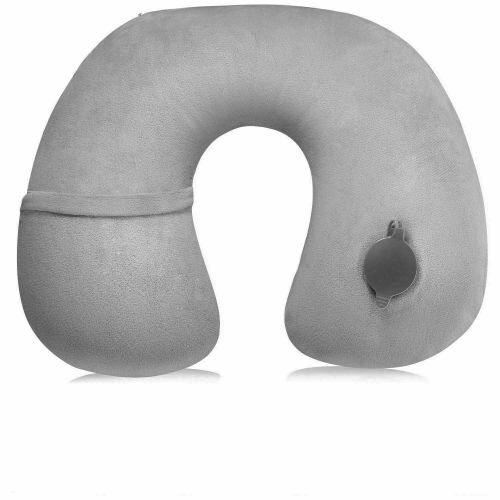 Your price for this item is $46
Discover more categories related to Travel Neck Pillows
Top Collections:
Best Black Friday Deals This Year, Best Black Friday Deals On Electronics, Kindle Devices, Best Black Friday Deals On Apple Products, Best Budget Office Chairs, Best Cameras for Sports Photography, Dyson Airwrap, Canon G7X Cameras, Best Laptops for Writers, Samsung Galaxy Phones
Some products may be subject to Environmental Handling Fees
(EHF) depending on your province.
Learn more about EHFs.