Smart TVs With Voice Control
Smart TVs With Voice Control make it easier than ever to enjoy your favorite entertainment, search for content, and manage your viewing experience. With hands-free operation and intuitive technology, these advanced televisions bring convenience and connectivity right to your living room. Explore a wide selection of Smart TVs With Voice Control to find the perfect fit for your home setup and elevate the way you watch, stream, and interact with your TV.
Sort













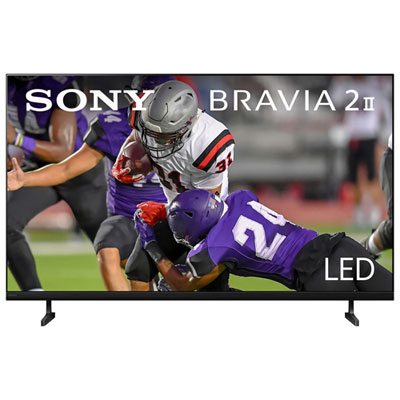






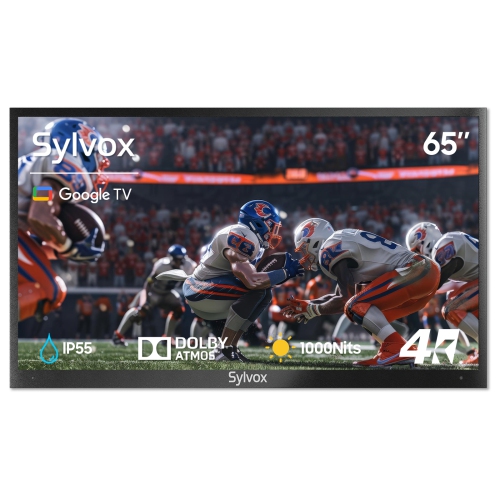

Less on-screen typing, more time watching your favourites
Smart TVs with voice control combine internet-connected entertainment with spoken commands, making everyday tasks such as finding a film, adjusting the volume, and opening a streaming app more convenient. Rather than entering a title one letter at a time with an on-screen keyboard, a viewer can say it into a compatible remote and see matching results. Depending on the television, software, and connected services, voice commands may also pause playback, switch inputs, change channels, or search by actor or genre. This can be especially useful when a household moves between live television, streaming subscriptions, and a game console, although the commands supported within each app can differ. There are two main ways to use the feature: a voice remote with a microphone button, and hands-free voice control through built-in microphones or a compatible separate speaker. A microphone-equipped remote generally requires a button press before speaking; it does not automatically mean the television supports hands-free operation. Hands-free models can listen for a wake phrase when that setting is enabled, allowing someone carrying a snack tray to lower the volume without reaching for a remote. Compatibility with an assistant is also different from having that assistant built into the television, so the distinction matters when choosing how the TV will work in a room. For households already using Alexa, Smart TVs With Alexa can help narrow the focus to televisions designed to work with that assistant, with the exact setup and supported functions varying by model. Most connected voice-search features require internet access, and some require an account, additional permissions, or a separate device. Search results may include content from several services, but a spoken request does not replace a subscription or other access requirement. The practical benefit is less time navigating menus, whether that means finding a favourite series after dinner or bringing up a familiar film for visiting family.
Voice control is only one part of a television’s everyday appeal; screen size, picture quality, sound, and physical fit remain just as important. A large screen can make sports and films feel more immersive in a main living room, while a smaller television may suit a bedroom, compact apartment, or shared study. Measuring the furniture and viewing space helps establish a comfortable fit, particularly because advertised screen size refers to the diagonal measurement rather than the cabinet’s width. Stand width and depth deserve attention too: widely spaced feet need sufficient support, and a low stand can leave little clearance for a soundbar beneath the picture. For wall-mounted installations, the television’s mounting pattern, weight, and the wall’s construction must suit the bracket and fastening method. Cable access and room for ventilation should remain clear once the screen is in place. Picture preferences depend on what the household watches and where people sit. High contrast can bring out detail in dark film scenes, while strong brightness and reflection handling can make daytime viewing easier in a room with large windows. Wide viewing angles are useful when several people gather across a sectional rather than sitting directly in front of the screen. A 4K display can show fine detail when suitable content is supplied, and high dynamic range can produce richer highlights and colour when supported by both the television and the source. For gaming, low input lag, suitable HDMI connections, and support for the console’s resolution and refresh rate matter independently of voice features. Built-in speakers may be sufficient for casual viewing, while a compatible soundbar can improve dialogue clarity and add weight to film soundtracks. Voice-based volume adjustment through an external audio system depends on the equipment and connection, so it should not be assumed from the presence of a voice remote alone. A dependable Wi-Fi connection, or a wired network connection where supported, also helps streaming and connected searches work smoothly.
The best everyday experience comes from matching the television’s controls to the people who will use them. Voice search can reduce repetitive button presses for someone who finds on-screen typing awkward, and it can make a shared television easier to navigate when different family members prefer different apps. It is not a complete substitute for accessible menus, clear remote buttons, captions, or audio description, however; those features deserve separate consideration. Recognition can vary with pronunciation, background sound, language settings, and the distance from the microphone. In bilingual households, support for Canadian English and French should be checked for the particular television, assistant, and intended functions, since language options are not identical across systems. A remote held nearby may be more practical than a room microphone when a film is playing loudly or several people are talking. Privacy preferences also shape the choice between push-to-talk and hands-free operation. Depending on the design, controls may include microphone settings, a physical microphone switch, or account options for reviewing and deleting voice activity. Children’s profiles, purchase restrictions, and content settings remain important in a family room, since speaking a request is not itself a parental control. For a television given as a housewarming or family gift, the recipient’s existing subscriptions, home network, room dimensions, and comfort with account setup matter more than simply adding another feature. Long-term care is straightforward but worth planning for. Slim cabinets, often made with plastic and metal components, still contain delicate display panels that should be handled without pressure on the screen. Secure placement and appropriate anti-tip measures are particularly important around children and pets. For cleaning, follow the manufacturer’s directions, use a soft, clean microfibre cloth, and avoid spraying liquid directly onto the panel. Keeping ventilation openings unobstructed, maintaining the remote’s batteries or charge as applicable, and installing supported software updates can help preserve reliable operation. App support and connected features can change over time, so useful physical connections and straightforward manual controls remain valuable alongside the convenience of voice.
Voice control is only one part of a television’s everyday appeal; screen size, picture quality, sound, and physical fit remain just as important. A large screen can make sports and films feel more immersive in a main living room, while a smaller television may suit a bedroom, compact apartment, or shared study. Measuring the furniture and viewing space helps establish a comfortable fit, particularly because advertised screen size refers to the diagonal measurement rather than the cabinet’s width. Stand width and depth deserve attention too: widely spaced feet need sufficient support, and a low stand can leave little clearance for a soundbar beneath the picture. For wall-mounted installations, the television’s mounting pattern, weight, and the wall’s construction must suit the bracket and fastening method. Cable access and room for ventilation should remain clear once the screen is in place. Picture preferences depend on what the household watches and where people sit. High contrast can bring out detail in dark film scenes, while strong brightness and reflection handling can make daytime viewing easier in a room with large windows. Wide viewing angles are useful when several people gather across a sectional rather than sitting directly in front of the screen. A 4K display can show fine detail when suitable content is supplied, and high dynamic range can produce richer highlights and colour when supported by both the television and the source. For gaming, low input lag, suitable HDMI connections, and support for the console’s resolution and refresh rate matter independently of voice features. Built-in speakers may be sufficient for casual viewing, while a compatible soundbar can improve dialogue clarity and add weight to film soundtracks. Voice-based volume adjustment through an external audio system depends on the equipment and connection, so it should not be assumed from the presence of a voice remote alone. A dependable Wi-Fi connection, or a wired network connection where supported, also helps streaming and connected searches work smoothly.
The best everyday experience comes from matching the television’s controls to the people who will use them. Voice search can reduce repetitive button presses for someone who finds on-screen typing awkward, and it can make a shared television easier to navigate when different family members prefer different apps. It is not a complete substitute for accessible menus, clear remote buttons, captions, or audio description, however; those features deserve separate consideration. Recognition can vary with pronunciation, background sound, language settings, and the distance from the microphone. In bilingual households, support for Canadian English and French should be checked for the particular television, assistant, and intended functions, since language options are not identical across systems. A remote held nearby may be more practical than a room microphone when a film is playing loudly or several people are talking. Privacy preferences also shape the choice between push-to-talk and hands-free operation. Depending on the design, controls may include microphone settings, a physical microphone switch, or account options for reviewing and deleting voice activity. Children’s profiles, purchase restrictions, and content settings remain important in a family room, since speaking a request is not itself a parental control. For a television given as a housewarming or family gift, the recipient’s existing subscriptions, home network, room dimensions, and comfort with account setup matter more than simply adding another feature. Long-term care is straightforward but worth planning for. Slim cabinets, often made with plastic and metal components, still contain delicate display panels that should be handled without pressure on the screen. Secure placement and appropriate anti-tip measures are particularly important around children and pets. For cleaning, follow the manufacturer’s directions, use a soft, clean microfibre cloth, and avoid spraying liquid directly onto the panel. Keeping ventilation openings unobstructed, maintaining the remote’s batteries or charge as applicable, and installing supported software updates can help preserve reliable operation. App support and connected features can change over time, so useful physical connections and straightforward manual controls remain valuable alongside the convenience of voice.
Top selling and popular products
-
 Your price for this item is $999.99
 -
 Your price for this item is $1199.97
 -
 Your price for this item is $1995.95
 -
 Your price for this item is $2499.99
 -
 Your price for this item is $899.99
 -
 Your price for this item is $1749
 -
 Your price for this item is $2999.99
 -
 Your price for this item is $2399.99
Discover more categories related to Smart TVs With Voice Control



Top Collections:
Pokemon Centers, Kindle Devices, Best Budget Office Chairs, Apple iPhones 16, Best Laptops for Writers, iPhone 15 Apple, Canon G7X Cameras, Refurbished Apple Laptops, Alarm Clock, Motorola Razr Phones
Some products may be subject to Environmental Handling Fees
(EHF) depending on your province.
Learn more about EHFs.