Stainless Steel Toasters for Small Kitchens
Stainless steel toasters bring a sleek, modern touch to any kitchen countertop while offering reliable performance for your daily breakfast routine. With their timeless design and durable construction, stainless steel toasters complement a wide range of kitchen styles. Whether you’re preparing toast for a quick snack or getting breakfast ready for the whole family, these appliances offer both style and convenience. Explore a variety of stainless steel toasters to find the perfect addition to your kitchen setup.
Sort






What fits in the slots and on the counter
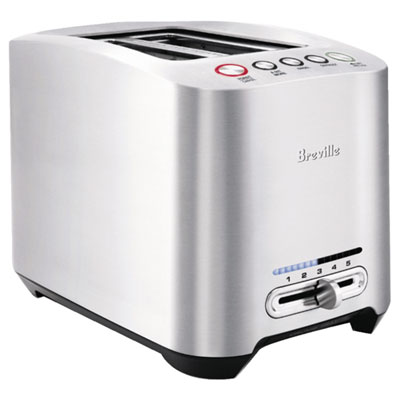
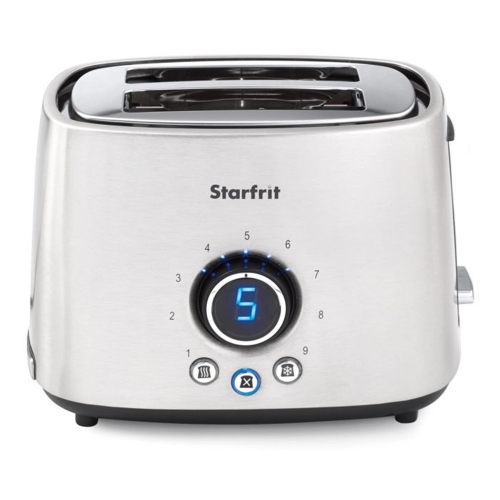
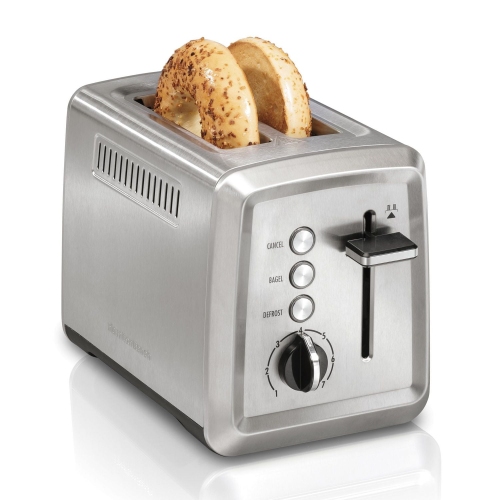
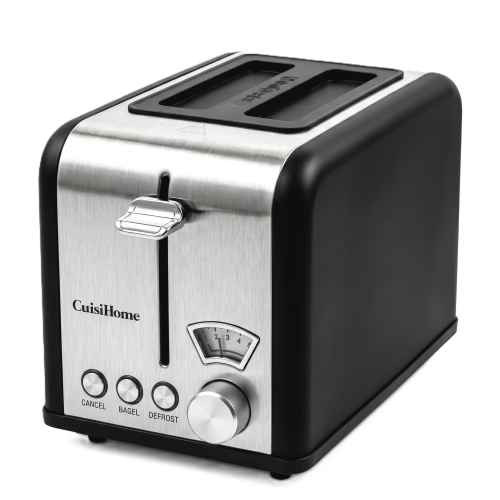
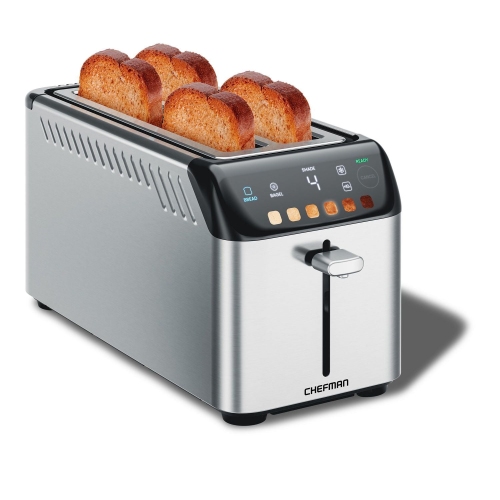
A compact 2-slice stainless steel toaster is a practical fit for a small kitchen where the same stretch of countertop might serve as a breakfast station, a chopping area and a place to set down groceries. Most 2-slice models have two short slots side by side, a layout that works well for sandwich bread, English muffins and everyday toast without taking up the space of a typical 4-slice toaster. A single long-slot design often has a narrower body but takes up more room lengthwise. That shape can be a better match for a shallow counter or for a kitchen where a long slice of sourdough is more common than two slices from a sandwich loaf. Slot layout tells only part of the story: the overall width and depth show how much work surface the toaster takes up, while the position of the lever and controls determines which way it can face without putting them out of reach. A toaster may fit neatly between the kettle and the wall but still be awkward to use if the lever sits on the end with little room beside it. The crumb tray needs space to slide out, too, particularly when it pulls from the back rather than the front. Where upper cabinets or shelves hang low, the height of the toaster is less important than having sufficient open space above and around it during use, as specified by the manufacturer. A spot near a suitable outlet keeps the cord from crossing the sink or the main prep area, and built-in cord storage is handy when the toaster cools down and goes back into a cupboard. For someone who puts the toaster away after breakfast, a compact body that’s easy to lift and a cord that tucks underneath can matter as much as the amount of space it saves while in use.
Slot width and slot length solve different problems. Extra-wide slots make room for thick bagel halves, substantial slices of multigrain bread and uneven cuts from a bakery loaf. A long slot is more useful when a slice is simply too long for a standard opening, even if the bread itself is thin. Tall slices are another consideration: bread that sticks well above the opening may toast unevenly, so the usable slot depth matters for anyone who often cuts slices from a tall loaf. At the other end of the scale, a high-lift lever raises smaller pieces above their usual resting position after the cycle, making an English muffin half easier to retrieve. A browning control is useful even in a household that mostly buys the same bread. A fresh slice, a thin slice and one straight from the freezer can all come out differently on the same setting. The number of shade settings matters less than how clearly they’re marked and how easily the dial or buttons can be read from where the toaster sits. A defrost setting is useful when bread is stored in the freezer and taken out a slice at a time. A bagel setting changes how heat is applied, often emphasizing the cut side, though the correct slot orientation depends on the model. A reheat function is handy when toast is ready before the rest of breakfast, and a cancel button lets the cycle end early if a thin slice is browning faster than expected. For someone making two slices before work, a simple shade dial and an easy-to-reach lever may be enough. In a shared kitchen where one person toasts frozen waffles and another prefers thick-cut bread, wider slots and clearly labelled settings tend to get more use. A 4-slice toaster can make sense when several people eat together regularly, but for staggered breakfasts, a 2-slice layout leaves more space for everything else that happens on the counter.
Stainless steel gives a toaster a finish that pairs easily with nearby appliances, even when they aren’t from the same set. The term typically describes the exterior finish or housing, not every part of the toaster. Levers, knobs, end panels and the base may be made from other materials, so a stainless steel finish doesn’t necessarily mean an all-metal body or a cool-touch exterior. Brushed finishes tend to show fewer fingerprints than highly polished ones, a small difference that’s noticeable when the toaster sits in plain view. A stable base and a lever that moves smoothly are useful signs of a toaster that will feel comfortable to operate day after day. An accessible crumb tray also makes routine care easier. A seeded slice or a crumbly English muffin can leave plenty behind, and it’s simpler to empty a tray that slides straight out than one that requires moving neighbouring appliances. Once the toaster is unplugged and cool, a soft cloth and the care method specified by the manufacturer are generally all the exterior needs; abrasive pads can mark the finish, and the toaster itself should never be immersed in water. For a first apartment, a student kitchen where countertop appliances are permitted or a household setting up a smaller space, a compact stainless steel toaster can make a useful housewarming gift. The best fit depends on familiar details: whether the recipient keeps sliced bread in the freezer, orders bagels by the dozen or has only one clear patch of counter beside an outlet. When that patch needs to serve more than breakfast, compact cooking appliances such as Stainless Steel Air Fryers for Small Kitchens suit different tasks, including crisping leftovers and cooking small portions. A slot toaster earns its place when the everyday job is simpler: browning bread, bagels or English muffins without taking up more counter space than the household needs.
Top selling and popular products
-
 Your price for this item is $34.99
-
 Your price for this item is $159.99
-
 Your price for this item is $109.99
-
 Your price for this item is $122.82
-
 Your price for this item is $104.99
-
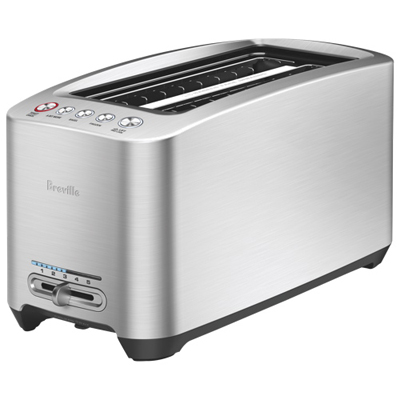 Your price for this item is $179.99
-
 Your price for this item is $209.99
-
 Your price for this item is $219.99
Discover more categories related to Stainless Steel Toasters for Small Kitchens

Top Collections:
Best Black Friday Deals This Year, Best Black Friday Deals On Electronics, Kindle Devices, Pokemon Centers, Best Black Friday Deals On Apple Products, Best Cameras for Sports Photography, Dyson Airwrap, Pokémon 30th Celebration Cards, Apple iPhone 17 Pro, Canon G7X Cameras
Some products may be subject to Environmental Handling Fees
(EHF) depending on your province.
Learn more about EHFs.