Best Binoculars for Hunting

Spot distant game and scan rugged terrain with the best binoculars for hunting, ranked by user review ratings. Whether you’re scouting open fields or watching a wooded trail, compare options with the magnification, field of view, and low-light performance that suit your needs. Look for a comfortable grip, weather-resistant construction, and a manageable weight for long days in the field.

Read More

What to look for in binoculars for hunting

1. Magnification and Lens Size

Binoculars with 8x magnification can make it easier to hold your view steady, while 10x magnification offers a closer look at distant wildlife. Larger objective lenses, such as 42 mm or 50 mm, can provide brighter views in low light but typically add weight.

2. Optical Quality

Look for fully multi-coated lenses to help improve light transmission and reduce glare at dawn or dusk. Extra-low dispersion (ED) glass can reduce colour fringing, helping you distinguish fine details against brush or trees.

3. Field of View and Focus

A wide field of view makes it easier to scan terrain and follow moving wildlife. Choose binoculars with a smooth, easy-to-reach focus wheel, and check for sufficient eye relief if you wear glasses.

4. Durability and Carrying Comfort

Look for waterproof construction and nitrogen- or argon-purged optics to help prevent internal fogging during changing weather. Rubber armour, manageable weight and a comfortable strap or harness can make binoculars easier to carry on long outings.
  1. 1

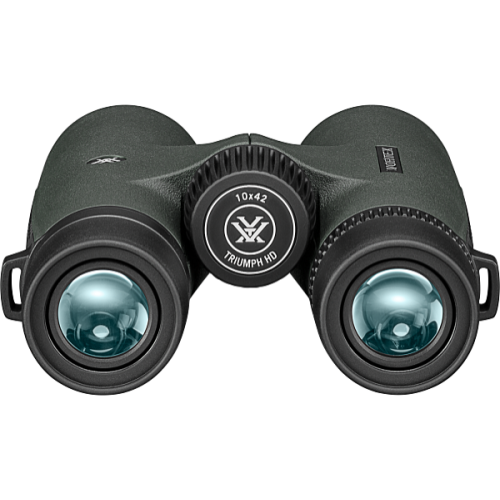
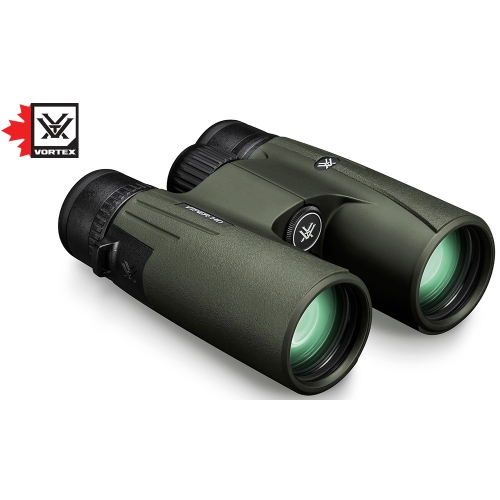
    VORTEX Triumph HD 10X42 Binocular

    About this product

    A rugged, shockproof binocular with HD optics, 10x magnification, and fully multi-coated lenses for sharp images.

    (5)
    $178.00
    SAVE $32
    Your price for this item is $178
  2. 2

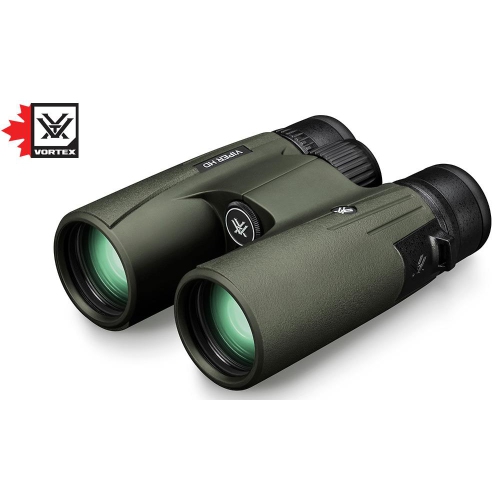
    VORTEX Optics Viper HD Roof Prism Binoculars 8X42

    About this product

    A compact, rugged binocular with HD lens elements, wide field of view, and ergonomic grip design.

    (5)
    $889.00 Your price for this item is $889
  3. 3

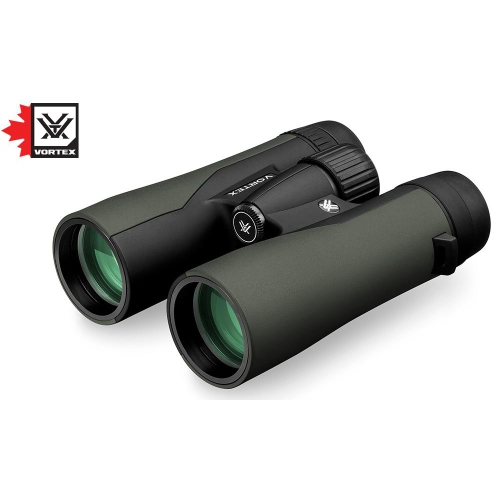
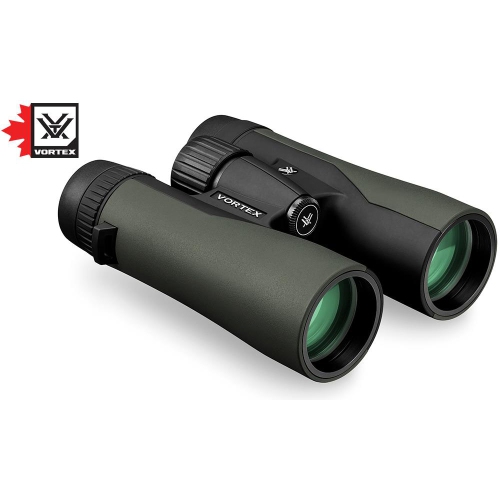
    VORTEX Crossfire HD 8X42 Roof Prism Binoculars

    About this product

    A rugged roof prism binocular with HD optics and included harness for quick, comfortable use outdoors.

    (2)
    $289.00 Your price for this item is $289
  4. 4

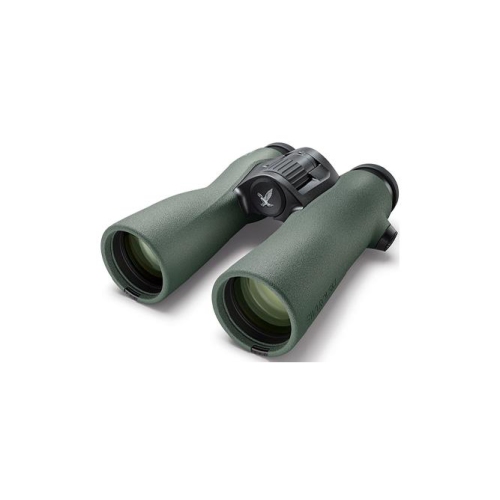
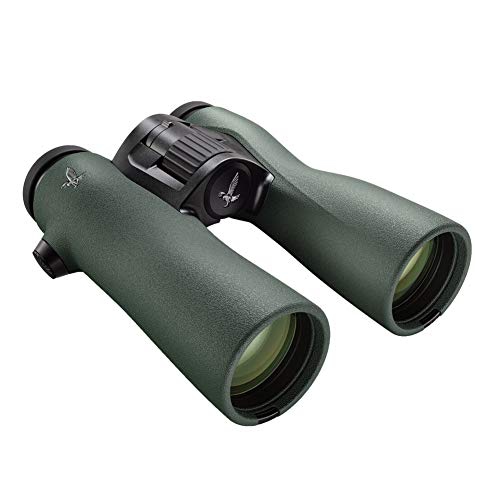
    SWAROVSKI 12X42 Nl Pure Binoculars

    About this product

    A revolutionary pair of binoculars with the largest field of view, ergonomic design, and green color.

    (1)
    $4,639.00 Your price for this item is $4639
  5. 5

    VORTEX Viper HD 10X42 Roof Prism Binoculars

    About this product

    A compact, rugged binocular with HD optics, wide field of view, ergonomic grip, and included chest harness.

    (0)
    $739.00
    SAVE $160
    Your price for this item is $739
  6. 6

    BURRIS Droptine 8X42MM Binocular 300290

    About this product

    A rugged, lightweight binocular with 8x magnification and easy-grip rubber armouring for comfortable extended use.

    (7)
    $219.99 Your price for this item is $219.99
  7. 7

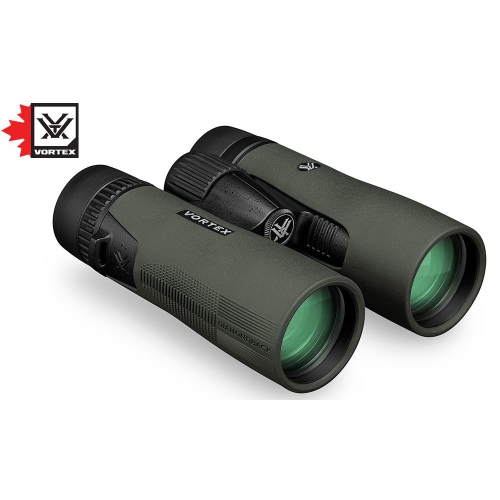
    VORTEX Diamondback HD 10X42 Roof Prism Binoculars

    About this product

    A high-definition roof prism binocular with 10x magnification and included GlassPak harness for easy carrying.

    (17)
    $439.00 Your price for this item is $439
  8. 8

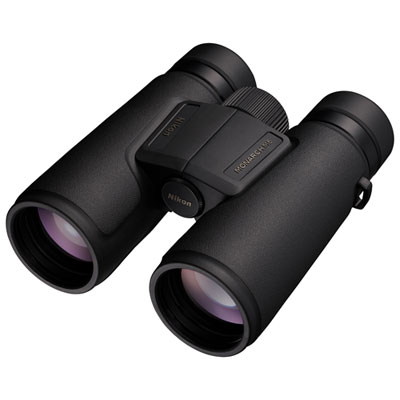
    Nikon Monarch M5 10 x 42 Binoculars

    About this product

    A powerful pair of binoculars with 10x magnification and 42mm objective lenses for clear viewing.

    (12)
    $404.98 Your price for this item is $404.98
  9. 9

    VORTEX Crossfire HD 10X42 Roof Prism Binoculars

    About this product

    A rugged pair of HD roof prism binoculars with 10x magnification and a comfortable GlassPak harness.

    (7)
    $299.00 Your price for this item is $299
  10. 10

    SWAROVSKI 8X42 Nl Pure Binoculars

    About this product

    A pair of green binoculars offering 8x magnification and an exceptionally wide, immersive field of view.

    $4,495.00 Your price for this item is $4495

Why higher magnification is not always better

The best binoculars for hunting combine clear optics, manageable weight, and a comfortable view that suits the terrain. High magnification alone does not make a pair better: binoculars used to scan a wooded hillside need a different balance of features from those used to study animals across an open valley. An 8x magnification offers a steady handheld image and typically a wider field of view, making it easier to follow movement between trees or locate an animal after lowering the binoculars. A 10x magnification brings distant details closer while remaining practical for many handheld situations. Higher magnifications can be useful across broad landscapes, but they also magnify hand movement and may benefit from a tripod or other support. The two numbers in a designation such as 10x42 describe magnification and the diameter of the objective lenses in millimetres. Larger objective lenses can gather more light, although image brightness also depends on optical quality, coatings, magnification, and the viewer’s eyes. For example, 8x42 binoculars have a larger exit pupil than 10x42 binoculars, which can make eye placement more forgiving and support comfortable viewing in dim light. A 42 mm objective size provides a practical balance of viewing comfort and carrying weight, while 50 mm objectives generally add bulk in exchange for greater light-gathering potential at the same magnification. Compact binoculars are easier to tuck into a small pack, but their smaller exit pupils at comparable magnifications can make extended viewing less forgiving. Field of view, usually expressed as the width visible at a stated distance, matters just as much as reach when scanning cover. A broad view helps reveal movement at the edge of a clearing without constant repositioning. For hunters walking long distances, an easy-to-carry pair that settles quickly at the eyes may be more useful than a larger, more powerful pair that spends much of the outing inside a pack.

Optical quality becomes especially noticeable when an animal’s outline blends into brush, bark, or shaded ground. Fully multi-coated lenses use multiple coatings on all air-to-glass lens surfaces to reduce reflections and improve light transmission, helping preserve contrast and detail. Extra-low dispersion glass, often described as ED glass, can reduce colour fringing around high-contrast edges, such as branches against a bright sky. These features are useful indicators, but the finished optical design determines how well the image holds together from the centre towards the edges. Roof-prism binoculars have a relatively straight, streamlined shape that fits neatly into a chest harness, while traditional Porro-prism designs have offset barrels and can offer a strong sense of depth. In roof-prism optics, phase-correction coatings help maintain contrast and resolution; coating descriptions are worth distinguishing from general claims about clarity. The view also needs to fit the person using it. Adjustable interpupillary distance lets the barrels line up with the spacing of the eyes, creating one complete circular image rather than two overlapping views. A dioptre adjustment compensates for differences between the eyes, so the main focus wheel can then bring subjects into focus at changing distances. Locking or firm dioptre controls help keep that setting from shifting during transport. Hunters who wear glasses often benefit from longer eye relief, commonly around 15 mm or more, though the usable view depends on the eyecup design and the glasses themselves. Twist-up eyecups with secure positions help maintain consistent eye placement, with or without eyewear. A smooth focus wheel that is easy to reach allows quick adjustments from nearby branches to a distant treeline without repeatedly changing grip. Weight distribution, barrel diameter, and thumb placement also affect comfort during repeated scanning. Even a modest difference in handling can become noticeable when binoculars are raised dozens of times along a trail or held steadily while examining a far slope.

Hunting binoculars need construction that stands up to frequent carrying, handling, and contact with outdoor gear. Magnesium-alloy, aluminium, and reinforced polymer bodies offer different balances of weight, rigidity, and cost of manufacture, while rubber armour improves grip and helps protect the exterior from minor knocks. Armour does not make binoculars impact-proof, and the quality of the hinge, eyecups, and moving controls remains important. Waterproof ratings and sealed construction indicate resistance to moisture under specified conditions; nitrogen or argon purging helps limit internal fogging but does not prevent condensation on the outside of the lenses. Secure objective covers and eyepiece covers keep dust and grit away from exposed glass between viewing sessions. A chest harness can hold binoculars close to the body, reduce swinging when stepping over logs, and distribute weight more comfortably than a narrow neck strap. Harness fit should allow an easy lift to the eyes without forcing the head forward, and an enclosed pouch should leave enough room for the binoculars with their eyecups in the preferred position. Tripod compatibility is useful for prolonged observation from one location, particularly at higher magnifications, although some designs require a separate adapter. For examining smaller details at longer distances from a supported position, Spotting Scopes for Hunting complement binoculars rather than replace their wider, quicker scanning view. Binoculars also suit wildlife watching, making them a practical gift for someone whose time outdoors extends beyond hunting. Familiarity with the recipient’s eyewear, carrying preferences, and usual terrain helps narrow the choice more meaningfully than magnification alone. Routine care protects that investment in optical performance: loose particles should be removed with a blower or soft lens brush before wiping, followed by an optical microfibre cloth and lens-safe cleaner when needed. Clothing and paper tissues can drag grit across coatings or leave fibres behind. Clean, dry storage with covers in place helps protect the lenses, while checking straps and attachment points reduces the chance of an accidental drop. With the right fit and thoughtful care, hunting binoculars can remain comfortable, dependable tools for patient observation over many outings.
Read More

FAQ

Some products may be subject to Environmental Handling Fees (EHF) depending on your province. Learn more about EHFs.