Best Camera Filters

The best camera filters can help you manage reflections, control light, and bring out richer colours in your photos. Whether you’re capturing sweeping landscapes or experimenting with long exposures, the right filter gives you more creative control over every shot. Explore camera filters ranked by customer review ratings to find an option that suits your lens and photography style.

Read More

What to look for in camera filters

1. Filter Type

Choose a circular polarizing filter to reduce reflections on glass and water, or a neutral density (ND) filter for longer exposures and wider apertures in bright light. UV filters offer front-element protection, while diffusion filters soften highlights for a more stylized look.

2. Lens Compatibility

Match a screw-on filter’s diameter to your lens’s filter thread size, which is usually marked with a diameter symbol (ø). Step-up rings let you fit larger filters onto smaller lenses, while square and rectangular filters need a compatible holder.

3. Optical Quality and Coatings

Look for high-quality optical glass and multi-layer coatings that help limit flare, ghosting and unwanted colour casts. Water- and oil-resistant coatings can make fingerprints and droplets easier to clean.

4. Strength and Frame Design

For ND filters, choose the light-reduction strength that suits your intended shutter speed and aperture; variable ND filters offer adjustable strength but can produce uneven darkening at some settings. Slim filter frames can help reduce dark corners on wide-angle lenses, especially when stacking filters.
  1. 1

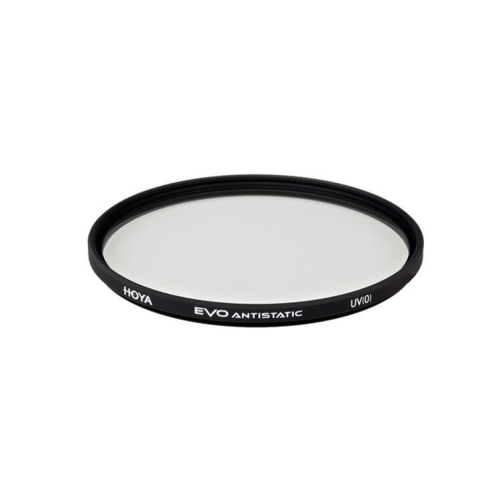
    HOYA 82MM Evo Antistatic Uv(0) Filter

    About this product

    An antistatic UV filter that protects camera lenses and reduces haze for clearer photos.

    What customers like

    • Effective antistatic and dust-repelling properties
    • Durable and sturdy build quality
    • Easy to install and fits well
    • Excellent lens protection
    • High optical clarity with no distortion
    (100)
    $109.00
    SAVE $25
    Your price for this item is $109
  2. 2

    HOYA 77MM Nxt Plus Uv Hmc Multi-Coated Slim Frame Glass Filter

    About this product

    A slim, multi-coated UV filter with waterproof Schott B270 glass for lens protection and maximum sharpness.

    (19)
    $69.00
    SAVE $16
    Your price for this item is $69
  3. 3

    HOYA 77MM Nxt Plus Circular Polarizer Slim Frame Glass Filter

    About this product

    A slim-frame circular polarizer filter that reduces glare and enhances color clarity for your camera lens.

    (9)
    $139.65
    SAVE $7
    Your price for this item is $139.65
  4. 4

    HOYA 82MM Nxt Plus Uv Hmc Multi-Coated Slim Frame Glass Filter

    About this product

    A slim frame glass filter that provides UV protection for lenses with an 82mm diameter.

    What customers like

    • Slim frame design for stacking filters
    • Effective lens protection
    • Trusted brand reputation
    • High-quality optical performance
    • Affordable price for quality
    (22)
    $89.00
    SAVE $19
    Your price for this item is $89
  5. 5

    THINKWARE Cpl Filter

    About this product

    A circular polarizing filter that reduces glare and enhances colour clarity for dash cam footage.

    (5)
    $24.99 Your price for this item is $24.99
  6. 6

    HOYA HD3 Professional Uv Filter 77Mm

    About this product

    An ultra-durable UV filter with 32-layer anti-reflective coating for superior lens protection and clarity.

    (1)
    $181.00 Your price for this item is $181
  7. 7

    HOYA 62MM Nxt Plus Circular Polarizer Slim Frame Glass Filter

    About this product

    A slim-frame circular polarizer filter that reduces reflections and features waterproof, polished clear glass for sharp images.

    (4)
    $79.00
    SAVE $18
    Your price for this item is $79
  8. 8

    HOYA 77MM Solas Irnd 3.0 Filter (10-Stop) #

    About this product

    A 77mm neutral density filter offering 10-stop exposure reduction for creative long-exposure photography.

    (1)
    $139.00
    SAVE $29
    Your price for this item is $139
  9. 9

    HOYA 82MM Evo Antistatic Protector Filter

    About this product

    A clear, multi-coated filter with antistatic, water, stain, and scratch-resistant protection for camera lenses.

    (1)
    $111.15
    SAVE $5
    Your price for this item is $111.15
  10. 10

    HOYA 82MM Nxt Plus Circular Polarizer Slim Frame Glass Filter

    About this product

    A slim-frame glass filter that reduces reflections to enhance color, texture, and detail in photos.

    (12)
    $185.25
    SAVE $9
    Your price for this item is $185.25

How lens filters shape light before the shot

The best camera filters suit the lens, the light, and the photograph or video being created. A circular polarizer can bring out the colour of leaves dulled by surface glare, a neutral density filter can turn moving water into a smooth ribbon, and a diffusion filter can lend a gentle glow to bright highlights. These effects happen as light enters the lens, making physical lens filters different from colour presets or effects applied after capture. Circular polarizing filters, often called CPL filters, are particularly useful for landscapes, travel photography, and scenes viewed through glass. Rotating the filter changes how much reflected light is reduced, helping reveal stones beneath shallow water or details behind a shop window. The strength of the effect depends on the angle of the light and the position of the camera; polarizers do not remove every reflection and are generally less effective on bare metal. They can also deepen blue skies, although a very wide-angle lens may show uneven darkening across the frame. Neutral density filters, usually shortened to ND filters, reduce the amount of light reaching the sensor without intentionally changing colour. This gives photographers room to use longer exposures in daylight or wider apertures for softly blurred backgrounds. For video, ND filtration helps maintain a chosen shutter speed and aperture when filming in bright conditions. Fixed ND filters provide a set amount of light reduction, while variable ND filters adjust through a range by turning a ring. Variable designs are convenient when moving between brighter and darker locations, though some can introduce colour shifts or an X-shaped dark pattern near their strongest setting, especially with wide-angle lenses. The best fit depends on whether the priority is managing reflections, controlling exposure, or shaping the character of the image. Each filter type has a distinct purpose, so a small selection matched to familiar shooting situations can be more useful than several filters with overlapping effects.

Other camera filters serve more subtle or specialised roles. Clear protective filters place a transparent barrier in front of the lens, helping keep fingerprints, blowing grit, and accidental surface marks away from the front element. UV filters can serve a similar protective purpose on digital cameras, where ultraviolet filtration usually has little visible effect because the camera already limits UV light. Neither type makes a lens impact-proof, and any additional glass can introduce reflections or flare in demanding light. Quality optical glass, good surface flatness, and effective anti-reflective coatings help preserve contrast and fine detail. Multi-coated surfaces can reduce unwanted reflections, while water- and oil-resistant coatings can make droplets and smudges easier to remove. Diffusion and mist filters have a different aim: rather than keeping the image as crisp as possible, they soften fine contrast and spread light around bright areas. A low-strength diffusion filter can gently soften a portrait while keeping facial features defined; stronger diffusion can create more noticeable halos around streetlights or illuminated signs. Results vary with the lens, aperture, exposure, and lighting, so the same filter may look restrained in soft daylight and much more pronounced at night. Graduated neutral density filters offer another form of control, with a darker section that transitions into a clear section. They can help balance a bright sky against darker land within a single exposure, particularly where the horizon is relatively open. Harder transitions suit clearly defined horizons, while softer transitions blend more gradually across hills or other uneven outlines. Square and rectangular filter systems allow the transition to move within the composition, which is useful when the horizon sits away from the centre. Photographers exploring Cameras With Filters will find that compatibility matters as much as the intended effect: physical filters attach to a suitable lens or holder, and built-in camera effects do not necessarily offer the same control over incoming light. Landscape photographers, portrait makers, content creators, and hobbyists may all use filters, but the most practical choice reflects the subjects and conditions they photograph most often.

Fit, construction, and everyday handling make a noticeable difference to how comfortably a filter works within a camera kit. Round screw-in filters match the lens’s front filter-thread diameter, typically marked in millimetres beside a diameter symbol or listed in the lens specifications. This measurement is not the same as focal length: a 50 mm lens does not necessarily take a 50 mm filter. Step-up rings allow a larger filter to fit a smaller lens thread, which can help one filter serve several lenses, although the arrangement may interfere with a lens hood or require a different cap. Step-down rings can obstruct the view and darken the corners, particularly on wide-angle lenses. Some lenses with bulbous front elements need dedicated holders rather than standard screw-in filters. Slim filter frames help limit corner darkening on wide-angle lenses, while stacking multiple filters increases the risk of vignetting and unwanted reflections. Aluminium frames offer light weight, and brass frames can provide smooth threading with less tendency to bind; careful machining and a comfortable grip also matter when adjusting a filter with cold fingers. Optical glass is common in round filters, while some larger filter systems use resin for lower weight. Both benefit from protective storage, and scratch resistance should never be mistaken for scratch-proof construction. Loose grit is best lifted with a blower or soft lens brush before the surface is wiped with a clean lens cloth and a suitable cleaning solution. Separate padded sleeves or divided cases keep filters from rubbing together during travel. During the cooler months, allowing cold equipment to warm gradually inside a closed camera bag can help limit condensation when moving indoors. For someone receiving camera filters as a gift, knowing the lens thread size and preferred subjects makes the selection more personal and practical. A photographer drawn to lakes and wooded trails may appreciate reflection control, while someone filming outdoor portraits may find adjustable light reduction more useful. With the right fit and thoughtful care, camera filters can support both everyday shooting and more deliberate creative work without adding much bulk to a camera bag.
Read More

FAQ

Some products may be subject to Environmental Handling Fees (EHF) depending on your province. Learn more about EHFs.