Best Lenses for Nikon

Capture sharp portraits, sweeping landscapes, and detailed close-ups with the right lens for your camera. Ranked by customer review ratings, these top-rated lenses offer a starting point for comparing options that suit your photography style. Explore focal lengths, aperture ranges, and camera compatibility to find the best fit for your next shot.

Read More

What to look for in lenses for Nikon cameras

1. Camera Compatibility

Check whether your Nikon camera uses the Z mount or F mount, and whether it has a DX or FX sensor. Many F-mount lenses can work with Nikon Z cameras using a compatible adapter, but autofocus and other features may vary by lens and camera.

2. Focal Length

Wide-angle lenses suit landscapes and interiors, while telephoto lenses help bring wildlife and sports closer. Standard zooms offer flexibility for everyday photography, and dedicated macro lenses capture fine details up close.

3. Maximum Aperture

A wider maximum aperture, indicated by a lower f-number, lets in more light and can help create a blurred background. Prime lenses often offer wide apertures, while zoom lenses let you adjust your framing without changing lenses.

4. Focus and Stabilization

Look for responsive autofocus for moving subjects and quiet focusing if you shoot video. Vibration Reduction (VR) can help reduce blur from camera shake when shooting handheld; check how the lens works with any stabilization built into your camera.
Citrus catapult arrow
  1. 1

    NIKON Nikkor Z 35MM F 1.2 S Lens Z

    About this product

    A fast wide-angle prime lens with f/1.2 aperture, multi-focus system, and dust- and water-resistant design.

    (4)
    $3,359.99 Your price for this item is $3359.99
  2. 2

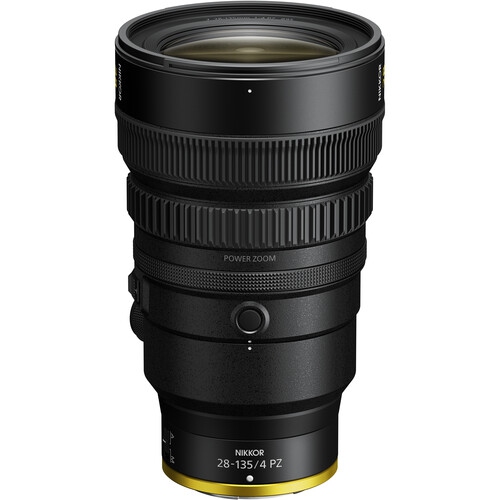
    NIKON Nikkor Z 28 to 135MM F4 Pz Full Frame Z Mount Power Zoom Lens In Black

    About this product

    A versatile full-frame zoom lens with power zoom, stepping motor autofocus, and programmable control ring.

    (4)
    $3,249.99 Your price for this item is $3249.99
  3. 3

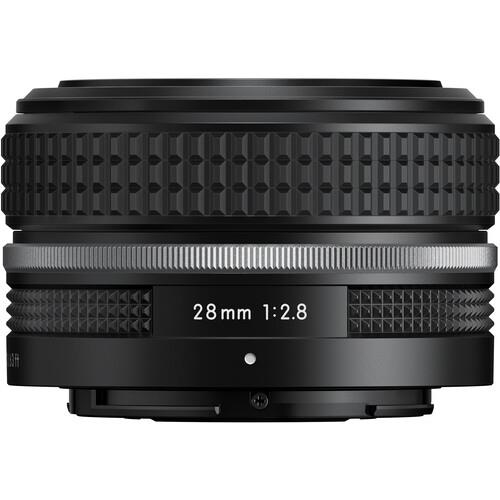
    NIKON Nikkor Z 28MM F/2.8 Se Lens - Brand New

    About this product

    A compact wide-angle lens with f/2.8 aperture and fast autofocus for Nikon Z-mount cameras.

    (1)
    $449.00 Your price for this item is $449
  4. 4

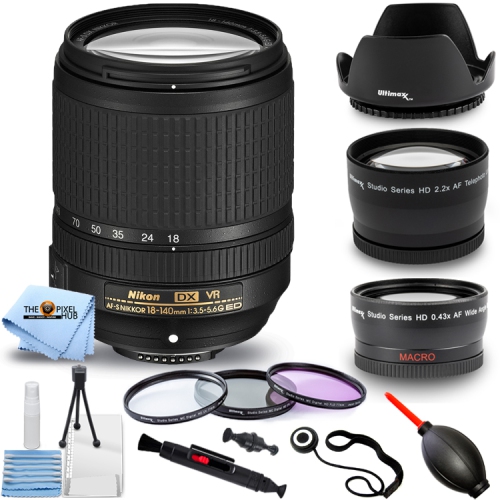
    NIKON Af-S Dx Nikkor 18-140MM F3.5-5.6G Ed Vr Lens + Filter Kit Bundle

    About this product

    A versatile DX-format zoom lens bundle featuring VR image stabilization, silent autofocus, and a 67mm filter.

    $579.95
    SAVE $120
    Your price for this item is $579.95
  5. 5

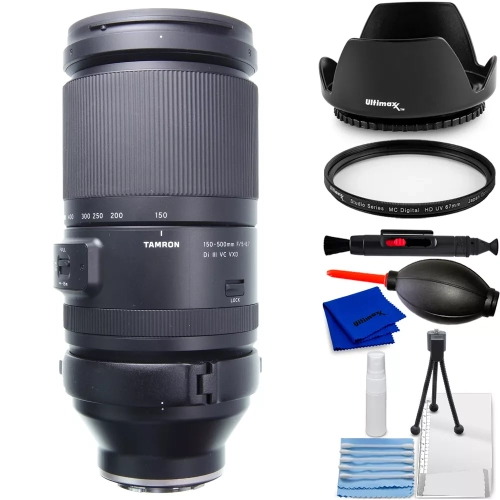
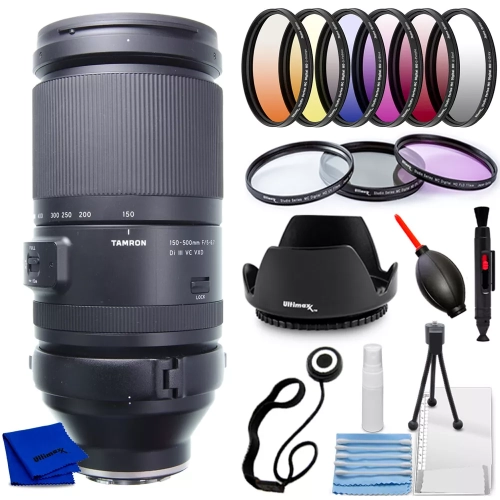
    TAMRON 150-500MM F/5-6.7 Di Iii Vc Vxd Lens (Nikon Z) - 7PC Accessory Bundle

    About this product

    A compact ultra-telephoto zoom lens with VXD autofocus, VC stabilization, and moisture-resistant construction for Nikon Z.

    $1,749.95
    SAVE $520
    Your price for this item is $1749.95
  6. 6

    TAMRON 150-500MM F/5-6.7 Di Iii Vc Vxd Lens (Nikon Z) - 9PC Accessory Bundle

    About this product

    A versatile ultra-telephoto zoom lens for Nikon Z with image stabilization, fast autofocus, and weather resistance.

    $1,769.95
    SAVE $230
    Your price for this item is $1769.95
  7. 7

    NIKON Nikkor Z 85MM F/1.8 S Lens 20090 + 67MM Uv Ultraviolet Filter

    About this product

    An FX-format Z-mount lens with f/1.8 aperture and 67mm UV filter for crisp, clear images.

    $1,169.95
    SAVE $350
    Your price for this item is $1169.95
  8. 8

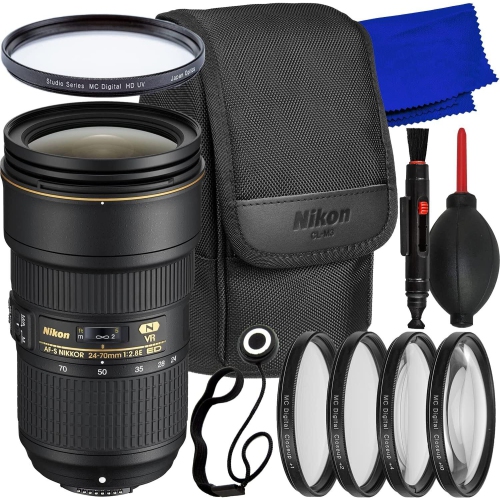
    NIKON Af-S Nikkor 24-70MM F/2.8E Ed Vr Lens 20052 - 7PC Accessory Bundle

    About this product

    A versatile FX-format zoom lens with f/2.8 aperture, vibration reduction, and advanced optical coatings.

    $2,589.95 Your price for this item is $2589.95
  9. 9

    TAMRON 18-300MM F/3.5-6.3 Di Iii-A Vc Vxd Lens (Nikon Z)

    About this product

    A versatile superzoom lens with fast, precise autofocus and vibration compensation for Nikon Z-mount cameras.

    $1,399.95 Your price for this item is $1399.95
  10. 10

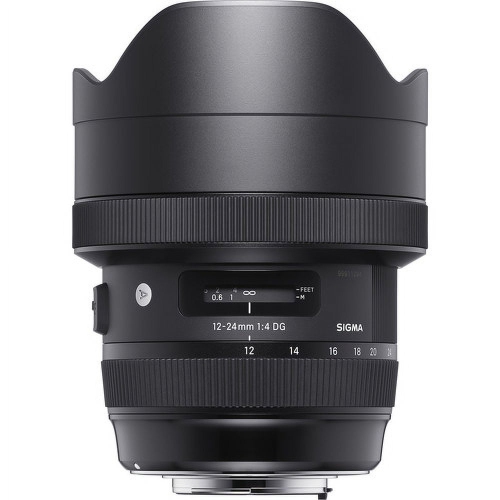
    SIGMA 12-24MM F/4 Dg Hsm Art Lens for Nikon F

    About this product

    A wide-angle lens with a maximum aperture of f/4, designed for Nikon F cameras.

    $1,965.67 Your price for this item is $1965.67

The right lens fits your camera and your subjects

The best lenses for a camera are the ones that match its mount, sensor format, and the subjects it photographs most often. An everyday zoom offers flexibility for family outings and travel, a wide-angle lens takes in sweeping scenery and interiors, and a telephoto lens brings distant wildlife or field sports closer. Prime lenses, which have a fixed focal length, often appeal to photographers who want a bright maximum aperture for indoor photography and softly blurred backgrounds. Compatibility comes first: Z-mount lenses fit the corresponding mirrorless camera system, while F-mount lenses are designed for the DSLR system. Some DSLR lenses can work on mirrorless bodies with a compatible mount adapter, but autofocus, aperture control, and other functions depend on the particular lens, adapter, and camera combination. An adapter does not make every feature universal, and mirrorless lenses generally cannot be adapted for use on DSLR bodies. Sensor coverage matters, too. DX lenses are designed around an APS-C sensor, while FX lenses cover a full-frame sensor. A full-frame lens used on a compatible APS-C body produces a narrower angle of view than it does on a full-frame body; the focal length itself does not change. A DX lens used on a compatible full-frame body may require a crop setting, reducing the portion of the sensor used for the image. Beyond fit, the best everyday lens balances useful coverage with a weight that feels comfortable throughout an outing. A wide-to-short-telephoto zoom can capture a streetscape, a table of friends, and a detail across the room without a lens change. A compact prime keeps a camera bag lighter and encourages deliberate framing, though fitting more into the picture may mean stepping back when space allows. Neither approach is better for every photographer. A parent photographing everyday moments may value flexibility above all else, while someone making carefully composed portraits may prefer the handling and rendering of a dedicated prime. The most useful choice supports the way the camera actually gets used.

Focal length and aperture shape both the look of an image and the situations a lens suits. Wide-angle lenses make room for mountain ridges, tall buildings, and small interiors, but close placement can exaggerate the apparent size of foreground objects. Keeping faces away from the edges of a very wide frame can help portraits look more natural. Standard focal lengths suit street scenes, meals, and informal photographs with a familiar sense of perspective. Short telephoto lenses provide comfortable working distance for portraits, while longer telephoto lenses help frame a bird on a distant branch or a player across the field. For moving subjects, autofocus responsiveness and reliable subject tracking matter alongside reach; performance also depends on the camera body, available light, and subject contrast. A wide maximum aperture, indicated by a lower f-number, allows more light through the lens and can support faster shutter speeds indoors. It can also produce shallow depth of field, separating a face from a busy background, although subject distance and focal length influence that effect. A constant-aperture zoom maintains its maximum aperture as the focal length changes, which is useful when working with consistent manual exposure settings. Variable-aperture zooms can offer a practical balance of range, size, and weight when a wide aperture throughout the zoom range is not essential. Optical stabilization helps reduce blur caused by camera movement during handheld photography, but it does not freeze a running child or a flying bird. Those subjects still need an appropriately fast shutter speed. Close-up photography brings a different set of priorities: maximum reproduction ratio, minimum focusing distance, and working distance all affect how small details fill the frame. The Macro Lenses for Nikon collection is relevant to photographers interested in flower petals, jewellery, textured fabrics, and other small subjects. A lens capable of 1:1 reproduction can project a subject onto the sensor at life size. Longer macro focal lengths can provide more space between the lens and subject, making lighting easier and reducing the chance of disturbing an insect. Many macro lenses also suit portraits, although autofocus speed and handling vary.

Construction and handling become especially noticeable when a lens spends hours on a camera rather than sitting in a bag. Lens barrels may use metal, engineered plastics, or a combination of materials; weight alone does not establish build quality or durability. A secure mount, smoothly operating rings, and controls that are easy to identify by touch all contribute to a dependable feel. Weather-resistant construction can offer added protection against dust and light moisture when paired with a suitably protected camera, but it is not the same as waterproofing. During the cooler months, a properly fitted cover can help shield equipment from wet snow, and allowing a cold camera and lens to warm gradually inside a closed bag can help limit condensation when moving indoors. A hood helps block stray light and provides some protection from accidental contact with the front element. Front and rear caps, a padded compartment, and sensible support for heavier lenses help protect equipment between shoots. Loose grit is best removed with a hand blower before an appropriate lens cloth touches the glass; rubbing dust across a coated surface can cause scratches. Cleaning fluid should be intended for optical surfaces and applied according to its directions, rather than sprayed indiscriminately onto the lens. For video, quiet focusing, smooth aperture changes, and controlled focus breathing can matter as much as still-image sharpness. Focus breathing changes the framing as focus moves between subjects, so it can be noticeable in a shot that shifts attention from a nearby object to a person farther away. Photographers carrying equipment on long walks may favour compact designs, while those working from a tripod may accept greater weight for additional reach or a wider aperture. A lens can also be a thoughtful gift for a photography student, a keen traveller, or someone documenting family life, provided the camera mount and preferred subjects are known. Across these uses, lasting value comes from compatible features, comfortable handling, and optical qualities that serve the photographs someone wants to make.
Read More

FAQ

Some products may be subject to Environmental Handling Fees (EHF) depending on your province. Learn more about EHFs.