Best Vlogging Cameras With Flip Screen
Capture your best angles with vlogging cameras featuring flip screens that make framing yourself easy. Whether you’re filming daily updates, travel adventures or tutorials, a screen you can see while recording helps you stay in the shot. Explore the best vlogging cameras with flip screens below, ranked by user review ratings to help you find the right fit for your content.

Read More

What to look for in vlogging cameras with flip screens

1. Screen Design

Choose a screen that faces forward so you can check your framing while recording. A side-hinged, fully articulating screen offers flexible viewing angles, but check whether microphones, cables or a tripod could obstruct it.

2. Video Quality and Autofocus

Look for 4K recording for detailed footage and reliable face or eye autofocus to help keep you sharp as you move. Check for recording crops, low-light performance and frame rate options that suit your filming style.

3. Stabilization and Portability

For handheld vlogging, look for effective stabilization and a comfortable grip in a camera you can easily carry. Digital stabilization may crop the image, so check that the camera or lens provides a wide enough view for filming at arm’s length.

4. Audio and Recording Features

An external microphone input gives you more audio options, while a headphone jack lets you monitor sound during recording. Check battery life, recording limits and USB power support if you plan to film longer sessions.
  1. 1

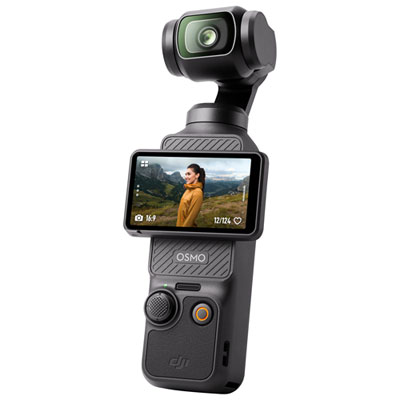
    DJI Osmo Pocket 3 3-Axis Stabilized 4K Handheld Camera with Rotatable touchscreen - Black

    About this product

    A compact black handheld camera offering 4K 120fps recording with 3-axis stabilization and rotatable touchscreen.

    What customers like

    • Highly portable and compact design
    • Great low light performance
    • Excellent stabilization and smooth footage
    • Easy to use with intuitive touchscreen
    • Outstanding 4K video and photo quality
    (790)
    $505.99 Your price for this item is $505.99
  2. 2

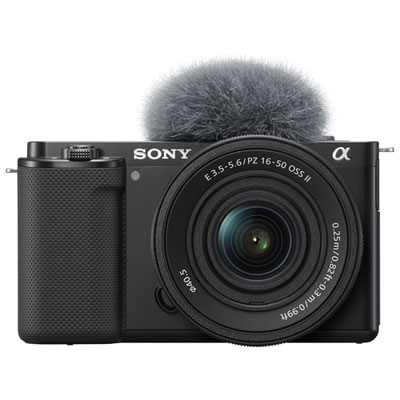
    Sony Alpha ZV-E10KB APS-C Interchangeable Lens Mirrorless Vlog Camera with 16-50mm Kit - Black

    About this product

    A black mirrorless camera with APS-C sensor, 16-50mm lens, and advanced autofocus for sharp 4K video.

    What customers like

    • Versatile interchangeable lens system
    • User-friendly and easy to use
    • Lightweight and compact design
    • Reliable autofocus and image stabilisation
    • Excellent 4K video and photo quality
    (147)
    $999.99 Your price for this item is $999.99
  3. 3

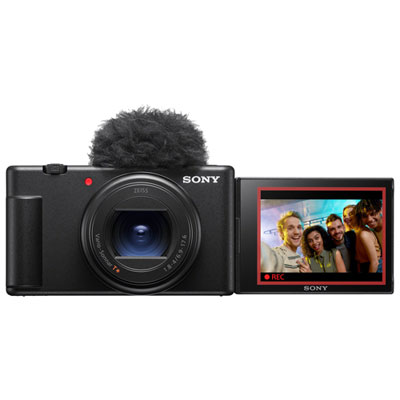
    Sony ZV-1 II Content Creator Vlogger Camera with 18-50mm Lens - Black

    About this product

    A compact black vlogging camera with a wide-angle 18-50mm lens, 1-inch sensor, and built-in microphone.

    What customers like

    • User-friendly touchscreen and interface
    • Reliable autofocus and built-in microphone
    • Excellent video and photo quality, including 4K
    • Wide-angle and versatile zoom lens ideal for vlogging
    • Compact and lightweight for portability
    (248)
    $1,199.99 Your price for this item is $1199.99
  4. 4

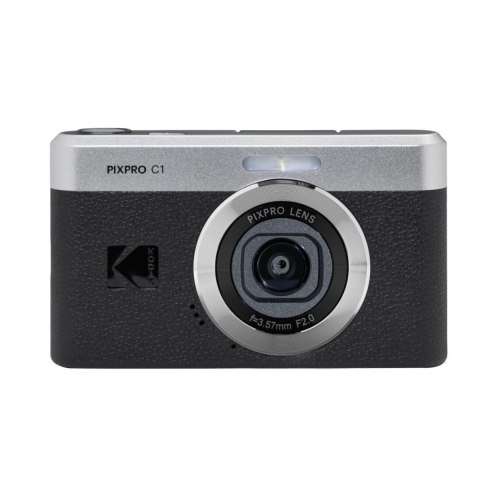
    KODAK Pixpro C1 Friendly Zoom 13Mp 1080P Digital Camera - 26MM F/2.0 (Black)

    About this product

    A black digital camera featuring a 13MP CMOS sensor, 26mm F2.0 lens, and 1080p Full HD video.

    What customers like

    • Affordable and great value
    • Easy to use with simple settings
    • Compact and lightweight design
    • Good picture and video quality
    • Flip-up screen is useful for selfies and vlogging
    (64)
    $243.00 Your price for this item is $243
  5. 5

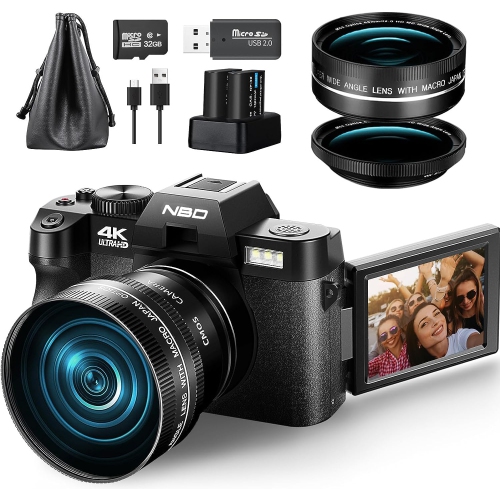
    NBD 5K Digital Cameras for Photography, 64Mp Vlogging Camera for w Wifi, 180° Flip Screen Compact Camera w Flash, 16X Digital Zoom w Wide-Angle

    About this product

    A compact 4K camera with 48MP resolution, 180° flip screen, Wi-Fi, flash, and 16X digital zoom.

    (2)
    $189.99
    SAVE $10
    Your price for this item is $189.99
  6. 6

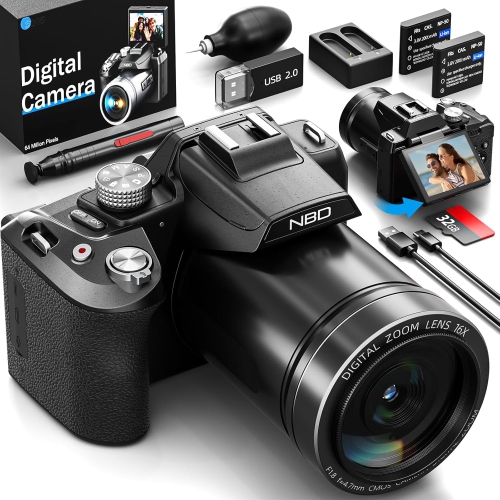
    NBD 64Mp 5K Professional Cameras for Photography - Wifi, Autofocus 16X Zoom, 3” 180° Flip Screen, Anti-Shake w 32G Card 2 Batteries, Digital

    About this product

    A digital camera offering 64MP photos, 5K video, Wi-Fi, autofocus, 16X zoom, and flip screen.

    (1)
    $229.97
    SAVE $50
    Your price for this item is $229.97
  7. 7

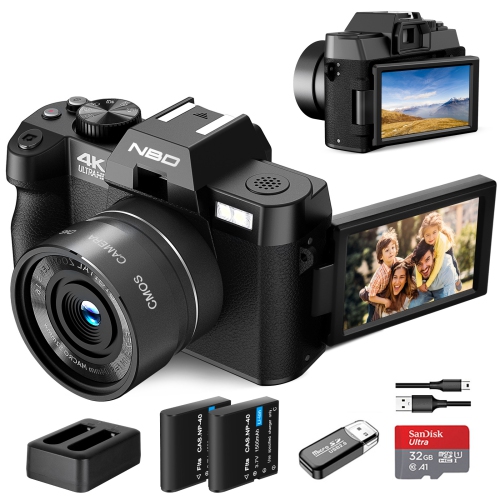
    NBD Digital Camera, 64Mp Cameras for Photography, 5K Vlogging Camera For, 180°Flip Screen Digital Point And Shoot Camera w 18X Zoom, Compact

    About this product

    A compact 64MP digital camera featuring 5K video, 18X zoom, and a 180° flip screen for vlogging.

    (5)
    $139.99
    SAVE $30
    Your price for this item is $139.99

Why screen positioning matters when filming yourself

The best vlogging cameras with a flip screen make it easier to frame a shot, check focus, and stay connected with the lens while filming yourself. A screen that faces forward lets a creator see whether their face is centred, a demonstration stays within the frame, or the background needs a little more space. That visibility matters when filming alone, whether the setup is a camera on a kitchen counter for a recipe video or a handheld grip for a walk through a gallery. Flip-screen designs vary: a flip-up display tilts above the camera body, a flip-down display opens below it, and a fully articulating display swings out to the side and rotates. Each design fits different setups. A microphone mounted on top can obstruct some flip-up screens, while a tripod or grip may interfere with a flip-down screen. Side-opening screens often offer more positioning freedom, although connected cables can affect their movement. Compact cameras with built-in lenses suit creators who want a straightforward setup with fewer parts to carry. Mirrorless cameras with interchangeable lenses offer more control over framing, background blur, and working distance, making them useful for everything from desk-based commentary to detailed craft videos. Small cameras with integrated gimbals can suit moving footage, but a rotating display is not necessarily a front-facing flip screen; the screen’s actual range of movement matters for self-filming. Across these formats, comfortable controls and dependable face- or eye-detection autofocus can be more useful than a long list of advanced settings. For a creator who holds an object up to the lens, a focus mode designed to shift between a face and a nearby object can help keep the demonstration clear. Touchscreen focus selection is useful for placing attention precisely, while visible audio levels and recording indicators provide reassurance without requiring someone behind the camera. The strongest fit is a camera whose screen, lens, and handling work together for the way its owner actually films.

Video quality depends on more than the resolution printed in a specification list. A vlogging camera with 4K recording can capture fine detail and provide room to crop footage when producing a Full HD video, but sensor size, lens brightness, autofocus, and image processing also influence the finished result. A larger sensor can offer advantages in dim indoor light, though lens choice and settings still matter. A lens with a wide maximum aperture can help separate a presenter from the background, but very shallow focus leaves less room for movement before a face or object becomes soft. For arm’s-length filming, a sufficiently wide field of view helps include both the presenter and their surroundings without an awkward stretch. Some recording modes and electronic stabilization settings crop the image, making that framing tighter than expected. Optical stabilization, in-body stabilization, and electronic stabilization address camera shake differently, and none automatically removes every bounce from walking footage. A gimbal can add smoother movement, while a tripod provides a steady foundation for interviews, tutorials, and overhead demonstrations. Frame rate affects the look and flexibility of a clip: 24 or 30 frames per second are common for spoken content, while 60 frames per second can suit movement or allow some slow-motion editing when played back at a lower frame rate. Support for these settings varies by resolution and recording mode. Clear speech is just as important as a sharp picture. Built-in microphones offer convenience, but they can pick up handling noise, room echo, and nearby conversations. An external microphone input gives creators more options for placing a microphone close to the speaker, and a headphone output allows direct listening where supported. A side-facing screen remains particularly useful during these setups because it helps reveal a microphone slipping into the shot or a cable pulling against the camera. For longer conversations and demonstrations, battery endurance, recording limits, and support for external power deserve attention alongside image quality.

Everyday comfort and durability help determine whether a vlogging camera becomes a regular companion or stays in its case. Body weight alone does not tell the whole story: an interchangeable lens, microphone, grip, and spare battery can noticeably change how a setup feels after several minutes at arm’s length. A textured grip, reachable recording button, and screen that remains easy to read from the intended filming position can make a small camera more comfortable to use. Camera bodies may combine engineered plastics, metal components, and textured grip surfaces; practical durability also depends on the screen hinge, lens mechanism, port covers, and how the camera is carried. An articulating screen adds a moving part that benefits from careful handling. Closing it before packing the camera, keeping straps clear of the hinge, and using a padded compartment help protect the display and reduce pressure on protruding controls. Dust on the lens can soften an otherwise crisp shot, so a lens cap, hand-operated blower, and suitable lens-cleaning cloth are useful companions. Cleaning should follow the manufacturer’s directions, with unnecessary contact with an exposed sensor avoided when changing lenses. Storage and file handling also shape the ownership experience. Higher-resolution footage generally needs more card capacity and drive space, and demanding recording modes may require a memory card with a specified sustained write speed. Compatible USB connections or Wi-Fi features can simplify transfers, although supported file types and transfer speeds differ. Creators who publish vertical clips as well as horizontal videos may value flexible mounting positions and displays that remain visible when the camera is turned. Students documenting a project, artists sharing their process, and families preserving everyday stories can all benefit from the ability to check framing without stepping behind the lens. As a gift, a flip-screen camera is most useful when its size, controls, and lens options match the recipient’s interests and experience. The broader range of Cameras With Flip Screen also suits self-portraits and photography from high or low angles, giving a screen designed for self-filming practical value beyond a vlog.
Read More

FAQ

Some products may be subject to Environmental Handling Fees (EHF) depending on your province. Learn more about EHFs.