Nikon D780
Capture every moment in stunning detail with the Nikon D780. Whether you're a photography enthusiast or a seasoned professional, this versatile camera is designed to help you unleash your creativity. Explore a range of compatible accessories and lenses to elevate your shooting experience. Discover how the Nikon D780 can enhance your photography journey, delivering impressive results for every project.
Sort

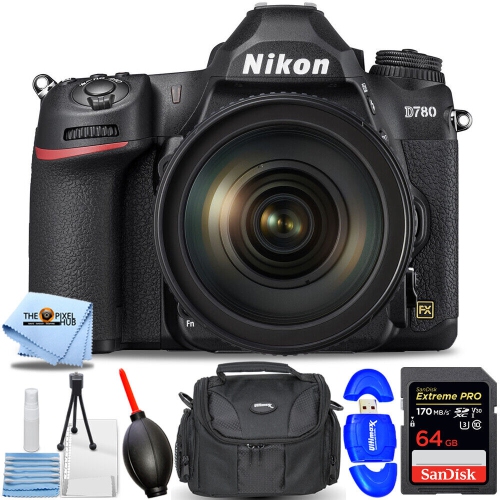
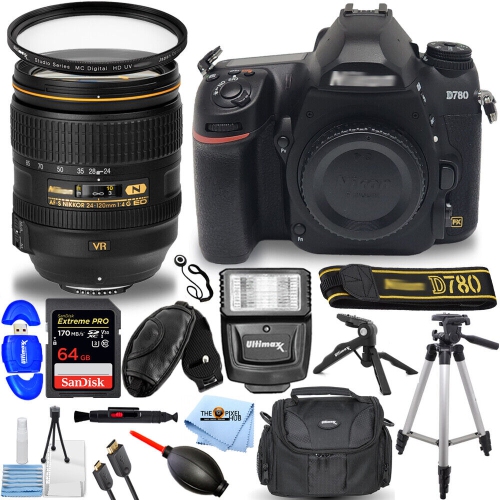
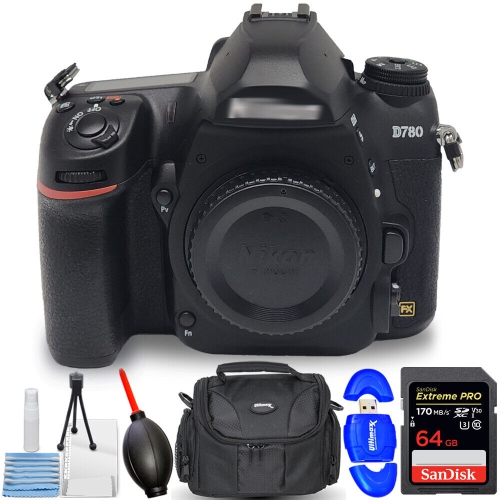
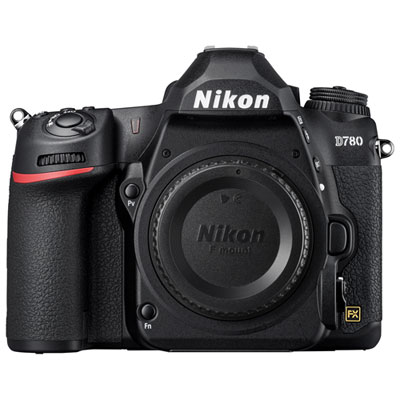
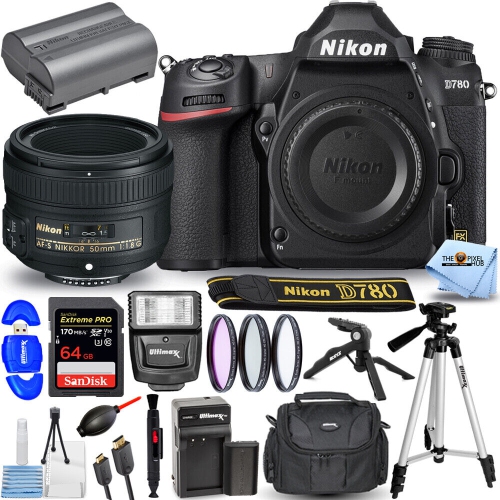
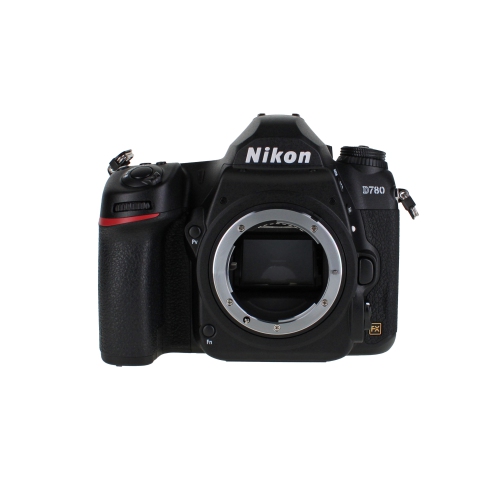
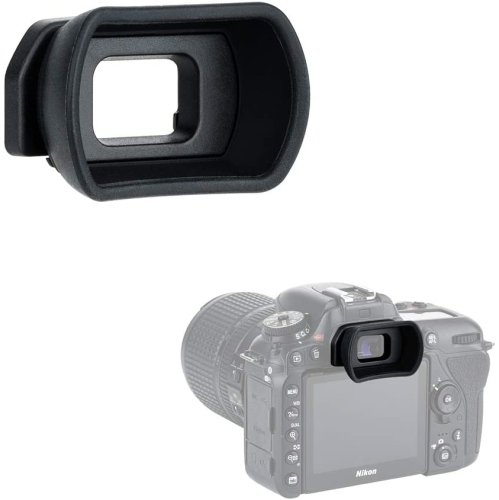
Full-frame flexibility meets the feel of a DSLR
Full-frame DSLR cameras bring together an optical viewfinder, interchangeable lenses and a large imaging sensor for photography that ranges from family portraits to demanding outdoor assignments. Their appeal lies as much in the handling as in the resulting photographs: a substantial grip, dedicated controls and a clear view through the lens can make a camera feel responsive when a fleeting expression or changing light leaves little time to adjust settings. A full-frame sensor measures approximately 36 × 24 mm, matching the image area of traditional 35 mm film. Paired with a suitable lens, it offers flexibility for separating a subject from a softly blurred background, capturing a wide landscape or working indoors without relying entirely on flash. Resolution in the mid-20-megapixel range provides useful detail for prints and moderate cropping, while keeping file sizes more manageable than those from much higher-resolution sensors. Image quality also depends on lens performance, exposure and technique; sensor size alone does not guarantee a sharper photograph. For portraits beside a window, a wide-aperture lens can help preserve the softness of natural light. For a forest trail or distant skyline, a smaller aperture can bring more of the scene into focus, with a tripod providing stability when shutter speeds slow. Lens compatibility is central to this kind of camera system. The mount must match the body, and autofocus, metering and image coverage can vary with the lens generation and design. Lenses designed for smaller sensors may introduce a crop rather than use the entire full-frame image area. Photographers moving from another DSLR often value the possibility of retaining familiar lenses, but compatibility needs to extend beyond whether a lens physically attaches. The combined size and weight also matter, especially for someone carrying a camera through a full day of travel, photographing an outdoor celebration or following a sporting event from the sidelines.
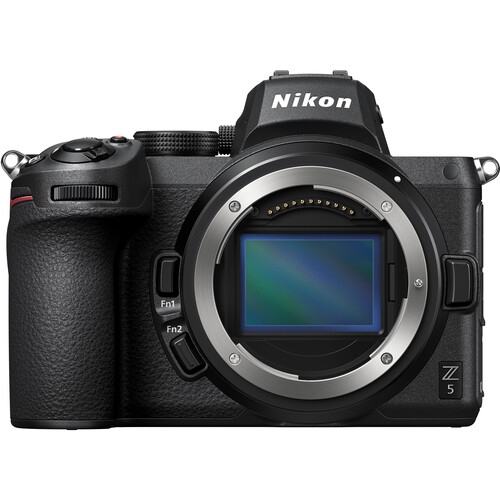
A DSLR’s optical viewfinder shows the scene through the lens rather than on an electronic display, giving photographers a direct view of movement and expression. Live View, by contrast, uses the rear screen and can offer a different focusing experience, particularly on designs with on-sensor phase-detection autofocus. Where supported, face and eye detection can help maintain focus on a portrait subject, while a tilting touchscreen makes low compositions and tripod work more comfortable. Viewfinder autofocus and Live View autofocus are distinct systems, so their coverage, tracking behaviour and shooting speeds may differ within the same camera. Continuous shooting is useful for a runner crossing the finish line or a bird lifting from the water, although a burst rate tells only part of the story. Buffer capacity, memory card speed, shutter settings and the selected file format all affect how long a sequence can continue. Silent electronic shooting can be helpful during a quiet performance, but it may produce distortion with fast movement or banding under some artificial lighting. For photographers who also create video, full-frame 4K capture can provide detailed footage for interviews, travel films and family milestones. Autofocus behaviour, microphone connections, headphone monitoring and stable support are important alongside resolution. High-frame-rate Full HD footage can allow slow-motion playback when captured and edited with compatible settings. Advanced video output options may require an external device, so internal capture formats and external output capabilities should not be treated as interchangeable. Battery endurance also varies substantially between optical-viewfinder photography, screen-based shooting and video. Wireless connectivity can simplify sharing selected images, but large transfers still take time and depend on compatible devices and software. Photographers comparing traditional DSLR handling with a full-frame mirrorless approach may also consider Nikon Z5 cameras, with particular attention to the viewfinder experience, lens mount and overall carrying weight.
The practical qualities of a camera body become especially noticeable after several hours of use. Grip depth, button placement and the balance of a mounted lens influence comfort more than body weight alone. A pronounced grip can feel secure with a longer lens, while a well-adjusted strap distributes the load during a walk or an extended portrait session. Camera bodies may combine metal structural components with engineered outer panels to balance rigidity and weight. Seals around controls and openings can add protection against dust and moisture, but weather resistance is not waterproofing, and protection also depends on the attached lens and properly closed covers. During the cooler months, moving from cold outdoor air into a warm room can cause condensation. Allowing equipment to warm gradually inside a closed camera bag helps limit sudden exposure to warm, moist air. Everyday care is straightforward but important: loose grit should be removed before wiping surfaces, lens glass needs suitable cleaning materials, and the exposed sensor should never be touched with a cloth. Keeping body and rear lens caps fitted when equipment is separated helps prevent dust from entering the system. A padded bag with adjustable dividers protects against knocks in transit and keeps heavy lenses from pressing against screens or controls. For lengthy outings, battery planning and memory card capacity deserve the same attention as focal length. Where a camera has two card slots, supported recording settings may allow backup copies, overflow storage or separation of file types; a second slot does not automatically mean every photograph has been duplicated. RAW files offer greater latitude for adjusting white balance and tone, while JPEG files are convenient for sharing with less processing. This category suits dedicated hobbyists, photography students and working photographers who value direct controls and an established interchangeable-lens workflow. It can also be a meaningful gift for someone developing a serious interest in portraiture, wildlife or travel photography, provided the camera fits their existing lenses and preferred way of working. The most useful setup is one that balances image quality with comfortable handling, dependable storage and the willingness to carry it when an ordinary scene turns into a photograph worth keeping.
A DSLR’s optical viewfinder shows the scene through the lens rather than on an electronic display, giving photographers a direct view of movement and expression. Live View, by contrast, uses the rear screen and can offer a different focusing experience, particularly on designs with on-sensor phase-detection autofocus. Where supported, face and eye detection can help maintain focus on a portrait subject, while a tilting touchscreen makes low compositions and tripod work more comfortable. Viewfinder autofocus and Live View autofocus are distinct systems, so their coverage, tracking behaviour and shooting speeds may differ within the same camera. Continuous shooting is useful for a runner crossing the finish line or a bird lifting from the water, although a burst rate tells only part of the story. Buffer capacity, memory card speed, shutter settings and the selected file format all affect how long a sequence can continue. Silent electronic shooting can be helpful during a quiet performance, but it may produce distortion with fast movement or banding under some artificial lighting. For photographers who also create video, full-frame 4K capture can provide detailed footage for interviews, travel films and family milestones. Autofocus behaviour, microphone connections, headphone monitoring and stable support are important alongside resolution. High-frame-rate Full HD footage can allow slow-motion playback when captured and edited with compatible settings. Advanced video output options may require an external device, so internal capture formats and external output capabilities should not be treated as interchangeable. Battery endurance also varies substantially between optical-viewfinder photography, screen-based shooting and video. Wireless connectivity can simplify sharing selected images, but large transfers still take time and depend on compatible devices and software. Photographers comparing traditional DSLR handling with a full-frame mirrorless approach may also consider Nikon Z5 cameras, with particular attention to the viewfinder experience, lens mount and overall carrying weight.
The practical qualities of a camera body become especially noticeable after several hours of use. Grip depth, button placement and the balance of a mounted lens influence comfort more than body weight alone. A pronounced grip can feel secure with a longer lens, while a well-adjusted strap distributes the load during a walk or an extended portrait session. Camera bodies may combine metal structural components with engineered outer panels to balance rigidity and weight. Seals around controls and openings can add protection against dust and moisture, but weather resistance is not waterproofing, and protection also depends on the attached lens and properly closed covers. During the cooler months, moving from cold outdoor air into a warm room can cause condensation. Allowing equipment to warm gradually inside a closed camera bag helps limit sudden exposure to warm, moist air. Everyday care is straightforward but important: loose grit should be removed before wiping surfaces, lens glass needs suitable cleaning materials, and the exposed sensor should never be touched with a cloth. Keeping body and rear lens caps fitted when equipment is separated helps prevent dust from entering the system. A padded bag with adjustable dividers protects against knocks in transit and keeps heavy lenses from pressing against screens or controls. For lengthy outings, battery planning and memory card capacity deserve the same attention as focal length. Where a camera has two card slots, supported recording settings may allow backup copies, overflow storage or separation of file types; a second slot does not automatically mean every photograph has been duplicated. RAW files offer greater latitude for adjusting white balance and tone, while JPEG files are convenient for sharing with less processing. This category suits dedicated hobbyists, photography students and working photographers who value direct controls and an established interchangeable-lens workflow. It can also be a meaningful gift for someone developing a serious interest in portraiture, wildlife or travel photography, provided the camera fits their existing lenses and preferred way of working. The most useful setup is one that balances image quality with comfortable handling, dependable storage and the willingness to carry it when an ordinary scene turns into a photograph worth keeping.
Top selling and popular products
-
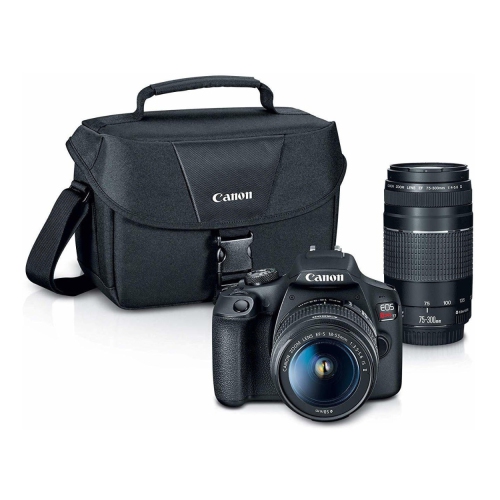 Your price for this item is $1039.95
 -
 Your price for this item is $799.99
 -
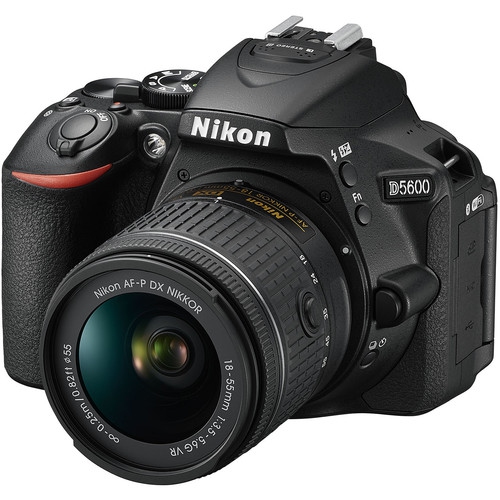 Your price for this item is $1309.95
 -
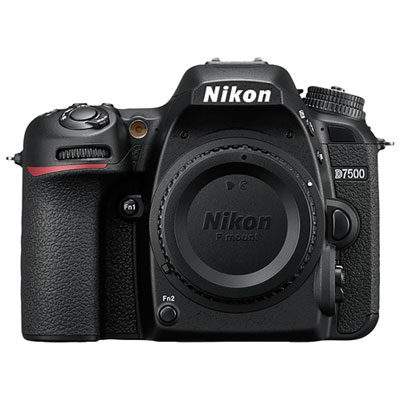 Your price for this item is $1279.99
 -
 Your price for this item is $1199.95
 -
 Your price for this item is $1919.95
 -
 Your price for this item is $66.99
 -
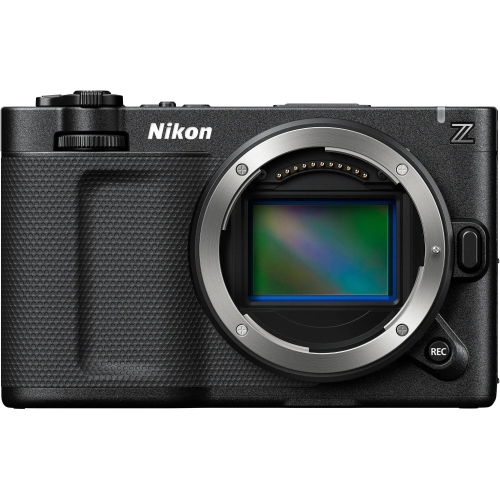 Your price for this item is $2889.99
Discover more categories related to Nikon D780
Top Collections:
Pokemon Centers, Best Budget Office Chairs, Budget 4K TVs, Kindle Devices, Best Laptops for Writers, Canon G7X Cameras, Apple iPhones 16, iPhone 15 Apple, Laptops for Business Work, Xiaomi Phones
Some products may be subject to Environmental Handling Fees
(EHF) depending on your province.
Learn more about EHFs.