Back To School Portable Document Scanners For Class Notes
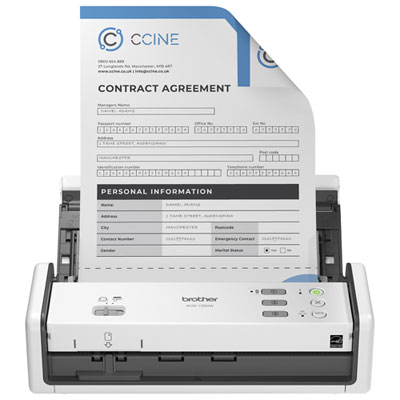
Find back-to-school portable document scanners for digitizing class notes, handouts, and study materials. Browse compact scanners with portability in mind, and compare scanning speed, paper handling, and device compatibility to choose one that fits your coursework and study routine.



FAQ
Common formats include PDF for documents and JPEG for individual images. Some scanner apps also support searchable PDFs through optical character recognition (OCR). Available formats depend on the scanner and its software, so check the export options if your school requires a particular file type.
Depending on the model, portable document scanners may connect through USB or Wi-Fi. Mobile scanning may require a companion app, while laptop use may require scanning software or drivers. Check compatibility with your operating system and preferred device before choosing a scanner.
Simplex scanning captures one side of a sheet at a time. Duplex scanning captures both sides, though the process varies by model. For double-sided lecture handouts, check whether a scanner offers automatic duplex scanning or requires you to turn the pages over manually.
Portable document scanners may use USB power, a rechargeable battery, or a power adapter. Some models draw power directly from a connected laptop, while others can operate on battery power without a computer connection. Check the power requirements and whether a cable or adapter is included.
Create a folder for each course, then use consistent file names that include the lecture date and topic. Depending on the scanning software, you may be able to combine pages into one PDF, rename files during export, or save directly to a cloud storage account. Keep lecture notes, readings, and assignments in separate subfolders if that suits your study routine.
Top selling and popular products
Discover more categories related to Back To School Portable Document Scanners For Class Notes
Some products may be subject to Environmental Handling Fees (EHF) depending on your province. Learn more about EHFs.