Best Gaming Monitors Under $300

Upgrade your setup without stretching your budget with the best gaming monitors under $300, ranked by user review ratings. Whether you enjoy fast-paced competition or immersive adventures, compare options with the screen size, resolution, and refresh rate that suit your play style. Use feedback from fellow shoppers to help find the right fit for your gaming space.

Read More

What to look for in gaming monitors under $300

1. Screen Size and Resolution

A 24-inch Full HD (1920 × 1080) monitor offers a practical balance of size and sharpness, while a 27-inch screen provides more viewing space. If you find a QHD (2560 × 1440) model within your budget, check that your graphics card can deliver the frame rates you want at that resolution.

2. Refresh Rate and Response Time

Look for a refresh rate of 144Hz or higher for smoother motion in fast-paced games. A low response time can help reduce trailing behind moving objects, though advertised response times may not reflect everyday performance.

3. Panel Type and Picture Quality

IPS panels generally offer wide viewing angles and consistent colours, while VA panels typically provide stronger contrast for dark scenes. Compare brightness and motion clarity rather than relying on an HDR label alone, as HDR performance can be limited at this price.

4. Connectivity and Adaptive Sync

Check that the monitor’s HDMI or DisplayPort connections support your computer or console at your preferred resolution and refresh rate. Compatible adaptive sync can help reduce screen tearing, while a height-adjustable stand or VESA mount support can make positioning more comfortable.
Citrus catapult arrow
  1. 1

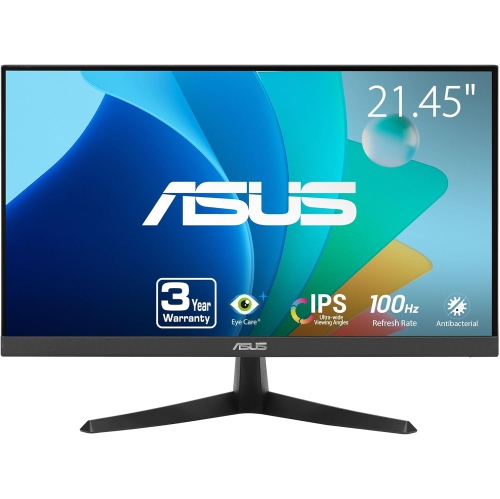
    ASUS Vy Eye Care 21.45" 1080P HD Ips Lcd Gaming Monitor (Vy229Hf) - Adaptive-Sync - 100Hz

    About this product

    An FHD IPS gaming monitor with 100Hz refresh rate, 1ms response, and advanced eye care features.

    (2)
    $134.00 Your price for this item is $134
  2. 2

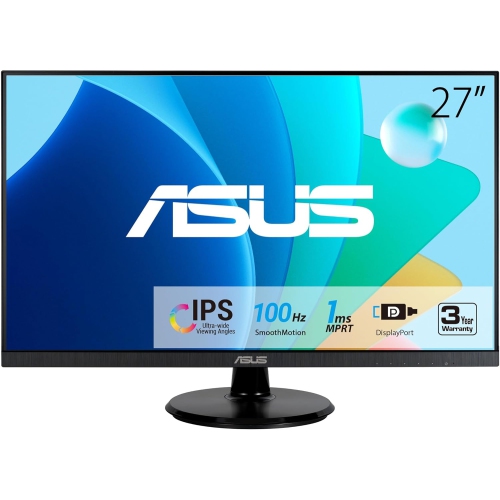
    ASUS 27" Va27Dqf Eye Care Monitor

    About this product

    A Full HD IPS gaming monitor with 1ms response time, 100Hz refresh rate, HDMI, and DisplayPort connectivity.

    (2)
    $285.99
    SAVE $31
    Your price for this item is $285.99
  3. 3

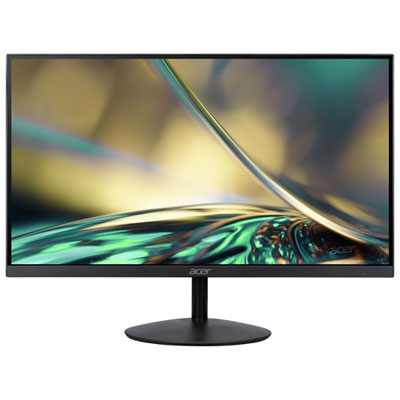
    Acer SA 31.5" 1080p HD IPS LED Gaming Monitor (SA322Q) - FreeSync - 1ms GTG - 75Hz - Only at Best Buy

    About this product

    An ultra-thin black IPS monitor offering 75Hz refresh rate, 1ms response, and FreeSync for smooth gaming.

    (6)
    $179.97 Your price for this item is $179.97
  4. 4

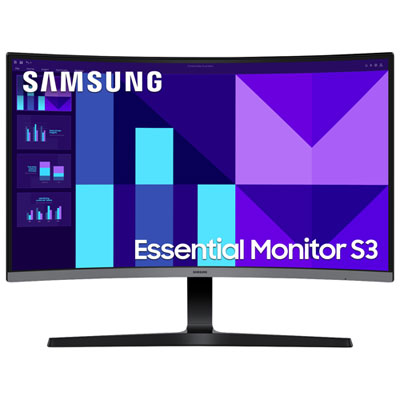
    Samsung 27" Curved 1080p HD VA LED Gaming Monitor (LS27D390GANXZA) - FreeSync - 100Hz - Only at Best Buy

    About this product

    A curved 27-inch monitor with 1080p HD, 100Hz refresh rate, FreeSync, and Eye Saver mode.

    What customers like

    • Good value for the price
    • Easy setup and installation
    • Curved screen enhances viewing experience
    • Smooth motion with 100Hz refresh rate
    • Clear and vibrant picture quality
    (27)
    $209.99 Your price for this item is $209.99
  5. 5

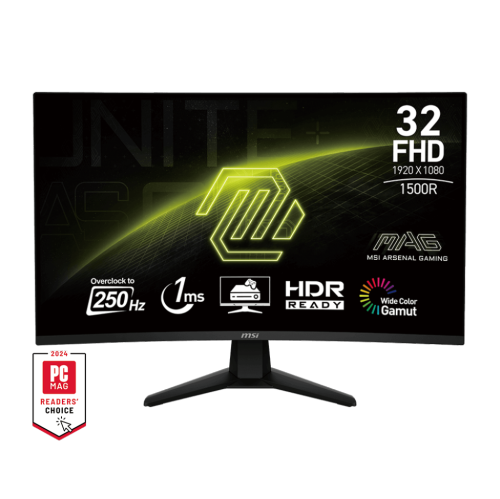
    MSI Mag 32" 1080P HD 1500R Curved Va Led Gaming Monitor (Mag 32C6X) - Adaptive-Sync - 250Hz - HDr Ready - Tilt Adjustable

    About this product

    A curved VA gaming monitor with 250Hz refresh rate, 1ms response time, and tilt adjustment.

    What customers like

    • Smooth 250Hz refresh rate
    • Large 32” curved screen enhances immersion
    • Crisp and vibrant display
    • Easy and fast setup
    • Good value for price
    (39)
    $249.99
    SAVE $40
    Your price for this item is $249.99
  6. 6

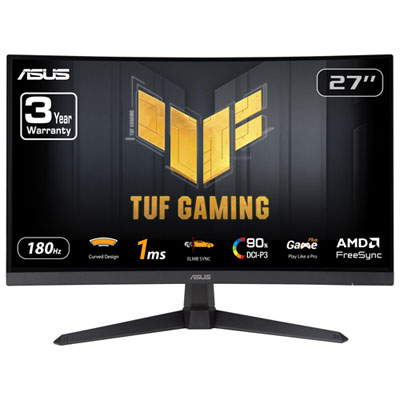
    ASUS TUF 27" Curved 1080p HD VA LED Gaming Monitor (VG27VQ3B) - FreeSync - 1ms GTG - 180Hz

    About this product

    A black curved gaming monitor featuring 180Hz refresh rate, 1ms response time, and AMD FreeSync technology.

    What customers like

    • Smooth and fast performance
    • Great value for the price
    • Large curved screen enhances gaming
    • Vivid and bright colours
    • Easy setup and use
    (47)
    $179.99
    SAVE $20
    Your price for this item is $179.99
  7. 7

    ACER Qg 27" 1080P HD Va Led Lcd Monitor (Qg271) - 75Hz - Freesync

    About this product

    A sleek black monitor featuring Full HD resolution, VA panel, FreeSync, and a 75 Hz refresh rate.

    What customers like

    • Easy to set up and use
    • Clear and vibrant display
    • Versatile connectivity options
    • Large screen size suitable for work and gaming
    • Great value for the price
    (79)
    $199.00
    SAVE $80
    Your price for this item is $199
  8. 8

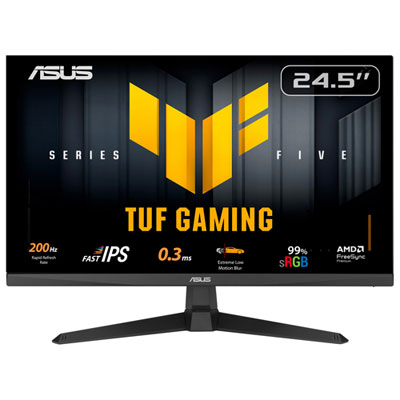
    Asus TUF 24.5" 1080p HD IPS LED Gaming Monitor (VG259Q5A) - G-Sync/FreeSync - 1ms GTG - 200Hz

    About this product

    A high-speed gaming monitor with 200Hz refresh rate, 1ms response, G-Sync, and ergonomic adjustable stand.

    What customers like

    • Easy to set up and use
    • Smooth and responsive gameplay
    • Vivid and accurate colours
    • Excellent value for the price
    • Ideal for fast-paced gaming
    (71)
    $149.99
    SAVE $50
    Your price for this item is $149.99
  9. 9

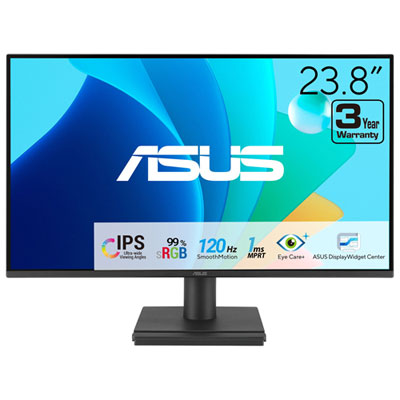
    ASUS Eye Care 24" 1080p HD IPS LED Gaming Monitor (VA249HG) - Adaptive-Sync - 1ms GTG - 120Hz

    About this product

    An FHD IPS gaming monitor with 120Hz refresh rate and eye care features for comfortable viewing.

    What customers like

    • Affordable and great value
    • Smooth 120Hz refresh rate
    • Comfortable viewing with eye-care features
    • Crisp and vibrant picture quality
    • Easy to use and set up
    (34)
    $99.99
    SAVE $10
    Your price for this item is $99.99
  10. 10

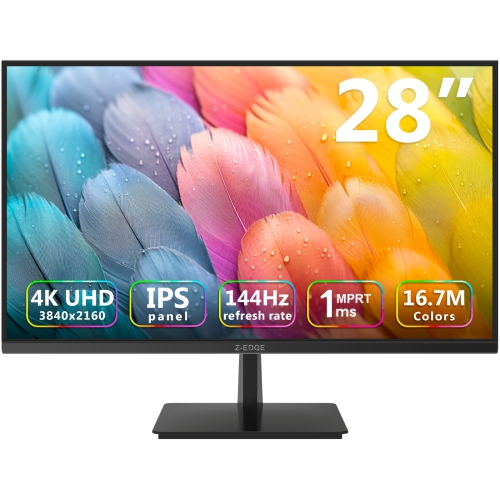
    Z-EDGE 28" 4K Uhd Ips Led Gaming Monitor (U28I4K) - Freesync - 144Hz - HDr10

    About this product

    An ultra-fast 4K IPS gaming monitor in black with 144Hz refresh rate and 1ms response time.

    (2)
    $299.99
    SAVE $50
    Your price for this item is $299.99

The trade-off between sharper detail and smoother motion

Gaming monitors bring fast-moving play into focus, whether that means tracking an opponent across a crowded arena or noticing a distant trail in an open-world adventure. The best fit depends on the games being played, the space on the desk, and the computer or console supplying the picture. Resolution, refresh rate, and pixel response time work together, but each affects a different part of the experience. Resolution determines how much detail the screen can display: Full HD, or 1920 × 1080, can be a practical match for a compact setup and a computer focused on high frame rates, while QHD, or 2560 × 1440, adds definition to scenery, small interface elements, and text. A 24-inch Full HD screen suits many smaller desks, whereas a 27-inch QHD display provides more room for detailed game worlds and everyday multitasking. Screen size alone does not determine sharpness; the same resolution spread across a larger panel produces a less dense image. Refresh rate describes how often the display can update its image each second. A 144Hz or 165Hz screen can make motion look smoother than a 60Hz screen when the connected system delivers enough frames. That difference is especially noticeable during quick camera turns, racing corners, and rapid aiming adjustments. Higher resolution places more demand on a graphics card, so the sharpest picture and the highest frame rate are not always achievable together at the same game settings. Competitive players often prioritize motion clarity, while players drawn to exploration and story-driven games may place more weight on detail and contrast. A monitor used for both gaming and schoolwork also benefits from readable text and enough workspace for documents beside a browser. For a broader selection spanning gaming and everyday computing, Best Monitors under $300 brings those uses together. Across these different needs, a balanced gaming display is one whose capabilities suit the connected hardware and the way its owner actually plays.

Panel technology shapes the picture just as much as the headline specifications. IPS panels generally maintain consistent colours when viewed from different angles, which is useful when a friend pulls up a chair or the screen doubles as a shared display. VA panels typically deliver stronger native contrast, giving dark areas more depth, although some can show visible trailing during dark transitions. TN panels can favour fast pixel transitions, but their viewing angles and colour consistency are often more limited. Performance varies within each panel type, so the panel label is only part of the story. Pixel response time describes how quickly pixels change between shades; it is different from input lag, which is the delay between an action and its appearance on screen. An advertised response time may rely on an aggressive overdrive setting that creates bright or dark outlines behind moving objects. Clear motion depends on balanced tuning rather than a single number. Adaptive sync can help reduce screen tearing and uneven motion by matching the display’s refresh rate to the system’s changing frame output within a supported range. Compatibility with the graphics hardware, connection type, and intended refresh rate matters here. HDR support also deserves context: accepting an HDR signal does not necessarily mean a screen can show bright highlights and deep shadows convincingly. Brightness, colour range, contrast, and effective local dimming all influence that result. For everyday play, a well-balanced standard dynamic range picture can still make colourful landscapes, detailed interiors, and game menus look appealing. Matte screen finishes help diffuse reflections from room lighting, though positioning still matters when a lamp or window sits directly behind the player. Curved panels can create a more wrapped-in feeling from a centred seat, while flat panels are straightforward for shared viewing and mixed desktop tasks. Neither shape guarantees better performance; seating distance, screen width, and personal preference influence how natural the display feels during a long match or a quiet evening spent exploring a game world.

Physical fit and connectivity determine how comfortably a gaming monitor becomes part of an existing setup. A screen may fit the desk by width yet leave too little room for a keyboard and mouse if its stand extends far forward. Stand depth, base shape, and access to the rear ports are worth considering alongside the diagonal screen measurement. Height adjustment, tilt, and swivel make it easier to position the display comfortably without leaning forward or raising the chin. A compatible monitor arm can free up desk space, provided the mounting pattern and weight rating match the screen and the desk can support the installation. Monitor housings commonly use plastic, with metal reinforcement in parts of the stand or mounting structure; secure joints and a stable base matter more in daily use than decorative trim. Thin bezels can make adjacent screens feel less visually separated, but overall dimensions still determine whether a dual-screen arrangement fits. HDMI and DisplayPort connections may support different combinations of resolution and refresh rate on the same monitor. A console setup needs compatibility with the console’s supported output modes, while a gaming laptop may require attention to the capabilities of its video port or adapter. USB-C video and charging are separate features and should not be assumed simply because a USB-C socket is present. Built-in speakers can handle occasional audio, although a headset or separate speakers may suit games that rely on directional sound. For care, a clean, soft microfibre cloth helps remove dust without scratching the panel; any cleaning liquid should follow the manufacturer’s directions and should never be sprayed directly onto the screen. Keeping vents unobstructed and leaving slack in connected cables helps protect the setup from unnecessary strain. These practical details also matter when choosing a gaming monitor as a gift for a student, a casual player, or someone building a first desktop setup. Matching their desk space, preferred games, and connection requirements is more useful than choosing by screen size alone, and supports a display that remains comfortable for gaming, video calls, and everyday work.
Read More

FAQ

Some products may be subject to Environmental Handling Fees (EHF) depending on your province. Learn more about EHFs.