Cyber Monday Deals on LEGO
Unlock incredible savings with Cyber Monday deals on LEGO at Best Buy. Discover a wide selection of sets perfect for builders of all ages, whether you’re looking to spark creativity or add to an existing collection. Take advantage of these limited-time offers to find the perfect gift or treat yourself to a new building adventure. Shop now and enjoy unbeatable prices during our Cyber Monday deals on LEGO. Remember, our Low Price Guarantee means you can shop confidently knowing that you'll find the best price at Best Buy, all year round. We encourage you to check our website frequently for the most up-to-date information on our latest offers and savings opportunities.

Sort
There’s more to a LEGO build than piece count
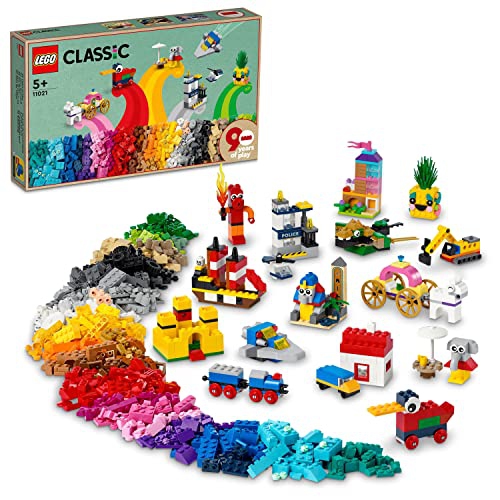
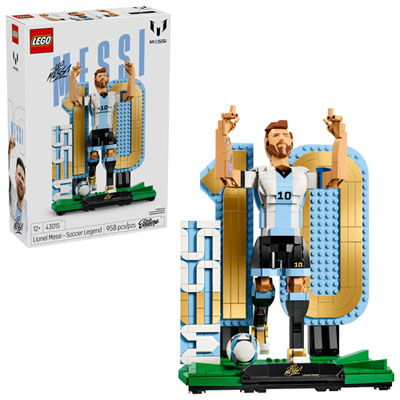
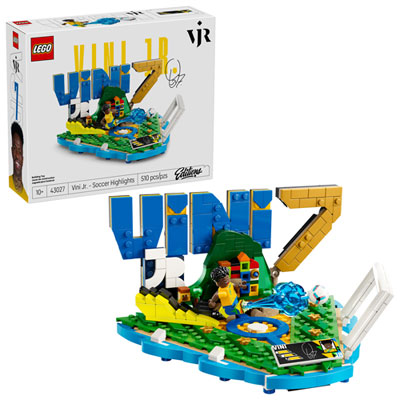
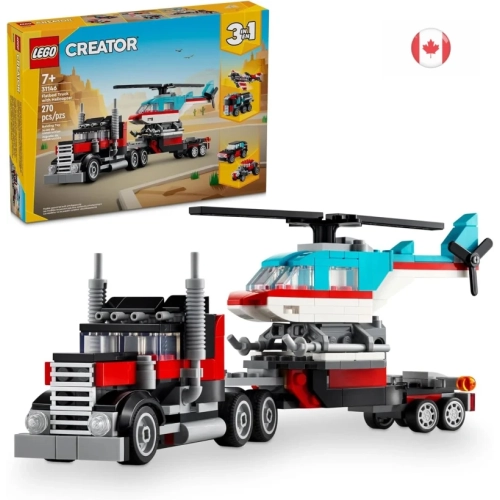
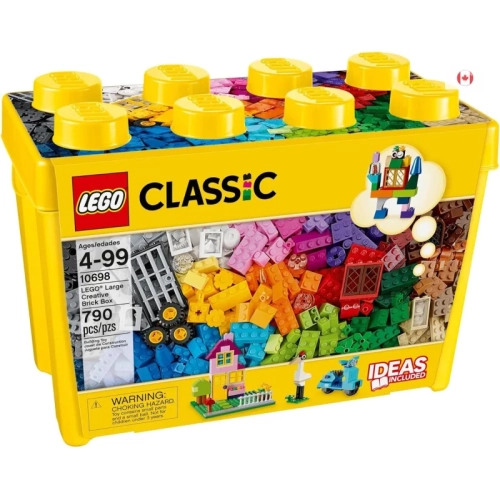
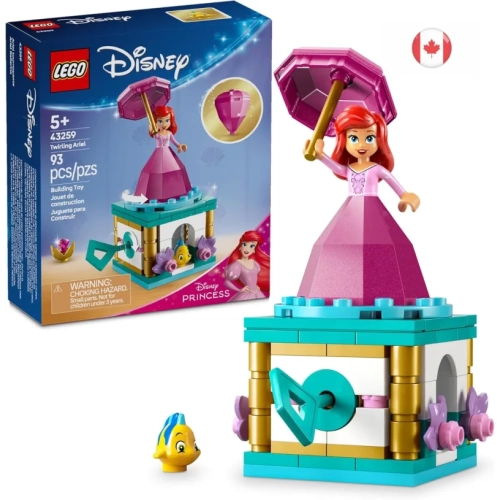
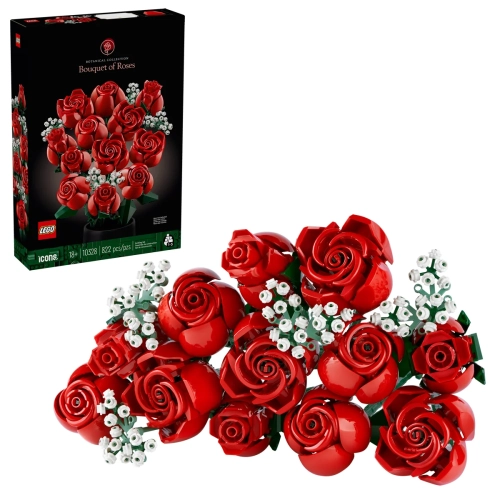
Building sets bring hands-on creativity to Cyber Monday browsing, with possibilities that range from open-ended play to detailed models made for display. The appeal lies in the process as much as the finished result: sorting colours, finding the right shape, and watching a loose collection of pieces turn into something recognizable. For a child who enjoys inventing stories, a build with rooms, characters, or moving sections can provide a starting point for hours of imaginative play. Someone drawn to vehicles or structures may prefer the satisfaction of assembling a carefully shaped body, a sturdy framework, or a mechanism that moves when a handle turns. Adult builders often appreciate a project that gives their hands something precise to do away from a screen, whether they complete it in one sitting or leave it on a table to revisit. Age recommendations, subject matter, construction style, and finished dimensions all help distinguish one kind of building experience from another. Piece count provides useful context, but it does not tell the whole story. A smaller model with intricate connections can demand more concentration than a larger build made from repeated sections. Likewise, a large number of tiny decorative elements creates a different experience from the same number of basic bricks. The intended use matters just as much: a model that will be picked up and played with benefits from secure connections and accessible features, while a display piece may devote more of its construction to fine details and delicate shapes. Cyber Monday can also be an occasion to choose a gift around a recipient’s interests rather than size alone. A familiar subject, an enjoyable level of challenge, and enough room to build can make a set feel personal. For a broader look at play beyond building bricks, Cyber Monday Deals on Toys brings together another part of the occasion’s toy selection. Building sets remain a distinct choice for people who enjoy making something tangible, following a sequence, or discovering what else the same pieces can do.
The materials and construction of a building set shape how it feels in use, from the grip between two bricks to the way a finished model holds together when moved. Many interlocking pieces are made from rigid moulded plastic, with smooth surfaces and connection points designed for repeated assembly. Depending on the set, other components may include flexible elements, clear panels, rubber-like tyres, fabric details, or decorative stickers. Those differences affect both handling and care, so the manufacturer’s directions are the best reference for cleaning and storage. A piece intended to bend should not be treated like a rigid beam, and a decorated surface may need gentler handling than a plain brick. For compatible washable pieces, mild cleaning methods and thorough air-drying help keep connections free of residue; electronic components, motors, and battery housings need separate care and should not be immersed. Heat, harsh cleaners, and excessive force can damage parts or affect how neatly they fit. A brick separator, where appropriate, can help loosen tight connections without resorting to teeth or sharp household tools. Durability also depends on the design of the assembled build. A wide base and reinforced connections support active play, whereas thin antennae, small ornaments, and projecting sections call for a more careful touch. Fit is particularly important when adding a set to an existing collection. Building systems can use different scales and connection styles, so similar-looking pieces should not be assumed to work together without checking compatibility. Larger-format pieces may suit younger hands, while smaller elements allow finer detail but require more precise finger movements. The stated age range and safety warnings take priority, especially in homes with young children who might put loose pieces in their mouths. Small parts should be kept away from children under three and anyone who may mouth them. A contained building area also helps families manage pieces around pets and younger siblings. Shallow trays, a clear tabletop, and a lidded storage container give unfinished projects a practical home without making every pause mean starting again.
The most enjoyable building experience usually matches the builder’s habits as closely as their interests. A child who likes changing the story mid-build may get more use from pieces that can be rearranged freely than from a model intended to stay exactly as pictured. A patient builder who enjoys accuracy may find numbered stages, subtle colour changes, and carefully layered details especially satisfying. Neither approach is more advanced in every respect: following instructions calls for attention and spatial reasoning, while free building involves experimentation, balance, and finding another solution when a wall will not stand. These activities can give children opportunities to practise sorting, sequencing, and hand–eye coordination without turning play into a formal lesson. Shared builds offer a different kind of enjoyment. At a family table, one person might find pieces while another assembles a section, with roles changing as the model takes shape. Projects with clearly separated sections can make that collaboration easier, although smaller builds can also be shared with a little patience. For gift giving, it helps to picture the recipient’s actual space and routine. A compact model may suit a desk or small shelf; a broad structure needs a stable surface and enough clearance to appreciate its shape. Finished height, width, and depth are more useful than box size when judging that fit. Display models also benefit from a spot away from direct sunlight and busy edges where a sleeve or backpack could catch a projecting piece. For frequent play, accessible storage makes it easier to bring a build out and put it away without losing its smallest details. Loose pieces can be organized by shape, function, or colour, depending on how the builder searches for them, while instructions kept together make rebuilding simpler later. A photograph can preserve a favourite creation before its pieces return to the collection. Whether the aim is a satisfying solo project, a shared activity, or a gift that invites repeated use, building sets offer a balance of structure and possibility: there is pleasure in completing the pictured model, and often just as much in taking it apart and trying something different.
The materials and construction of a building set shape how it feels in use, from the grip between two bricks to the way a finished model holds together when moved. Many interlocking pieces are made from rigid moulded plastic, with smooth surfaces and connection points designed for repeated assembly. Depending on the set, other components may include flexible elements, clear panels, rubber-like tyres, fabric details, or decorative stickers. Those differences affect both handling and care, so the manufacturer’s directions are the best reference for cleaning and storage. A piece intended to bend should not be treated like a rigid beam, and a decorated surface may need gentler handling than a plain brick. For compatible washable pieces, mild cleaning methods and thorough air-drying help keep connections free of residue; electronic components, motors, and battery housings need separate care and should not be immersed. Heat, harsh cleaners, and excessive force can damage parts or affect how neatly they fit. A brick separator, where appropriate, can help loosen tight connections without resorting to teeth or sharp household tools. Durability also depends on the design of the assembled build. A wide base and reinforced connections support active play, whereas thin antennae, small ornaments, and projecting sections call for a more careful touch. Fit is particularly important when adding a set to an existing collection. Building systems can use different scales and connection styles, so similar-looking pieces should not be assumed to work together without checking compatibility. Larger-format pieces may suit younger hands, while smaller elements allow finer detail but require more precise finger movements. The stated age range and safety warnings take priority, especially in homes with young children who might put loose pieces in their mouths. Small parts should be kept away from children under three and anyone who may mouth them. A contained building area also helps families manage pieces around pets and younger siblings. Shallow trays, a clear tabletop, and a lidded storage container give unfinished projects a practical home without making every pause mean starting again.
The most enjoyable building experience usually matches the builder’s habits as closely as their interests. A child who likes changing the story mid-build may get more use from pieces that can be rearranged freely than from a model intended to stay exactly as pictured. A patient builder who enjoys accuracy may find numbered stages, subtle colour changes, and carefully layered details especially satisfying. Neither approach is more advanced in every respect: following instructions calls for attention and spatial reasoning, while free building involves experimentation, balance, and finding another solution when a wall will not stand. These activities can give children opportunities to practise sorting, sequencing, and hand–eye coordination without turning play into a formal lesson. Shared builds offer a different kind of enjoyment. At a family table, one person might find pieces while another assembles a section, with roles changing as the model takes shape. Projects with clearly separated sections can make that collaboration easier, although smaller builds can also be shared with a little patience. For gift giving, it helps to picture the recipient’s actual space and routine. A compact model may suit a desk or small shelf; a broad structure needs a stable surface and enough clearance to appreciate its shape. Finished height, width, and depth are more useful than box size when judging that fit. Display models also benefit from a spot away from direct sunlight and busy edges where a sleeve or backpack could catch a projecting piece. For frequent play, accessible storage makes it easier to bring a build out and put it away without losing its smallest details. Loose pieces can be organized by shape, function, or colour, depending on how the builder searches for them, while instructions kept together make rebuilding simpler later. A photograph can preserve a favourite creation before its pieces return to the collection. Whether the aim is a satisfying solo project, a shared activity, or a gift that invites repeated use, building sets offer a balance of structure and possibility: there is pleasure in completing the pictured model, and often just as much in taking it apart and trying something different.
Top selling and popular products
Top Collections:
Pokemon Centers, Budget 4K TVs, Kindle Devices, Canon G7X Cameras, Apple iPhones 16, iPhone 15 Apple, Laptops for Business Work, Flip Phones, Xiaomi Phones, Refurbished Apple Laptops
Some products may be subject to Environmental Handling Fees
(EHF) depending on your province.
Learn more about EHFs.