Food Dehydrators for Drying Herbs
Find an herb dehydrator for turning fresh culinary herbs into ingredients for homemade seasonings, soups and sauces. Explore food dehydrators suited to herb drying, and compare temperature controls, tray layouts and cleaning requirements. Whether you’re experimenting with small batches or expanding your pantry projects, choose a setup that fits your cooking habits and countertop space.



FAQ
An herb dehydrator is generally a food dehydrator that supports drying culinary herbs, rather than a separate appliance category. Check for stated herb-drying use, suitable temperature settings and any recommended tray accessories.
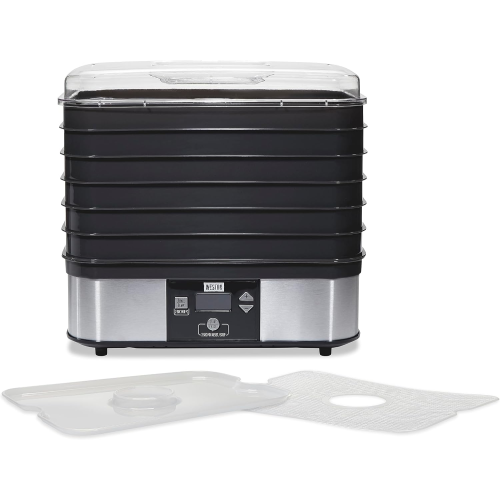
An herb tray is a drying surface intended to support loose herbs, including leaves that could fall through a standard rack. Depending on the appliance, it may be a dedicated tray or an insert. Check compatibility and whether it is included or sold separately.
A dehydrator removes moisture from fresh culinary herbs. A grinder breaks herbs into smaller pieces or powder for cooking and seasoning blends. They serve different stages of preparation, so a grinder does not replace a dehydrator.
Compare the available temperature settings, how they are adjusted and the manufacturer’s herb-drying recommendations. If you want timed operation, check the timer controls and confirm separately whether the appliance has automatic shut-off.
Dried culinary herbs can be used in seasoning blends, rubs, soups, sauces and herb salts. Keeping varieties separate gives you flexibility to customize blends for your favourite recipes, rather than committing an entire batch to one mixture.
Top selling and popular products
Discover more categories related to Food Dehydrators for Drying Herbs
Some products may be subject to Environmental Handling Fees (EHF) depending on your province. Learn more about EHFs.