Cookware Sets With Lids
Cookware Sets With Lids offer a convenient solution for outfitting your kitchen with everything you need to prepare delicious meals at home. Whether you're upgrading your current collection or setting up a new space, these sets provide coordinated pieces designed to handle a variety of cooking tasks. With matching lids included, it's easy to lock in flavor and heat while you sauté, simmer, or steam. Explore a wide range of sizes and styles to find the perfect Cookware Sets With Lids that suit your culinary needs and complement your kitchen décor.
Sort

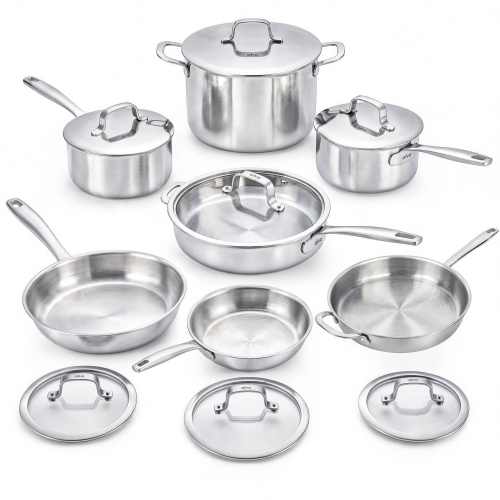
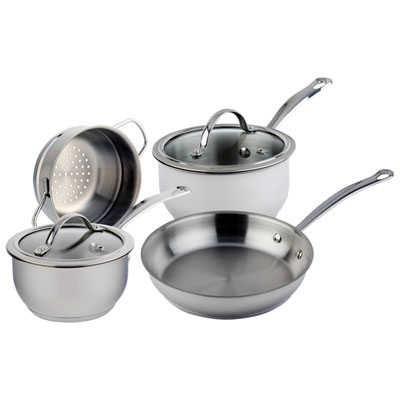
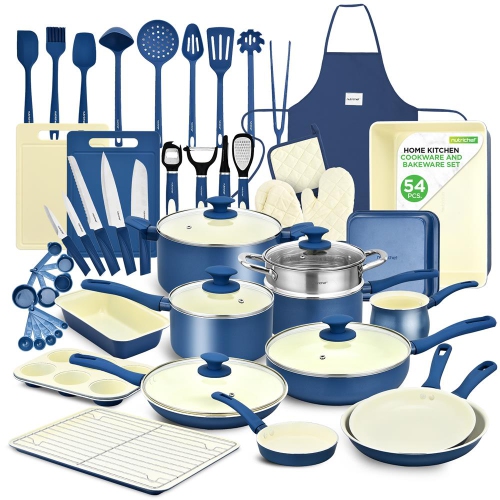
What the piece count doesn’t tell you about lids
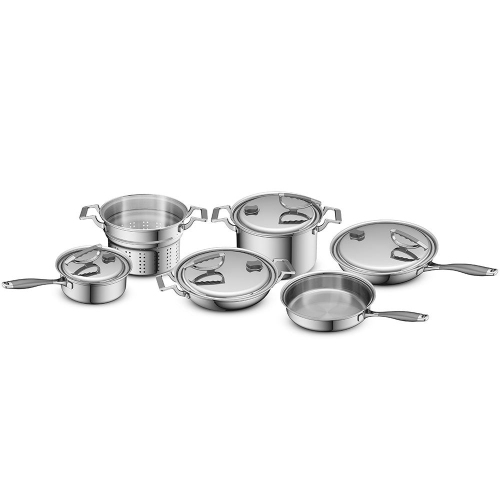
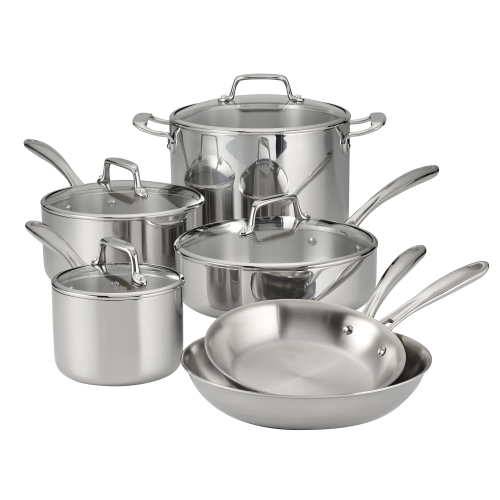
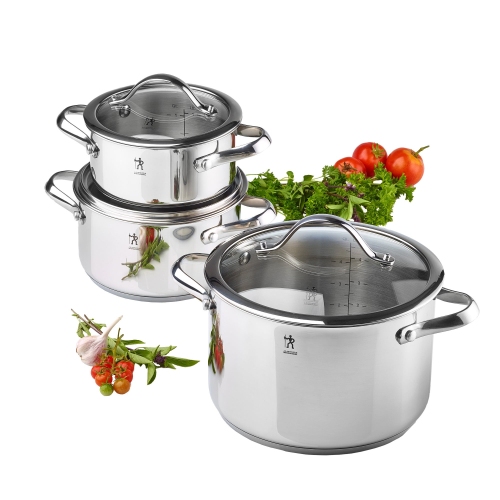
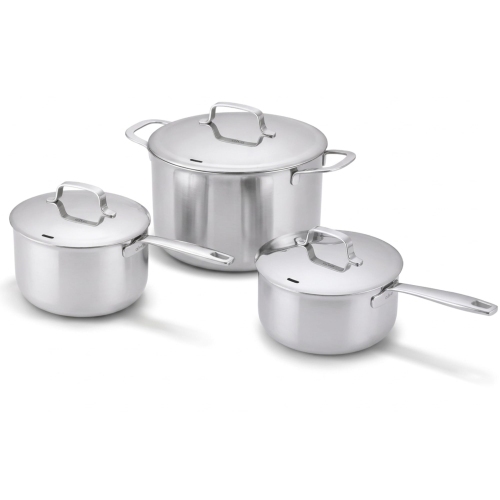
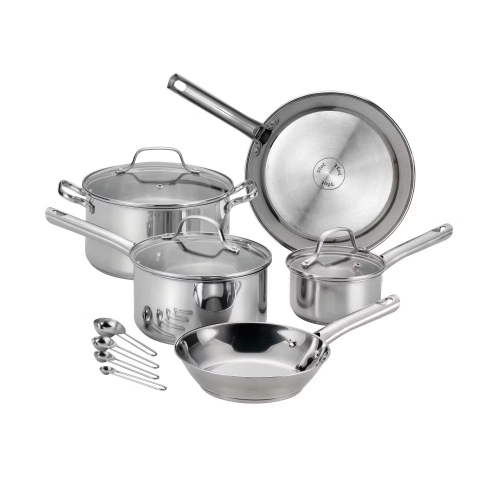
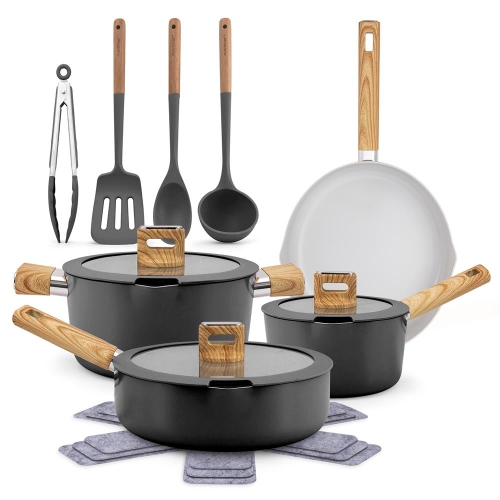
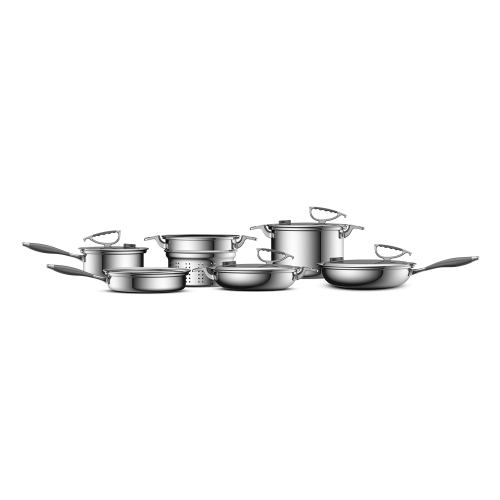
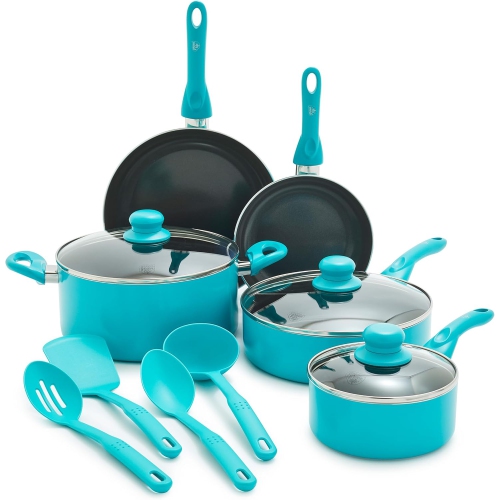
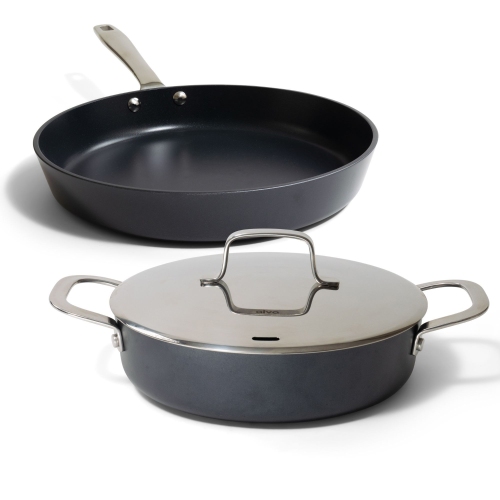
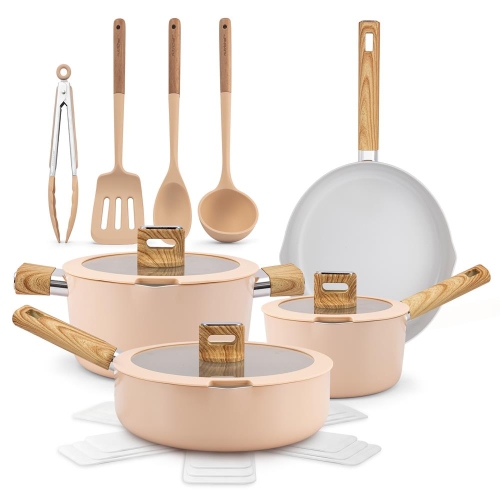
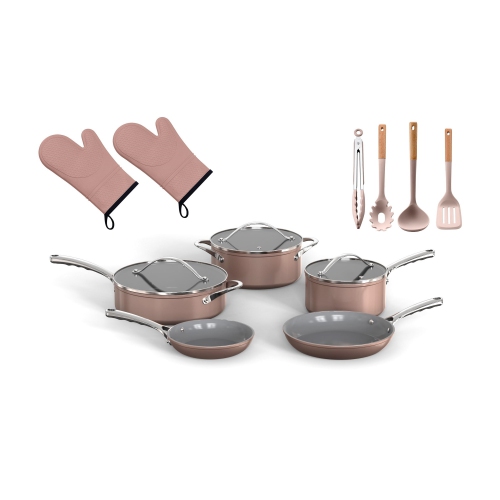
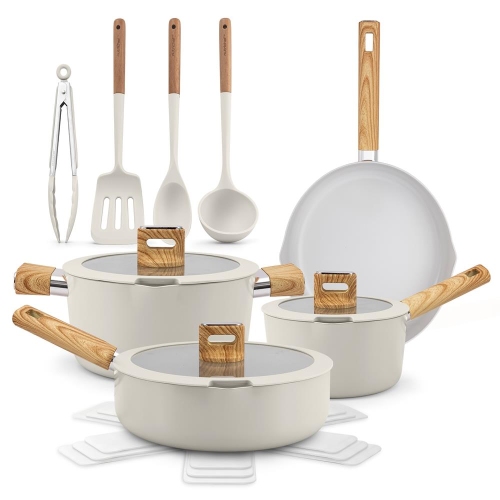
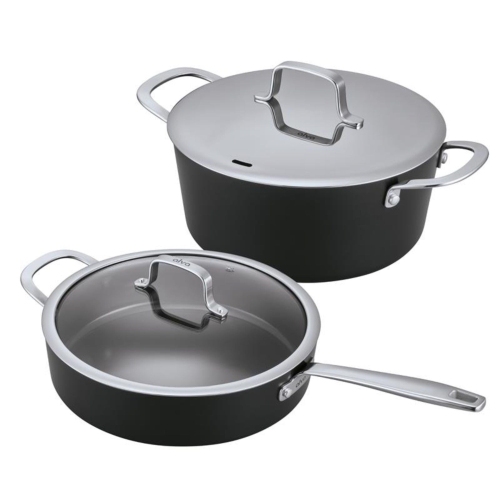
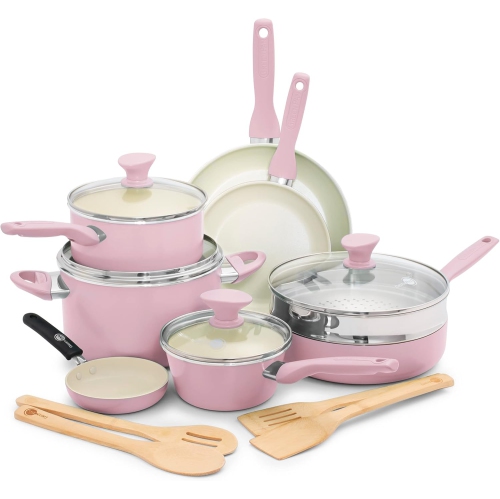
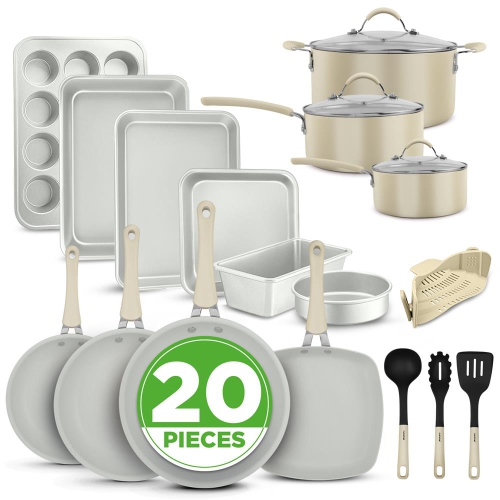
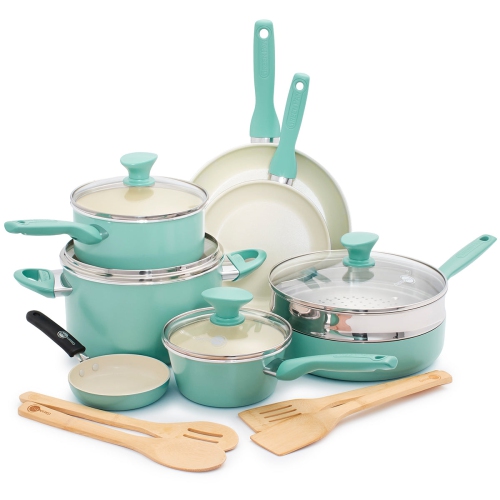
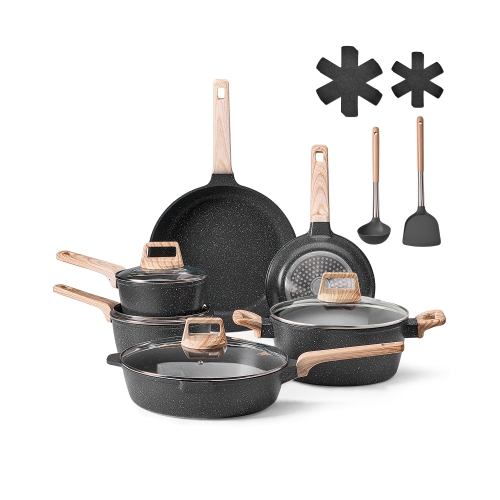
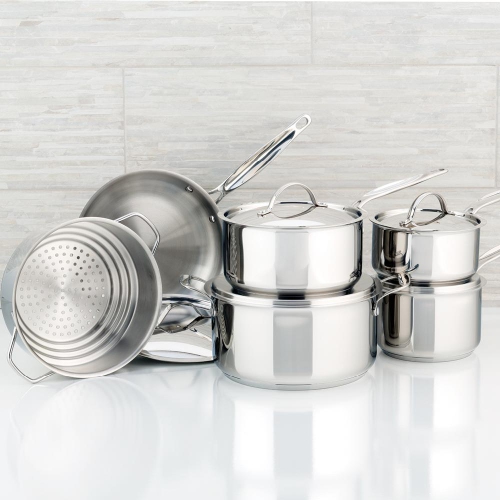
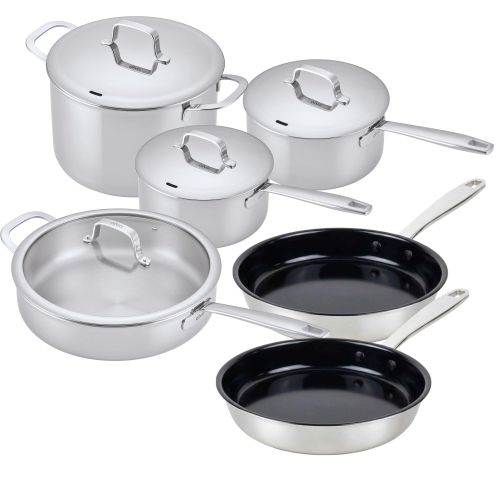
Cookware sets with lids bring together pots and pans for everyday stovetop cooking, from a small saucepan for oatmeal to a stockpot for soup or a deep sauté pan for a meal that starts with browning and finishes at a simmer. A lid makes those vessels more versatile: it helps a pot of water come to a boil, keeps moisture in while rice cooks and catches splatters as a tomato sauce bubbles. Taking the lid off lets steam escape when the sauce needs to thicken or when browned vegetables would otherwise soften. The most useful assortment depends on what tends to be on the stove at the same time. A saucepan and a lidded sauté pan can handle rice and a saucy main dish on separate burners, while a larger pot leaves room to stir a batch of chilli without crowding the rim. A wide, shallow pan gives chicken or mushrooms space to brown before liquid goes in; a taller pot holds enough water for pasta without taking up as much room across the cooktop. The piece count tells only part of the story, since it usually includes lids and may also include accessories such as a steamer insert. Some sets supply a lid for each pot, while others use one lid across two vessels with the same rim diameter. A shared lid takes up less cupboard space, but separate lids matter if both vessels are often in use at once. It’s also common for a set to include an open frying pan alongside lidded saucepans, so the number of covered vessels isn’t always obvious from the total. The capacities, rim diameters and lid pairings give a clearer picture of how the set will work for a typical meal.
Stainless steel, coated aluminum and ceramic non-stick sets offer different advantages at the stove. Uncoated stainless steel is well suited to browning meat or vegetables and making a pan sauce from the browned bits left behind. Stainless steel cookware with an aluminum core or base is designed to spread heat more evenly across the cooking surface. A non-stick surface, including a ceramic non-stick coating, makes it easier to turn an omelette or lift a delicate fish fillet without tearing it. Lid material makes a difference of its own. Tempered glass lets the cook check whether rice is still bubbling or whether broth is close to boiling without lifting the lid, though condensation can briefly obscure the view. Cookware With Glass Lids is especially useful for dishes that benefit from staying covered while they cook. Stainless steel lids don’t offer that view, but there’s no glass to chip if the lid knocks against the sink. A well-seated lid rests evenly on the rim rather than rocking; a vented lid has a small opening to let some steam escape. A generous loop handle is easier to grip with an oven mitt, particularly when lifting the lid away from the face so steam can escape in the opposite direction. Cooktop fit depends on the pan’s base, not the width across its rim. A broad sauté pan, for instance, is more practical when its base fits an element with room beside it for a saucepan. For induction, the set should be explicitly marked as compatible: aluminum on its own doesn’t work with induction, though an aluminum pan with a compatible magnetic base can. For dishes that finish in the oven, the oven limits for the vessel and lid are worth checking separately, as knobs and handles can have different limits from the pan body.
How a cookware set is washed and stored can make as much difference to its working life as the material it’s made from. Letting a hot pan and lid cool before washing helps avoid the sudden change that can warp a base or damage glass. Even when a set is marked dishwasher-safe, handwashing with a soft sponge can help preserve the finish, especially on coated pans. Wood or silicone utensils help protect non-stick surfaces from scratches, while a soak with warm, soapy water can loosen stuck-on food without heavy scrubbing. Glass lids benefit from a quick look around the edge after a knock; a chipped or cracked lid should be taken out of use. In a deep drawer, pan protectors can keep stacked cookware from rubbing, and a lid rack can make it easier to reach the right cover without unstacking the whole set. Storage is particularly relevant for smaller kitchens, where a few frequently used sizes and one interchangeable lid may fit better than a large assortment. A household that regularly prepares several dishes at once may get more use from individual lids and a mix of capacities, from a small saucepan for reheating a single serving to a pot deep enough for a batch of soup. A cookware set with lids can also make a practical housewarming or wedding gift, especially for someone moving into a first home or replacing a collection of mismatched pans. Knowing the recipient’s cooktop and cupboard space makes the gift easier to match to their kitchen. So does knowing what they like to cook: a lidded sauté pan earns its place with meals that go from searing to simmering, while a roomy stockpot is more likely to see regular use in a kitchen where leftovers are part of the plan.
Top selling and popular products
-
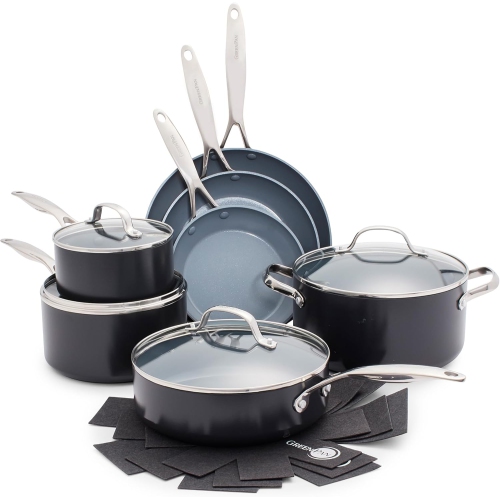 Your price for this item is $899
-
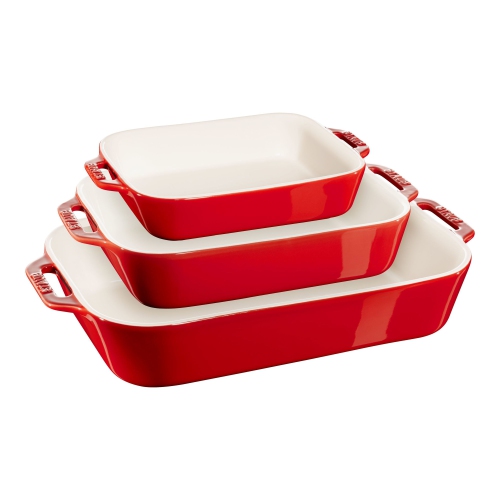 Your price for this item is $129.99
-
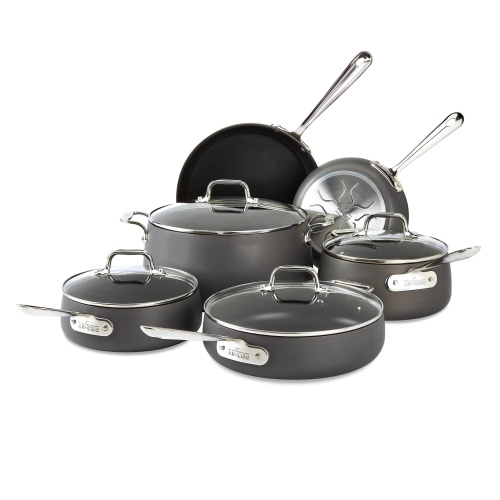 Your price for this item is $807.5
-
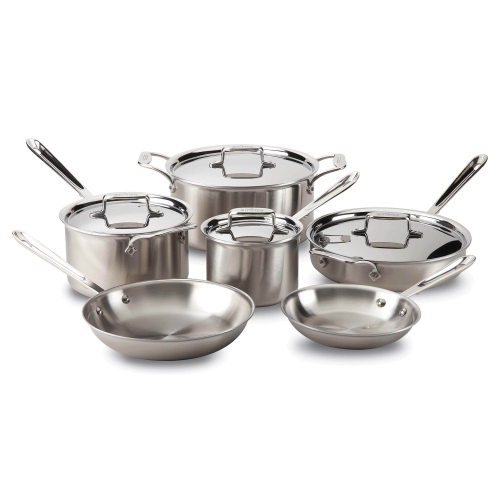 Your price for this item is $1615
-
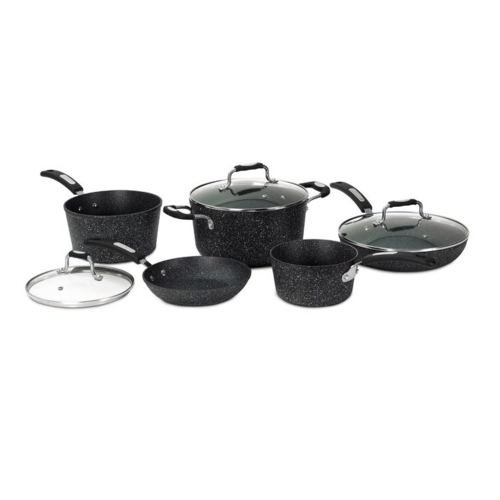 Your price for this item is $129.99
-
 Your price for this item is $69.99
-
 Your price for this item is $129.99
-
 Your price for this item is $591
Discover more categories related to Cookware Sets With Lids
Top Collections:
Best Black Friday Deals This Year, Best Black Friday Deals On Electronics, Kindle Devices, Pokemon Centers, Best Black Friday Deals On Apple Products, Best Cameras for Sports Photography, Dyson Airwrap, Pokémon 30th Celebration Cards, Apple iPhone 17 Pro, Canon G7X Cameras
Some products may be subject to Environmental Handling Fees
(EHF) depending on your province.
Learn more about EHFs.