Desk Floor Mats
Desk floor mats are essential additions to any workspace, helping to protect your floors while enhancing the look and feel of your office or home setup. Whether you’re working from a dedicated office or a multi-purpose room, a desk floor mat can provide a practical solution for keeping your space tidy and organized. Explore a variety of options designed to suit different styles and needs, making it easy to find the perfect desk floor mat for your environment.
Sort

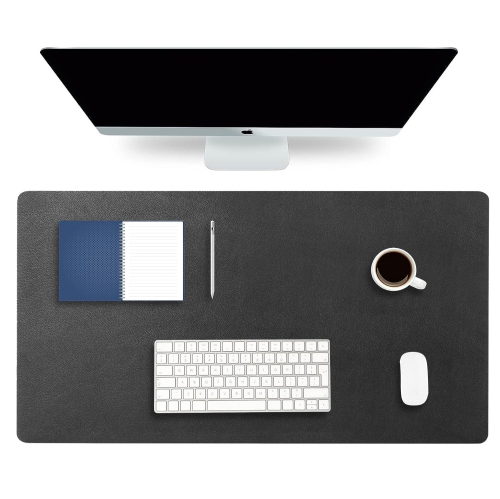

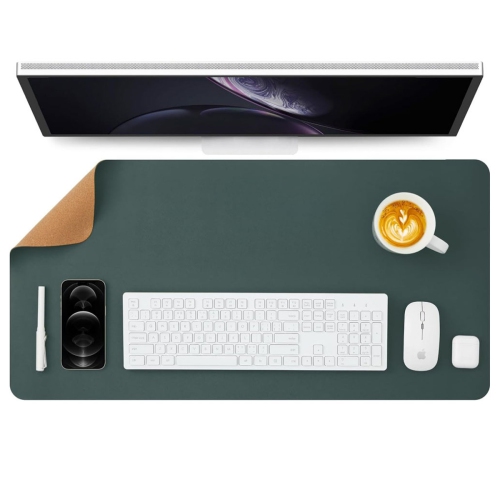

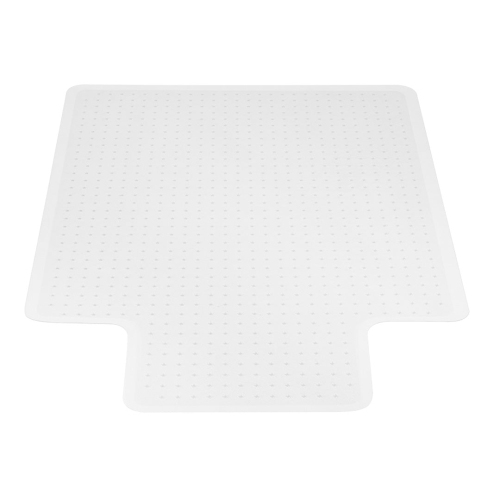
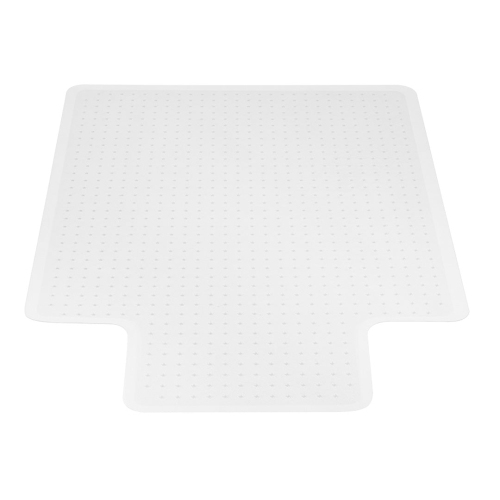

Floor protection that fits the way your chair moves
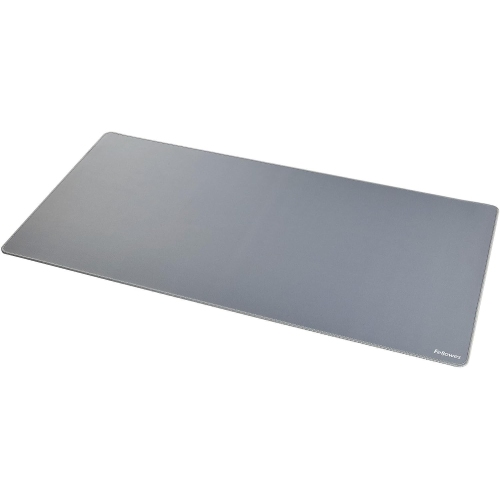
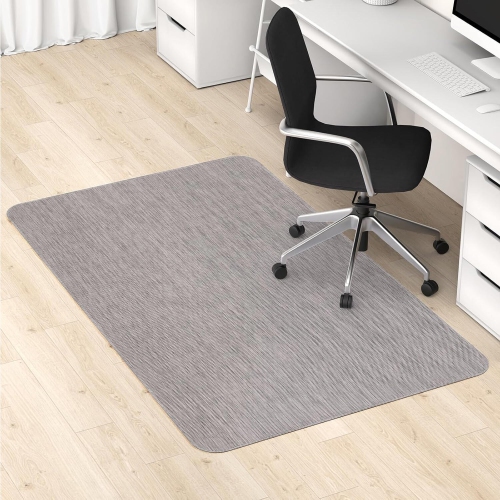
Desk floor mats create a protective layer between a desk chair and the flooring beneath it, helping reduce scuffs, scratches, and wear from repeated movement. They also provide a defined surface for rolling between a keyboard, filing cabinet, and other parts of a workstation. The right fit depends on both the floor and how the space is used: a chair mat for hardwood has different backing requirements from one designed for carpet, and a compact study corner needs a different footprint from a wide office desk. On hard surfaces such as wood, laminate, vinyl, or tile, mats generally have a smooth underside or a backing designed to resist slipping without scratching the floor. Compatibility with the floor finish matters, particularly where certain backing materials could cause marking or discolouration. Carpet chair mats often have small underside grips that help anchor them in place, along with enough rigidity to support rolling casters. Those grips belong on compatible carpet rather than exposed hard flooring. Carpet pile height is another important distinction. A mat intended for low-pile carpet may flex too much on a thicker surface, allowing chair wheels to settle into depressions and making movement harder. The weight of the chair and its user also affects performance, so stated load limits and floor compatibility are more useful than thickness alone. For someone working at a computer for several hours, a properly matched mat can make small movements, such as pulling closer to a monitor or turning towards a drawer, feel more consistent. In a shared room, it can also help define the work area without replacing or covering the entire floor. Protection is concentrated where the mat sits, making coverage especially important beneath the chair’s usual travel path. A chair that regularly rolls off the back edge can still leave the surrounding flooring exposed to wear, while an undersized mat may become an obstacle rather than a useful part of the setup.
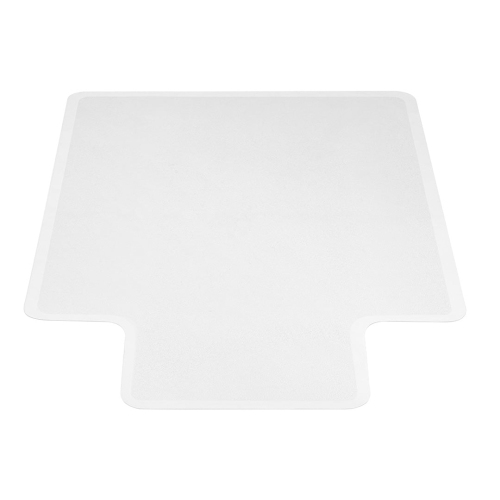
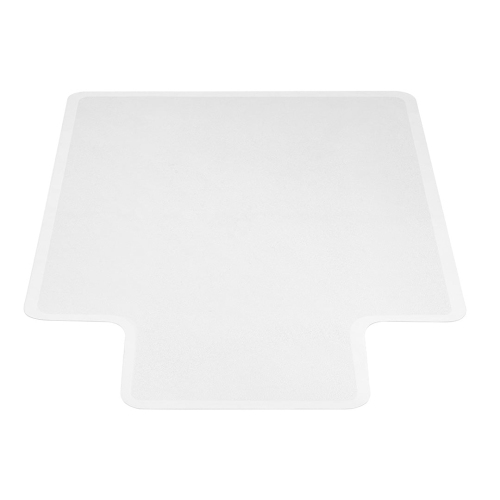
Materials influence how desk floor mats look, feel, and hold up to daily use. PVC mats can offer a flexible surface, although their stiffness and suitability for different floors vary by construction. Polycarbonate mats are generally more rigid and can provide a firm rolling surface when matched to the correct flooring. Tempered glass chair mats offer a hard surface and a clear appearance, but their weight, handling requirements, edge design, and rated capacity deserve attention. Fabric-topped mats have a softer visual finish and may reduce some rolling noise, though movement can feel different from rolling across a rigid surface. No single material is the best match for every workspace, and backing, surface texture, and construction are just as important as the material name. Clear designs leave more of the floor visible, while opaque colours or patterned finishes can make a workstation feel more defined or conceal an uneven-looking patch of flooring. Sizing is about movement as much as desk width. Common footprints include 36-inch by 48-inch and 48-inch by 60-inch formats, but the useful area depends on the shape and the furniture around it. A rectangular mat provides broad coverage, while a design with a projecting lip can extend beneath the desk to cover the area where feet rest and the chair tucks in. Rounded corners and bevelled edges can make transitions less abrupt, although any raised edge still needs to be considered in a walking route. Desk legs, storage pedestals, nearby doors, and the chair’s full wheelbase all affect placement. A mat that fits neatly under an empty desk may feel small once the chair is pulled back to stand up. Allowing space for that everyday motion helps keep the chair supported during normal use. At an L-shaped desk, the rolling area may stretch between two work surfaces, making a wider footprint more practical than a narrow mat centred only beneath the main screen.
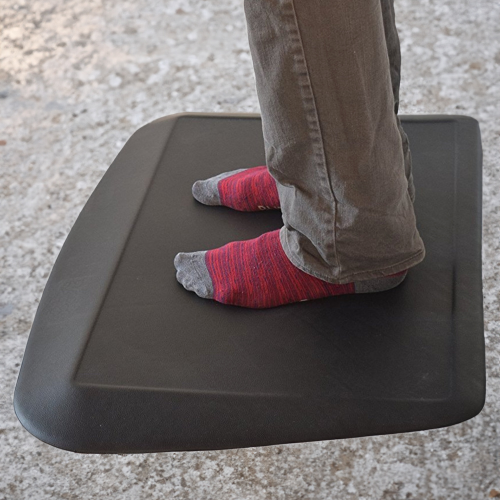
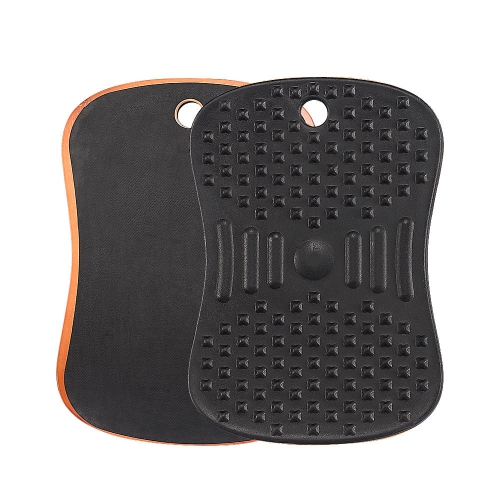
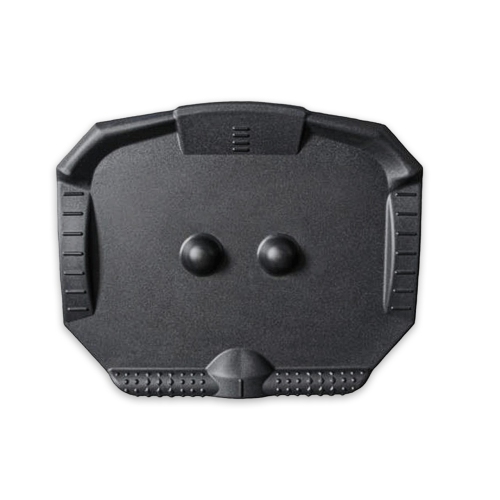
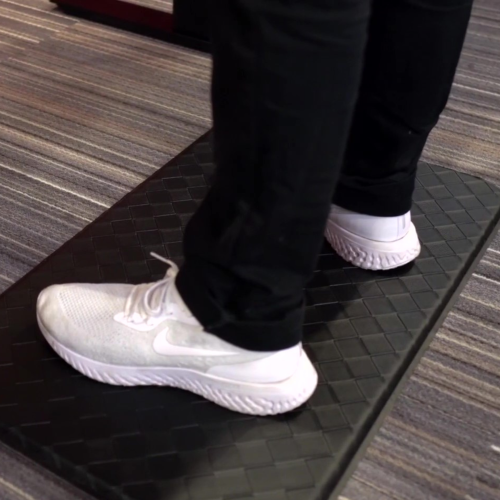
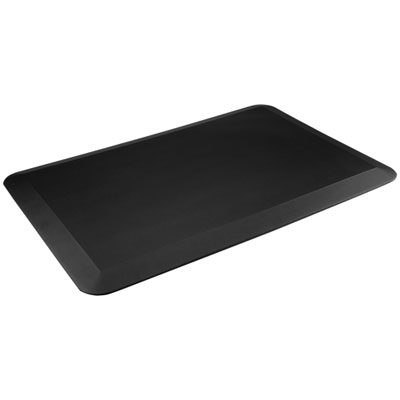
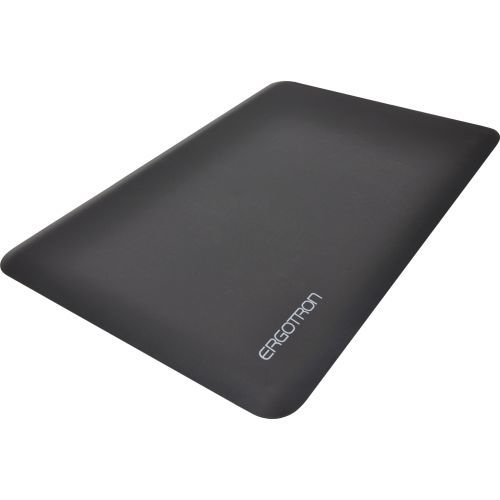
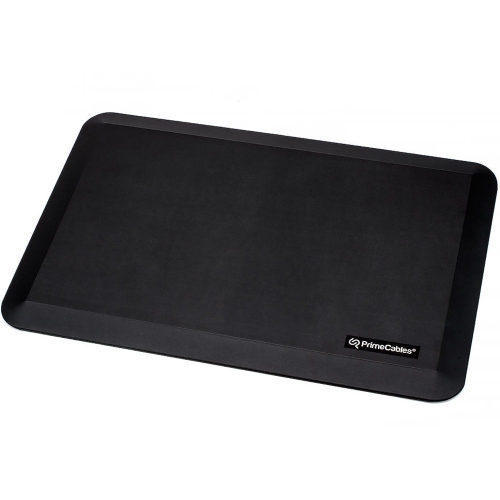
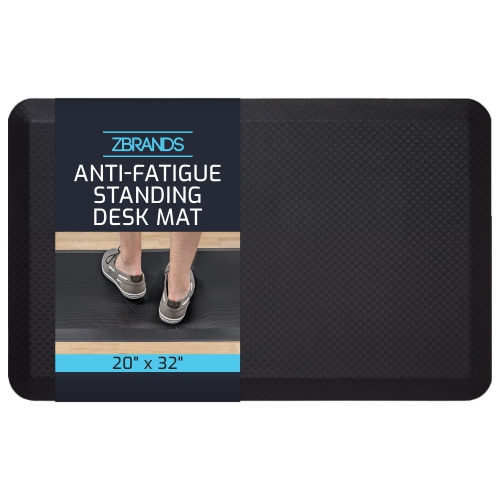
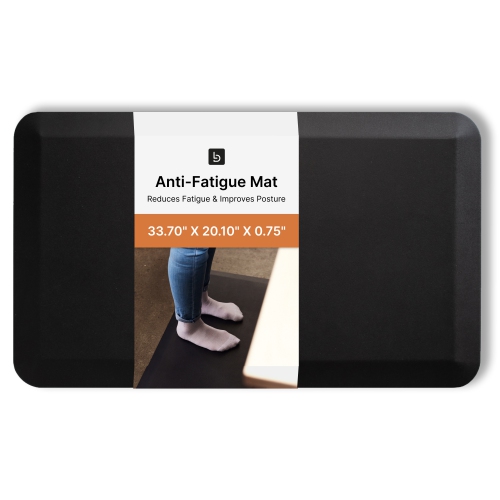
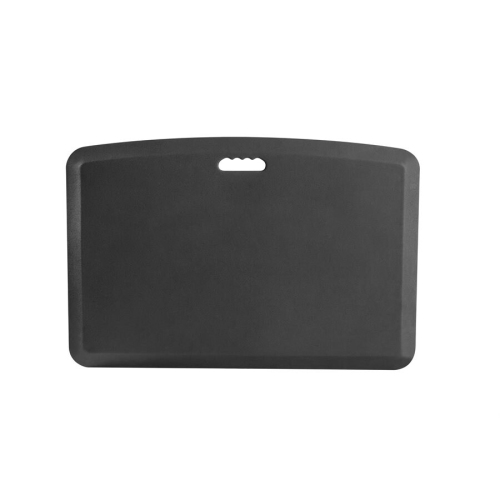
Day-to-day care helps a desk floor mat remain useful and keeps trapped debris from undermining its purpose. Dust, sand, and small particles beneath a mat can act as abrasives when the surface shifts, so both the mat and the floor underneath benefit from regular cleaning. Care methods vary by material: some surfaces can be wiped with a soft cloth and a mild cleaner, while fabric finishes may need vacuuming or a different spot-cleaning approach. The manufacturer’s care directions are important, since harsh cleaners, abrasive pads, or incompatible treatments can damage the surface or backing. Spills need attention around the edges as well as on top, because moisture trapped underneath can affect certain floors. A mat should lie flat before normal use, and rolled designs may need time to settle according to their instructions. Persistent curling, cracks, deep caster grooves, or a surface that repeatedly slides out of position can interfere with safe, comfortable movement. Chair maintenance matters too: wheels clogged with hair or debris can drag across a mat rather than roll smoothly. For home offices, student desks, craft workstations, and gaming setups, these details help match floor protection to the actual pattern of use rather than appearance alone. A seated workstation usually benefits from a surface designed for chair casters, while a standing workstation calls for a different kind of support. Standing Desk Mats are intended to provide cushioning underfoot during standing tasks, rather than serve as a rigid rolling surface. At a sit-stand desk, the standing mat may need to move aside when the chair returns, keeping its raised edges out of the rolling path. Matching each mat to its intended task helps keep the space practical, whether it supports focused study, daily office work, or a shared household desk. The most useful desk floor mat fits the flooring, accommodates the chair’s movement, and remains straightforward to maintain.
Top selling and popular products
-
 Your price for this item is $183.99
-
 Your price for this item is $154.99
-
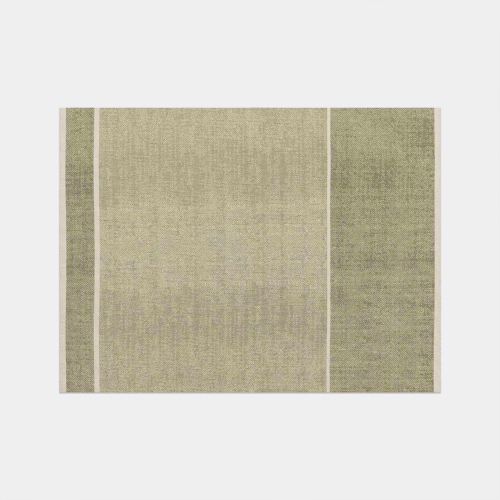 Your price for this item is $189
-
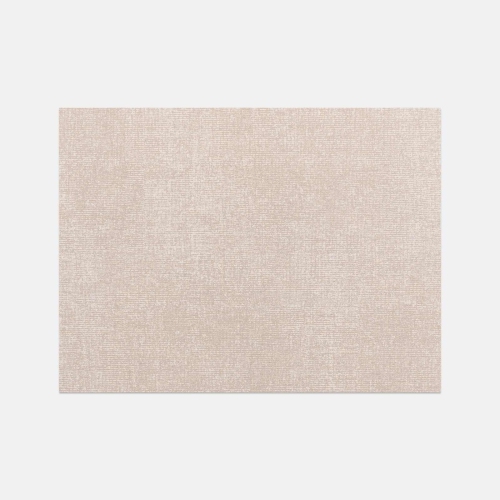 Your price for this item is $189
-
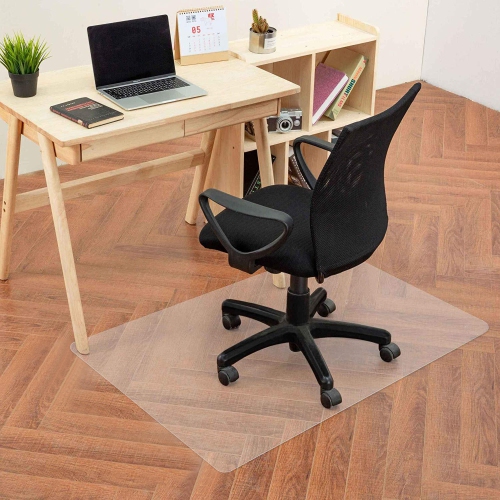 Your price for this item is $39.99
-
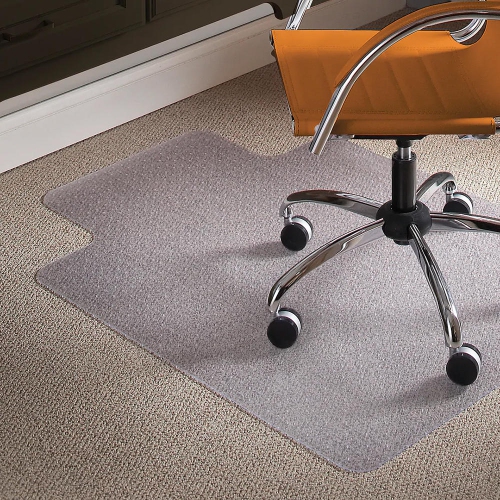 Your price for this item is $39.99
-
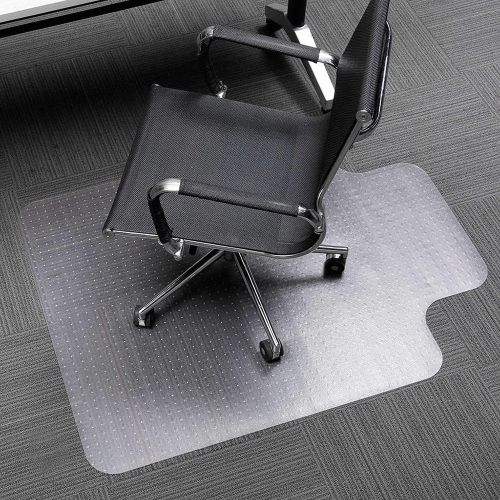 Your price for this item is $40.99
-
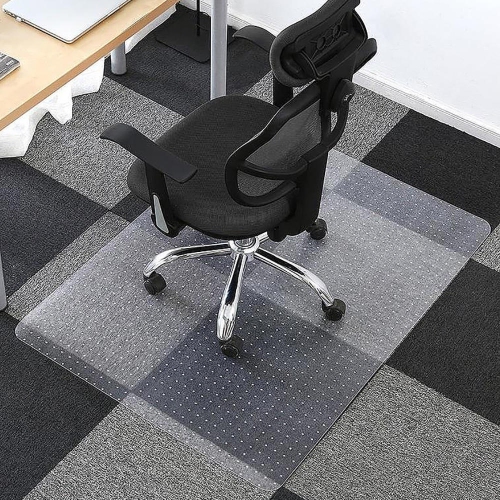 Your price for this item is $49.99
Discover more categories related to Desk Floor Mats

Top Collections:
Best Black Friday Deals This Year, Best Black Friday Deals On Electronics, Kindle Devices, Pokemon Centers, Best Black Friday Deals On Apple Products, Best Cameras for Sports Photography, Dyson Airwrap, Pokémon 30th Celebration Cards, Apple iPhone 17 Pro, Canon G7X Cameras
Some products may be subject to Environmental Handling Fees
(EHF) depending on your province.
Learn more about EHFs.