Standing Desk Mats
Standing desks are all the rage these days, but they can be hard to fit into your home office. That's why we're fans of these mats: They're affordable, easy to use, and available in a variety of styles and colors. Here are our top picks for the best standing desk mats.
Sort
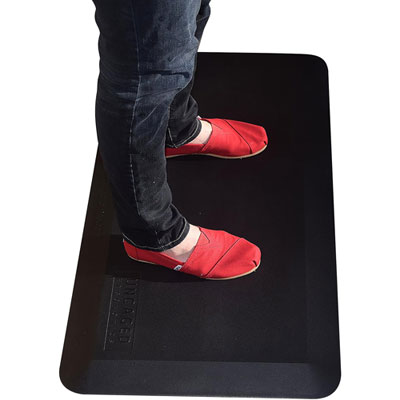
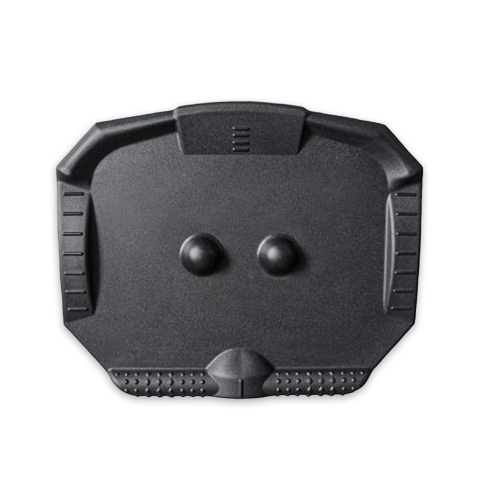
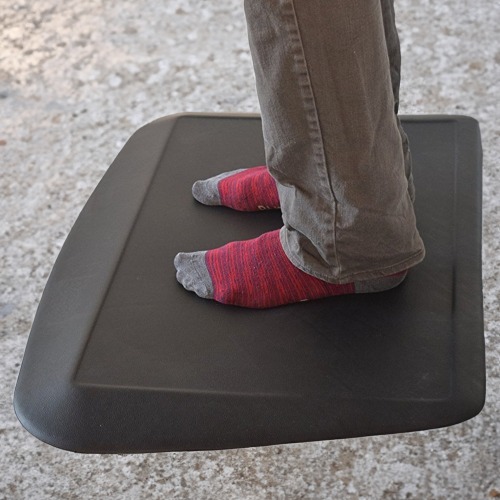
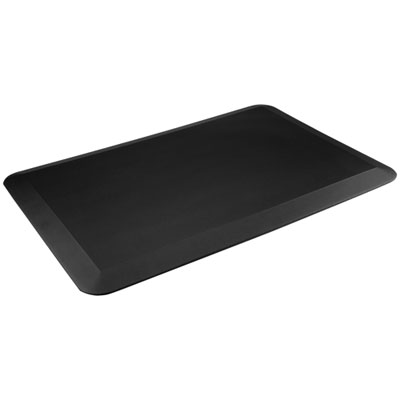
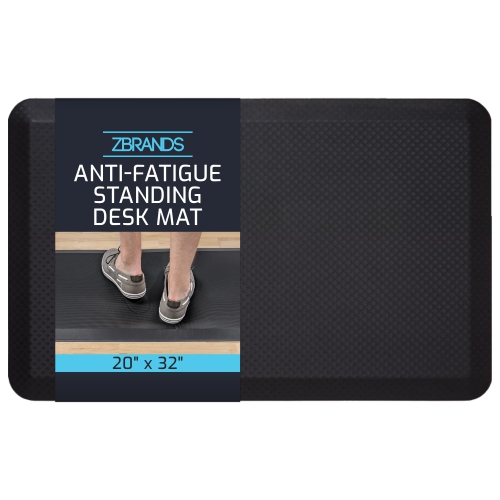
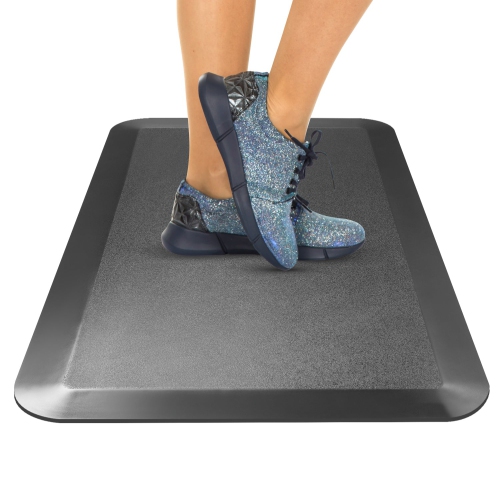
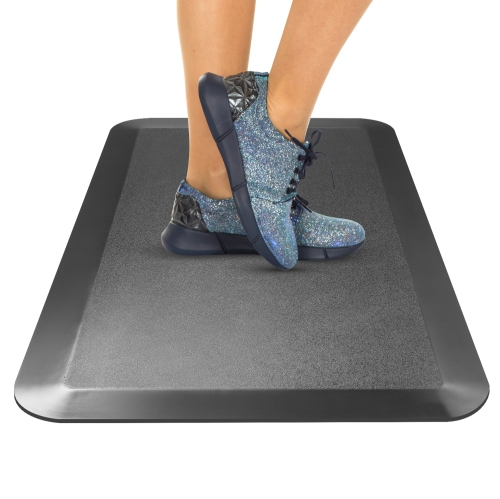
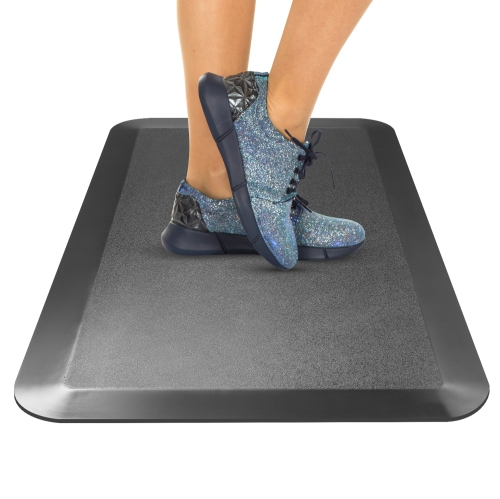

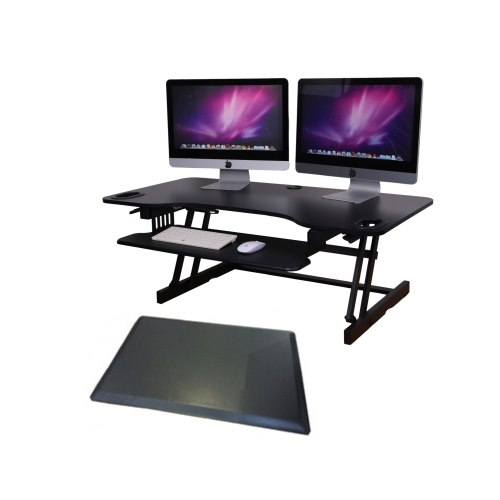



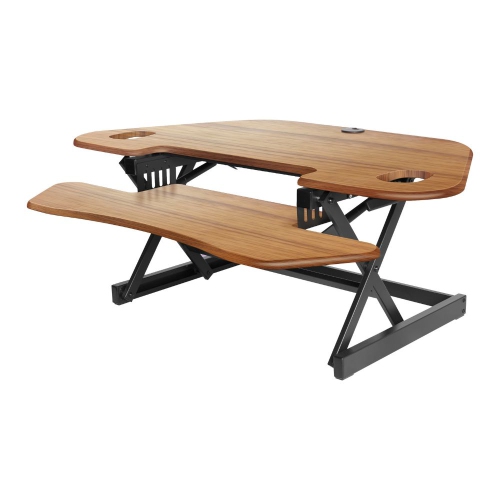
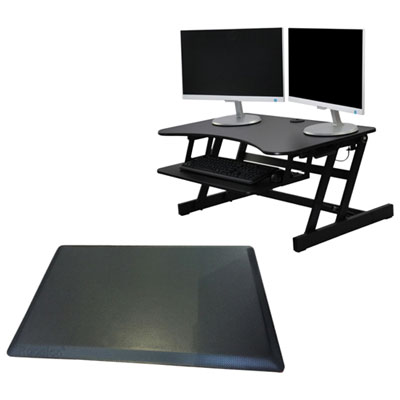
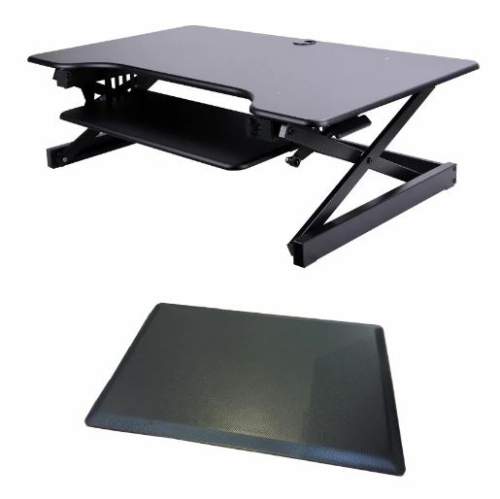
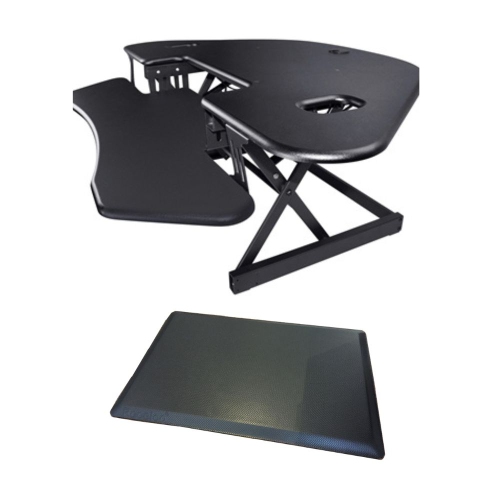
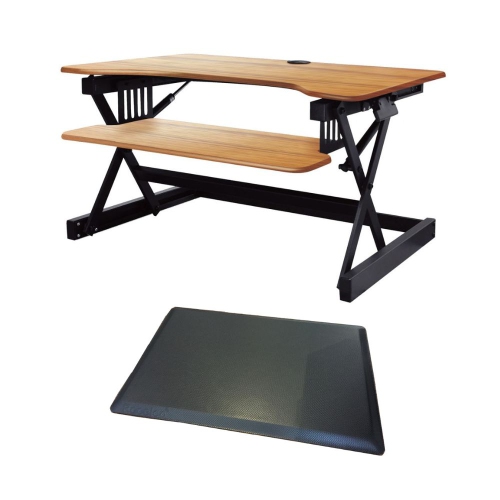
Comfort and stability for a more active workday
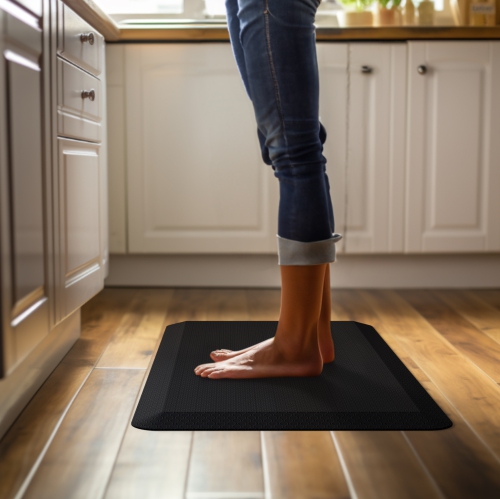
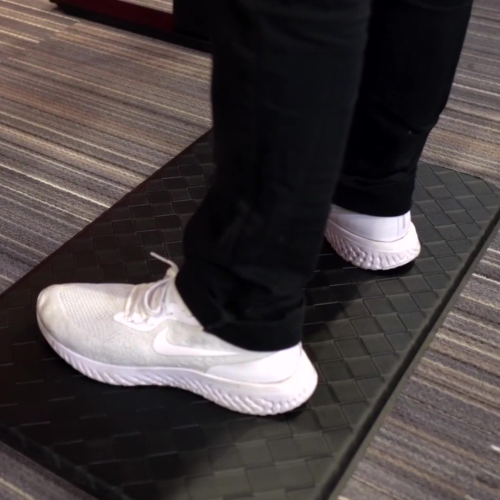
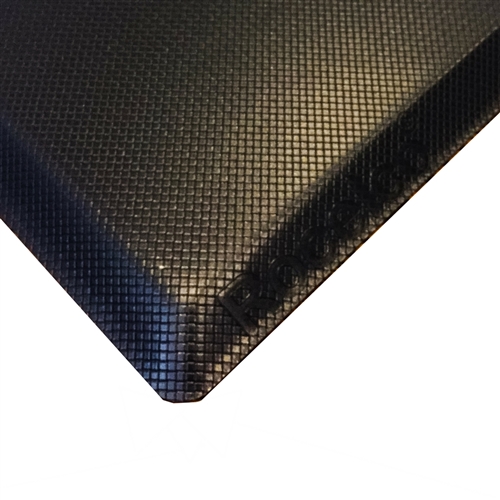
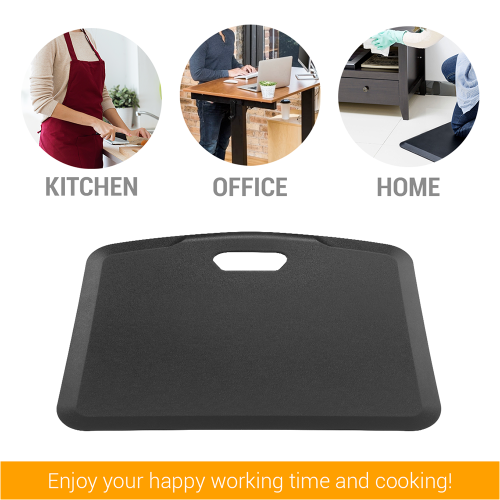
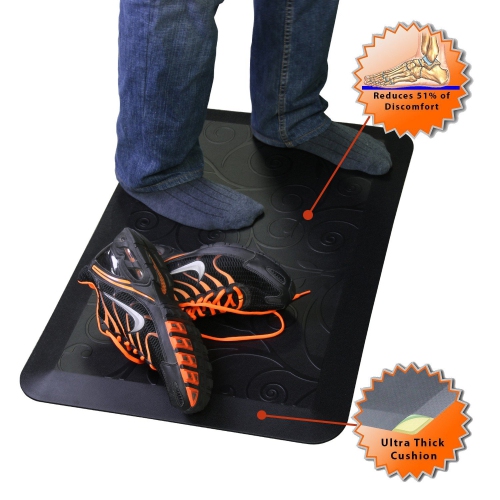
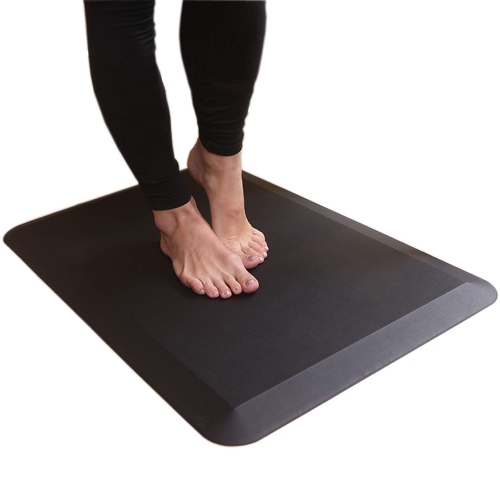
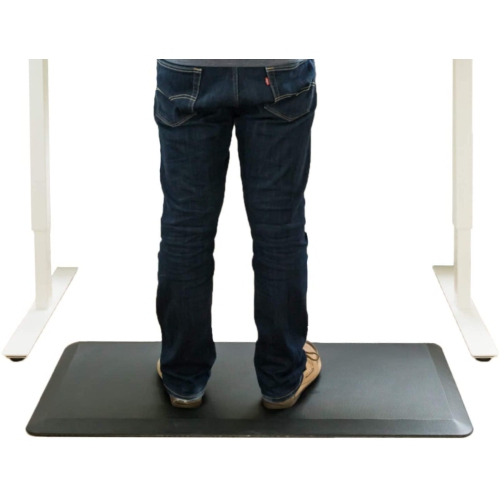
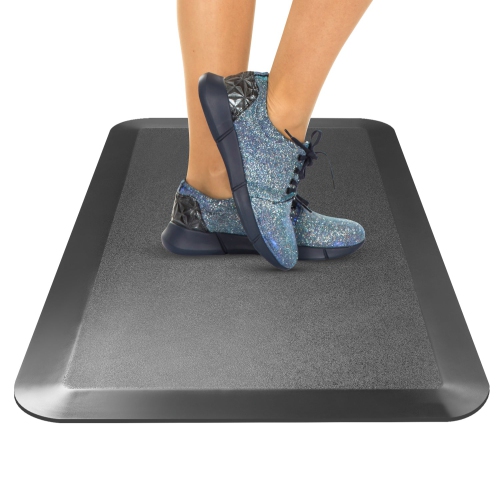
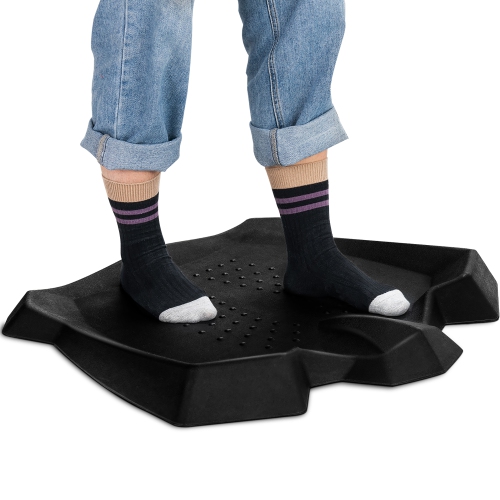
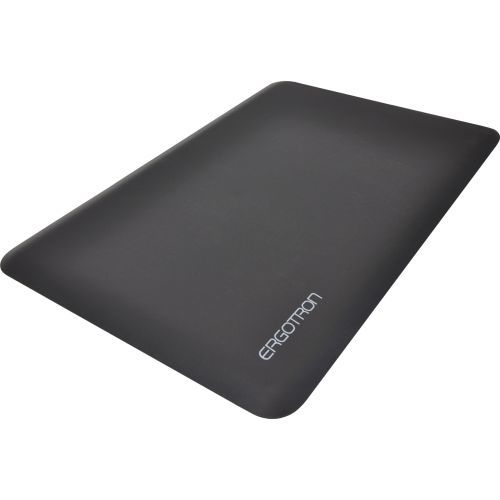
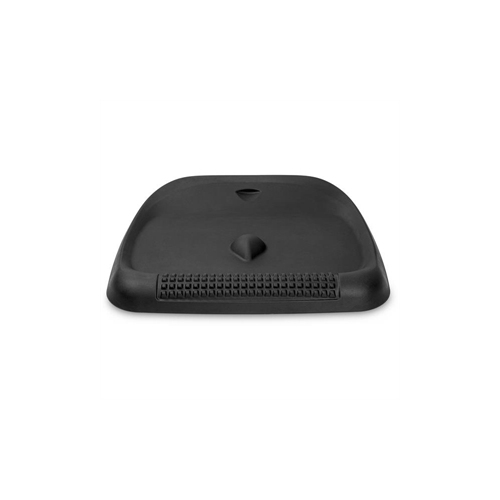
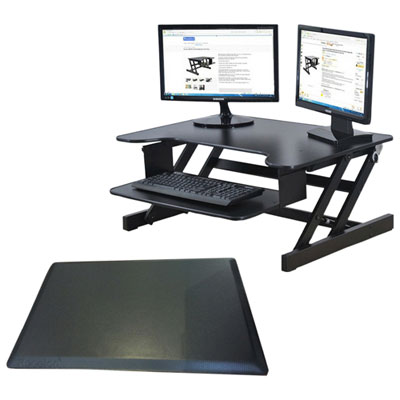
Standing desk mats are designed to make standing at a workstation more comfortable by adding cushioning beneath your feet. Often called anti-fatigue mats, they help reduce the hard, unforgiving feel of tile, wood, laminate, or concrete floors while encouraging small shifts in posture throughout the day. That extra support can make a meaningful difference for people who alternate between sitting and standing, work at a height-adjustable desk, or spend long stretches answering messages, attending virtual meetings, studying, crafting, or managing household tasks. A mat will not replace good posture, movement breaks, or properly adjusted desk equipment, but it can help ease pressure on the feet and reduce the strain that may build in the ankles, knees, hips, and lower back when standing on a firm surface. The best standing desk mats feel supportive rather than spongy, allowing you to stand comfortably without sinking or wobbling. High-density foam is a popular choice because it provides cushioning while retaining its shape, and a polyurethane surface can offer a durable feel that stands up well to regular use. Mats with a non-slip underside are useful on smooth flooring, while a textured or water-resistant top can make everyday cleaning easier. Bevelled edges are another practical detail, as they create a gradual transition from the floor to the mat and help reduce the chance of catching a toe when stepping on or off. For a coordinated home office setup, you can also browse Office Desk Mats for options intended to protect the area around a desk and complement your workspace.
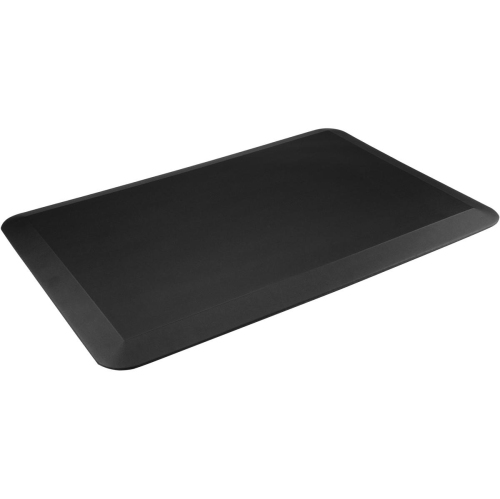
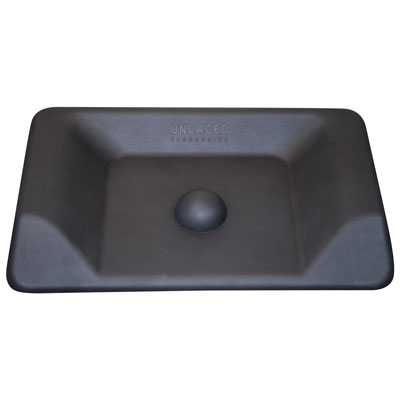
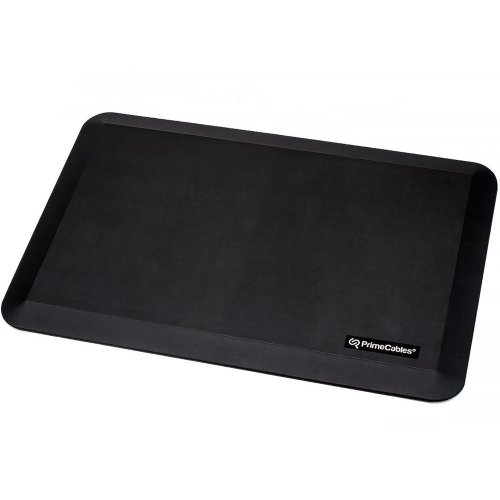
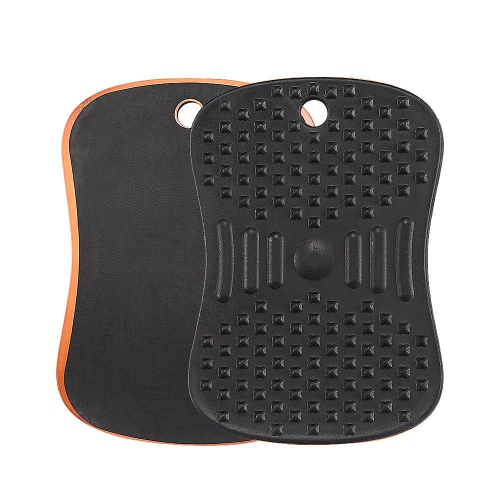
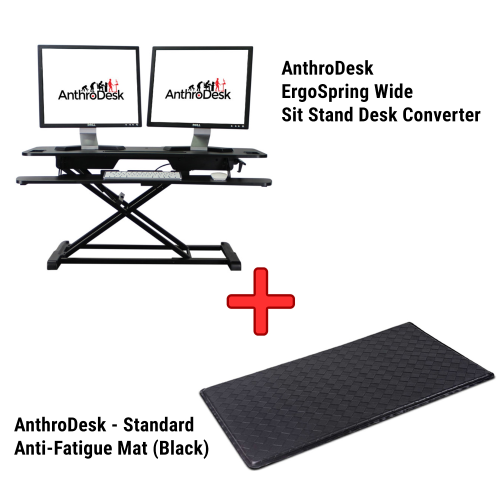
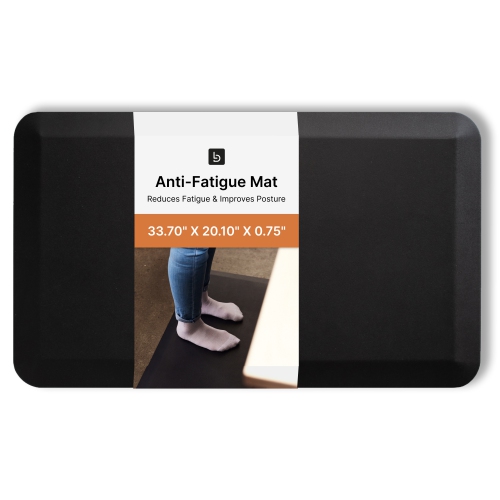
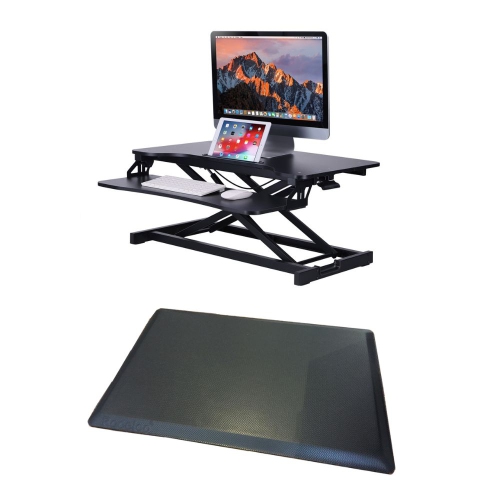
When choosing among standing desk mats, start by considering how you stand and how much room you have beneath your desk. A flat mat offers a simple, even surface and is often a good fit for someone who wants straightforward cushioning without raised features. It should be large enough for your usual stance, including the small steps and weight shifts you naturally make while reading, typing, or speaking on a video call. Check that it can slide out of the way when you lower your desk and sit down, particularly if your chair has casters or if the space between the desk legs is limited. Thickness matters as well. A mat around three-quarter inch to one inch thick may offer a useful balance of comfort and stability, although the ideal choice depends on the material, your flooring, and your personal preference. A very thin mat may not provide enough relief on a hard floor, while an overly soft surface can feel unstable and make it harder to maintain a comfortable stance. Contoured mats add another dimension, with raised areas, sloped edges, or massage-style textures that let you stretch your calves, move your feet, or change positions without leaving your workstation. They can be appealing to people who dislike standing completely still and enjoy a more active setup, though their larger profiles may require extra clearance. Balance boards take movement further by creating an intentionally unstable surface for gentle weight shifting, so they are best suited to users who want an active accessory and have enough room to use it safely. Whichever style you prefer, examine the underside, edge design, surface texture, and overall footprint rather than focusing on cushioning alone. A mat that stays in place, lies flat, and fits naturally beneath your desk is more likely to become a useful part of your daily routine.
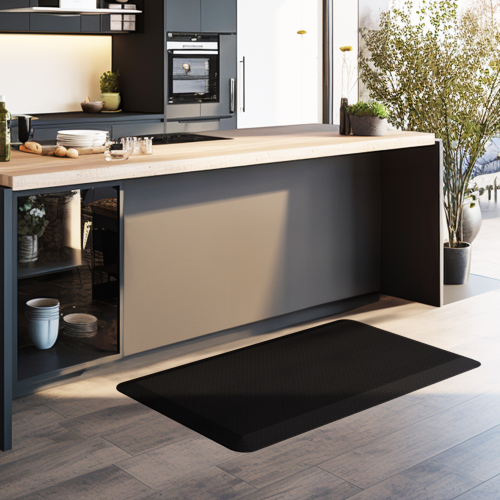
Standing desk mats can suit a range of workspaces and routines. A remote worker may keep one beneath a desk in a bright corner of the home, moving between seated computer work and standing during long calls. A student can use one while reviewing notes at a raised desk, while a hobbyist may appreciate the extra comfort when working at a craft table, music station, or model-building surface. In a shared office, a mat can be a thoughtful practical gift for someone who has recently switched to a sit-stand workstation or spends much of the day on their feet. It can also be useful for a home office refresh during the cooler months, when more time indoors makes small comfort improvements especially noticeable. For people who stand at a kitchen island or counter-height work surface, the right size and a wipe-clean finish may be more important than an elaborate shape. Keep the mat away from clutter, cords, and loose floor coverings, and place it where all four corners can rest securely on the floor. Pairing it with supportive footwear, a properly positioned monitor, and regular changes in position can create a more comfortable working rhythm: feet shifting gently, shoulders relaxing, and the desk adjusting smoothly from sitting to standing. Whether you prefer a low-profile foam mat for uncomplicated support or a contoured design that encourages movement, standing desk mats are a practical way to make a standing workstation feel more inviting and easier to use throughout the day.
When choosing among standing desk mats, start by considering how you stand and how much room you have beneath your desk. A flat mat offers a simple, even surface and is often a good fit for someone who wants straightforward cushioning without raised features. It should be large enough for your usual stance, including the small steps and weight shifts you naturally make while reading, typing, or speaking on a video call. Check that it can slide out of the way when you lower your desk and sit down, particularly if your chair has casters or if the space between the desk legs is limited. Thickness matters as well. A mat around three-quarter inch to one inch thick may offer a useful balance of comfort and stability, although the ideal choice depends on the material, your flooring, and your personal preference. A very thin mat may not provide enough relief on a hard floor, while an overly soft surface can feel unstable and make it harder to maintain a comfortable stance. Contoured mats add another dimension, with raised areas, sloped edges, or massage-style textures that let you stretch your calves, move your feet, or change positions without leaving your workstation. They can be appealing to people who dislike standing completely still and enjoy a more active setup, though their larger profiles may require extra clearance. Balance boards take movement further by creating an intentionally unstable surface for gentle weight shifting, so they are best suited to users who want an active accessory and have enough room to use it safely. Whichever style you prefer, examine the underside, edge design, surface texture, and overall footprint rather than focusing on cushioning alone. A mat that stays in place, lies flat, and fits naturally beneath your desk is more likely to become a useful part of your daily routine.
Standing desk mats can suit a range of workspaces and routines. A remote worker may keep one beneath a desk in a bright corner of the home, moving between seated computer work and standing during long calls. A student can use one while reviewing notes at a raised desk, while a hobbyist may appreciate the extra comfort when working at a craft table, music station, or model-building surface. In a shared office, a mat can be a thoughtful practical gift for someone who has recently switched to a sit-stand workstation or spends much of the day on their feet. It can also be useful for a home office refresh during the cooler months, when more time indoors makes small comfort improvements especially noticeable. For people who stand at a kitchen island or counter-height work surface, the right size and a wipe-clean finish may be more important than an elaborate shape. Keep the mat away from clutter, cords, and loose floor coverings, and place it where all four corners can rest securely on the floor. Pairing it with supportive footwear, a properly positioned monitor, and regular changes in position can create a more comfortable working rhythm: feet shifting gently, shoulders relaxing, and the desk adjusting smoothly from sitting to standing. Whether you prefer a low-profile foam mat for uncomplicated support or a contoured design that encourages movement, standing desk mats are a practical way to make a standing workstation feel more inviting and easier to use throughout the day.
Top selling and popular products
-
 Your price for this item is $180.75
 -
 Your price for this item is $24.99
 -
 Your price for this item is $400
 -
 Your price for this item is $14.98
 -
 Your price for this item is $106.68
 -
 Your price for this item is $379.97
 -
 Your price for this item is $110.37
 -
 Your price for this item is $75.58
Discover more categories related to Standing Desk Mats
Top Collections:
Pokemon Centers, Kindle Devices, Best Budget Office Chairs, Apple iPhones 16, Best Laptops for Writers, iPhone 15 Apple, Canon G7X Cameras, Refurbished Apple Laptops, Alarm Clock, Motorola Razr Phones
Some products may be subject to Environmental Handling Fees
(EHF) depending on your province.
Learn more about EHFs.