Dry Erase Calendars
Stay organized and keep track of your busy schedule with our selection of dry erase calendars. Whether you're a student, a professional, or a busy parent, these versatile tools are perfect for planning out your days, weeks, and months ahead. With their smooth writing surfaces and easy erasability, our dry erase calendars offer a convenient way to jot down appointments, deadlines, and important reminders. Explore our range of options and find the perfect dry erase calendar to help you stay on top of your commitments in style.
Sort
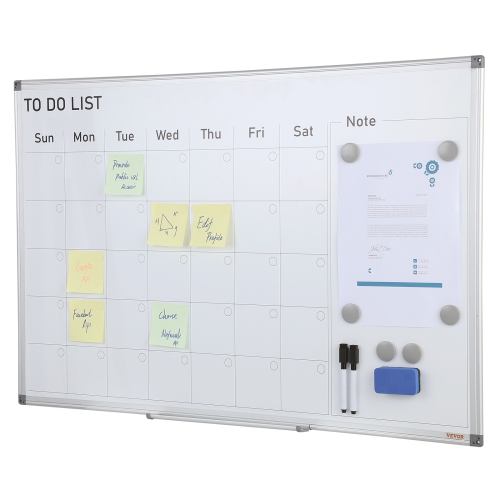
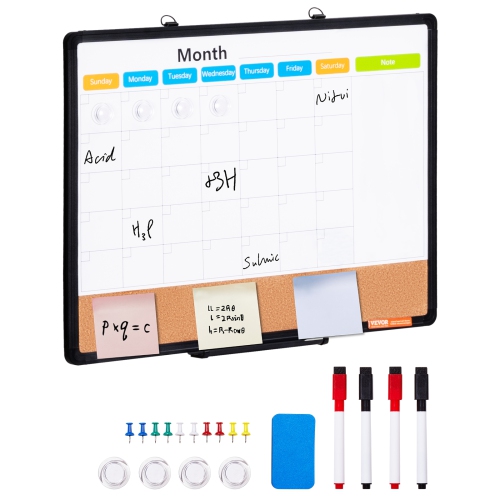
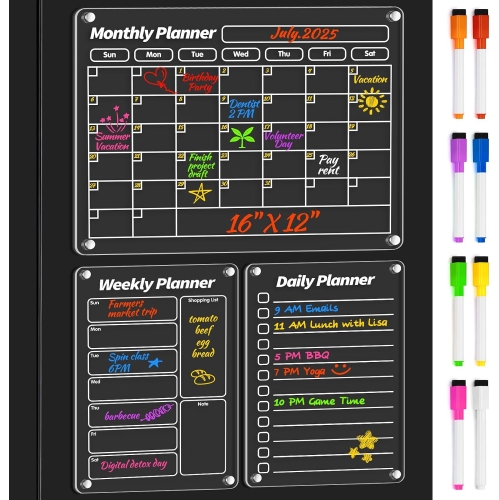

A shared schedule with room for changing plans
Dry erase calendars are reusable planning boards with a printed or permanent calendar grid and a writable surface that lets you add, erase, and rearrange appointments without replacing the calendar. They make a shared schedule visible at a glance, whether that means school activities beside the kitchen table, assignment deadlines above a student’s desk, or project milestones in an office. Unlike an open writing surface, a calendar layout gives each entry a defined place, helping separate dates, daily tasks, and longer-term commitments. Weekly formats leave more room for detailed routines, meal plans, and shift times, while monthly layouts show how appointments and deadlines fit together. Multi-month and yearly planners suit projects with several stages, vacation planning, or schedules that need a broader view. Undated grids can be reset as needed, although the dates must be filled in carefully whenever the layout changes. The most useful format depends as much on writing space as on the overall board size. A compact calendar may hold a few reminders comfortably but feel crowded when several people need to add locations, times, and names. Larger date boxes make those details easier to read without squeezing them into corners. Space for notes beside the grid can hold a shopping list, a phone number, or tasks that do not belong to a particular date. For a household managing overlapping activities, a consistent marker colour for each person can make a busy calendar easier to scan; adding initials also keeps entries clear when colours look similar. In a workplace, separate colours can distinguish deadlines from meetings or staff assignments. A calendar handles date-based planning, while dry erase boards provide open space for brainstorming, diagrams, and running task lists. Used side by side, these surfaces can keep the schedule readable without forcing every reminder into a date box. A quick glance before leaving home or starting work can then provide the details needed without searching through several separate notes.
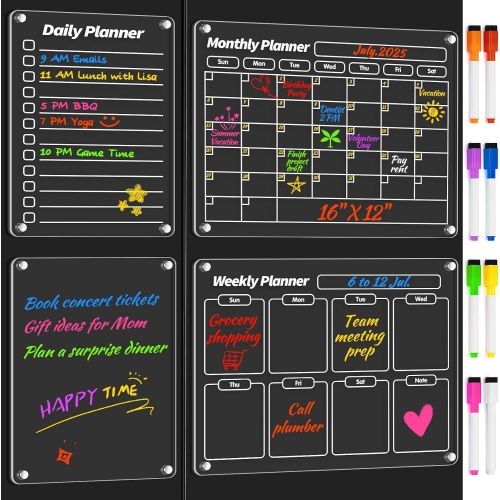
Materials and mounting styles shape where a dry erase calendar works best and how it fits into a room. Flexible magnetic calendars sit close to a compatible metal surface and can make use of an otherwise empty refrigerator door. A refrigerator’s finish alone does not confirm magnetic compatibility: some stainless steel doors will not hold magnets, so testing the intended spot matters. Rigid acrylic calendars have a clear, lightweight appearance, but their mounting method varies; some use magnetic hardware, while others attach to a wall. Transparent surfaces also take on the visual background behind them, making marker contrast important. Writing that stands out against a pale cabinet may be harder to read against a dark refrigerator. Framed whiteboard calendars offer a more defined planning area, with frame materials such as aluminium or wood contributing to the overall look. Writing surfaces may include coated board, painted steel, porcelain-coated steel, or glass, and those differences affect weight, scratch resistance, and cleaning requirements. Magnetic functionality depends on the construction rather than the appearance of the writing surface, and magnetic glass boards may require stronger, compatible magnets. Flexible laminated planners offer a poster-style format for broad schedules, though attachment and marker requirements vary. Measuring the intended location helps establish whether a calendar will fit without interfering with cupboard doors, switches, or nearby furniture. It is also worth allowing enough clearance to write comfortably along the bottom row and reach the upper corners. A large grid mounted behind a desk may be easy to see yet awkward to update. Wall-mounted designs need hardware suited to both the board’s weight and the wall material, while adhesive mounting systems need a compatible surface and careful attention to their load limits. In rented spaces, checking the removal instructions can help avoid damage to paint or finishes. For shared family use, a reachable position encourages participation, while a secure installation keeps the board stable during writing and erasing. Glare from a nearby window or overhead light can also affect legibility, particularly on glossy surfaces.
Everyday care has a direct effect on how clearly a dry erase calendar displays its schedule over time. The correct marker is the one specified for the writing surface, not simply any pen labelled for a board. Many hard calendar surfaces accept standard dry erase markers, while some laminated planners are designed for wet-erase ink that stays in place until wiped with a damp cloth. These marker types are not interchangeable on every surface, so checking compatibility helps prevent staining and difficult cleanup. Fine-tip markers suit smaller date boxes and detailed entries; broader tips make short reminders easier to read from across a room. Letting ink dry before touching nearby entries helps reduce smudges, and keeping a clean eraser or soft microfibre cloth close by makes changes less disruptive. Residual ink, sometimes called ghosting, can become more noticeable when writing remains in place for a long time or a dirty eraser spreads pigment across the board. Regular cleaning with a surface-approved cleaner, followed by drying as directed, helps maintain contrast. Abrasive pads and unsuitable solvents can scratch coatings, cloud acrylic, or damage printed grids, so care instructions matter even when the surface looks like ordinary glass or plastic. Magnetic backings and the surfaces beneath them should also stay clean to help limit marks from trapped grit. A marker tray, attached holder, or nearby storage cup keeps the tools together, but accessories should not block usable writing space. For families, a calendar near the usual place for keys and bags can make appointments part of the daily routine. Students may find a desk-side layout useful for mapping out study sessions, while caregivers can use clear entries to coordinate visits and errands. A dry erase calendar can also be a practical gift for a student setting up a study area, someone moving into a new home, or a person organizing a home office. The best fit is a format with enough room for real entries, a readable surface, and a placement that makes updating plans feel straightforward rather than like another task.
Top selling and popular products
-
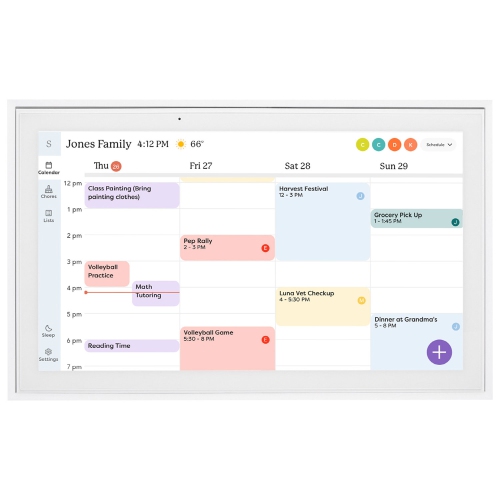 Your price for this item is $449
-
 Your price for this item is $28.11
-
 Your price for this item is $31.86
-
 Your price for this item is $190.99
-
 Your price for this item is $398.99
-
 Your price for this item is $34.99
-
 Your price for this item is $34.99
-
 Your price for this item is $46.99
Discover more categories related to Dry Erase Calendars

Top Collections:
Pokemon Centers, Best Cameras for Sports Photography, Kindle Devices, Samsung Galaxy Phones, Canon G7X Cameras, Pokémon 30th Celebration Cards, Refurbished Apple Laptops, iPhone 15 Apple, Laptops for Students, Budget Smartphones
Some products may be subject to Environmental Handling Fees
(EHF) depending on your province.
Learn more about EHFs.