Glass Containers for Freezer Storage
Glass containers for freezer storage offer a versatile and reliable way to keep your food organized and fresh. Ideal for meal prep, leftovers, and batch cooking, these containers make it easy to store everything from soups to snacks with confidence. Their clear design allows you to quickly identify contents, helping streamline your kitchen routine. Discover a range of sizes and styles to suit your needs and make the most of your freezer space with glass containers designed for convenient storage.
Sort
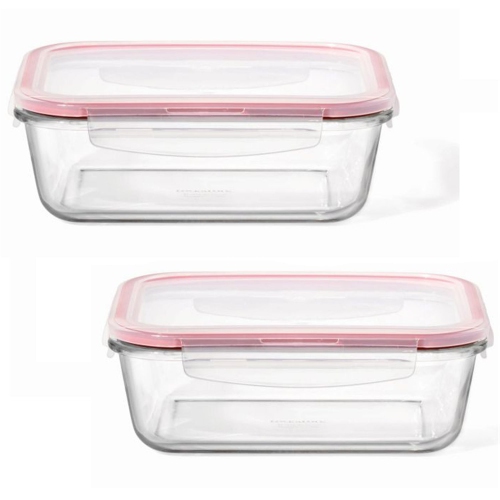
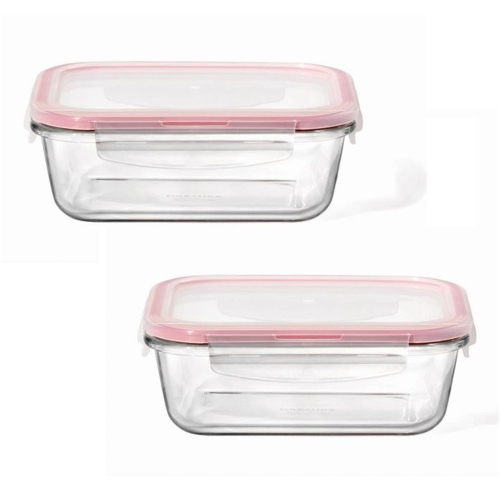
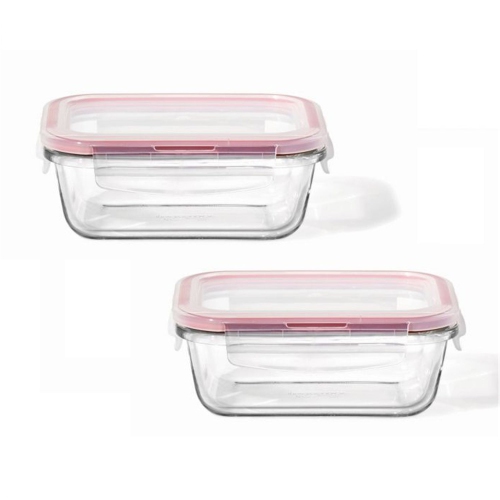
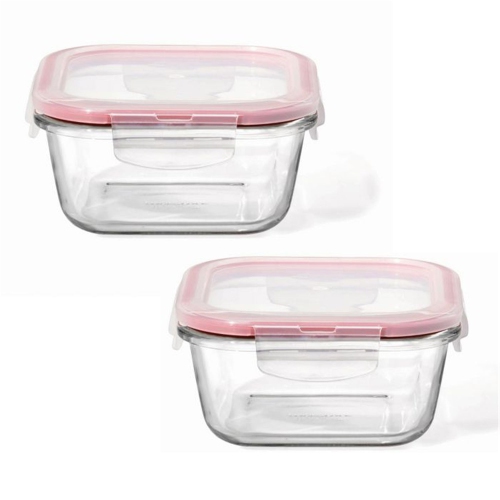
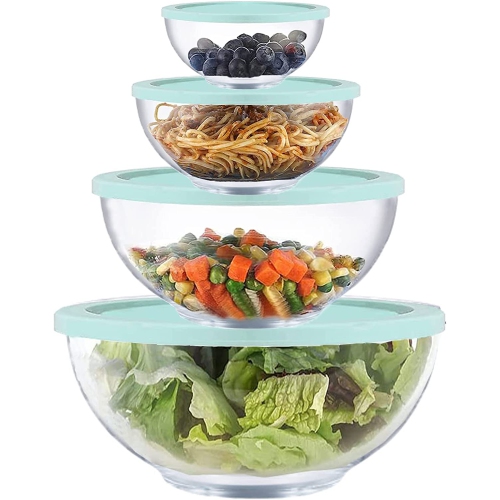
Reliable freezer storage starts with more than sturdy glass
Glass containers for freezer storage keep prepared meals, ingredients, and leftovers organized in sturdy, see-through vessels that make food easy to identify. A clear base lets a portion of tomato sauce stand apart from a similar-looking soup without opening the lid, while neatly arranged containers help keep smaller servings from disappearing behind larger dishes. These containers suit batch cooking, packed lunches, and households that prefer to divide a recipe into portions before freezing it. Their usefulness depends on more than the appearance or thickness of the glass: the base and lid should both be explicitly rated for freezer use. Borosilicate glass generally offers greater resistance to sudden temperature changes than ordinary glass, while tempered glass is treated for added strength. Neither description alone confirms that a container is suitable for freezing, baking, or reheating; the manufacturer’s stated uses and temperature limits remain important. Glass has a non-porous surface that resists absorbing food odours and staining, making it practical for richly coloured sauces, curries, and other frequently prepared meals. Many designs pair a glass base with a plastic lid and a silicone sealing ring, so the whole container should not be assumed to be plastic-free. Close-fitting lids help limit exposure to air and protect food from drying out in the freezer. An airtight seal can help reduce freezer burn, although it does not keep food at its best indefinitely. Leakproof performance is a separate feature worth checking when containers will also carry thawed soup or lunches in a bag. Snap closures, press-on lids, and removable gaskets offer different opening and cleaning experiences. For someone who portions meals frequently, a lid that closes securely without excessive force can matter just as much as the shape of the dish. Matching the container’s construction to its intended routine creates a more useful collection than choosing by capacity alone.
Size and shape influence how comfortably glass freezer containers fit into both storage spaces and everyday meal preparation. Rectangular and square bases often make efficient use of straight-sided freezer drawers, while round containers can be convenient for stirring sauces and scooping out thawed food. A shallow dish spreads a portion across a wider area, which can support quicker cooling and thawing than a deep container holding the same amount. Smaller capacities suit individual lunches, measured portions of stock, or a little sauce saved for another meal. Larger dishes are useful for family portions, provided their filled weight and dimensions remain manageable. A container that fits on a refrigerator shelf may not pass easily beneath a freezer drawer’s rim, especially with its lid attached. Exterior measurements, lid overhang, and the height of stacked containers therefore deserve attention alongside the stated volume. Stackable designs can bring order to a crowded freezer, but a secure, level stack is more useful than a tall one that is awkward to lift out. Nesting bases can save cupboard space when empty; glass surfaces still benefit from careful handling to avoid knocks and chipped edges. Capacity also needs to allow for the food itself. Water-rich foods expand as they freeze, so soups, stews, and sauces need empty space below the lid rather than a container filled to the brim. About an inch of headspace is a common allowance for liquids, but the appropriate amount depends on the container, its shape, and the contents; any marked fill line or manufacturer’s direction takes priority. Straight-sided vessels leave expanding food more room than shapes that narrow sharply near the opening. Freezing meals in portions that match the number of people eating also avoids having to thaw a large quantity for a small serving. A date and contents label on the lid makes similar dishes easier to distinguish and helps keep older meals in regular rotation.
Care and handling make a substantial difference to the durability of glass containers used in the freezer. Freezer-safe does not automatically mean oven-safe, microwave-safe, or suitable for a direct transfer between appliances. Even heat-resistant glass can break when exposed to a temperature change beyond its rated limits. A frozen container should not go straight into a hot oven or microwave unless the manufacturer expressly permits that exact use. Refrigerator thawing is generally a practical approach for prepared meals, followed by reheating according to the food’s needs and the container’s instructions. Thawing alone does not establish oven suitability, and lids often have different heat limits from their glass bases. Some must be removed entirely for reheating, while others permit microwave use only with a vent open or the lid loosened. Safe cooling before freezing matters too: hot food needs prompt, appropriate cooling rather than being left on the counter for hours, and hot glass should not be placed directly in the freezer. Dividing a large batch into smaller, shallow portions can make that process more manageable. For cleaning, dishwasher suitability should be checked separately for the base, lid, and gasket. Removable sealing rings make it easier to reach trapped sauce or crumbs, but they need to be refitted correctly once clean and dry. Soft cleaning tools help protect surfaces, and a chipped rim, crack, or damaged closure is a reason to stop using the container for freezer storage. Glass is heavier than many other food-storage materials, so a filled dish should feel comfortable to grip and carry, particularly for anyone with limited hand strength. A coordinated set can be a useful housewarming gift for someone who enjoys cooking ahead, while a few well-chosen sizes may better suit a compact kitchen. For meals that spend time in the fridge between preparation and freezing, Glass Containers for Leftovers offer a related way to organize portions, with freezer suitability checked for each design. Practical shapes, dependable closures, and clearly stated care requirements help glass storage fit naturally into a repeatable cooking routine.
Size and shape influence how comfortably glass freezer containers fit into both storage spaces and everyday meal preparation. Rectangular and square bases often make efficient use of straight-sided freezer drawers, while round containers can be convenient for stirring sauces and scooping out thawed food. A shallow dish spreads a portion across a wider area, which can support quicker cooling and thawing than a deep container holding the same amount. Smaller capacities suit individual lunches, measured portions of stock, or a little sauce saved for another meal. Larger dishes are useful for family portions, provided their filled weight and dimensions remain manageable. A container that fits on a refrigerator shelf may not pass easily beneath a freezer drawer’s rim, especially with its lid attached. Exterior measurements, lid overhang, and the height of stacked containers therefore deserve attention alongside the stated volume. Stackable designs can bring order to a crowded freezer, but a secure, level stack is more useful than a tall one that is awkward to lift out. Nesting bases can save cupboard space when empty; glass surfaces still benefit from careful handling to avoid knocks and chipped edges. Capacity also needs to allow for the food itself. Water-rich foods expand as they freeze, so soups, stews, and sauces need empty space below the lid rather than a container filled to the brim. About an inch of headspace is a common allowance for liquids, but the appropriate amount depends on the container, its shape, and the contents; any marked fill line or manufacturer’s direction takes priority. Straight-sided vessels leave expanding food more room than shapes that narrow sharply near the opening. Freezing meals in portions that match the number of people eating also avoids having to thaw a large quantity for a small serving. A date and contents label on the lid makes similar dishes easier to distinguish and helps keep older meals in regular rotation.
Care and handling make a substantial difference to the durability of glass containers used in the freezer. Freezer-safe does not automatically mean oven-safe, microwave-safe, or suitable for a direct transfer between appliances. Even heat-resistant glass can break when exposed to a temperature change beyond its rated limits. A frozen container should not go straight into a hot oven or microwave unless the manufacturer expressly permits that exact use. Refrigerator thawing is generally a practical approach for prepared meals, followed by reheating according to the food’s needs and the container’s instructions. Thawing alone does not establish oven suitability, and lids often have different heat limits from their glass bases. Some must be removed entirely for reheating, while others permit microwave use only with a vent open or the lid loosened. Safe cooling before freezing matters too: hot food needs prompt, appropriate cooling rather than being left on the counter for hours, and hot glass should not be placed directly in the freezer. Dividing a large batch into smaller, shallow portions can make that process more manageable. For cleaning, dishwasher suitability should be checked separately for the base, lid, and gasket. Removable sealing rings make it easier to reach trapped sauce or crumbs, but they need to be refitted correctly once clean and dry. Soft cleaning tools help protect surfaces, and a chipped rim, crack, or damaged closure is a reason to stop using the container for freezer storage. Glass is heavier than many other food-storage materials, so a filled dish should feel comfortable to grip and carry, particularly for anyone with limited hand strength. A coordinated set can be a useful housewarming gift for someone who enjoys cooking ahead, while a few well-chosen sizes may better suit a compact kitchen. For meals that spend time in the fridge between preparation and freezing, Glass Containers for Leftovers offer a related way to organize portions, with freezer suitability checked for each design. Practical shapes, dependable closures, and clearly stated care requirements help glass storage fit naturally into a repeatable cooking routine.
Top selling and popular products
-
 Your price for this item is $5.99
 -
 Your price for this item is $9.99
 -
 Your price for this item is $108.25
 -
 Your price for this item is $7.99
 -
 Your price for this item is $44.99
 -
 Your price for this item is $44.99
 -
 Your price for this item is $59.99
 -
 Your price for this item is $59.99
Discover more categories related to Glass Containers for Freezer Storage
Top Collections:
Pokemon Centers, Kindle Devices, Best Budget Office Chairs, Apple iPhones 16, Canon G7X Cameras, iPhone 15 Apple, Alarm Clock, Refurbished Apple Laptops, Flip Phones, Best Laptops for Writers
Some products may be subject to Environmental Handling Fees
(EHF) depending on your province.
Learn more about EHFs.