Grill Brushes
If you're looking to keep your grill clean and ready for your next BBQ gathering, a high-quality grill brush is an essential tool for any grilling enthusiast. With sturdy bristles and a durable handle, a good grill brush makes it easy to remove grease and residue, ensuring that your grill grates are spotless and ready for cooking. Whether you prefer a traditional wire brush or a more modern bristle-free design, finding the right grill brush can make all the difference in maintaining your grill and enhancing your outdoor cooking experience.
Sort
Why grate material matters more than brush stiffness
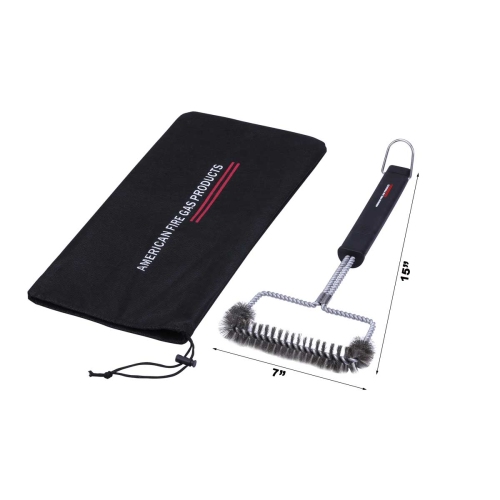
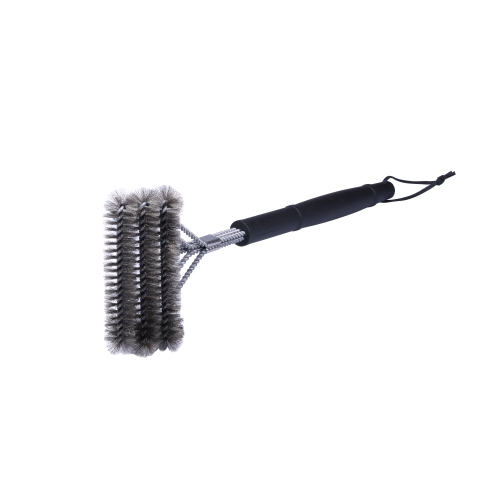
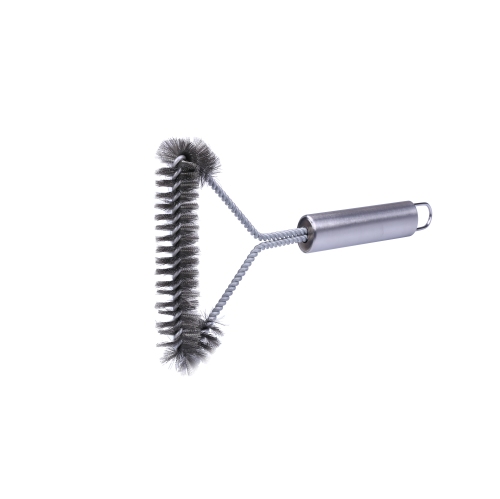
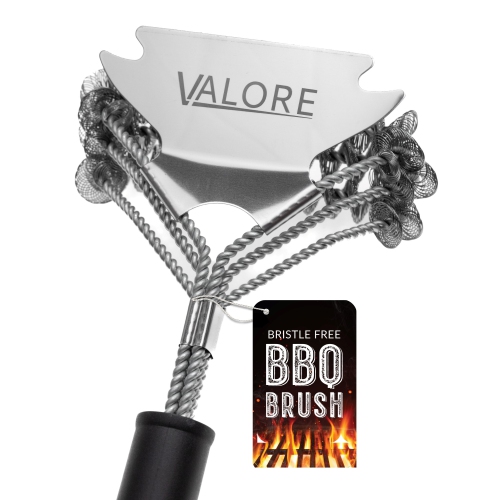
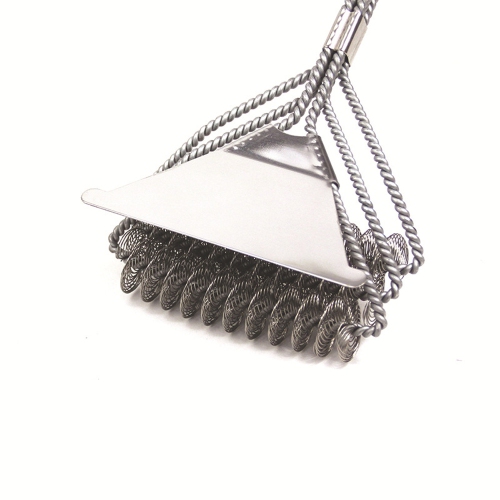
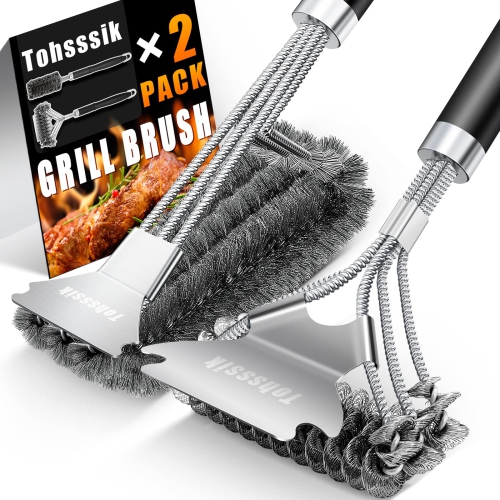
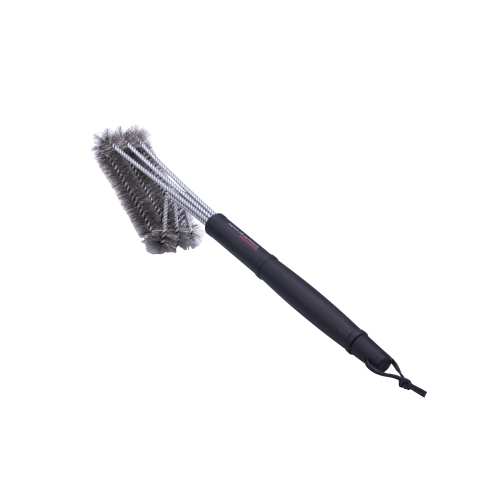
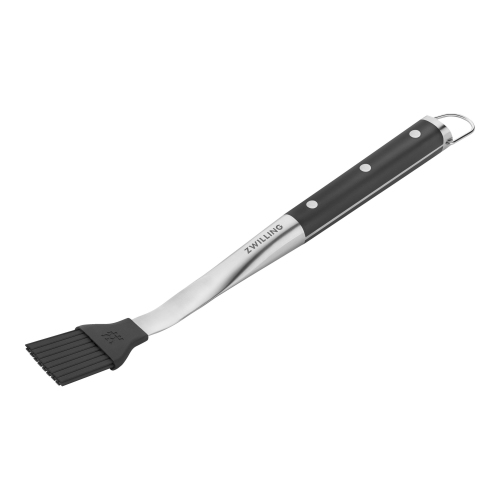
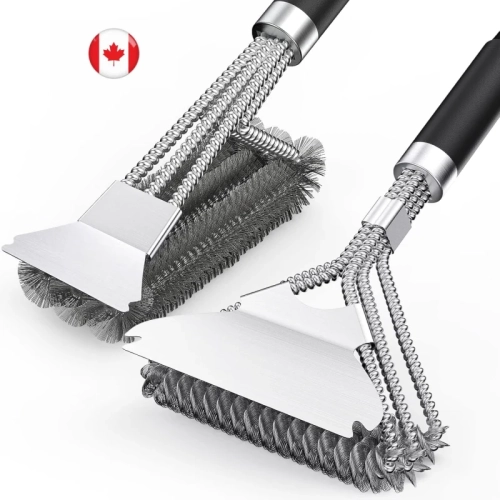
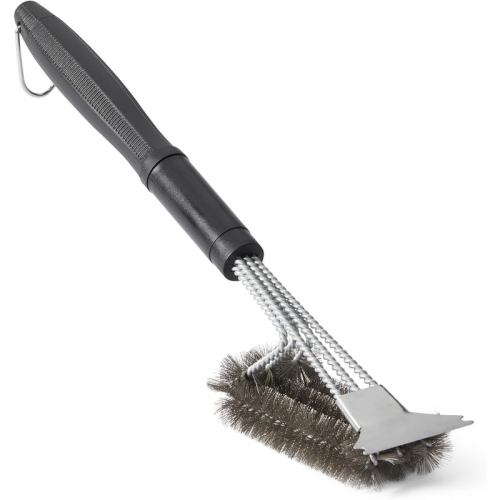
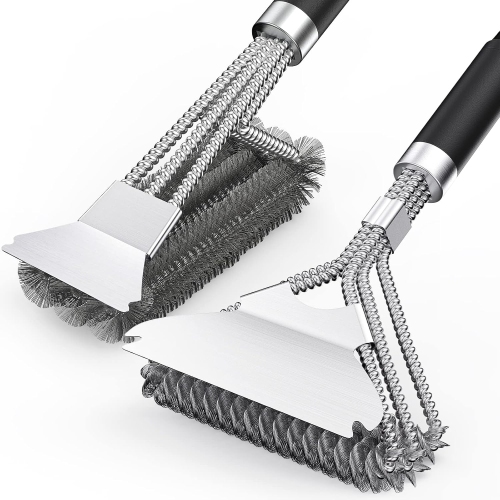
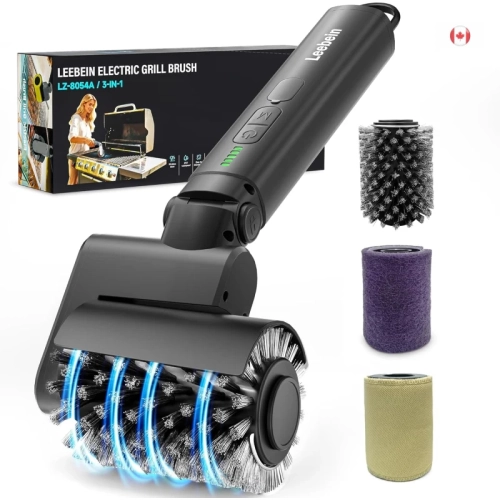
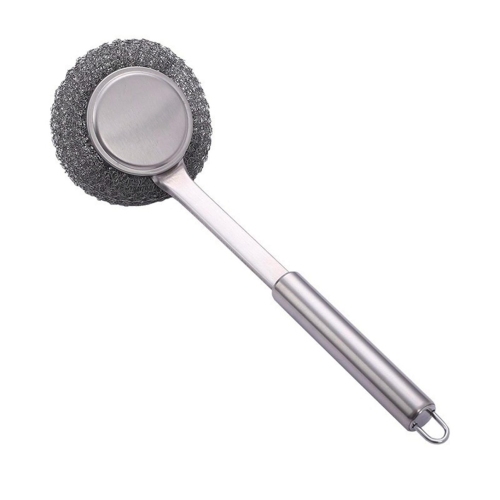
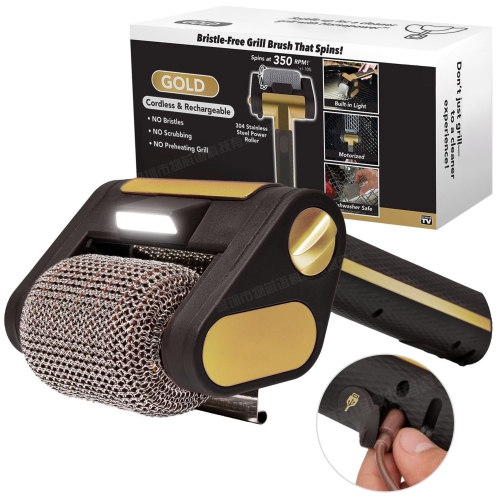
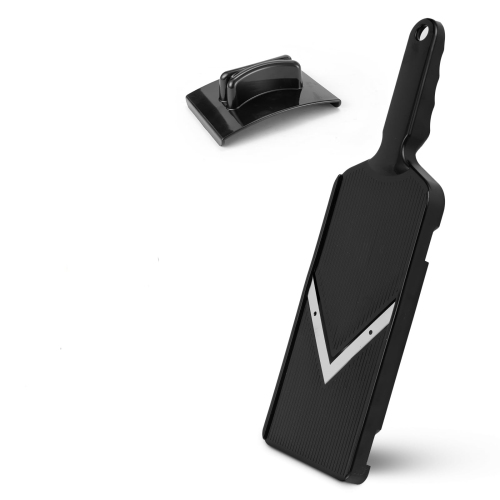
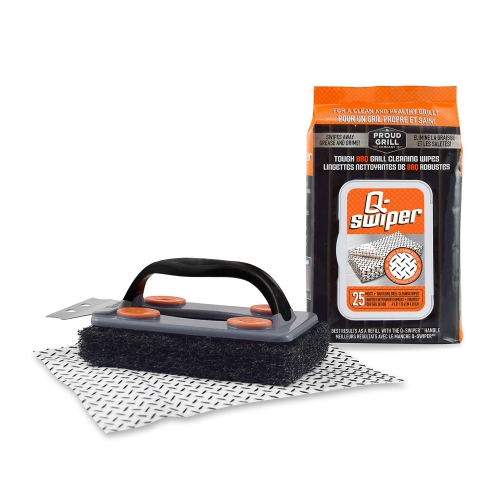
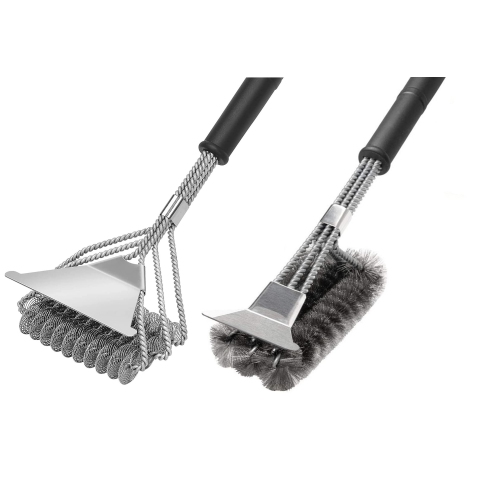
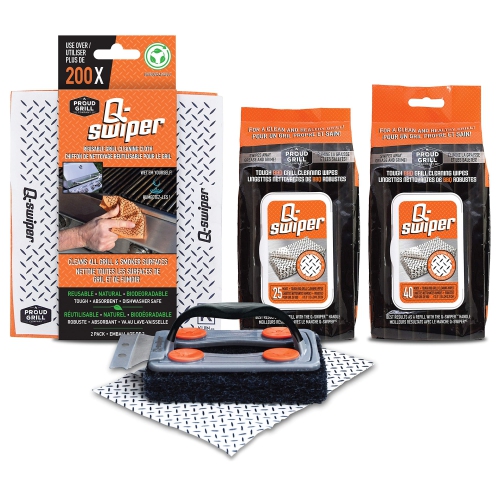
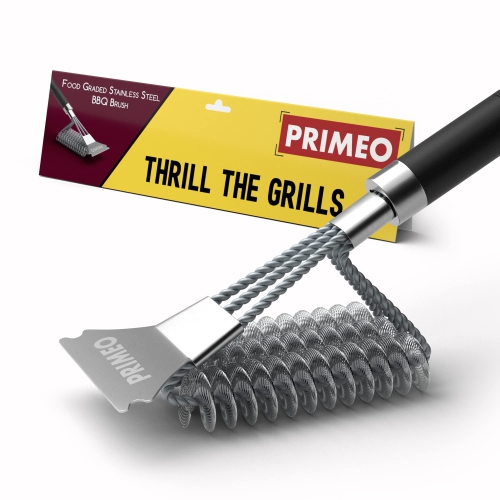
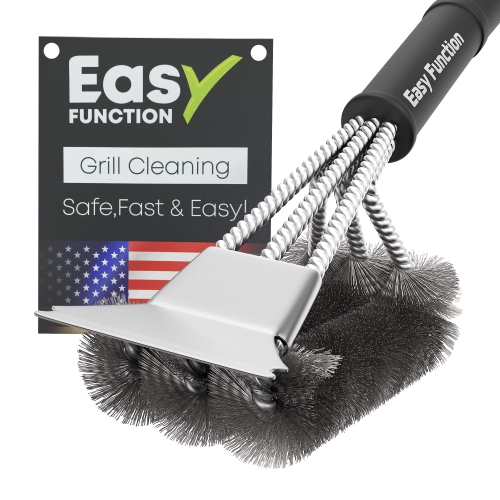
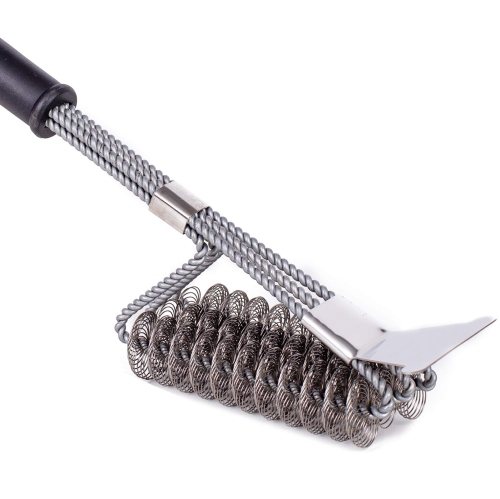
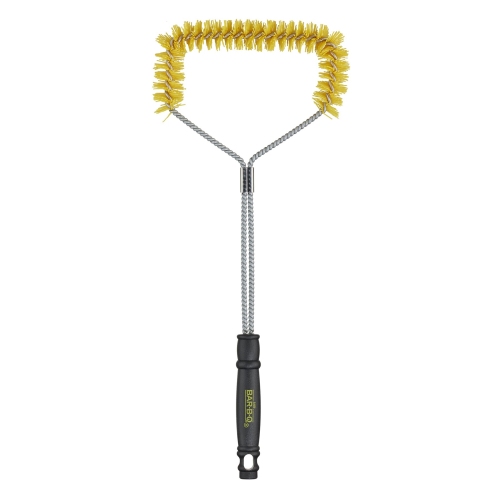
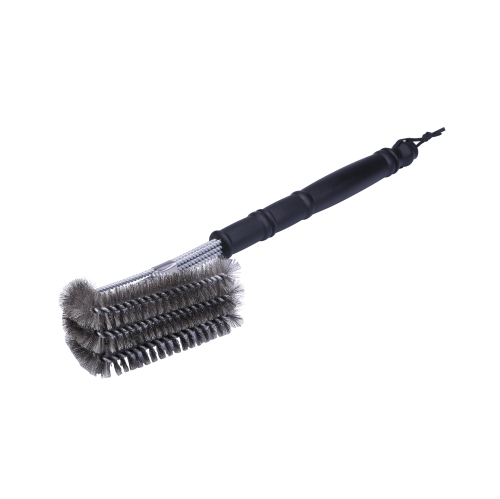
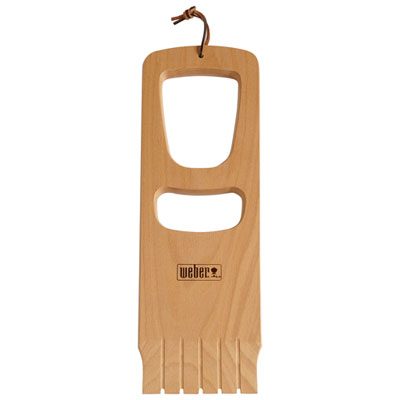
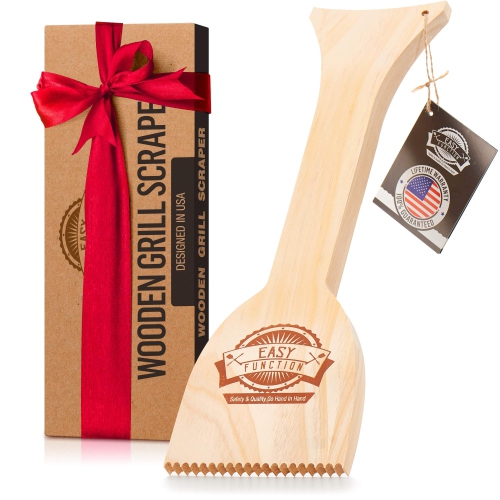
Grill brushes are cleaning tools designed to loosen cooked-on food, grease and char from barbecue cooking grates. Their cleaning heads range from traditional wire bristles to coiled metal, woven mesh, nylon and plant-fibre designs, with different shapes and levels of stiffness suited to different surfaces. The best grill brush for a particular barbecue depends on the grate material, the spacing between the bars and the grill manufacturer’s cleaning directions. Stainless steel grates may tolerate some tools that could scratch a coated surface, while porcelain-coated grates need an approach that protects their finish from chips and abrasion. Cast iron calls for care that removes food residue without unnecessarily stripping its seasoning or leaving moisture behind. Compatibility matters more than simply choosing the stiffest brush: a tool that cuts through a sticky glaze should also be appropriate for the surface underneath. Wire brushes can tackle stubborn deposits, but loose metal bristles pose an ingestion hazard if they remain on the grate and transfer to food. Bristle-free designs avoid individual wire bristles, although their coils, mesh, pads and attachments still need inspection for wear or loose pieces. Nylon brushes are generally intended for cool grates unless their manufacturer states otherwise. Plant-fibre brushes also have specific use limits; detached fibres should be removed rather than assumed harmless or left to burn away. Some mesh or pad-style tools use water on a heated grate to help loosen residue with steam, but only designs made for that method should be used that way. For shoppers comparing these formats, barbecue cleaning brushes offer another way to explore tools for routine grate care. Whether the barbecue is used for vegetable skewers, burgers or thick cuts of meat, an appropriate brush helps remove the remnants of the previous meal before the next round of cooking. It is a practical accessory for frequent grillers, occasional hosts and anyone who prefers not to face a grate covered in hardened sauce.
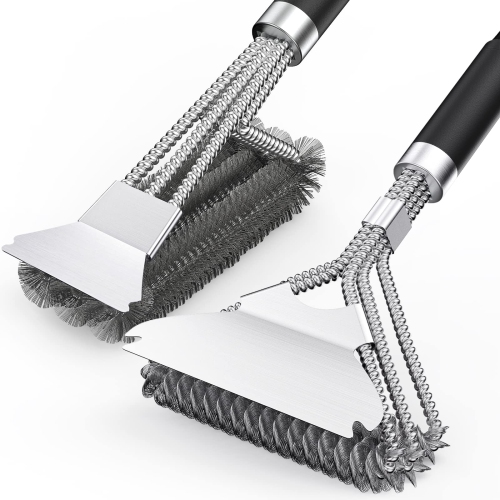
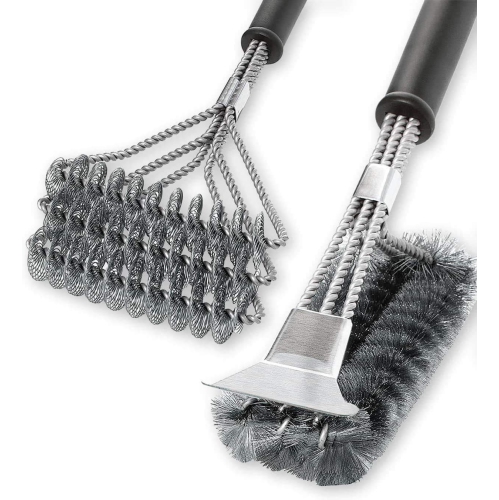
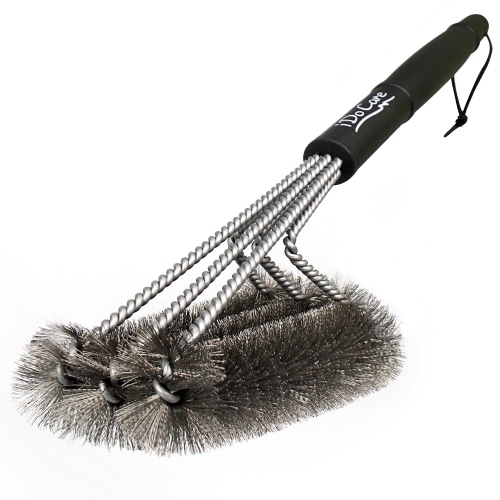
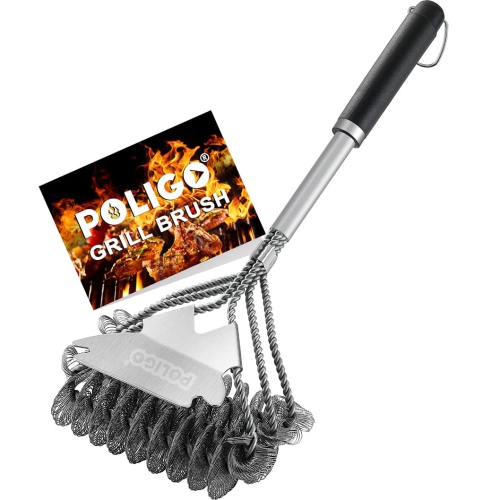
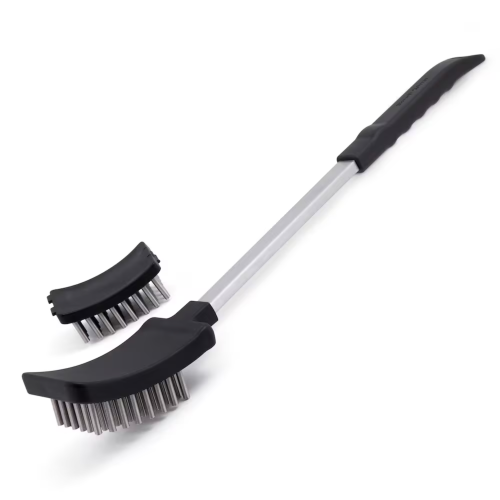
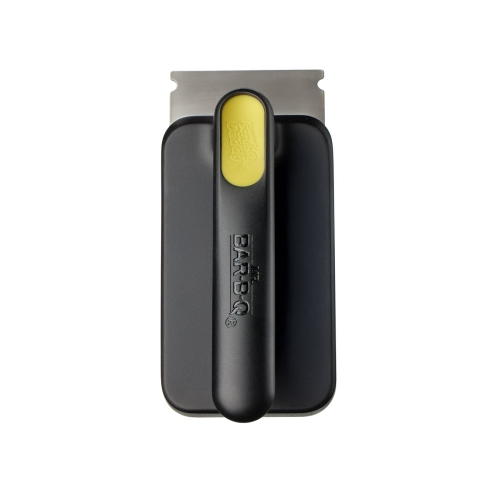
The shape and reach of a grill brush make a noticeable difference during everyday cleaning. A broad rectangular head can cover an open cooking surface efficiently, while a narrower head can be easier to position around the edges, beneath a raised warming rack or between closely spaced bars. Rounded and wraparound designs may contact the sides of grate bars as well as their upper surfaces, depending on the grate profile. Deep channels, thick cast iron bars and slim stainless steel rods do not all respond equally to the same brush geometry. A large head that feels useful on a full-size barbecue can be awkward inside a compact portable grill, so the dimensions of the cooking area are worth considering alongside the overall length of the tool. Long handles provide reach and can help keep hands farther from hot surfaces when the brush is approved for heated-grate cleaning, but they do not replace suitable heat protection. Shorter handles can offer closer control on a cool, removable grate. A secure, comfortable grip matters when working across several sections, especially where a shiny handle might become slippery with grease or water. The connection between the head and handle should feel firm, without wobbling or twisting under normal pressure. An integrated scraper can help lift thicker deposits, provided its edge and shape are suitable for the grate; sharp or aggressive edges may damage coatings. Notched scrapers need a compatible bar profile to work effectively rather than catching or skipping across the surface. Flat cooking plates require tools intended for those surfaces rather than an assumption that any barbecue brush will suit them. Replaceable heads can be useful for people who clean a grill frequently, but the correct attachment and a secure locking mechanism are essential. For someone who enjoys cooking for family and friends, a thoughtfully chosen grill brush can also make a practical gift alongside suitable grilling utensils. Knowing the recipient’s grate material and preferred cleaning method makes that choice more useful than selecting by appearance alone.
Care and inspection are as important as the brush’s original construction. Before each use, check the cleaning head, handle and fasteners for damage, and look for bent or loose bristles, unravelled mesh, cracked plastic, worn pads or a head that no longer sits securely. Stop using a damaged brush rather than trying to get a few more cleaning sessions from it. Wear depends on the brush material, the pressure applied, the condition of the grates and how frequently the tool is used, so there is no single replacement interval that suits every household. After brushing, inspect the cooking surface carefully for detached material and remove any debris before placing food on it. Wire bristles deserve particular attention because small fragments can be difficult to spot among grate bars and char. A bristle-free label does not remove the need for this final check. Follow the grill and brush manufacturers’ directions for whether cleaning should take place on a cool or heated surface, and never place a nylon head against hot grates unless it is explicitly approved for that use. With steam-style tools, follow the specified preparation method and keep hands clear of rising steam and splashes. For stubborn residue, repeated light passes with a compatible tool are often more controlled than heavy pressure that bends the head or gouges a coating. Once cleaning is finished, remove trapped grease and food from the brush according to its care instructions. Washable components should be rinsed and dried thoroughly, while wooden handles and other parts that should not be soaked need more careful treatment. Dishwasher cleaning is appropriate only when the manufacturer permits it. Store the brush dry, with its cleaning head protected from contamination and accidental contact. Cast iron grates may also need drying and a light application of cooking oil as directed by the grill manufacturer. A grill brush handles surface residue, but it does not replace cleaning grease trays, burners and other barbecue components according to their own maintenance instructions. Matching the tool to the grate, keeping it clean and checking its condition helps make routine barbecue care more manageable.
The shape and reach of a grill brush make a noticeable difference during everyday cleaning. A broad rectangular head can cover an open cooking surface efficiently, while a narrower head can be easier to position around the edges, beneath a raised warming rack or between closely spaced bars. Rounded and wraparound designs may contact the sides of grate bars as well as their upper surfaces, depending on the grate profile. Deep channels, thick cast iron bars and slim stainless steel rods do not all respond equally to the same brush geometry. A large head that feels useful on a full-size barbecue can be awkward inside a compact portable grill, so the dimensions of the cooking area are worth considering alongside the overall length of the tool. Long handles provide reach and can help keep hands farther from hot surfaces when the brush is approved for heated-grate cleaning, but they do not replace suitable heat protection. Shorter handles can offer closer control on a cool, removable grate. A secure, comfortable grip matters when working across several sections, especially where a shiny handle might become slippery with grease or water. The connection between the head and handle should feel firm, without wobbling or twisting under normal pressure. An integrated scraper can help lift thicker deposits, provided its edge and shape are suitable for the grate; sharp or aggressive edges may damage coatings. Notched scrapers need a compatible bar profile to work effectively rather than catching or skipping across the surface. Flat cooking plates require tools intended for those surfaces rather than an assumption that any barbecue brush will suit them. Replaceable heads can be useful for people who clean a grill frequently, but the correct attachment and a secure locking mechanism are essential. For someone who enjoys cooking for family and friends, a thoughtfully chosen grill brush can also make a practical gift alongside suitable grilling utensils. Knowing the recipient’s grate material and preferred cleaning method makes that choice more useful than selecting by appearance alone.
Care and inspection are as important as the brush’s original construction. Before each use, check the cleaning head, handle and fasteners for damage, and look for bent or loose bristles, unravelled mesh, cracked plastic, worn pads or a head that no longer sits securely. Stop using a damaged brush rather than trying to get a few more cleaning sessions from it. Wear depends on the brush material, the pressure applied, the condition of the grates and how frequently the tool is used, so there is no single replacement interval that suits every household. After brushing, inspect the cooking surface carefully for detached material and remove any debris before placing food on it. Wire bristles deserve particular attention because small fragments can be difficult to spot among grate bars and char. A bristle-free label does not remove the need for this final check. Follow the grill and brush manufacturers’ directions for whether cleaning should take place on a cool or heated surface, and never place a nylon head against hot grates unless it is explicitly approved for that use. With steam-style tools, follow the specified preparation method and keep hands clear of rising steam and splashes. For stubborn residue, repeated light passes with a compatible tool are often more controlled than heavy pressure that bends the head or gouges a coating. Once cleaning is finished, remove trapped grease and food from the brush according to its care instructions. Washable components should be rinsed and dried thoroughly, while wooden handles and other parts that should not be soaked need more careful treatment. Dishwasher cleaning is appropriate only when the manufacturer permits it. Store the brush dry, with its cleaning head protected from contamination and accidental contact. Cast iron grates may also need drying and a light application of cooking oil as directed by the grill manufacturer. A grill brush handles surface residue, but it does not replace cleaning grease trays, burners and other barbecue components according to their own maintenance instructions. Matching the tool to the grate, keeping it clean and checking its condition helps make routine barbecue care more manageable.
Top selling and popular products
-
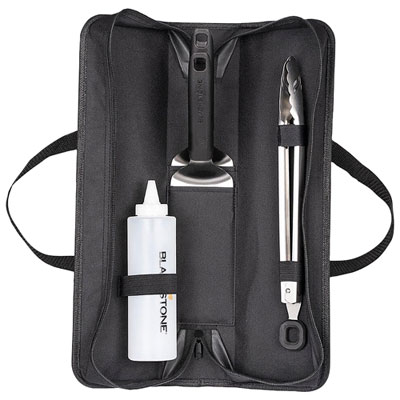 Your price for this item is $56.99
 -
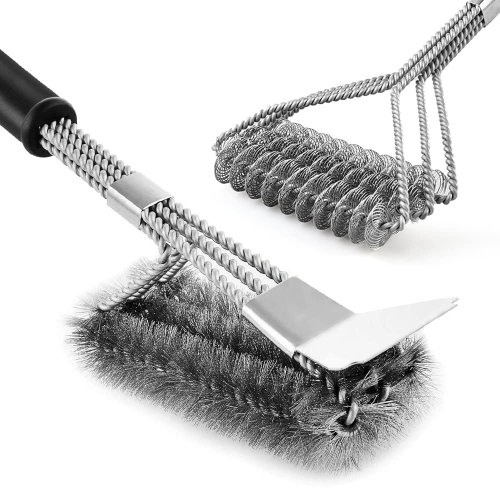 Your price for this item is $50.96
 -
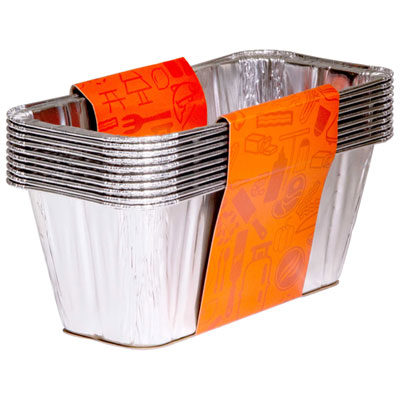 Your price for this item is $39.99
 -
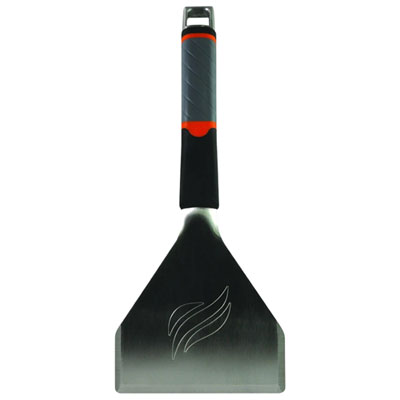 Your price for this item is $29.99
 -
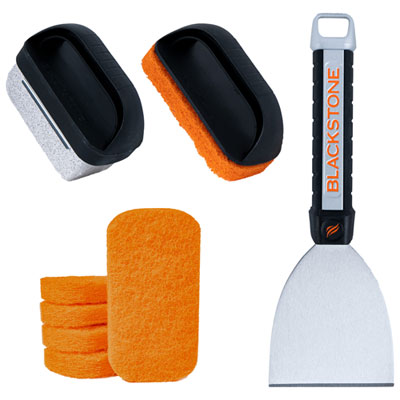 Your price for this item is $54.99
 -
 Your price for this item is $22.99
 -
 Your price for this item is $56.99
 -
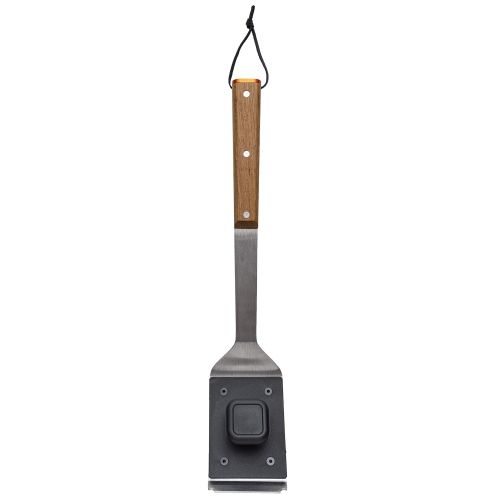 Your price for this item is $61.98
Discover more categories related to Grill Brushes
Top Collections:
Pokemon Centers, Kindle Devices, Best Budget Office Chairs, Apple iPhones 16, Best Laptops for Writers, iPhone 15 Apple, Canon G7X Cameras, Refurbished Apple Laptops, Alarm Clock, Motorola Razr Phones
Some products may be subject to Environmental Handling Fees
(EHF) depending on your province.
Learn more about EHFs.