Large Pans
Whether you're a seasoned home cook or just starting to build your kitchen collection, having a set of large pans is essential for preparing delicious meals with ease. From sautéing vegetables to searing meats, these versatile kitchen essentials offer ample space and even heat distribution for your culinary creations. Explore our selection of large pans designed to meet your cooking needs and elevate your kitchen experience.
Sort


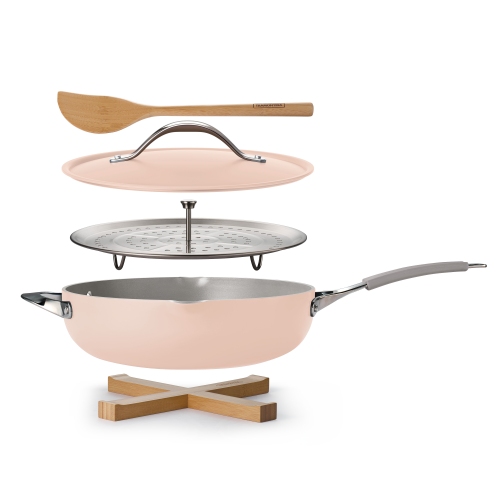

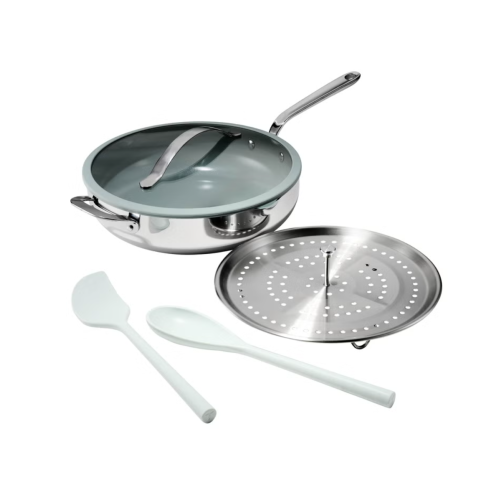
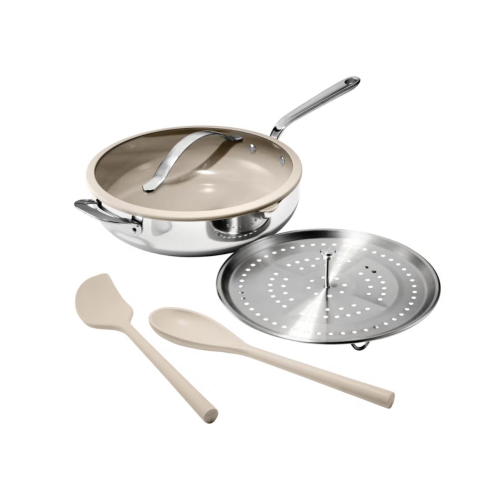


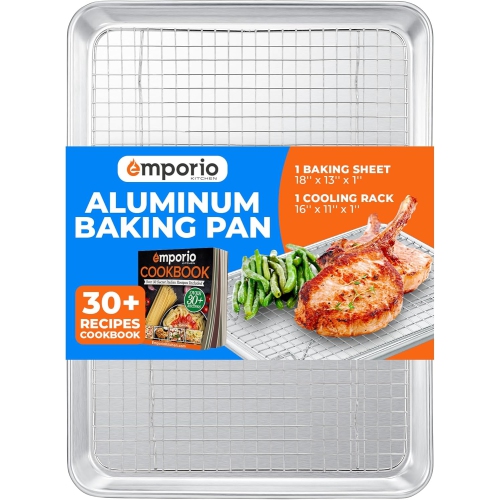


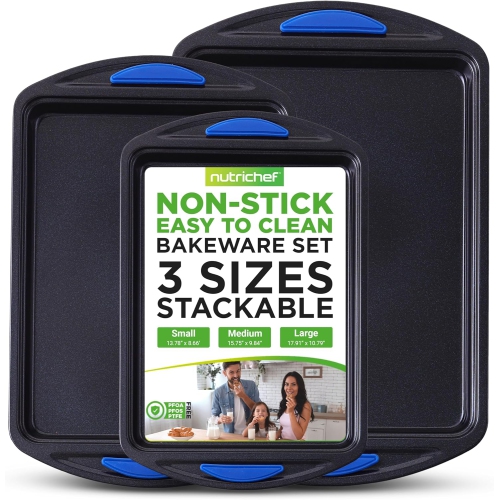

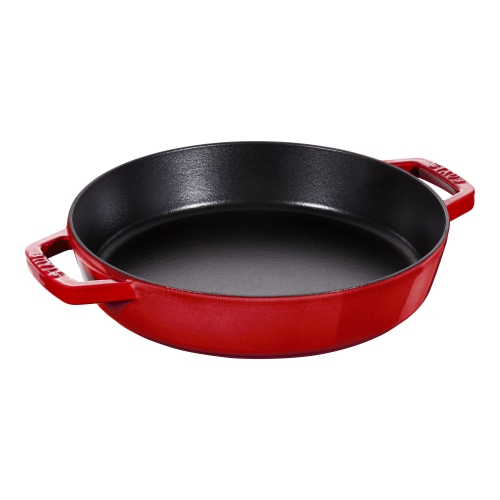


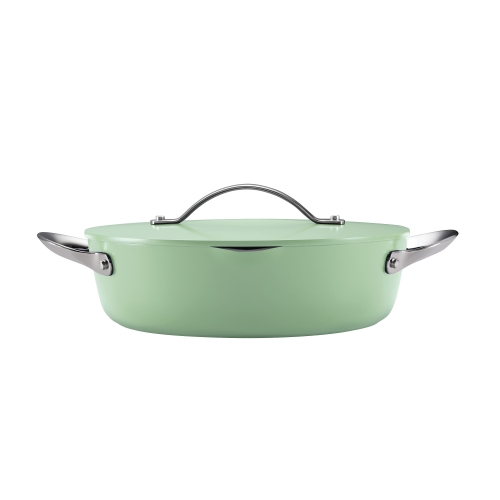
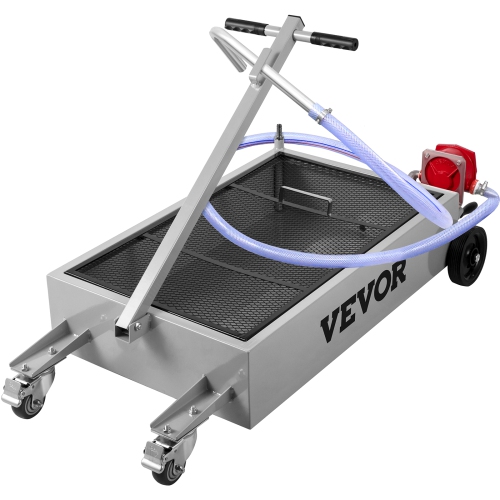
















































Why pan shape matters as much as size
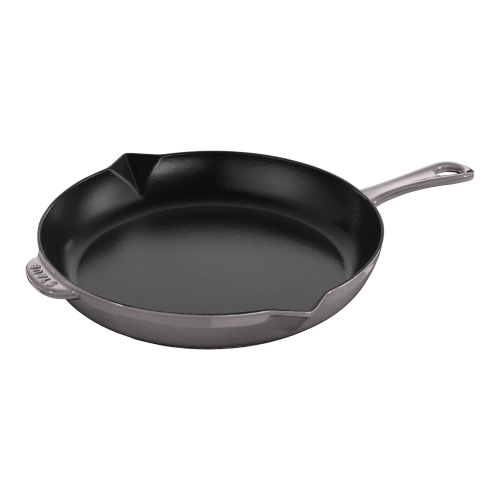
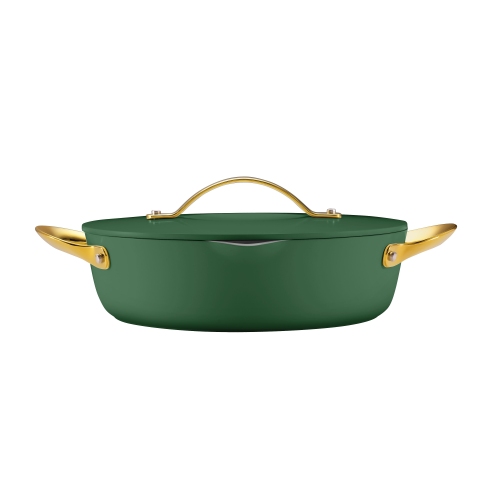
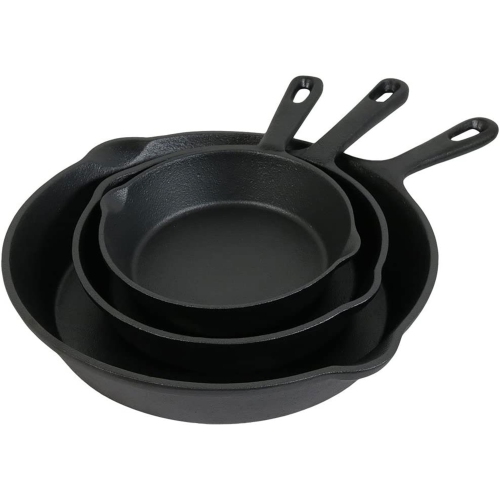
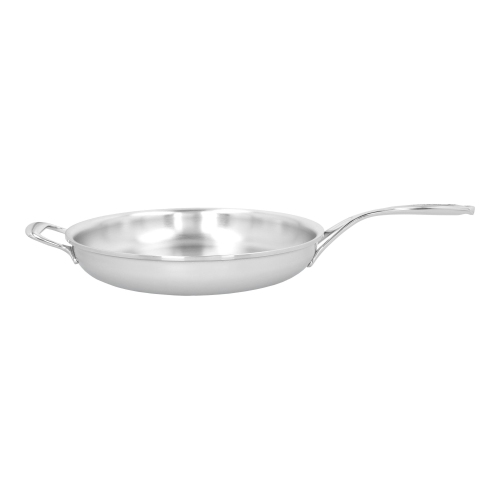
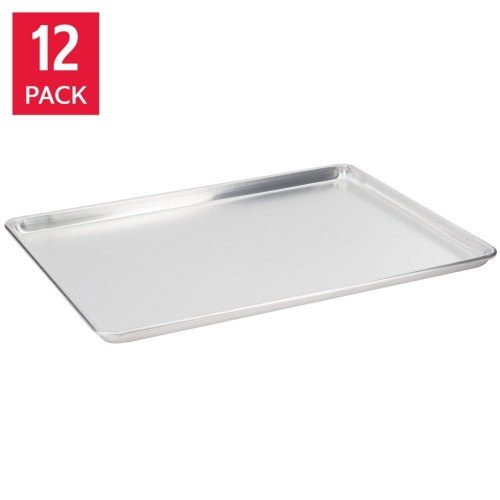
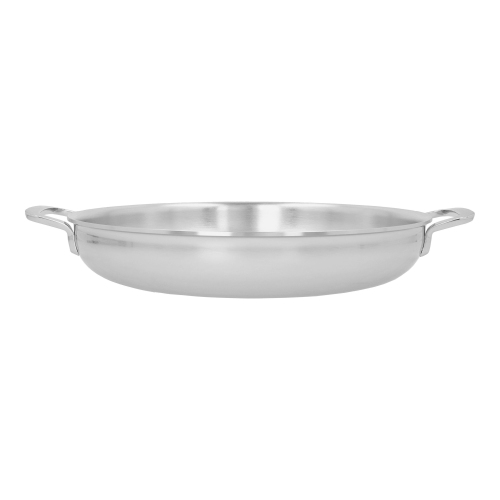
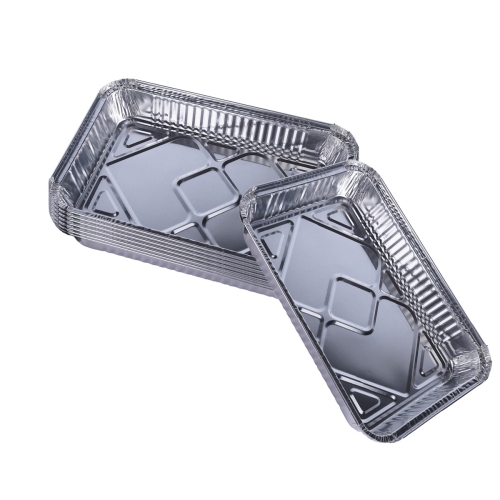
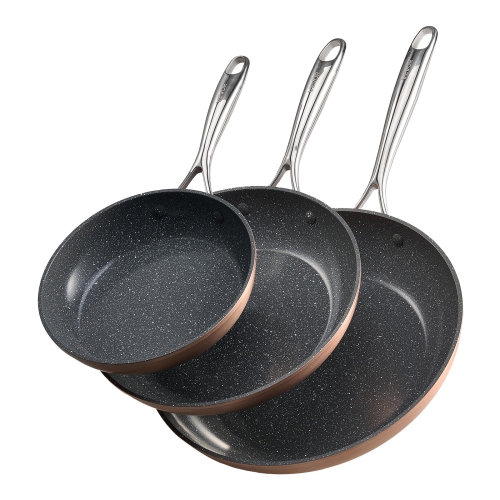
Large pans provide room to cook generous portions, spread ingredients across a broad cooking surface, and stir without sending food over the rim. They include wide frying pans for browning and searing, deep sauté pans for dishes with sauce, and roomy roasting pans for oven cooking. Many large frying pans measure 12 inches, or about 30 cm, across the top, although the usable cooking surface depends on the shape and slope of the sides. Capacity matters alongside diameter: two pans with similar widths can hold very different amounts if one has tall, straight walls and the other has low, flared edges. A broad base gives chicken pieces, mushrooms, or sliced vegetables more contact with the hot surface, helping them brown rather than sit crowded together in released moisture. Even a spacious pan can become overcrowded, so cooking in batches may still produce better results when ingredients contain plenty of water. Deeper sides are useful for stirring a family-sized pasta dish, simmering meatballs in tomato sauce, or folding greens into rice as they soften. Lower sides make it easier to slide a spatula beneath pancakes, turn fish fillets, and lift food onto a plate. For a closer look at that lower-sided shape, Shallow Pans offer a useful comparison. The right proportions depend on what usually reaches the table: a wide, open surface suits separate portions, while extra depth accommodates sauces and mixed dishes. Large pans can be practical for households feeding several people, cooks preparing lunches ahead, or hosts making a shared meal. Their value is not limited to big gatherings; extra cooking space can also mean fewer batches when preparing dinner for two. A pan that comfortably holds the usual recipe is often more useful than the largest size that will fit in a cupboard.
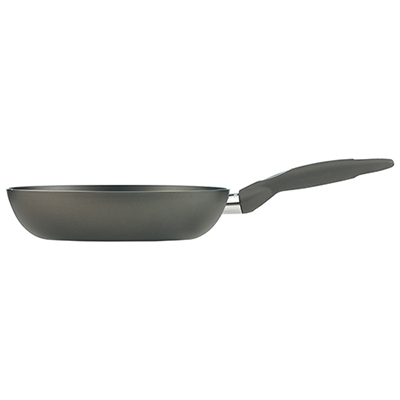
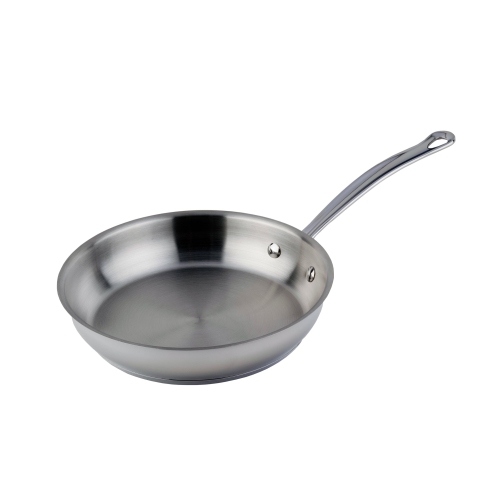
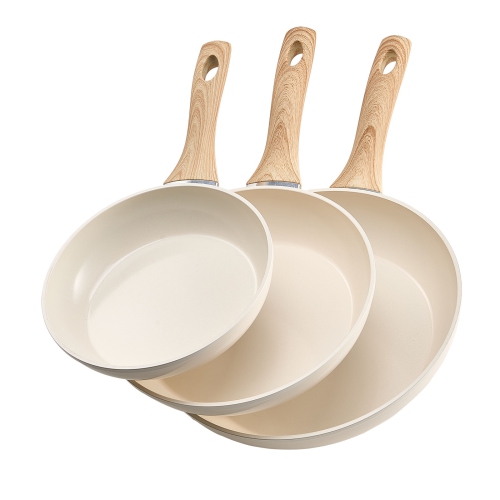
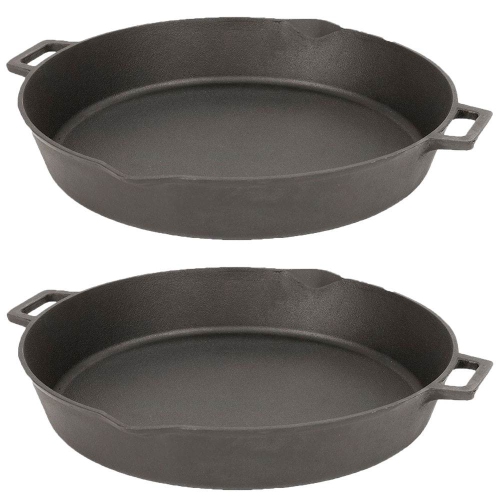
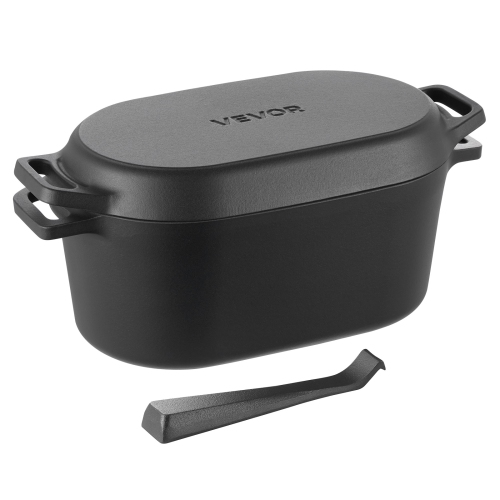
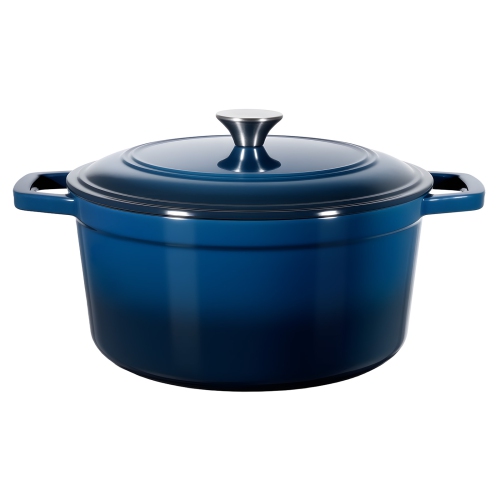
Material affects how a large pan heats, how much it weighs, and what care it needs. Stainless steel offers a durable cooking surface for browning meat and developing the browned bits that become the foundation of a pan sauce. Because stainless steel alone does not distribute heat especially well, many pans pair it with an aluminium or copper core, either through layered construction or an attached base. Fully clad construction carries those layers through the sides, while a bonded base concentrates them beneath the cooking surface. Cast iron holds heat well once warmed, making it useful for searing and cooking dishes that benefit from steady heat, though a large cast iron pan can be heavy before any food is added. Bare cast iron needs drying and a light application of oil to maintain its seasoning; enamelled cast iron does not require the same seasoning routine, but its finish still needs protection from hard impacts. Aluminium is relatively light and transfers heat readily, while hard-anodized aluminium has a hardened surface that may also carry a non-stick coating. Non-stick interiors can simplify cooking eggs, delicate fish, and foods prone to sticking, particularly when used with suitable utensils and moderate heat. Ceramic-coated surfaces also require care to protect their release properties; the coating alone does not establish how evenly a pan will heat or how long it will last. Thickness, construction, and everyday handling all contribute to performance. A heavier base generally changes temperature less abruptly when food is added, but it also takes longer to heat and cool. For cooks who move a full pan between the stovetop and oven, that trade-off is worth considering alongside handle comfort. No single material suits every meal equally well: frequent searing, delicate cooking, sauce-making, and oven finishing place different demands on the same piece of cookware.
Fit is especially important with large cookware because the widest rim is only one part of the footprint. The base should suit the cooking zone, with enough space around the pan to keep handles clear of nearby burners and leave adjacent controls accessible. A pan much wider than its heat source may cook unevenly around the edges, even when its overall capacity looks ideal. Induction cooking requires a compatible magnetic base, and some cooktops also have minimum pan-diameter requirements. On glass cooking surfaces, a smooth, flat base and careful lifting rather than dragging help protect the surface. Oven use depends on the complete pan, including its handles, lid, and coating, so each component’s stated limits matter. A helper handle can make a substantial difference when lifting a deep pan filled with sauce, while a well-fitting lid helps contain splashes and retain moisture during simmering. Glass lids allow a view of the food, though their heat limits may differ from those of the pan itself. Storage and washing deserve equal attention: a long handle may catch on a cupboard door, and a broad pan may not sit flat in a compact sink or dishwasher rack. Allowing cookware to cool before washing helps avoid sudden temperature changes that can cause damage. Gentle cleaning, utensils suited to the cooking surface, and a protective layer between stacked pans help preserve finishes. Dishwasher suitability varies, and handwashing may be specified even for cookware that otherwise seems robust. These everyday details also matter when choosing a large pan as a housewarming, wedding, or moving-out gift. A pan that matches the recipient’s cooktop, storage space, lifting comfort, and favourite meals is more likely to become a dependable part of the kitchen than one chosen for size alone.
Top selling and popular products
-
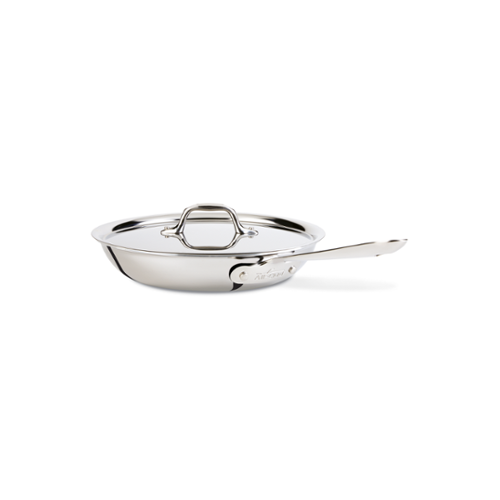 Your price for this item is $137.7
-
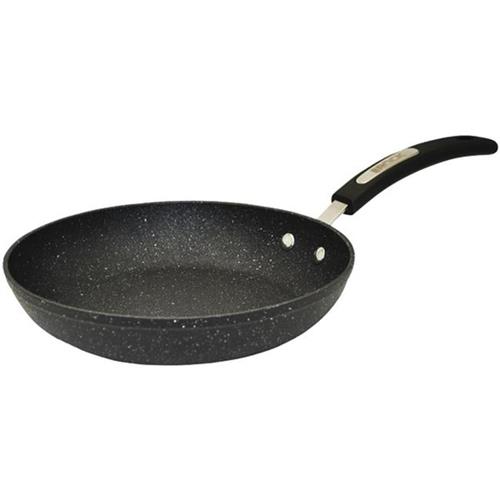 Your price for this item is $33.97
-
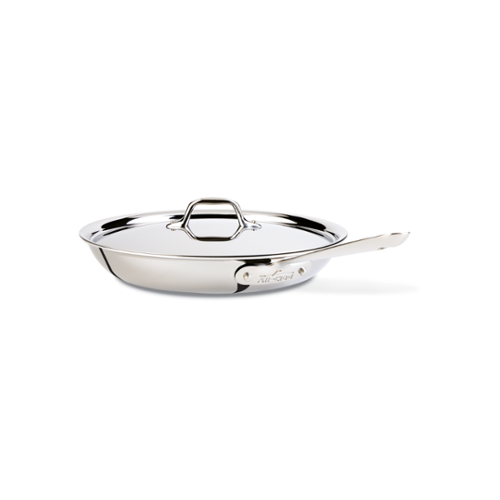 Your price for this item is $289.04
-
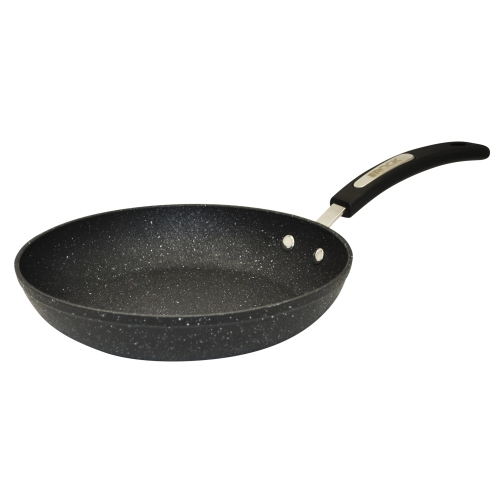 Your price for this item is $29.99
-
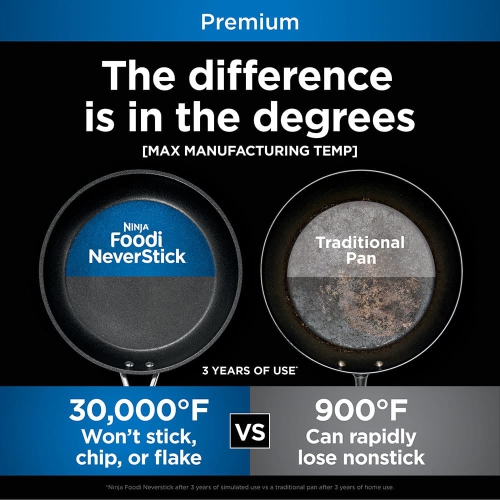 Your price for this item is $139.53
-
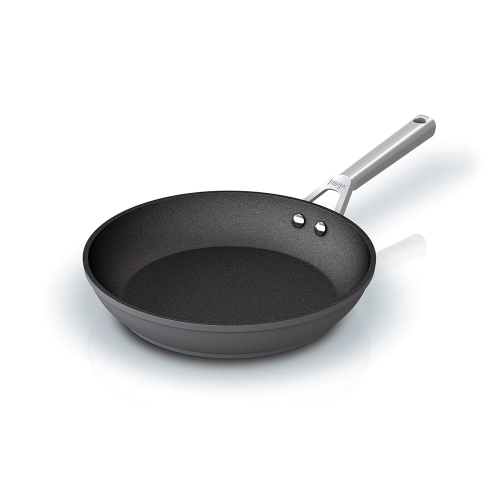 Your price for this item is $100.73
-
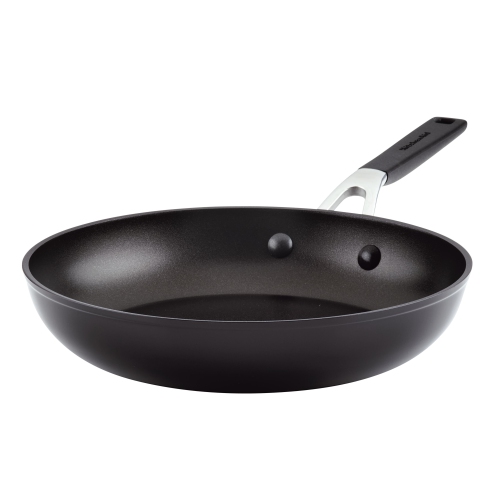 Your price for this item is $49.99
-
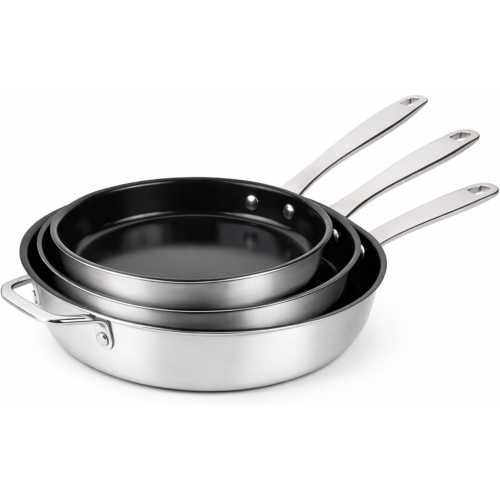 Your price for this item is $399
Discover more categories related to Large Pans

Top Collections:
Pokemon Centers, Best Cameras for Sports Photography, Kindle Devices, Samsung Galaxy Phones, Canon G7X Cameras, Pokémon 30th Celebration Cards, Refurbished Apple Laptops, iPhone 15 Apple, Laptops for Students, Budget Smartphones
Some products may be subject to Environmental Handling Fees
(EHF) depending on your province.
Learn more about EHFs.