Home Office Desks with Shelves
A home office desk is a great place to work from home, but it's also a great place to store your things when you're not at home. You can keep your bills and documents organized, your laptop charged, and your writing materials handy without taking up too much space on the floor. Here are some of our favorite desks with shelves.
Sort
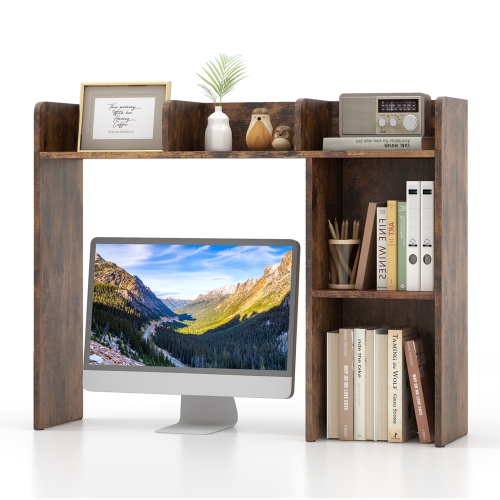
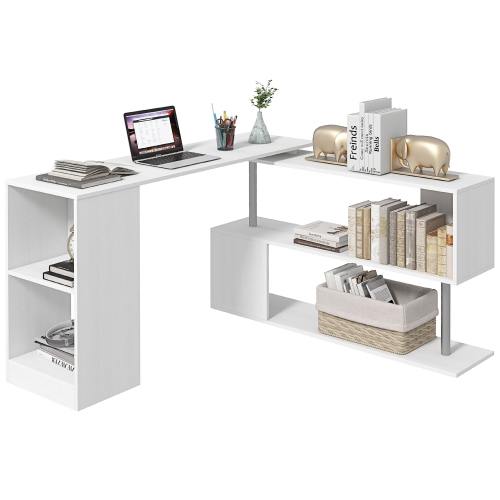
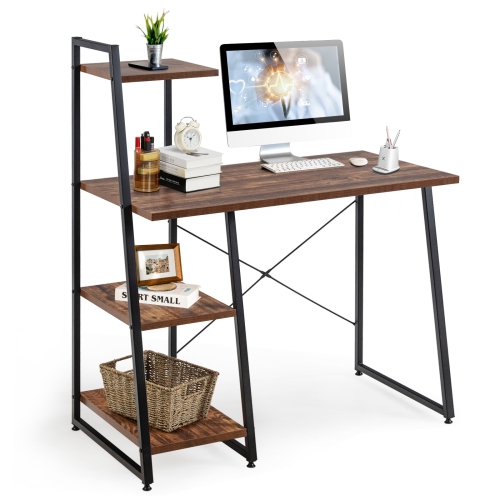
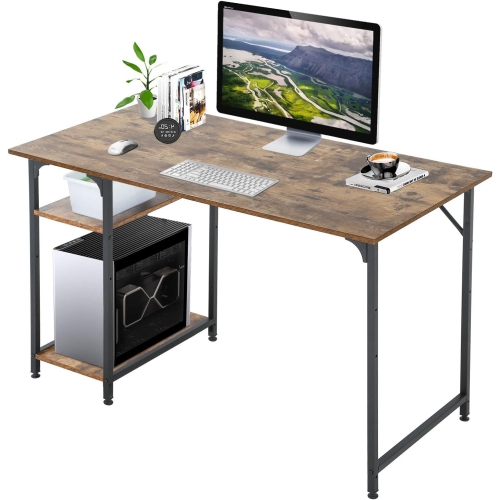
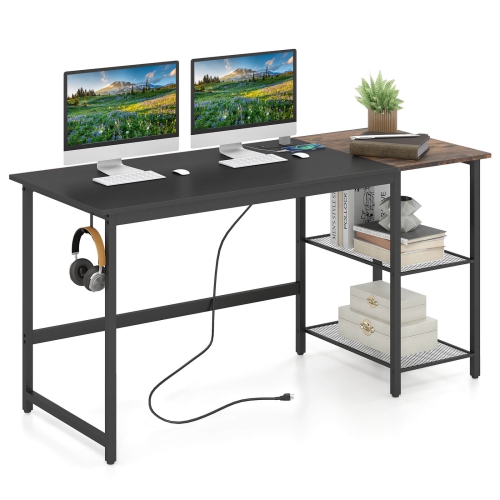
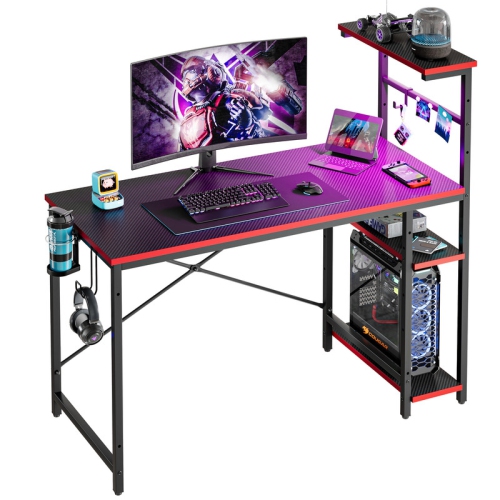
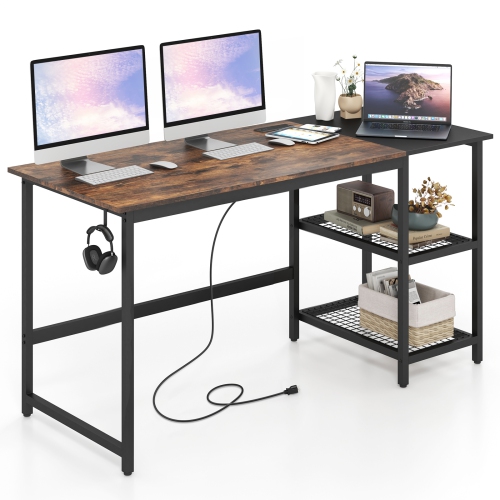
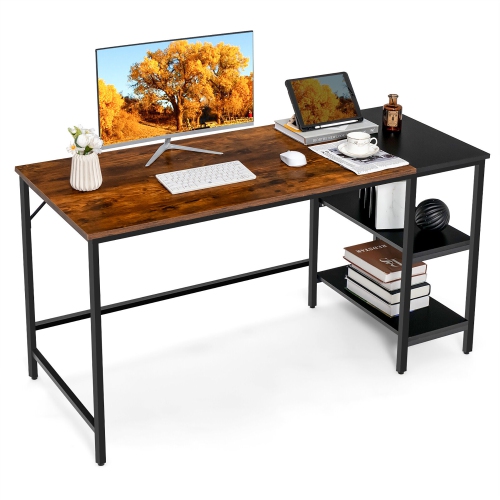
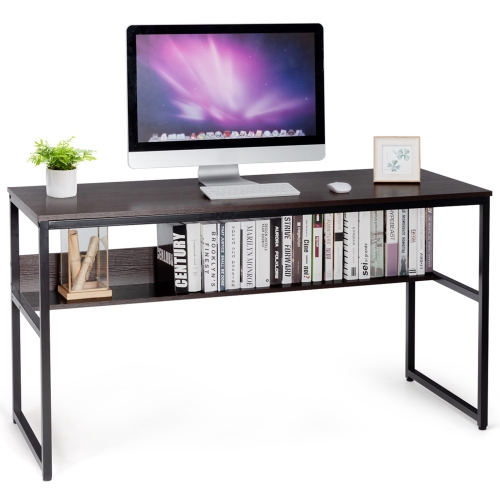
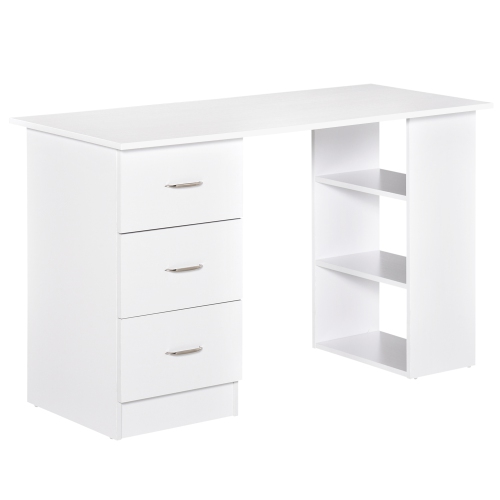
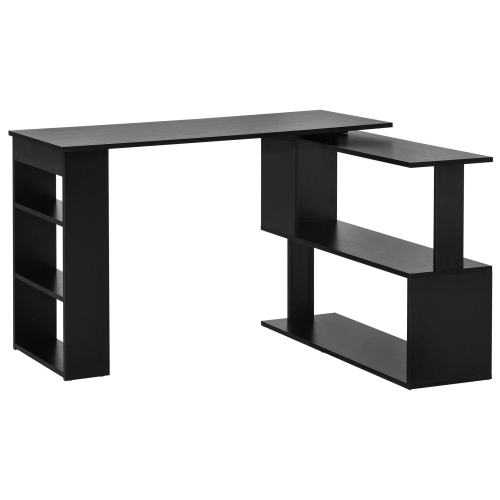
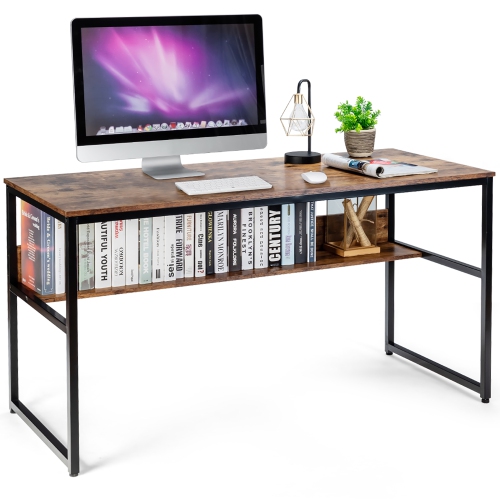
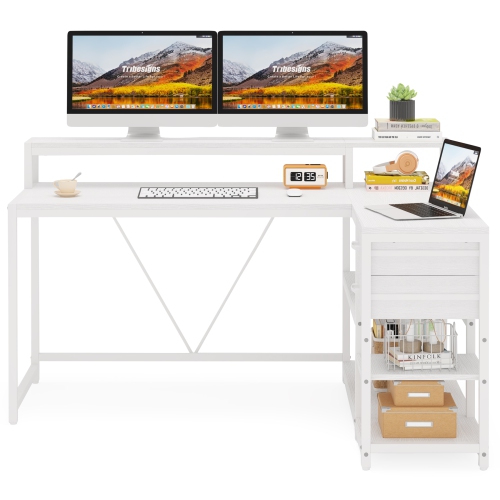
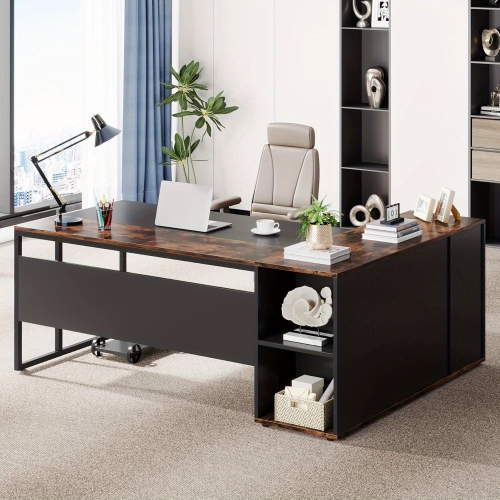
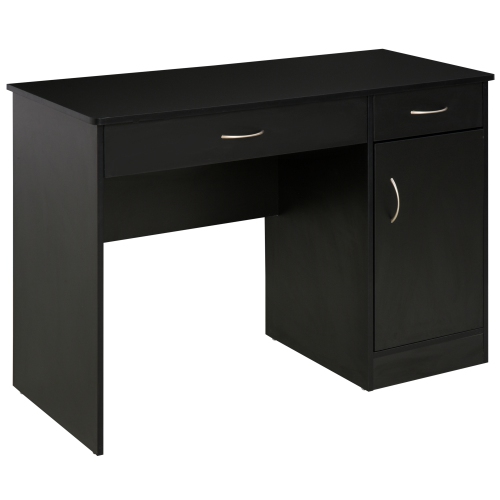
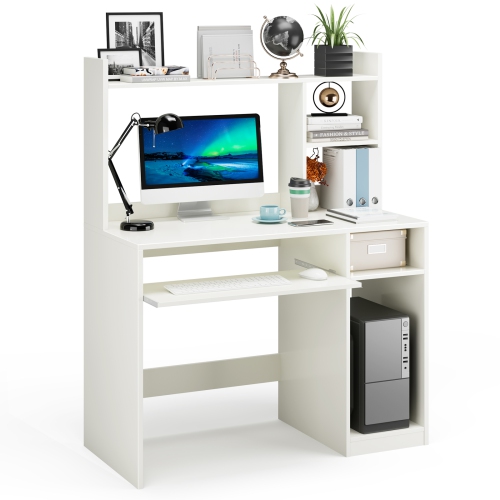

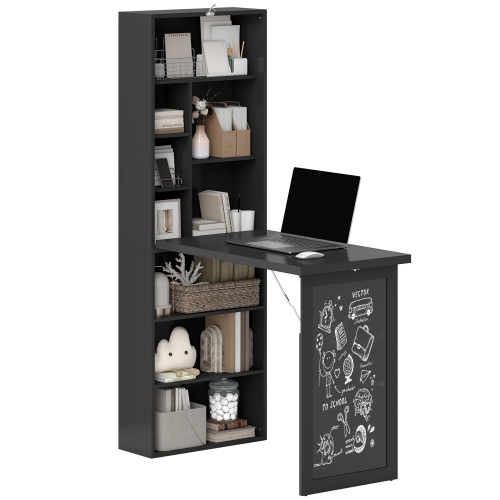
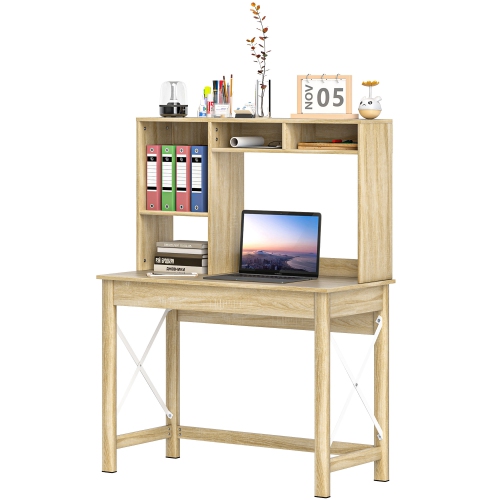
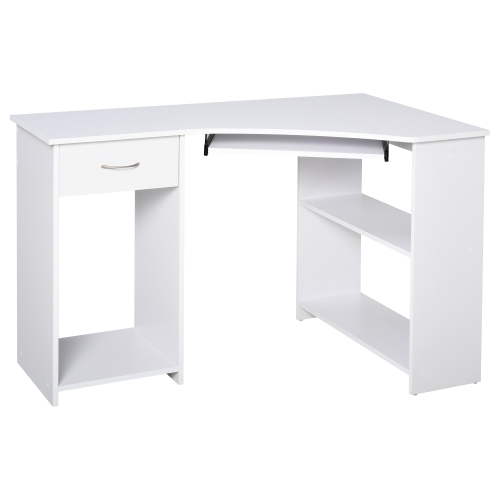
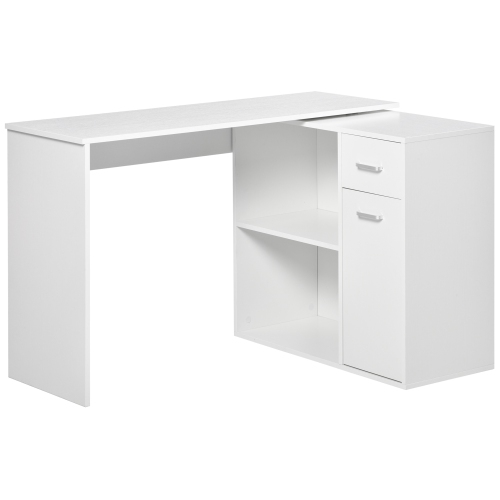

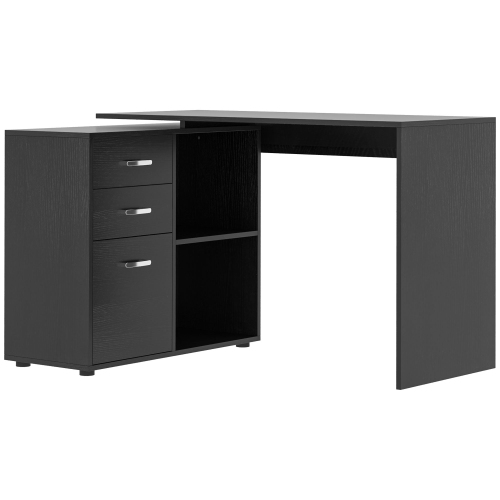
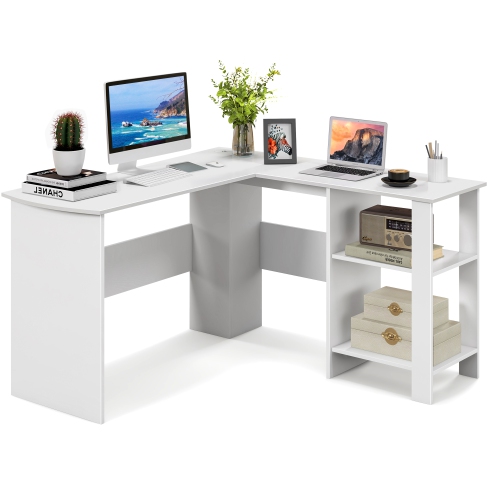
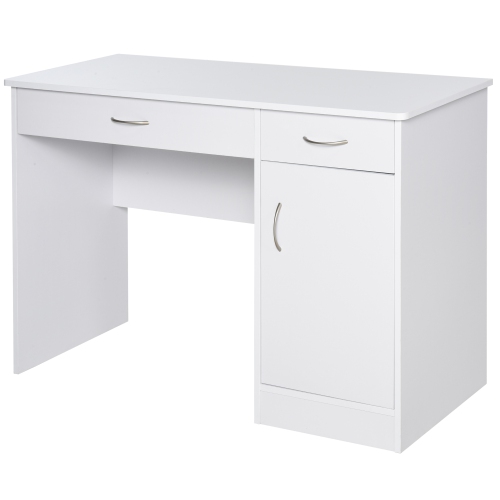
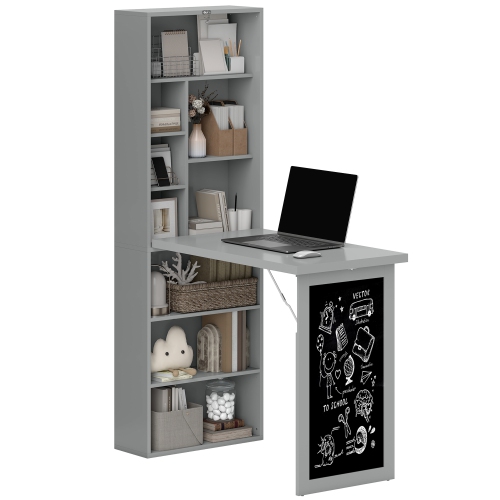
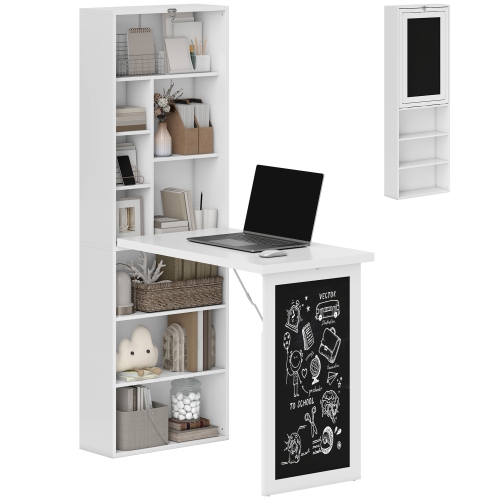
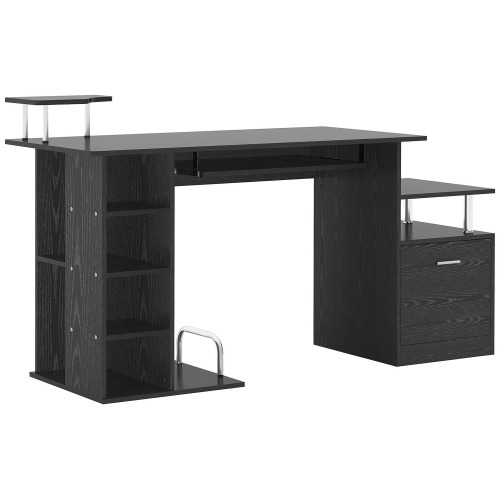
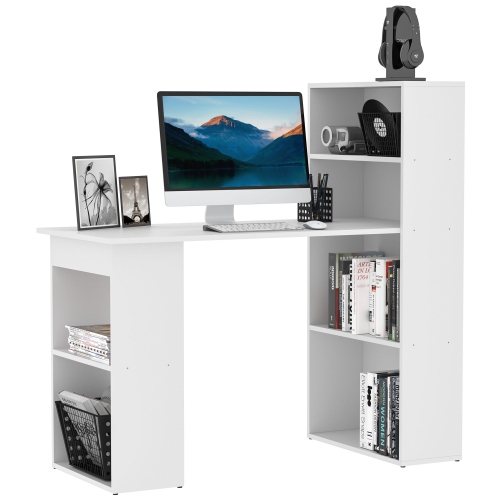
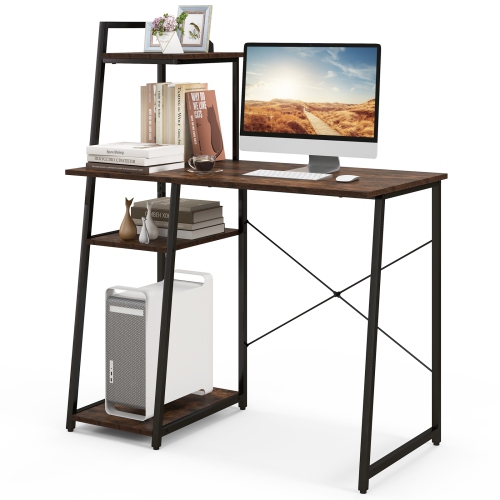
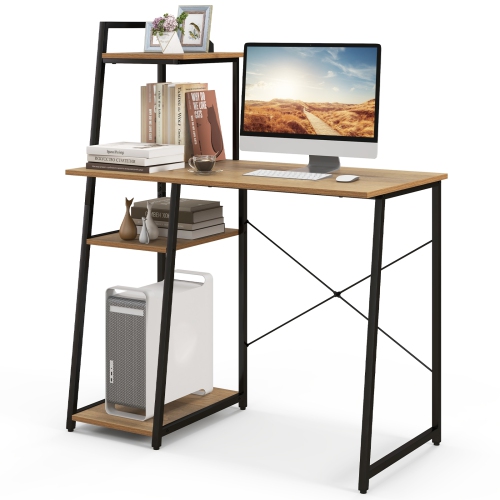
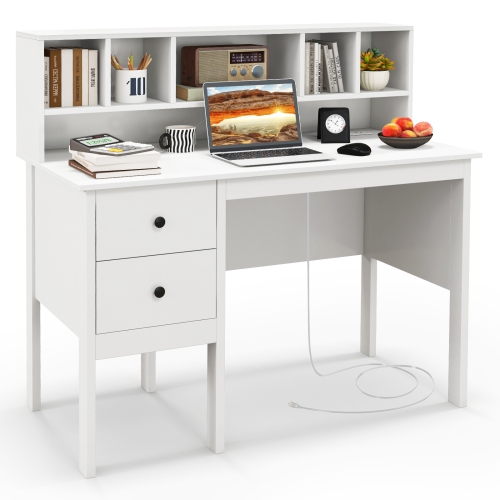
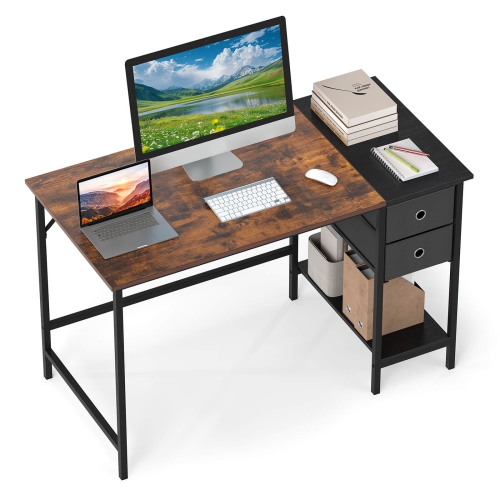
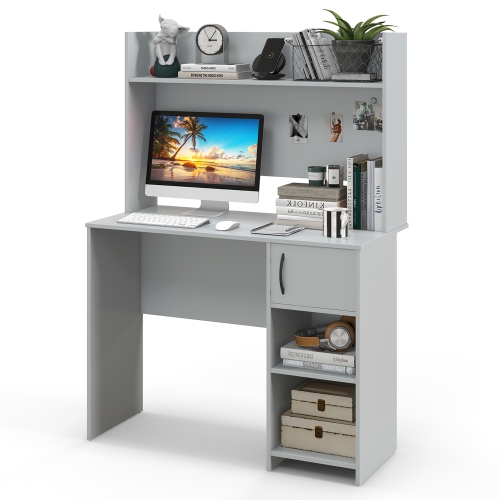
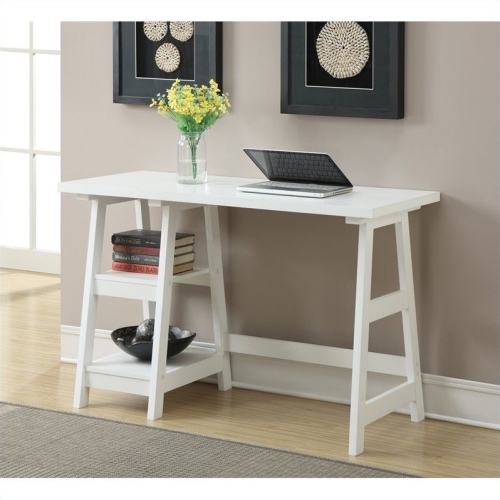
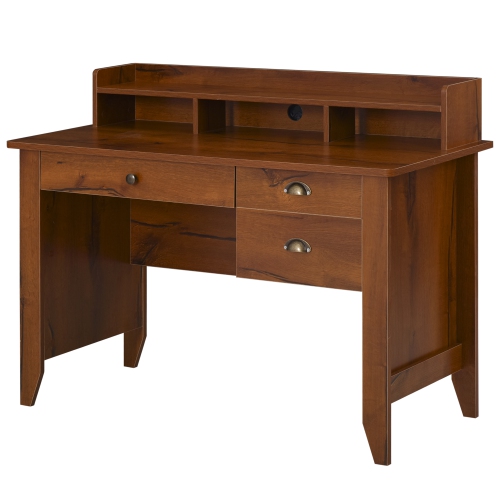
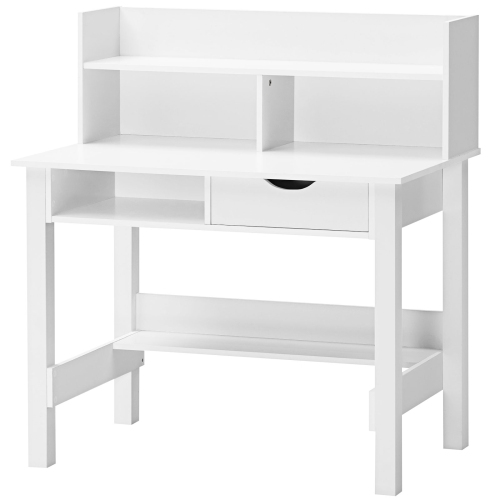
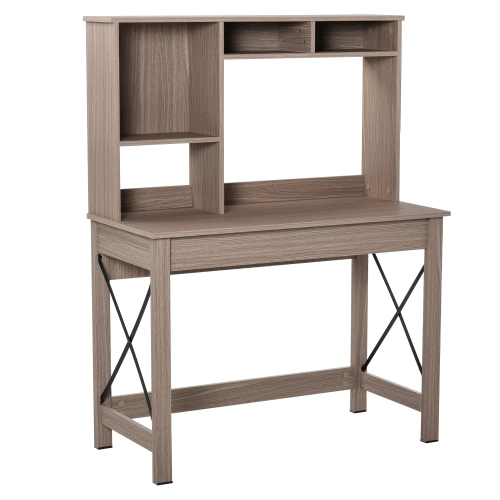
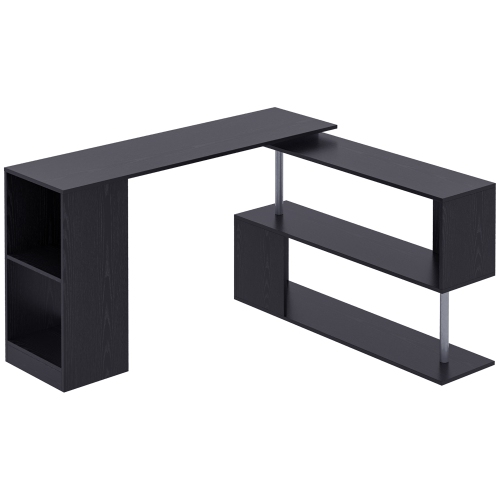
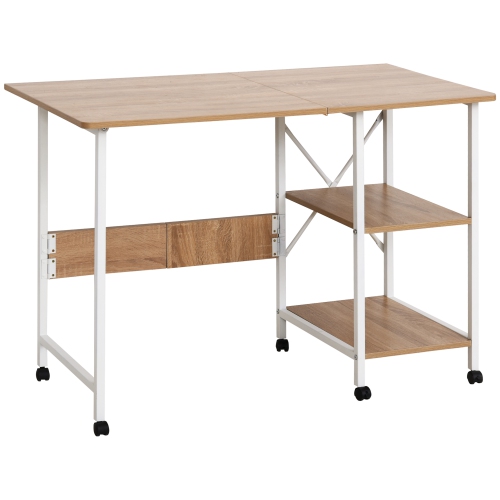
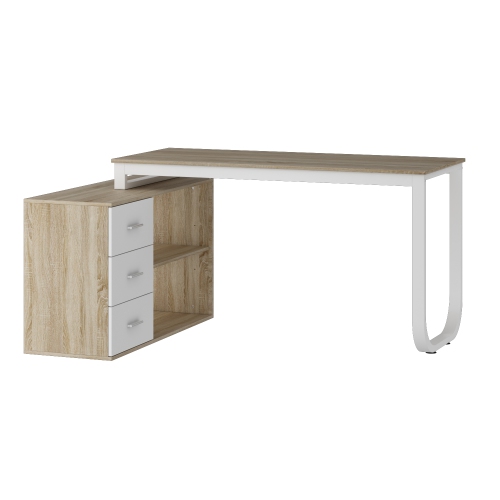

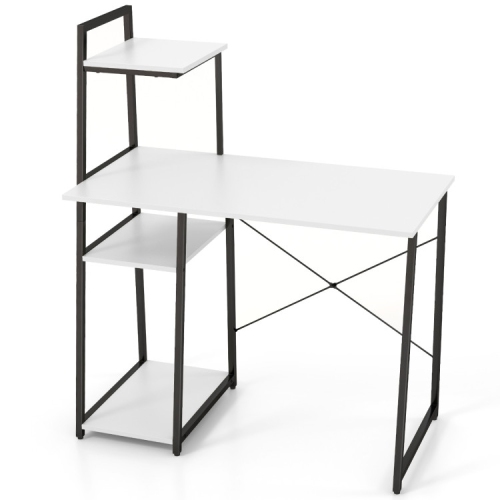
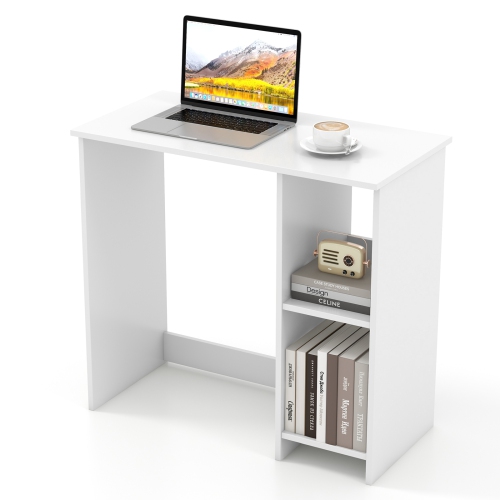
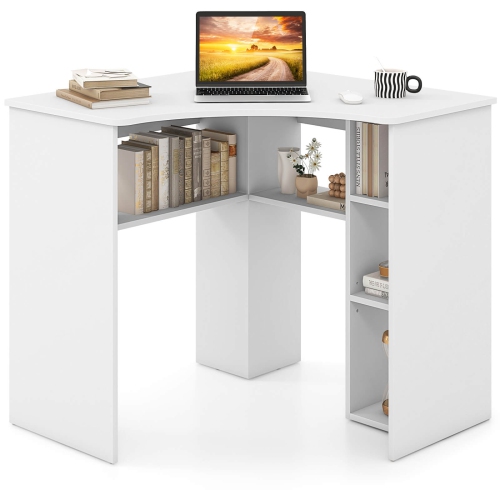

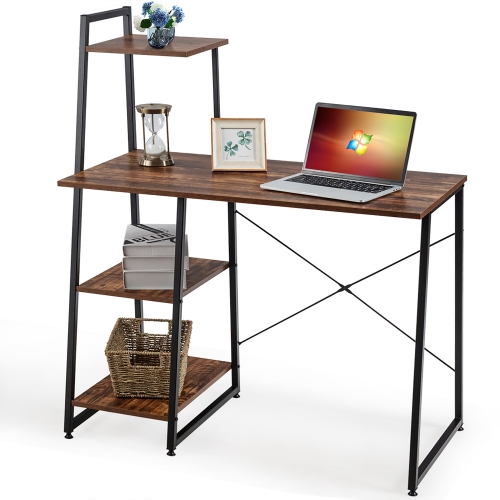
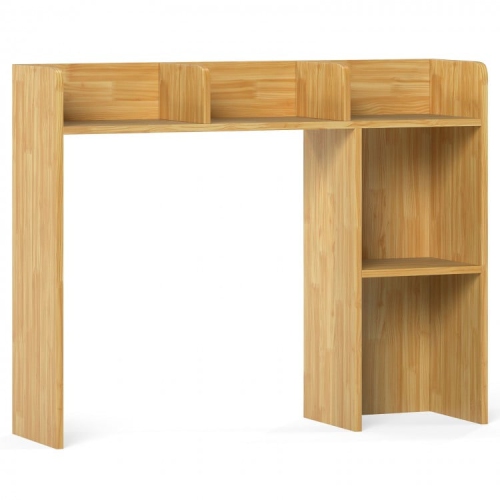
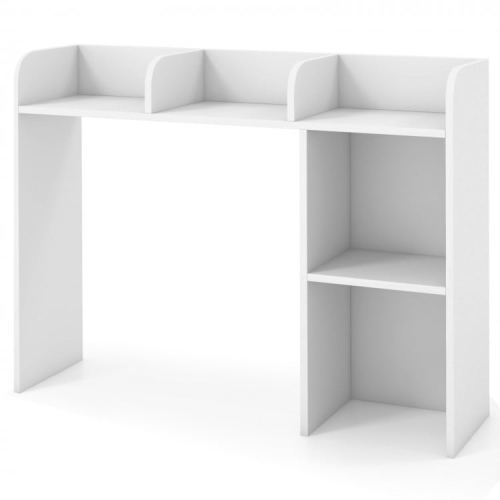
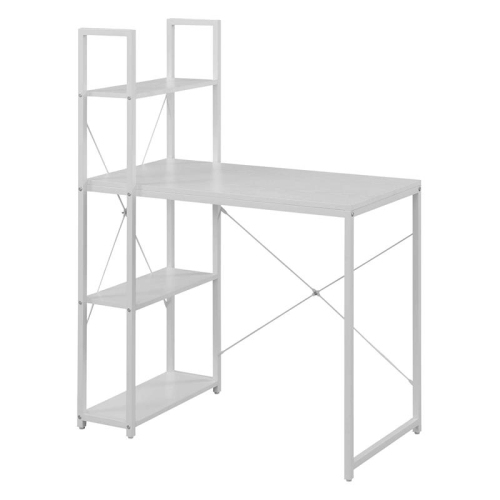
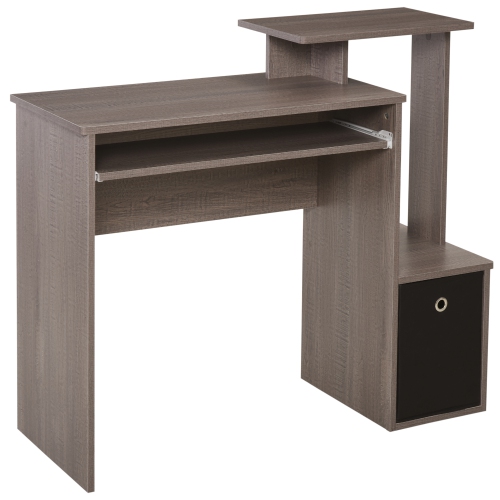
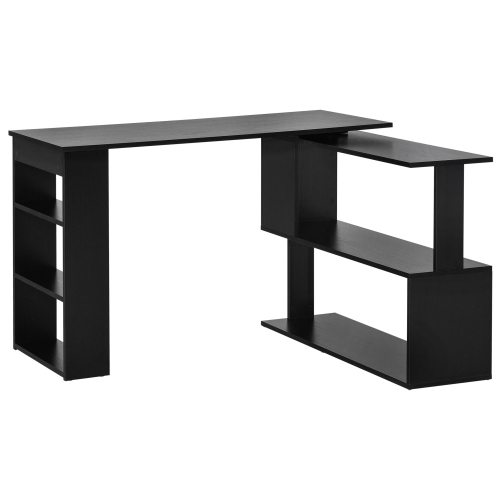
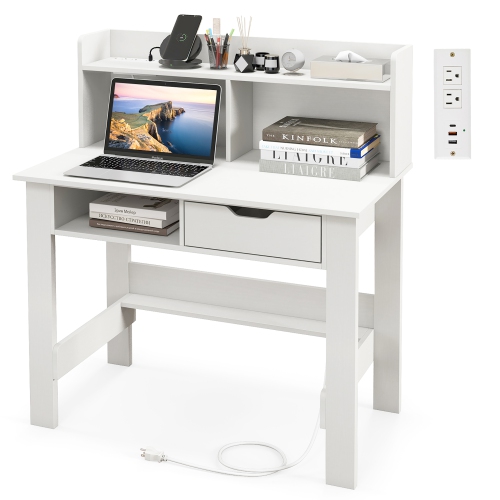
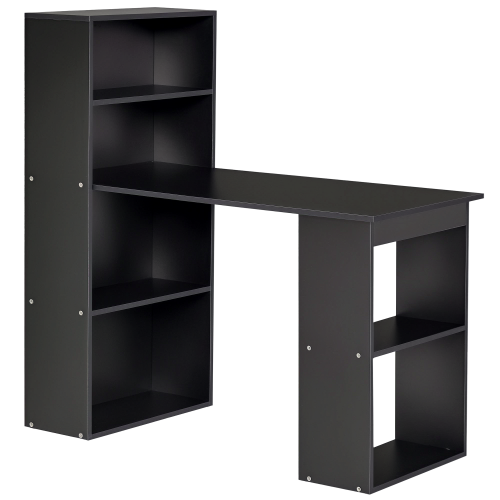
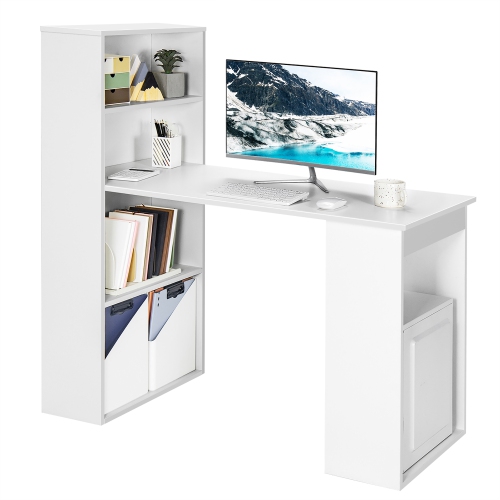
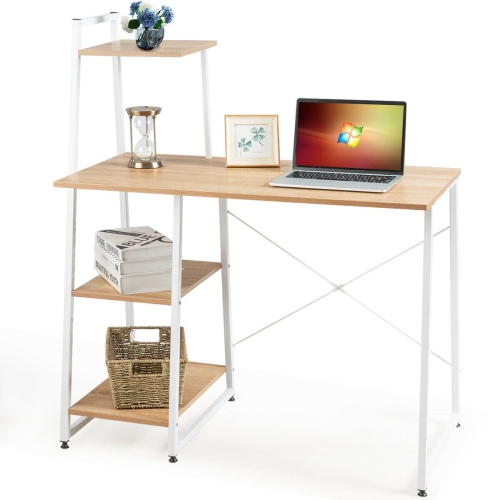
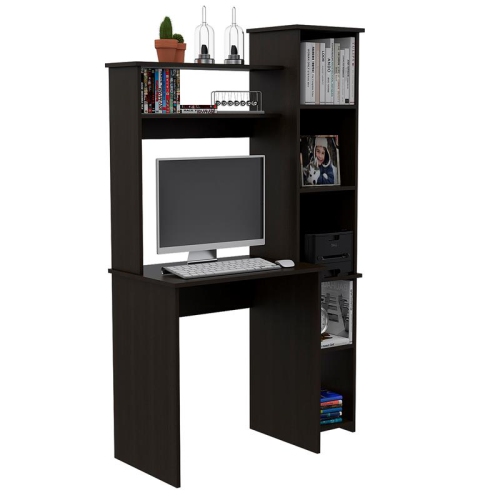
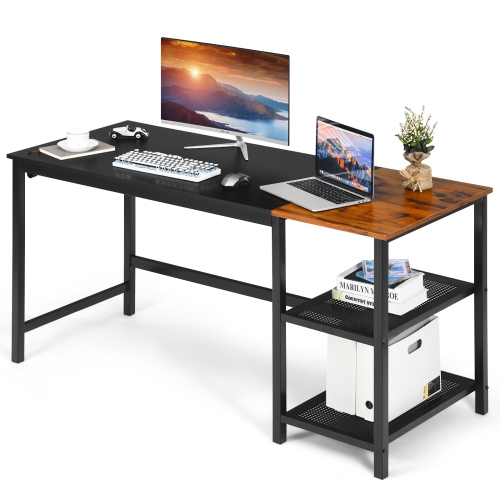
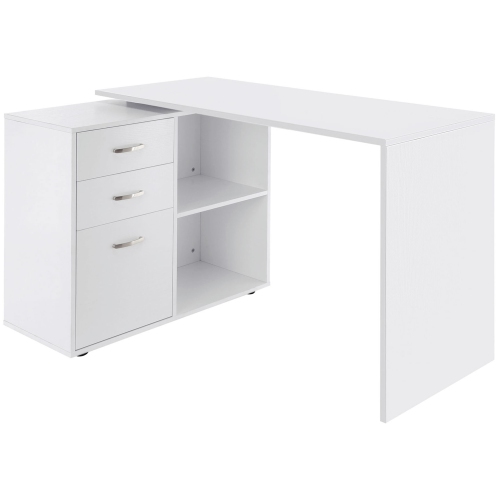
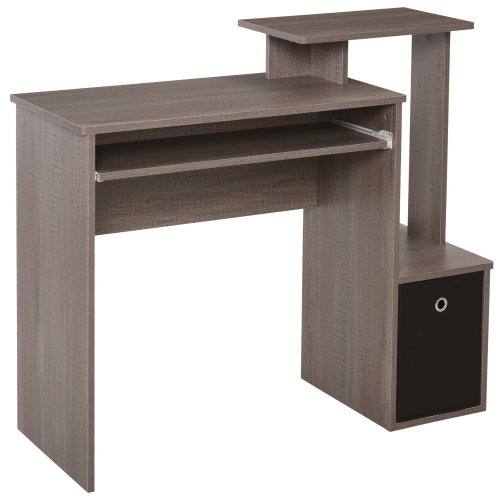
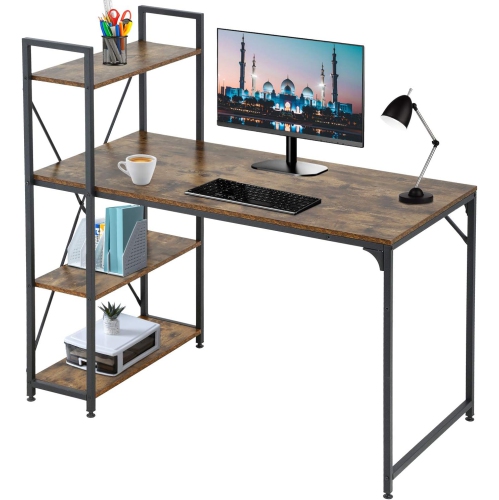
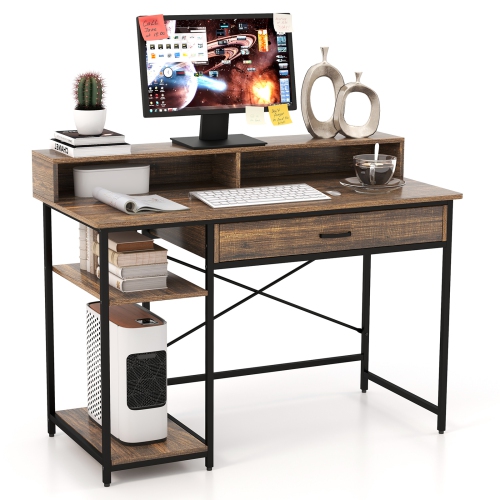
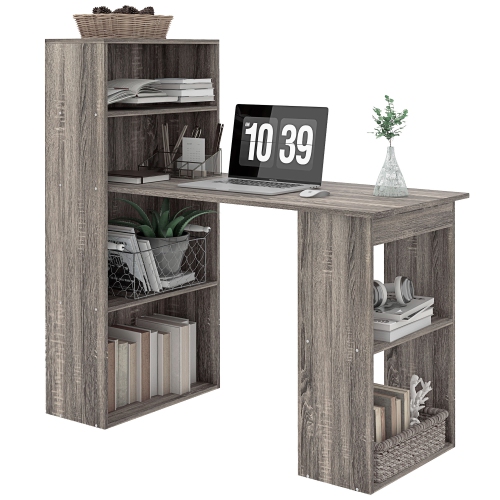
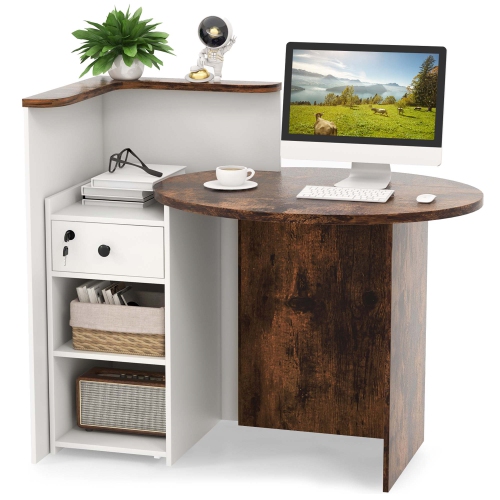

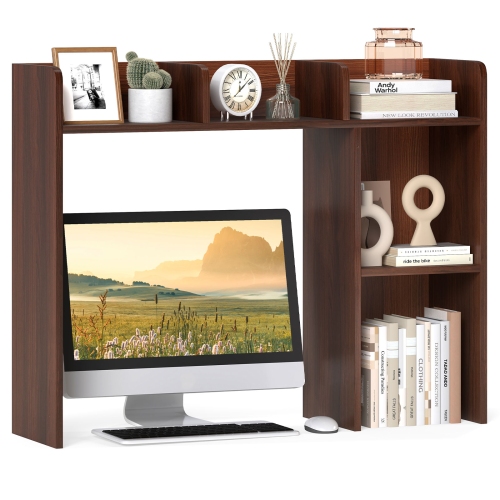
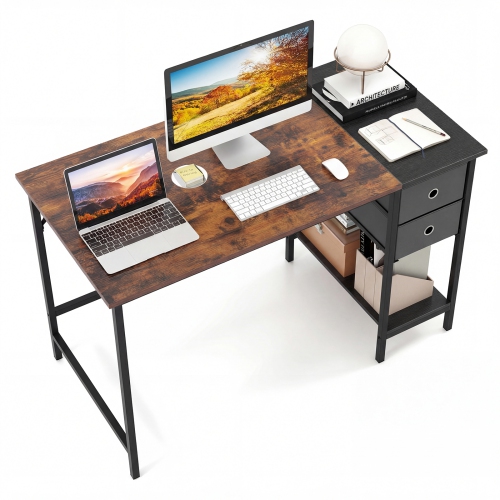
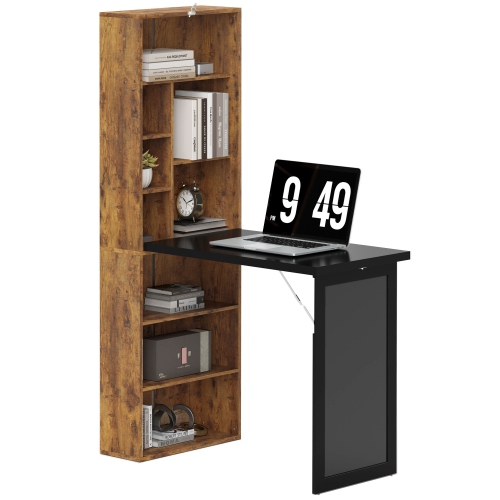
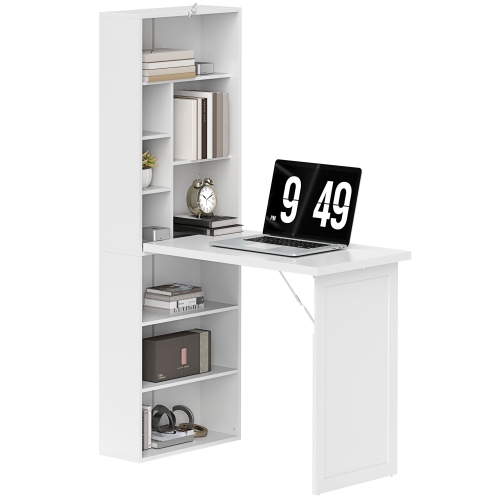
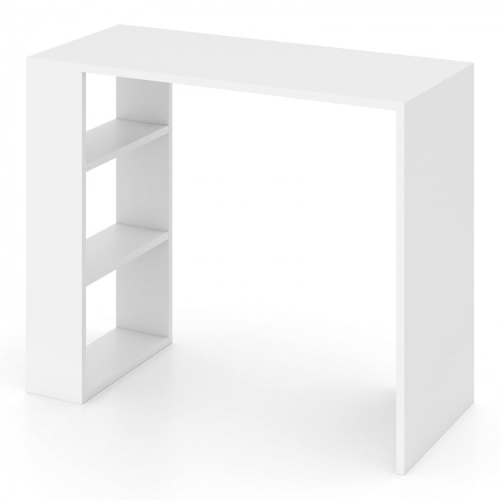
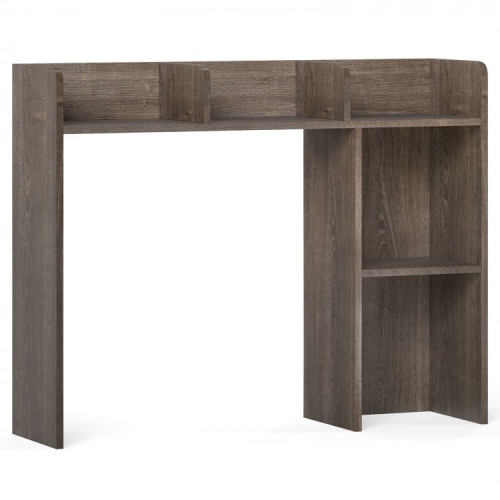
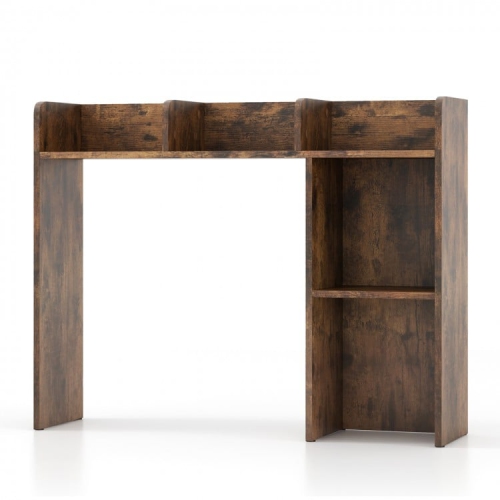
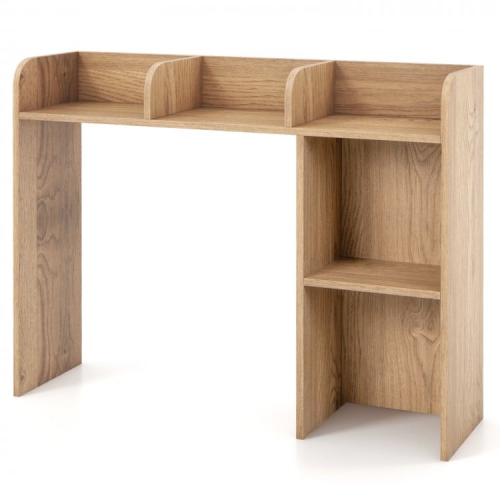
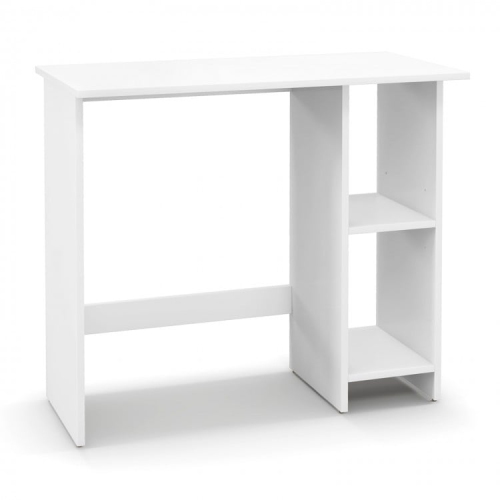
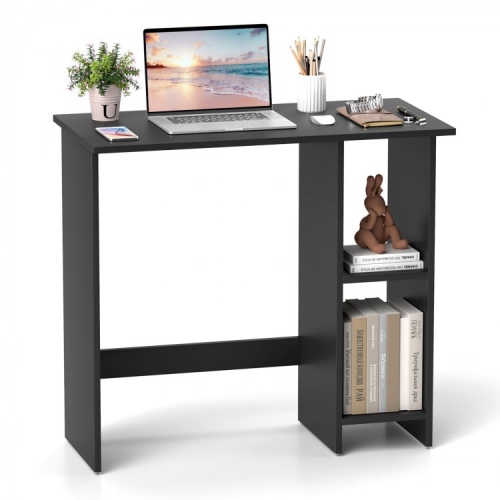
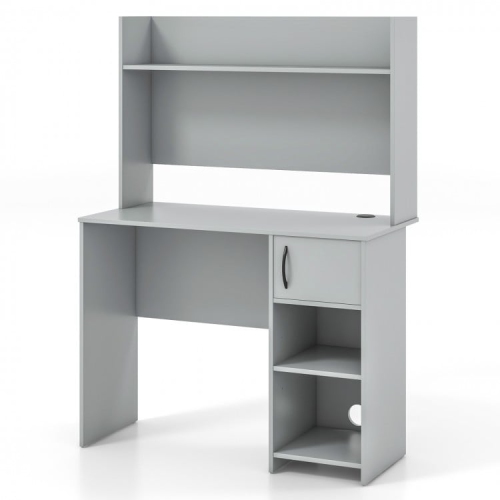
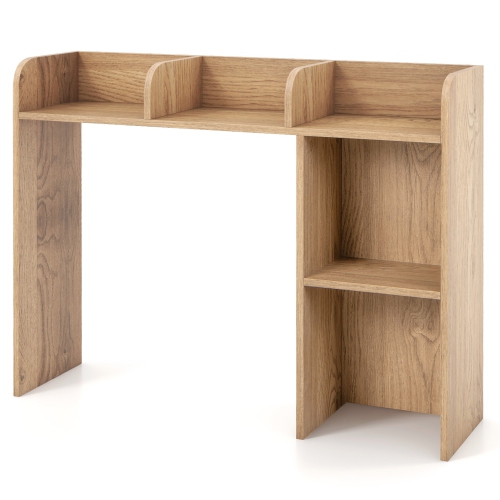
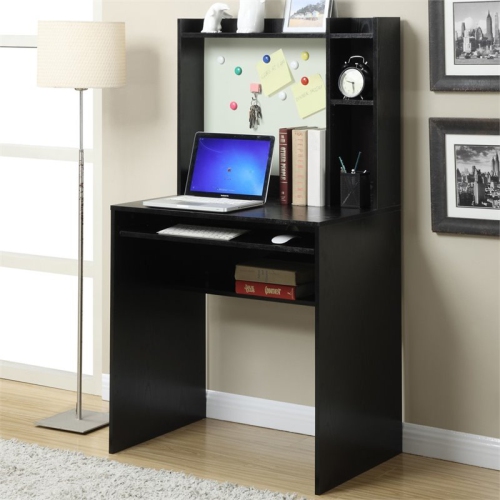
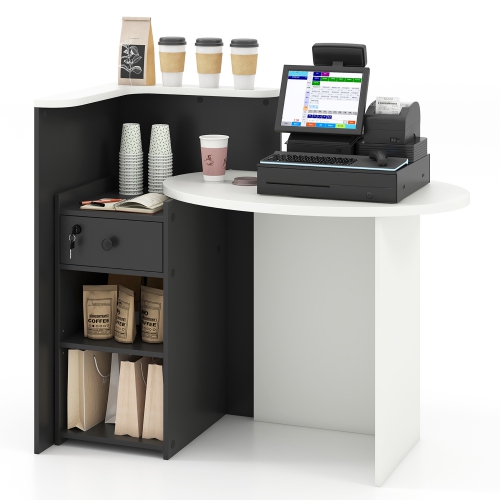
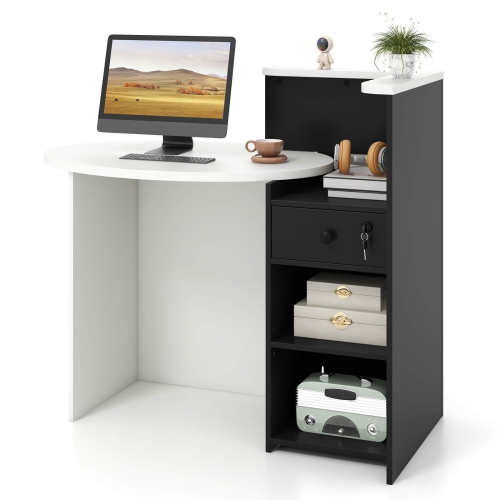
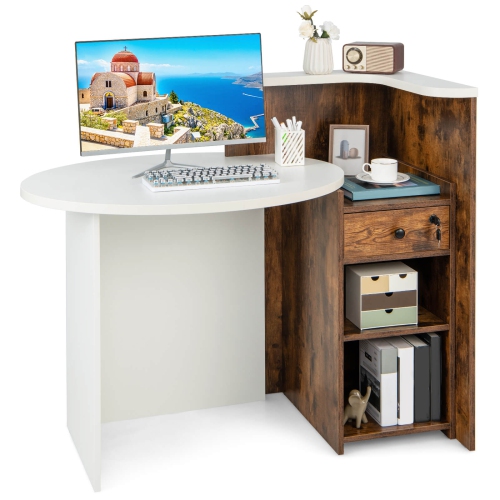
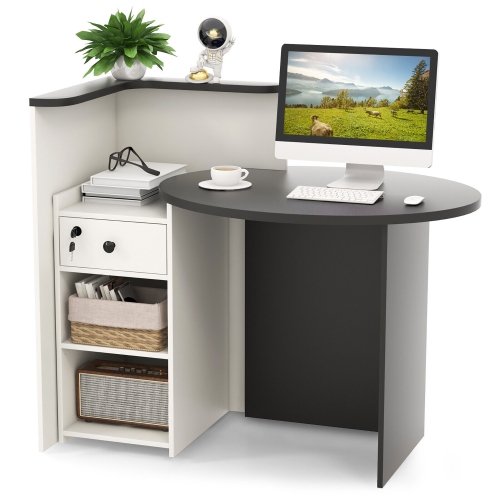
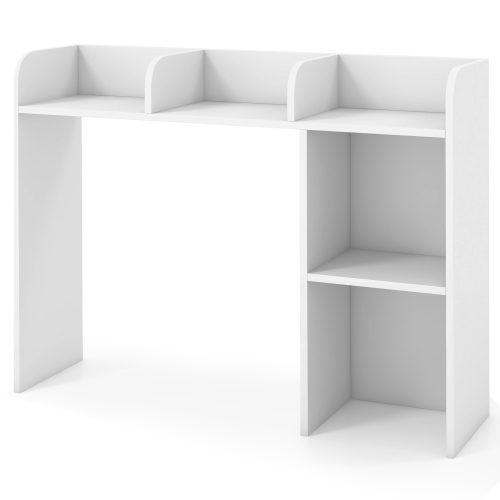
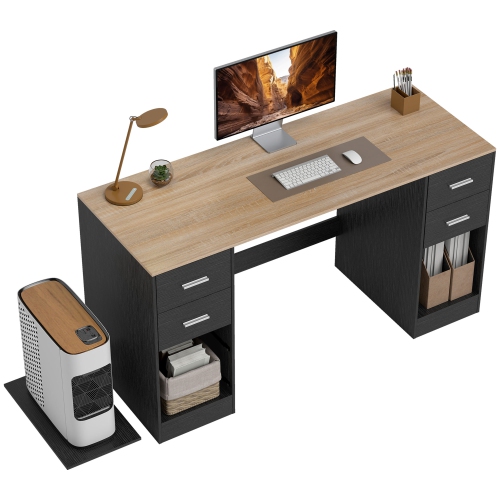
Built-in storage without sacrificing room to work
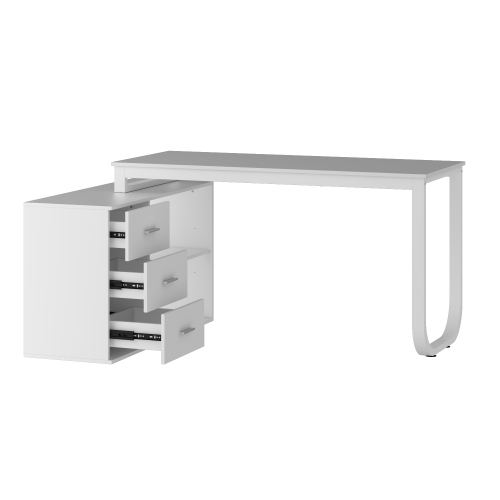
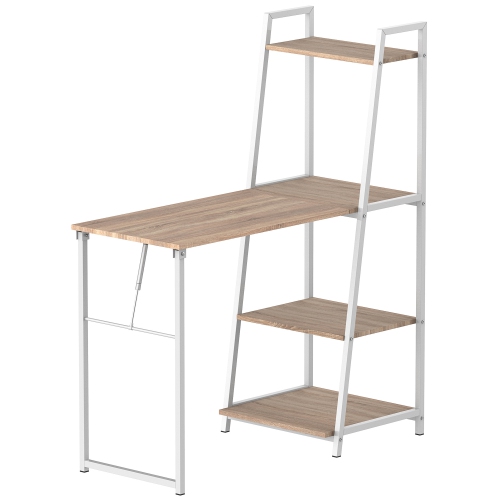
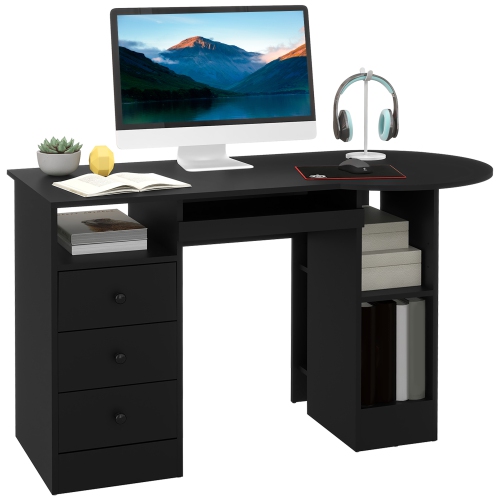
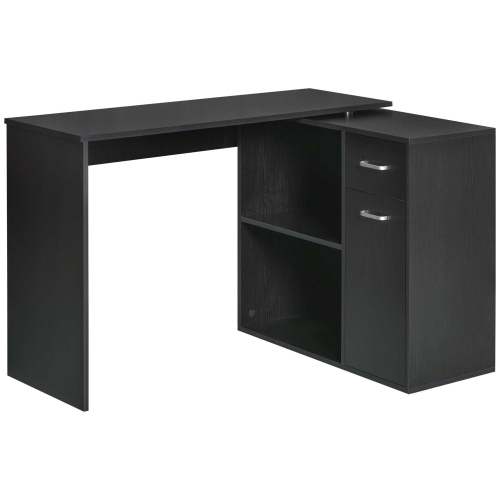
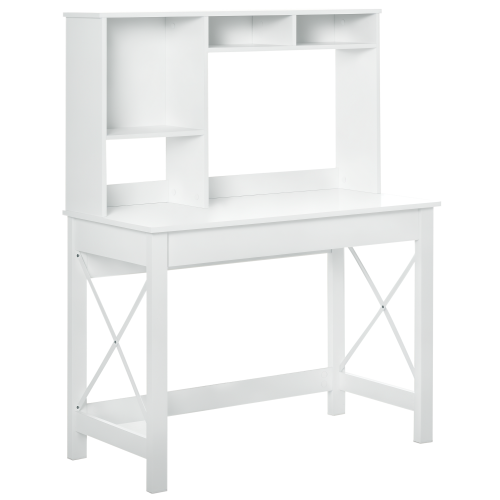
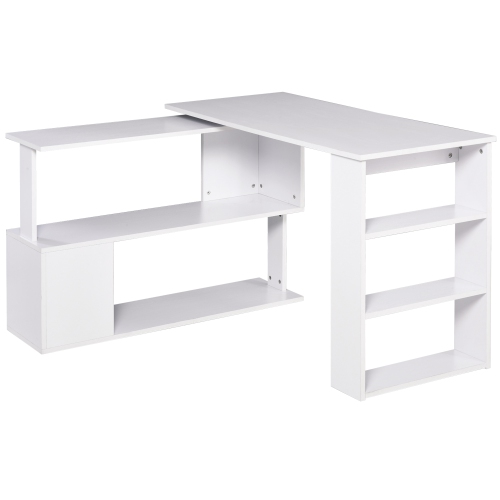
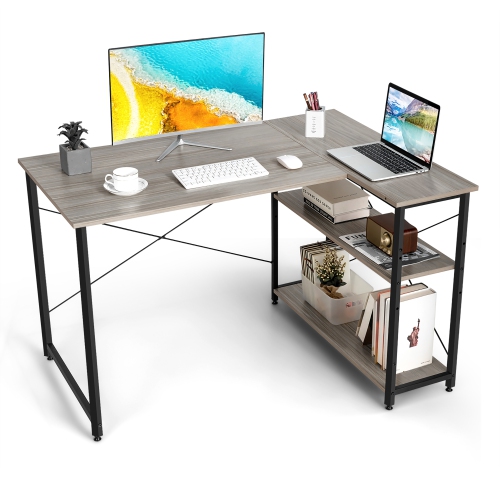
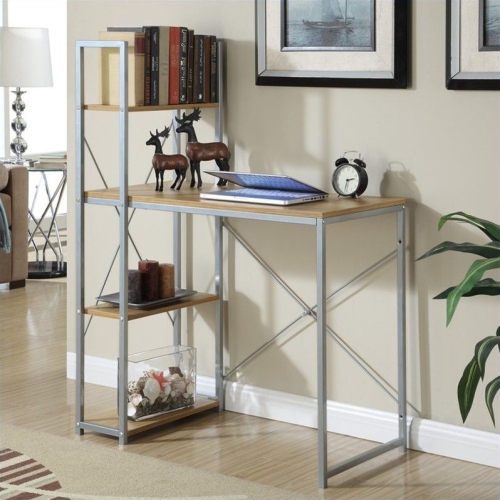
Home office desks with shelves combine a work surface and built-in storage, keeping everyday essentials close without requiring a separate bookcase beside the desk. They suit dedicated offices, shared study areas, and workspaces tucked into bedrooms or living rooms, where every piece of furniture needs to earn its place. The main differences are desk shape, desktop depth, shelf placement, and the amount of open or enclosed storage. Straight desks offer a familiar layout for a laptop, monitor, and notebook, while L-shaped desks create two connected surfaces that can separate computer work from paperwork or creative projects. A corner layout can make good use of an otherwise awkward spot, provided there is enough room for the chair to move freely. Desks with side shelves put folders and supplies within easy reach; designs with an overhead hutch use the space above the desktop for books, reference materials, and display pieces. Low shelving beneath the work surface can hold less frequently used supplies, although its position matters when stretching out or turning in a chair. For many single-monitor workspaces, a desktop around 48 to 60 inches wide offers a useful starting point, but the right fit depends on equipment dimensions and how the surface will be used. A laptop and a small writing pad need less space than two monitors, a full-size keyboard, and an open binder. Depth is just as important as width: a shallow desktop may fit neatly against a wall yet leave little room between the keyboard and screen. Built-in shelving also changes how much of the stated desk width is usable work surface, so overall measurements and desktop measurements serve different purposes. A well-proportioned desk leaves room for the task at hand, whether that means reviewing spreadsheets, attending video calls, completing assignments, or spreading out handwritten notes without balancing them on top of a keyboard.
Shelf layout has a direct effect on how comfortably a home office desk works throughout the day. Open shelves make it easy to see and reach notebooks, headphones, and charging accessories, while compartments paired with drawers or cupboards can keep loose paperwork and small supplies out of sight. Adjustable shelves offer flexibility for tall binders or storage boxes; fixed shelves provide set openings that need to match what will be stored. Shelf depth deserves attention, especially for equipment such as a printer, which may need extra clearance for paper trays, cables, and ventilation. A shelf that fits the printer body may still be too tight for everyday operation. Similarly, a desktop computer tower needs suitable airflow and accessible ports rather than a snug compartment that blocks vents. For frequently used materials, shelves beside the seated position are often more convenient than a high hutch that requires standing up each time. Heavier books and equipment belong on appropriately rated lower shelves, with each surface kept within the manufacturer's stated weight limit. In shared rooms, baskets or matching boxes can group supplies by person or task, leaving the desktop clear when work is finished. Cable openings and rear access can help route monitor and charging leads, but a desk still needs space behind it for plugs and cords without pinching them against the wall. Monitor arms introduce another fit consideration: a clamp requires a compatible desktop edge, enough clearance underneath, and a surface designed to support the load. An overhead hutch can also limit screen height or interfere with an adjustable arm. Where built-in compartments are better suited to daily essentials than larger collections, coordinating Home Office Storage Shelves can provide a separate place for reference books, files, and project materials. This keeps the desk focused on active work while allowing storage to extend across the room rather than crowding the space around the chair.
Materials, construction, and finish influence both the appearance of a desk with shelves and how it stands up to regular use. Solid wood brings visible grain and natural variation, while wood veneer offers a real-wood surface over a supporting core. Engineered wood with a laminate or melamine finish can provide a consistent colour and a surface that is generally straightforward to wipe clean, though resistance to scratches, heat, and moisture varies by construction. Metal frames can give a desk a lighter visual profile, but stability depends on the complete design, including bracing, connections, and the way shelves are supported. Glass surfaces have a distinct look and tend to show fingerprints; their care and equipment limits should follow the manufacturer's directions. On any desk, secure joints, well-supported shelves, and intact edges matter more to daily durability than appearance alone. Spills should be wiped up promptly, and coasters or desk mats can help protect surfaces from drink rings and repeated friction. Cleaning products need to suit the finish, with excess water avoided around seams and exposed edges. Fit extends beyond the desktop: the chair should slide into the knee space without striking shelf supports, and there should be enough clearance to stand, open nearby drawers, and move through the room. Taller hutches may require wall anchoring according to the supplied instructions, particularly in homes with children. Assembly access also matters, since a wide side panel or tall shelf unit needs room to be positioned safely. For remote workers, students, and people managing household paperwork, the most useful arrangement puts regularly handled materials close by without sacrificing legroom or writing space. A desk can also make a thoughtful gift for someone setting up a study or work area when their room measurements and preferences are known. Finishes that complement nearby furniture, along with storage that suits real routines, help the workspace feel like a considered part of the home rather than an improvised corner.
Shelf layout has a direct effect on how comfortably a home office desk works throughout the day. Open shelves make it easy to see and reach notebooks, headphones, and charging accessories, while compartments paired with drawers or cupboards can keep loose paperwork and small supplies out of sight. Adjustable shelves offer flexibility for tall binders or storage boxes; fixed shelves provide set openings that need to match what will be stored. Shelf depth deserves attention, especially for equipment such as a printer, which may need extra clearance for paper trays, cables, and ventilation. A shelf that fits the printer body may still be too tight for everyday operation. Similarly, a desktop computer tower needs suitable airflow and accessible ports rather than a snug compartment that blocks vents. For frequently used materials, shelves beside the seated position are often more convenient than a high hutch that requires standing up each time. Heavier books and equipment belong on appropriately rated lower shelves, with each surface kept within the manufacturer's stated weight limit. In shared rooms, baskets or matching boxes can group supplies by person or task, leaving the desktop clear when work is finished. Cable openings and rear access can help route monitor and charging leads, but a desk still needs space behind it for plugs and cords without pinching them against the wall. Monitor arms introduce another fit consideration: a clamp requires a compatible desktop edge, enough clearance underneath, and a surface designed to support the load. An overhead hutch can also limit screen height or interfere with an adjustable arm. Where built-in compartments are better suited to daily essentials than larger collections, coordinating Home Office Storage Shelves can provide a separate place for reference books, files, and project materials. This keeps the desk focused on active work while allowing storage to extend across the room rather than crowding the space around the chair.
Materials, construction, and finish influence both the appearance of a desk with shelves and how it stands up to regular use. Solid wood brings visible grain and natural variation, while wood veneer offers a real-wood surface over a supporting core. Engineered wood with a laminate or melamine finish can provide a consistent colour and a surface that is generally straightforward to wipe clean, though resistance to scratches, heat, and moisture varies by construction. Metal frames can give a desk a lighter visual profile, but stability depends on the complete design, including bracing, connections, and the way shelves are supported. Glass surfaces have a distinct look and tend to show fingerprints; their care and equipment limits should follow the manufacturer's directions. On any desk, secure joints, well-supported shelves, and intact edges matter more to daily durability than appearance alone. Spills should be wiped up promptly, and coasters or desk mats can help protect surfaces from drink rings and repeated friction. Cleaning products need to suit the finish, with excess water avoided around seams and exposed edges. Fit extends beyond the desktop: the chair should slide into the knee space without striking shelf supports, and there should be enough clearance to stand, open nearby drawers, and move through the room. Taller hutches may require wall anchoring according to the supplied instructions, particularly in homes with children. Assembly access also matters, since a wide side panel or tall shelf unit needs room to be positioned safely. For remote workers, students, and people managing household paperwork, the most useful arrangement puts regularly handled materials close by without sacrificing legroom or writing space. A desk can also make a thoughtful gift for someone setting up a study or work area when their room measurements and preferences are known. Finishes that complement nearby furniture, along with storage that suits real routines, help the workspace feel like a considered part of the home rather than an improvised corner.
Top selling and popular products
-
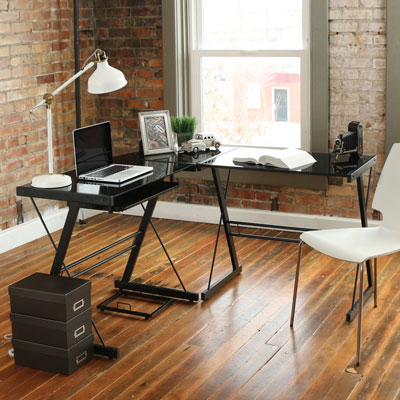 Your price for this item is $304.99
 -
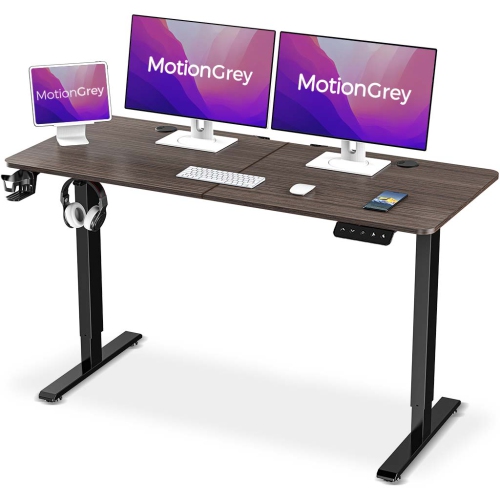 Your price for this item is $93.99
 -
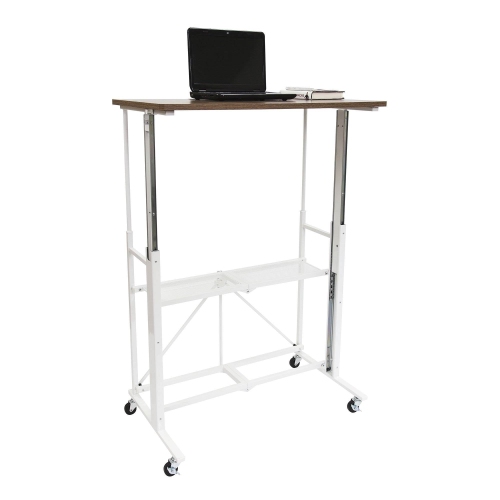 Your price for this item is $248.99
 -
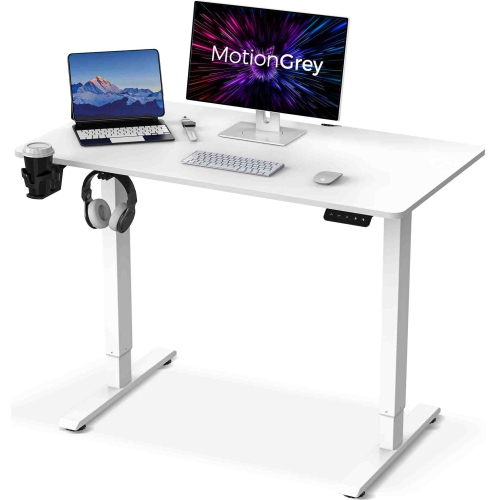 Your price for this item is $83.99
 -
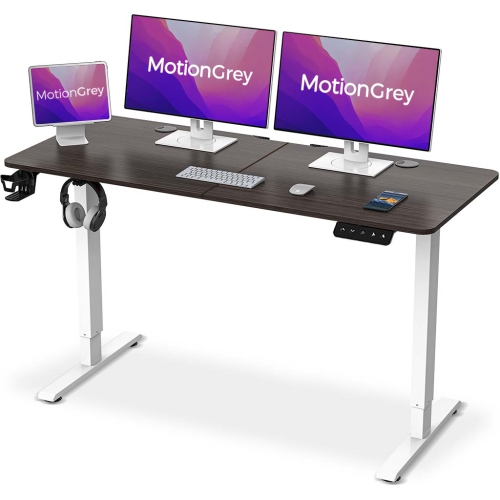 Your price for this item is $108.99
 -
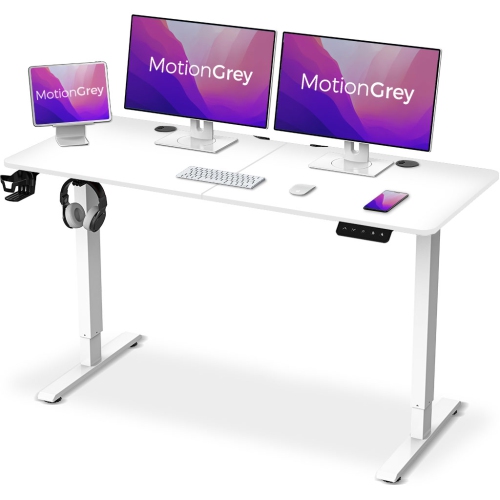 Your price for this item is $94.99
 -
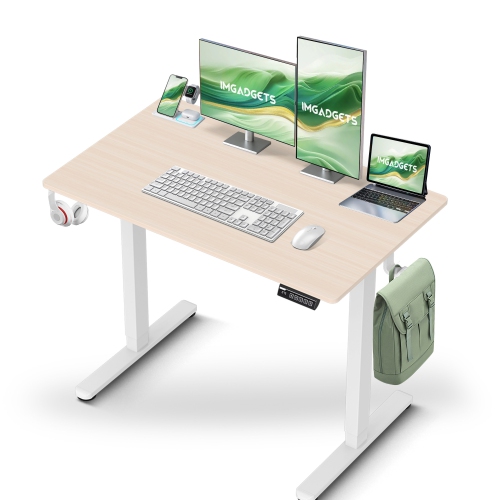 Your price for this item is $74.97
 -
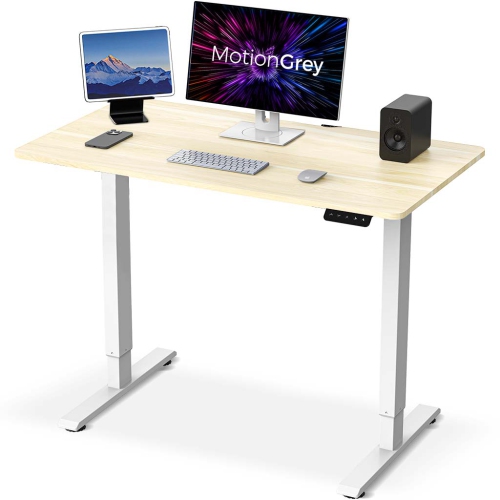 Your price for this item is $83.95
Discover more categories related to Home Office Desks with Shelves
Top Collections:
Pokemon Centers, Kindle Devices, Best Budget Office Chairs, Apple iPhones 16, Best Laptops for Writers, iPhone 15 Apple, Canon G7X Cameras, Refurbished Apple Laptops, Alarm Clock, Motorola Razr Phones
Some products may be subject to Environmental Handling Fees
(EHF) depending on your province.
Learn more about EHFs.