Stair Climbers
Stair climber machines offer an effective way to elevate your cardio workouts and build lower body strength from the comfort of your home. Whether you're looking to enhance your fitness routine or add a new challenge, stair climbers provide a dynamic workout experience. Explore a wide selection of stair climber options designed to fit various spaces and fitness goals, making it easy to find the right addition for your exercise setup.
Sort


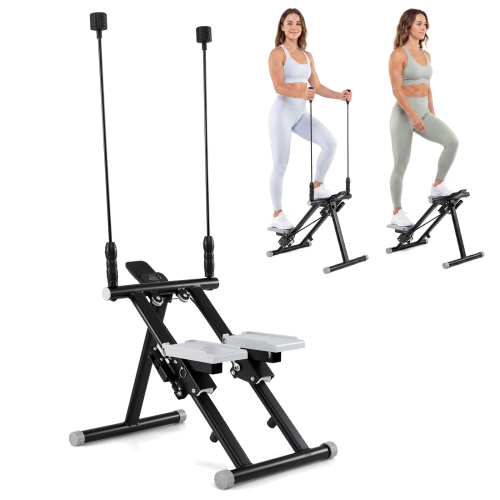
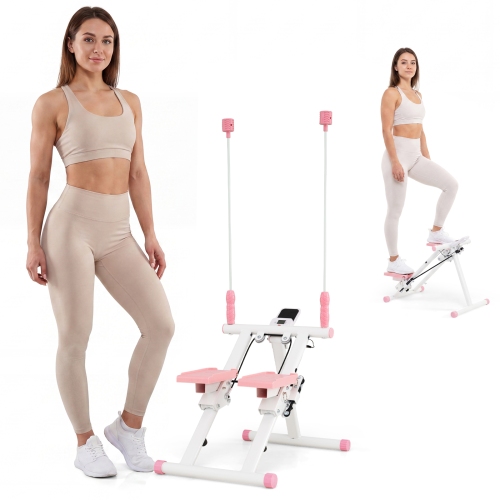



Every upward step puts your lower body to work
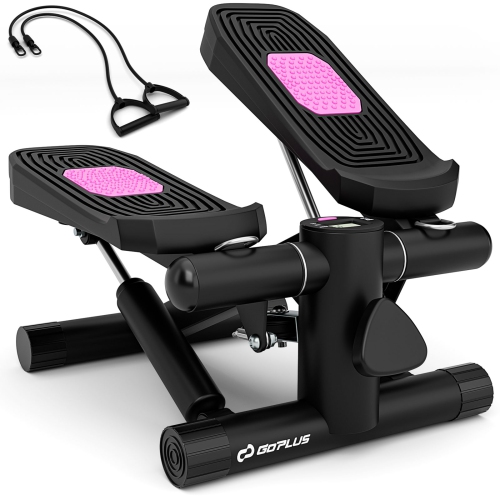
Stair climbers bring the familiar movement of climbing stairs into a dedicated cardio workout, with repeated upward steps that engage the glutes, quadriceps, hamstrings, and calves. The core also helps stabilize the body as weight transfers from one leg to the other. Although the terms stair climber and stair stepper sometimes overlap, the equipment can take different forms. A revolving-stair machine has a moving staircase that the user climbs continuously, while a pedal-based stepper uses two platforms that move up and down against resistance. Compact steppers generally have a smaller footprint, while larger stair-climbing machines may provide more substantial handrails, a console, and a broader range of workout settings. Both styles can support cardiovascular fitness and lower-body muscular endurance, but the experience depends on the stepping motion, resistance, pace, and length of the session. Stair climbing can feel demanding even at a measured pace because each step involves lifting body weight. It generally involves less landing impact than running, though it still places demands on the knees, hips, and ankles; lower impact does not mean that every machine suits every person. For someone building a regular exercise habit, a controlled stepping rhythm may offer a straightforward way to add movement without learning a complicated sequence. An experienced exerciser might use the same type of equipment for sustained climbs or intervals, provided the machine supports the required adjustments. The motion also has a practical connection to everyday activities such as taking stairs or walking uphill. Comfortable stepping leaves room for a stable foot placement and an upright posture rather than hanging heavily from the rails. Supportive athletic footwear and a pace that allows controlled movement help make the experience more manageable. People with balance concerns, joint symptoms, or health conditions may need advice from a qualified health or exercise professional before adding stair climbing to a routine. The goal is a repeatable workout that fits the user, not simply the fastest possible stepping speed.
The fit between a stair climber, its user, and the room matters as much as the workout settings. Floor dimensions tell only part of the story: there must also be clearance to step on and off, use the controls, and move safely around the equipment. Ceiling height deserves particular attention with revolving-stair machines because the user stands above floor level throughout the climb. The relevant measurement includes the machine’s raised stepping position, the user’s height, and the overhead clearance specified by the manufacturer. A low ceiling that works for a treadmill may not provide enough room for an elevated climbing surface. For pedal-based designs, pedal travel and the highest standing position also affect the space required. In a shared exercise area, access to doorways, shelving, and other equipment should remain clear during use. A folding frame can make a room easier to use for other activities, but folded dimensions, machine weight, and the effort needed to move it are separate considerations. Transport wheels help with repositioning on suitable surfaces; they do not necessarily make a heavy machine easy to carry between floors. Construction influences both stability and the feel of each step. Depending on the design, steel framing, reinforced joints, durable pedal surfaces, and secure rail connections can contribute to a solid platform. Textured footplates or stair treads help provide traction, while adequate stepping space allows comfortable foot placement without crowding the edges. Weight capacity is a firm manufacturer limit rather than a target, and the permitted session length or duty cycle can matter when several people share the equipment. A household planning back-to-back workouts has different demands from one person taking a brief movement break. Noise and vibration are worth considering, too, particularly near a home office or in a room above another living space. A suitable equipment mat may help protect the floor and reduce some vibration, but it cannot guarantee quiet operation or correct an unstable setup. Level placement and proper assembly remain essential.
Controls and maintenance shape the experience long after the first workout. On a powered revolving-stair machine, speed settings usually determine how quickly the stairs move, while pedal-based equipment may use hydraulic or other resistance systems to influence the effort of each stroke. Resistance adjustment, stepping height, and pace are not interchangeable features, so descriptions of how the mechanism works are more useful than a large setting count alone. Some hydraulic designs also have limits on continuous use or require cooling breaks, making the operating instructions important for anyone planning longer sessions. Displays may show elapsed time, step count, cadence, floors climbed, or estimated calories, depending on the machine. These measurements can help track consistency, but calorie figures are estimates rather than precise readings, and floor counts may be calculated differently across designs. Clearly labelled controls, readable numbers, and accessible stop functions can be more useful in daily use than a crowded screen. For households with more than one user, comfortable rail positions and easily changed settings help accommodate different routines, although not every frame adjusts to every height or stride. Compact equipment can suit a dedicated workout corner, while a larger machine may make more sense in a permanent exercise room. The selection of stair steppers for home gyms offers a related category for shoppers interested in stepping equipment for a home workout space. Whichever format suits the room, routine care helps preserve its condition: wiping away perspiration with a manufacturer-approved method, keeping stepping surfaces clean and dry, and checking for loose hardware or unusual movement are useful habits. Cleaning products, lubrication requirements, electrical care, and service intervals vary by design, so the supplied instructions should govern maintenance. Children and pets should remain clear of moving pedals and stairs, including when equipment is being adjusted or stored. With an appropriate fit, manageable controls, and care suited to its construction, a stair climber can become a dependable part of a varied exercise routine.
Top selling and popular products
-
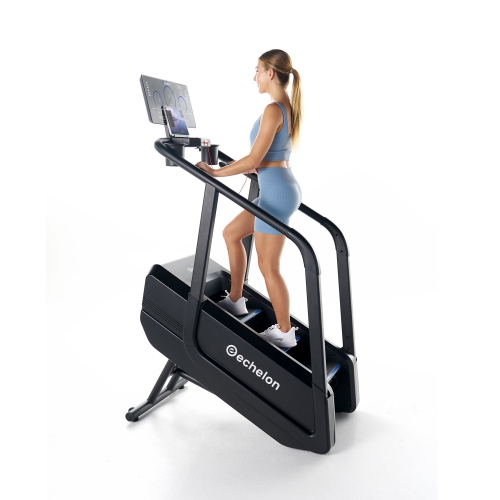 Your price for this item is $3150.99
-
 Your price for this item is $239.99
-
 Your price for this item is $209.99
-
 Your price for this item is $219.99
-
 Your price for this item is $209.99
-
 Your price for this item is $229.99
-
 Your price for this item is $249.99
-
 Your price for this item is $169.99
Discover more categories related to Stair Climbers
Top Collections:
Pokemon Centers, Best Budget Office Chairs, Kindle Devices, Best Cameras for Sports Photography, Pokémon 30th Celebration Cards, Best Laptops for Writers, Canon G7X Cameras, iPhone 15 Apple, Best Cell Phones Under $300, Apple iPhones 16
Some products may be subject to Environmental Handling Fees
(EHF) depending on your province.
Learn more about EHFs.