Foam Polishing Pads
Achieve a flawless finish on your vehicle with our selection of foam polishing pads, designed to elevate your car detailing experience. Perfect for both professional detailers and DIY enthusiasts, these pads are crafted to provide a smooth and even application of polish, wax, or sealant. Whether you're working on removing scratches, enhancing shine, or maintaining that showroom-quality look, the right foam polishing pad can make all the difference. Explore a variety of sizes and textures to find the perfect match for your specific needs and take your car's appearance to the next level.
Sort
Why pad firmness matters for your paint finish
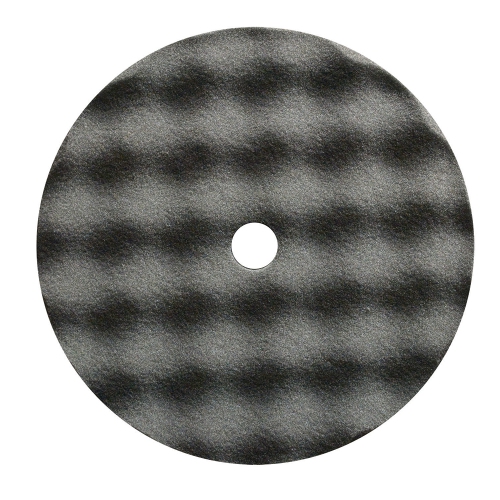
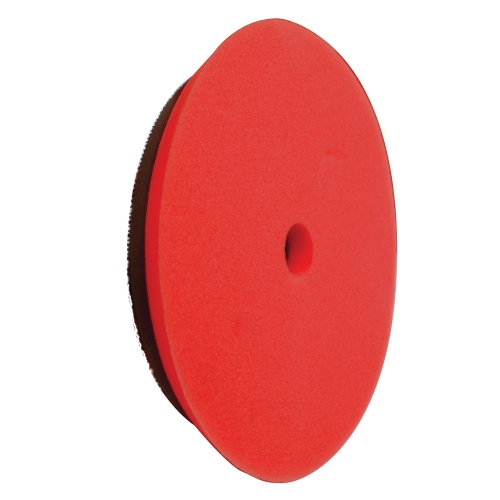
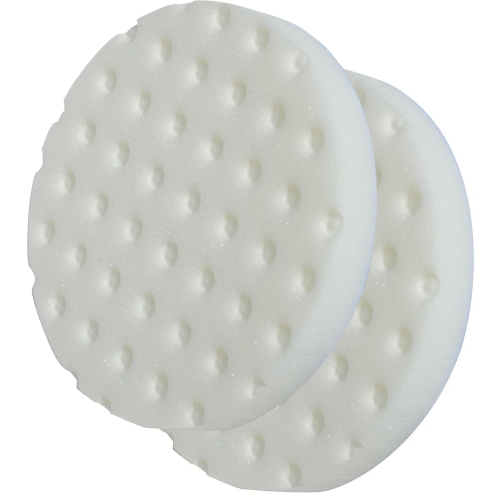
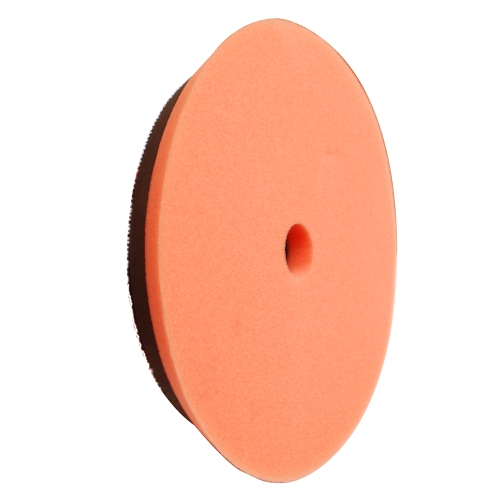
Foam polishing pads are detailing accessories used to spread compounds, polishes, waxes, and sealants across compatible surfaces, most often automotive paint and clear coat. Their cellular structure provides a cushioned contact surface, while differences in firmness, cell size, and construction influence how much cutting or finishing action they deliver. Many are made from open-cell polyurethane foam, though formulations vary to suit different tasks. A firm cutting pad paired with a suitable compound can help reduce oxidation and visible paint defects; a medium polishing pad is generally intended to refine light swirl marks and haze; and a soft finishing pad supports final gloss enhancement or the application of compatible protective products. These categories describe intended use rather than a universal grading system. Pad colours are not standardized across manufacturers, so an orange, blue, or black pad should be selected by its stated function rather than its colour alone. Results also depend on the liquid product, the machine, the paint’s hardness and condition, and the operator’s technique. Fine circular marks visible under a garage light may respond to a mild polish and a polishing pad, while haze left by a stronger compound may call for a softer pad and a finer finishing polish. Deep scratches that extend through the clear coat cannot safely be polished away, and even shallower defects may be better reduced than fully removed when preserving the finish is the priority. Foam pads appeal to car-care enthusiasts maintaining a daily driver, collectors refining a glossy finish, and professional detailers handling a range of paint conditions. Certain pads may also be suitable for gelcoat or other coated surfaces when explicitly approved for that application. They are not automatically suitable for matte paint, textured plastics, wraps, or every painted household surface. The most useful distinction is the task each pad is designed to perform: correcting a defect, refining the finish, or applying protection.
Fit is just as important as foam grade because a polishing pad must work with both the machine and its backing plate. Machine pads commonly use hook-and-loop attachment, while hand applicators are shaped to be held directly and do not require a polisher. Rotary and dual-action polishers move differently, and a pad intended for one machine type is not necessarily suitable for every other type. Compatibility information should cover the machine style, supported backing-plate size, and any operating limits. Nominal pad diameter may describe the polishing face rather than the attachment surface, especially on tapered designs, making both measurements worth checking. A pad specified for a 5-inch backing plate, for example, may have a wider working face to provide a margin around the plate, but the correct fit still depends on the stated specifications. Larger pads can cover broad areas such as bonnets and doors efficiently, while smaller pads provide access around narrow pillars, mirror housings, and sculpted sections when used with appropriately sized equipment. Thickness also affects how a pad feels in use. Thinner designs often transfer machine movement more directly, whereas thicker foam can provide additional cushioning; neither characteristic makes a pad universally better. Flat faces offer a continuous contact surface, while grooved, patterned, or recessed faces change how the foam contacts the panel and distributes polishing liquid. Some designs include a centre hole or a tapered edge, features whose purpose and compatibility depend on the pad’s construction. For shoppers comparing foam with other polishing materials, Buffing Pads provides a broader category to consider alongside the intended task and equipment. Wool and microfibre pads can behave differently from foam, particularly during heavier correction, so matching materials by appearance alone is unlikely to produce consistent results. A useful assortment of foam pads may include separate cutting, polishing, and finishing grades, plus duplicates for longer jobs. Keeping pads dedicated to particular compounds, polishes, or protective liquids helps prevent residue from a more abrasive stage from affecting a finer finishing stage.
Care and durability matter because a pad’s performance changes as it collects spent polish, removed residue, and contamination. Clean, resilient foam makes more even contact than a pad that has become clogged, distorted, or torn. Before polishing, the surface needs to be properly cleaned and free of loose grit, since a single trapped particle can leave marks rather than improve the finish. A small test area with a mild pad-and-polish combination is a practical way to assess how a particular finish responds before treating a larger section. Foam itself is not a guarantee against paint damage: excessive pressure, unsuitable machine settings, prolonged work in one spot, and aggressive combinations can all create problems. Edges, raised body lines, and areas with uncertain paint history deserve particular care. During use, accumulated residue should be cleared using a method approved for the pad and machine, with fresh pads substituted when the foam becomes heavily loaded or loses its normal working feel. Having several matching pads is especially useful for a full vehicle, where one saturated pad may no longer deliver the same finish it produced on the first panel. After use, a compatible pad-cleaning solution and thorough rinsing can help remove polishing residue, provided the pad’s care directions permit washing. Harsh solvents, stiff scrubbing, forceful wringing, or unapproved machine washing may damage the foam or the bond to its backing. Pads should dry fully before storage, without direct heat, and be kept somewhere clean where the working faces will not collect dust or grit. Inspection is equally important: crumbling foam, split edges, a separating backing layer, or an attachment surface that no longer grips securely are signs that a pad should be replaced. Service life varies with the application, cleaning routine, machine action, and handling rather than a fixed number of uses. For someone who enjoys detailing, a selection matched to their existing polisher and preferred tasks can also make a practical gift. Across occasional paint maintenance and frequent polishing work, the right foam grade, secure fit, and consistent care help support controlled results and a clear, even finish.
Fit is just as important as foam grade because a polishing pad must work with both the machine and its backing plate. Machine pads commonly use hook-and-loop attachment, while hand applicators are shaped to be held directly and do not require a polisher. Rotary and dual-action polishers move differently, and a pad intended for one machine type is not necessarily suitable for every other type. Compatibility information should cover the machine style, supported backing-plate size, and any operating limits. Nominal pad diameter may describe the polishing face rather than the attachment surface, especially on tapered designs, making both measurements worth checking. A pad specified for a 5-inch backing plate, for example, may have a wider working face to provide a margin around the plate, but the correct fit still depends on the stated specifications. Larger pads can cover broad areas such as bonnets and doors efficiently, while smaller pads provide access around narrow pillars, mirror housings, and sculpted sections when used with appropriately sized equipment. Thickness also affects how a pad feels in use. Thinner designs often transfer machine movement more directly, whereas thicker foam can provide additional cushioning; neither characteristic makes a pad universally better. Flat faces offer a continuous contact surface, while grooved, patterned, or recessed faces change how the foam contacts the panel and distributes polishing liquid. Some designs include a centre hole or a tapered edge, features whose purpose and compatibility depend on the pad’s construction. For shoppers comparing foam with other polishing materials, Buffing Pads provides a broader category to consider alongside the intended task and equipment. Wool and microfibre pads can behave differently from foam, particularly during heavier correction, so matching materials by appearance alone is unlikely to produce consistent results. A useful assortment of foam pads may include separate cutting, polishing, and finishing grades, plus duplicates for longer jobs. Keeping pads dedicated to particular compounds, polishes, or protective liquids helps prevent residue from a more abrasive stage from affecting a finer finishing stage.
Care and durability matter because a pad’s performance changes as it collects spent polish, removed residue, and contamination. Clean, resilient foam makes more even contact than a pad that has become clogged, distorted, or torn. Before polishing, the surface needs to be properly cleaned and free of loose grit, since a single trapped particle can leave marks rather than improve the finish. A small test area with a mild pad-and-polish combination is a practical way to assess how a particular finish responds before treating a larger section. Foam itself is not a guarantee against paint damage: excessive pressure, unsuitable machine settings, prolonged work in one spot, and aggressive combinations can all create problems. Edges, raised body lines, and areas with uncertain paint history deserve particular care. During use, accumulated residue should be cleared using a method approved for the pad and machine, with fresh pads substituted when the foam becomes heavily loaded or loses its normal working feel. Having several matching pads is especially useful for a full vehicle, where one saturated pad may no longer deliver the same finish it produced on the first panel. After use, a compatible pad-cleaning solution and thorough rinsing can help remove polishing residue, provided the pad’s care directions permit washing. Harsh solvents, stiff scrubbing, forceful wringing, or unapproved machine washing may damage the foam or the bond to its backing. Pads should dry fully before storage, without direct heat, and be kept somewhere clean where the working faces will not collect dust or grit. Inspection is equally important: crumbling foam, split edges, a separating backing layer, or an attachment surface that no longer grips securely are signs that a pad should be replaced. Service life varies with the application, cleaning routine, machine action, and handling rather than a fixed number of uses. For someone who enjoys detailing, a selection matched to their existing polisher and preferred tasks can also make a practical gift. Across occasional paint maintenance and frequent polishing work, the right foam grade, secure fit, and consistent care help support controlled results and a clear, even finish.
Top selling and popular products
-
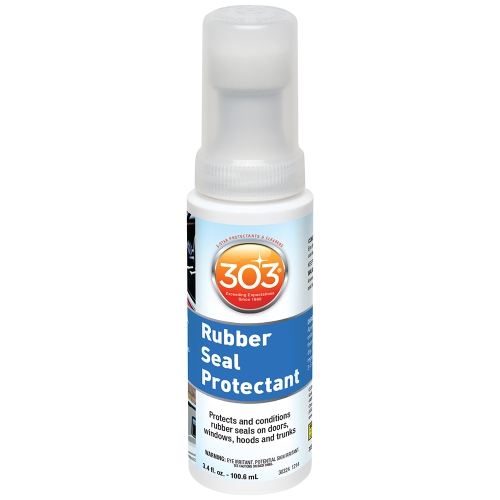 Your price for this item is $30.59
 -
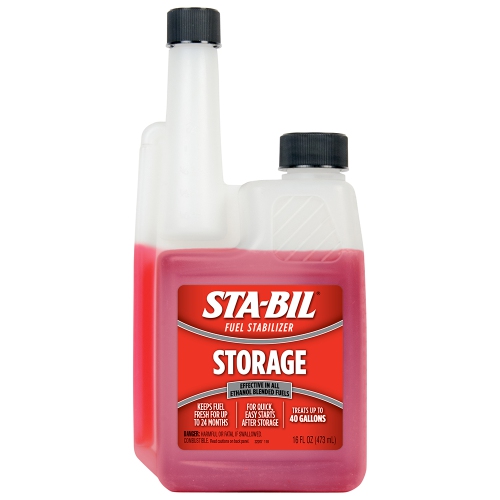 Your price for this item is $30.54
 -
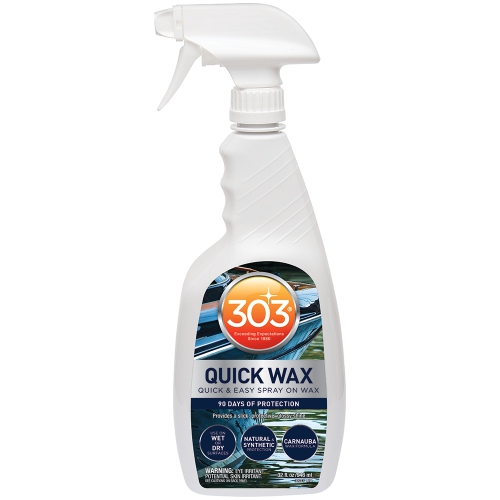 Your price for this item is $38.85
 -
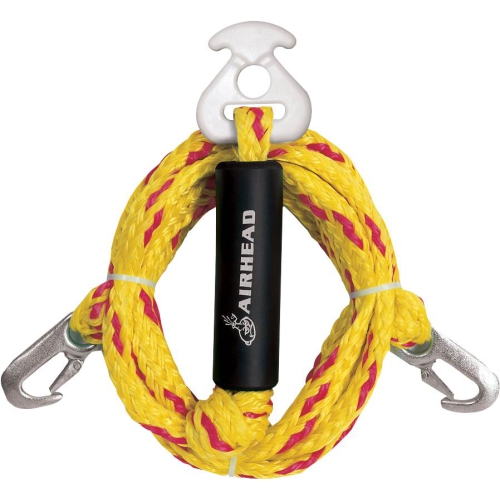 Your price for this item is $92.99
 -
 Your price for this item is $844.91
 -
 Your price for this item is $909.33
 -
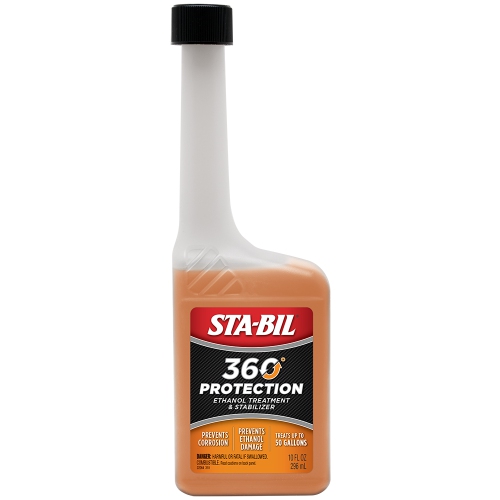 Your price for this item is $30.62
 -
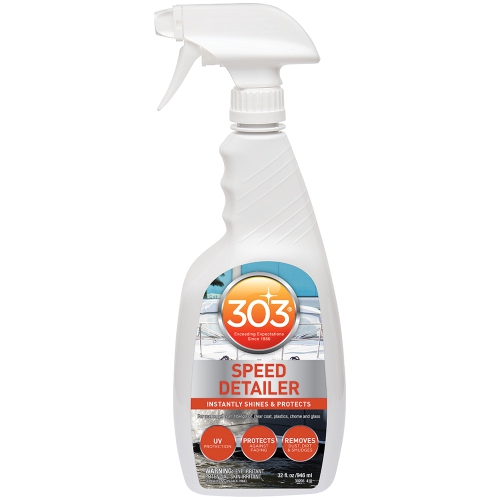 Your price for this item is $34.93
Discover more categories related to Foam Polishing Pads
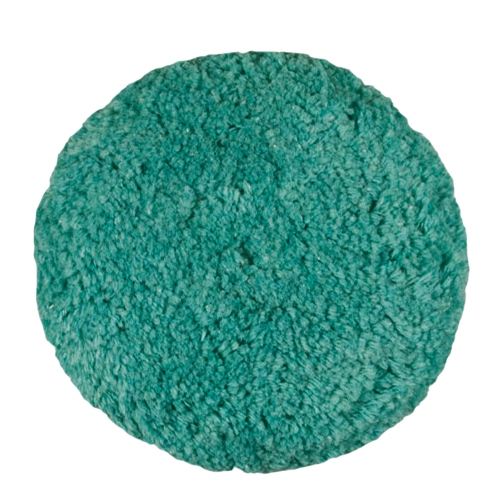
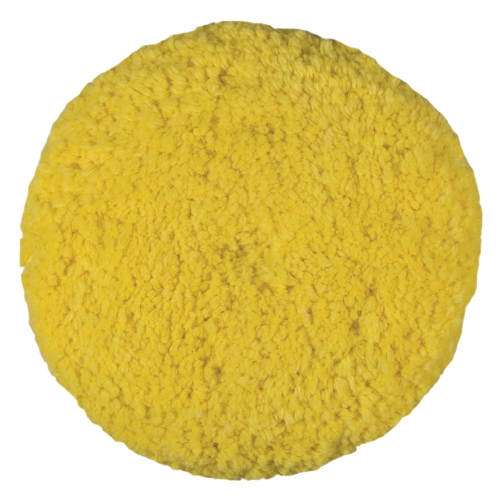
Top Collections:
Pokemon Centers, Kindle Devices, Best Budget Office Chairs, Apple iPhones 16, Best Laptops for Writers, iPhone 15 Apple, Canon G7X Cameras, Refurbished Apple Laptops, Alarm Clock, Motorola Razr Phones
Some products may be subject to Environmental Handling Fees
(EHF) depending on your province.
Learn more about EHFs.