Best Subwoofers Under $300

Bring deeper bass to your favourite music, movies, and games with the best subwoofers under $300. Ranked by user review ratings, this selection makes it easy to explore budget-friendly options for your home audio setup. Compare features, sizes, and connection options to find a subwoofer that fits your space and delivers the low-end punch you’re looking for.

Read More

What to look for in the best subwoofers under $300

1. Bass Performance

Look at frequency response and continuous power output to assess how low and loud a subwoofer can play. RMS power is more useful than peak power for comparing sustained output, though room size and placement also affect the bass you hear.

2. Connections and Compatibility

Check that the subwoofer’s inputs match your receiver, amplifier, or speakers, such as an LFE or line-level input. Powered subwoofers have a built-in amplifier, while passive models need separate amplification; soundbars may only work with specific matching subwoofers.

3. Size and Placement

Check cabinet dimensions to make sure the subwoofer fits your space with enough clearance for its connections and any ports. Placement near a wall or corner can increase bass output, but trying a few positions can help reduce boomy or uneven sound.

4. Controls and Value

Adjustable volume, crossover, and phase controls can help blend the subwoofer’s bass with your main speakers. Within a $300 budget, weigh these features alongside warranty coverage and any cables or amplification you may need to purchase separately.
  1. 1

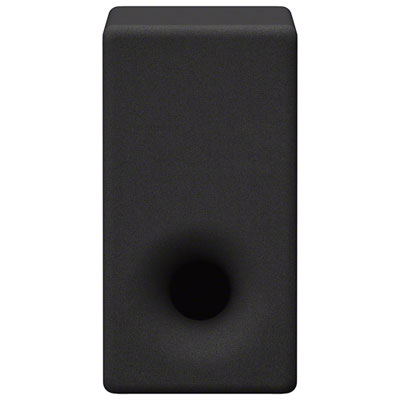
    Sony SA-SW3 200-Watt Subwoofer - Black

    About this product

    A wireless black subwoofer delivering 200W of powerful, distortion-free bass for immersive home audio.

    What customers like

    • Easy wireless setup and connectivity
    • Powerful and deep bass
    • Enhances home theater and movie experience
    • Sleek and minimalist design
    • Great value for the cost
    (865)
    $279.95
    SAVE $120
    Your price for this item is $279.95
  2. 2

    KICKER Cwr104 Compr 10" Subwoofer Dual Voice Coil 4-Ohm

    About this product

    A powerful 10-inch subwoofer with dual voice coil and 4-ohm impedance for deep, impactful bass.

    What customers like

    • Excellent value for money
    • Durable and solid construction
    • Easy installation and compatibility
    • Powerful and deep bass
    • Compact size fits limited spaces
    (251)
    $249.95
    SAVE $40
    Your price for this item is $249.95
  3. 3

    KICKER Cwr102 Compr 10" Subwoofer Dual Voice Coil 2-Ohm

    About this product

    A powerful dual voice coil 2-ohm subwoofer designed to deliver deep, impactful bass in your vehicle.

    What customers like

    • Excellent value for money
    • Durable and solid construction
    • Easy installation and compatibility
    • Powerful and deep bass
    • Compact size fits limited spaces
    (235)
    $249.95
    SAVE $40
    Your price for this item is $249.95
  4. 4

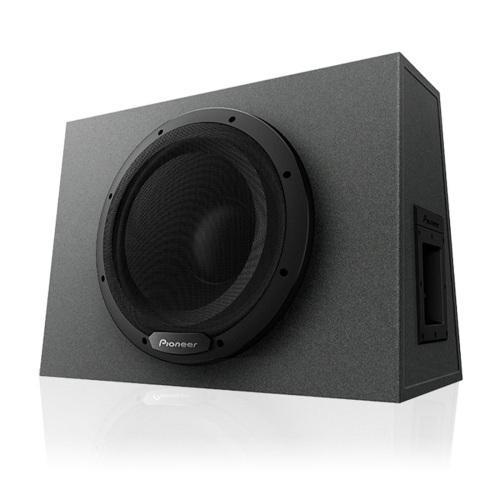
    PIONEER Ts-Wx1210A 12” 350W Sealed Enclosure Active Subwoofer

    About this product

    A powerful 350W active subwoofer with a 12" driver and sealed enclosure for deep, impactful bass.

    What customers like

    • Compact and well-designed
    • Easy installation and hookup
    • Powerful and deep bass
    • Excellent sound quality
    • Great value for money
    (25)
    $249.99
    SAVE $140
    Your price for this item is $249.99
  5. 5

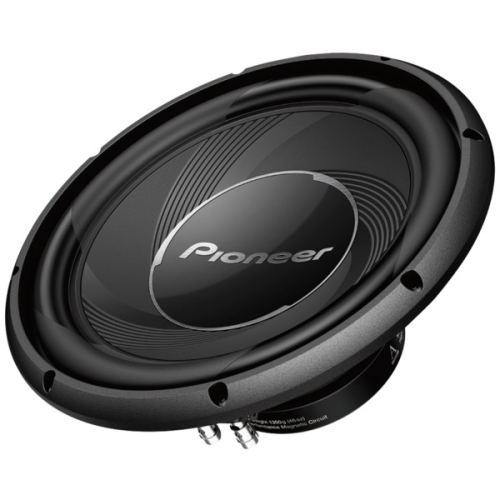
    PIONEER Ts-A30S4 A-Series Subwoofer (12 Inches)

    About this product

    A powerful 12-inch subwoofer delivering deep bass for an enhanced home audio experience.

    What customers like

    • Durable and reliable performance
    • Great value for the price
    • Powerful and deep bass
    • Excellent sound quality
    • Easy to set up
    (24)
    $154.48 Your price for this item is $154.48
  6. 6

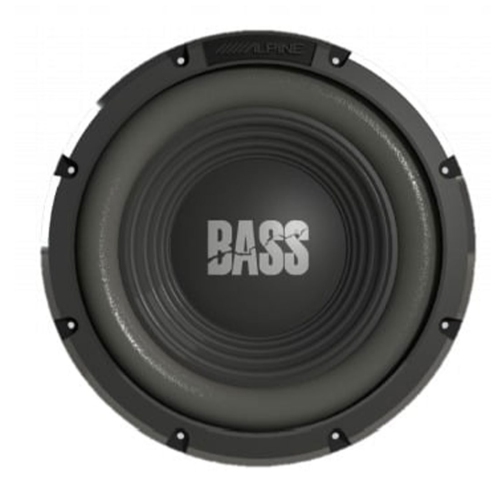
    ALPINE W12S4 Bassline Series 12" 4-Ohm Subwoofer

    About this product

    A powerful 12" 4-ohm subwoofer featuring a polypropylene and mica cone with poly-foam surround.

    What customers like

    • Deep and impactful bass
    • Solid build and durability
    • Impressive performance for the price
    • Excellent sound quality
    • Great value for money
    (21)
    $158.00
    SAVE $31
    Your price for this item is $158
  7. 7

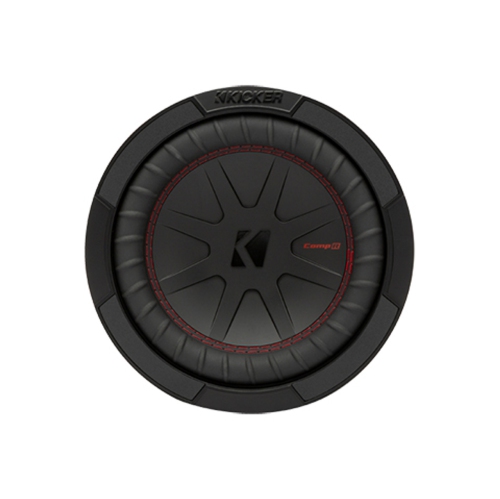
    KICKER 48Cwr84 Compr 8" Subwoofer 300W Rms - Dual 4 Ohm

    About this product

    A dual 4-ohm subwoofer featuring 300W RMS power, Santoprene surround, and polypropylene woofer cone.

    What customers like

    • Great sound quality
    • Excellent value for price
    • Compact size fits well
    • Deep and clear bass
    • Easy to install
    (21)
    $199.95
    SAVE $20
    Your price for this item is $199.95
  8. 8

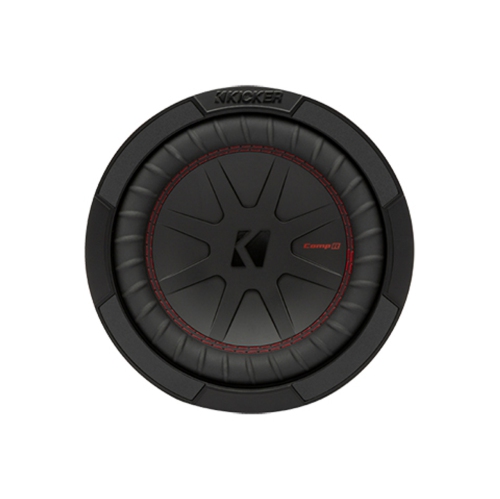
    KICKER 48Cwr82 Compr 8" Subwoofer 300W Rms - Dual 2 Ohm

    About this product

    A dual 2-ohm subwoofer featuring a polypropylene cone and Santoprene surround for powerful, reliable bass.

    (14)
    $199.95
    SAVE $20
    Your price for this item is $199.95
  9. 9

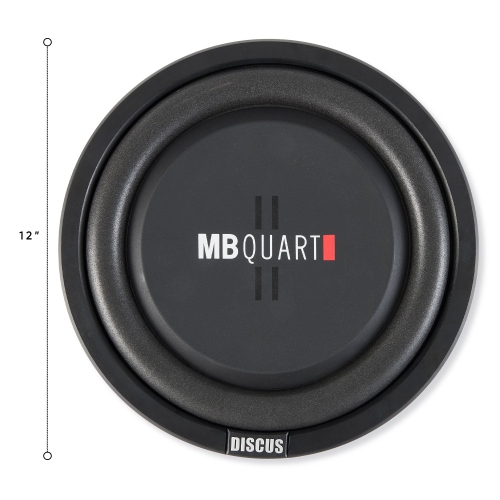
    MB QUART Ds1-304 400 Watt 12 Inch Slim Shallow Subwoofer Car/truck Dvc Sub

    About this product

    A slim, shallow mount subwoofer with 400 watts of power and durable construction.

    (12)
    $141.99 Your price for this item is $141.99
  10. 10

    KICKER 43Cwr124 Compr Series 12" Subwoofer 4-Ohm

    About this product

    A powerful 12" subwoofer featuring dual 4-ohm voice coils and an injection-moulded polypropylene cone.

    (9)
    $229.95 Your price for this item is $229.95

Deeper bass that blends with your existing speakers

A good home subwoofer adds depth and weight to sound without turning every scene or song into a rumble. Its role is to reproduce low frequencies that smaller speakers often struggle to deliver, from the resonant body of a kick drum to the rolling thunder beneath a film soundtrack. For a living room, bedroom, or compact home theatre, the best fit is a subwoofer that blends with the existing speakers, suits the room, and connects properly to the audio system. A powered subwoofer has a built-in amplifier, making it a practical choice for many home setups; a passive subwoofer needs a separate, compatible amplifier. That distinction matters more than cabinet size alone. An 8-inch or 10-inch driver can suit a smaller listening space, while a larger driver may offer greater output and deeper extension, depending on the enclosure and amplifier design. Driver diameter is only one part of performance, so frequency response, usable output, and control over bass are worth considering together. A lower stated frequency limit can suggest deeper bass, but specifications are most useful when they include a tolerance, such as ±3 dB, showing how much output varies across the stated range. Similarly, continuous or RMS power is generally more useful for comparison than a peak wattage figure, although amplifier power alone does not establish sound quality or loudness. For music, satisfying bass has a clear beginning and end: individual bass guitar notes remain distinct rather than merging into a single drone. For films and games, a well-matched subwoofer gives engines, footsteps, and dramatic effects a convincing sense of scale while leaving dialogue easy to follow. Listeners who enjoy orchestral music, electronic tracks, live concert recordings, or cinematic gaming can all appreciate that added foundation. The goal is not simply more bass, but low-frequency sound that feels connected to everything above it.

The cabinet, driver, and enclosure design all influence how a subwoofer sounds and how easily it fits into a home. Many cabinets use medium-density fibreboard, a dense engineered wood that helps limit unwanted panel vibration when the enclosure is well built and adequately braced. Driver cones may use treated paper, polypropylene, or other materials, with flexible surrounds that allow controlled movement. No single cone material guarantees better sound; the complete design matters more than any one component. A sealed enclosure has no bass port and can offer a compact footprint with a gradual low-frequency roll-off. A ported enclosure uses a tuned opening to increase output around part of its lower range, though performance depends on the tuning and construction. Neither design is automatically the better choice for every room or listening habit. Front-firing drivers face into the room, while down-firing drivers face the floor and rely on the clearance built into their feet or base. Both need stable placement and enough room around openings, controls, and amplifier panels. In a furnished apartment, cabinet depth can be just as important as width, particularly when an audio cable and power cord must fit behind it. Tucking a subwoofer into a tightly enclosed furniture compartment can restrict airflow and introduce rattles, so an open floor position is often more practical. Room layout also changes the result: a corner may increase bass output, but it can exaggerate certain notes, while another position along the front wall may sound more even. Open-plan rooms typically demand more output than enclosed rooms of similar listening distance because the connected space is larger. On shared floors, an isolation pad or suitable feet may reduce some mechanical vibration, but they will not prevent deep bass from travelling through a building. Moderate listening levels remain important, especially during late-night viewing. A compact cabinet with sensible output can be a more comfortable everyday match than a larger unit that overwhelms the space.

Connections and adjustments determine how smoothly a subwoofer becomes part of an existing system. Many powered home subwoofers accept a line-level signal through an RCA input, often labelled LFE or line in, which can connect to a compatible receiver’s subwoofer output. Some also offer speaker-level inputs for use with certain stereo amplifiers, but compatibility should be checked against both devices’ connection requirements. A television or soundbar does not necessarily support an external wired subwoofer, and wireless subwoofers are often designed to pair only with particular systems. Wireless audio capability also does not eliminate the need for power. For a straightforward setup, accessible volume, crossover, and phase controls can be useful. The crossover adjustment helps determine where the subwoofer hands off to the main speakers; with an AV receiver, bass management may be handled by the receiver instead. A crossover near 80 Hz is a common starting point for capable bookshelf speakers, while smaller satellite speakers may need a higher setting. Phase adjustment can help the subwoofer and speakers work together around that handoff, reducing the chance of bass sounding unexpectedly thin at the listening seat. Familiar music with a steady bass line makes integration easier to judge: the bass should sound full and even, not as though it comes from a separate box beside the sofa. Automatic standby is convenient for everyday use, although behaviour with very quiet signals varies by design. For long-term care, a soft, dry cloth is usually enough for the cabinet, with the manufacturer’s cleaning instructions taking priority. Keep liquids away, leave ventilation openings clear, and avoid pressing on the cone or resting objects on the enclosure that might vibrate during playback. A protective grille can be helpful in busy family rooms, but it is not a substitute for careful placement away from curious hands or pets. As a gift for a film fan, music lover, or gamer, a subwoofer is most successful when the recipient’s connections and floor space are already known. For a broader comparison of home audio options, Best Subwoofers Under $1000 offers another collection to explore. Whatever the listening setup, balanced bass, compatible connections, and a manageable footprint make the difference between an occasional showpiece and a welcome part of everyday entertainment.
Read More

FAQ

Some products may be subject to Environmental Handling Fees (EHF) depending on your province. Learn more about EHFs.