Money Counting Games
Encourage financial literacy and numeracy skills in a fun and engaging way with money counting games. These interactive tools are perfect for children and adults alike, offering an entertaining approach to learning the value of money, making change, and budgeting. Whether you're looking to enhance classroom learning or enjoy educational playtime at home, these games provide a hands-on experience that makes mastering money management enjoyable. Discover a variety of options designed to challenge different age groups and skill levels, turning math practice into an exciting adventure.
Sort
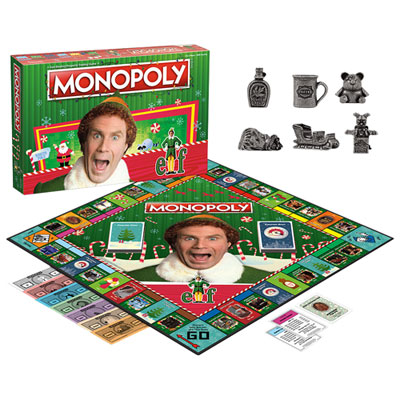
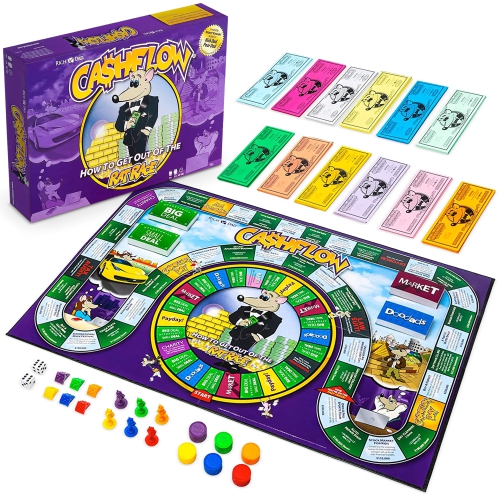
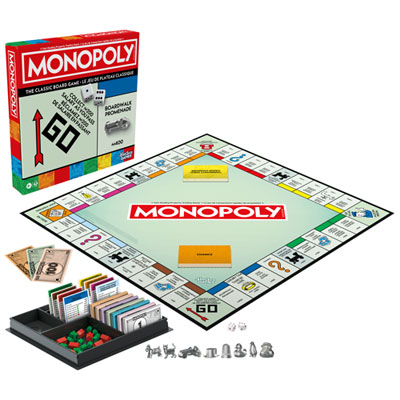
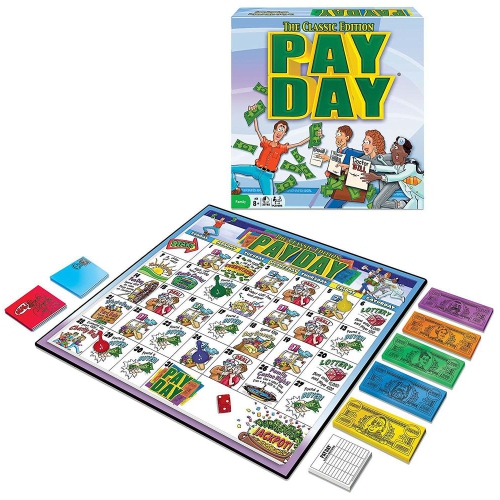
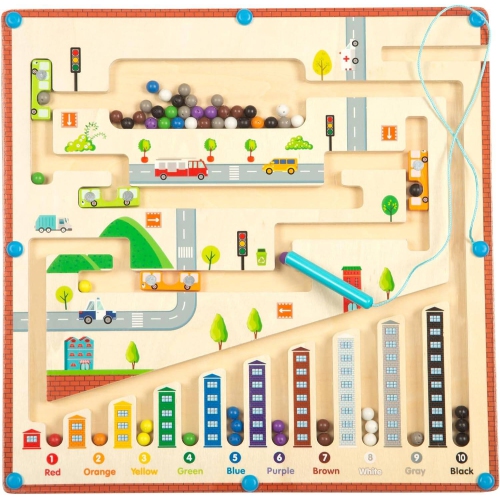
How hands-on play builds everyday money skills
Money counting games are educational toys and activities that help players identify coins and banknotes, understand their values, add amounts, and work out change through hands-on play. Physical formats include board games, matching cards, play money sets, and pretend checkout activities, giving children different ways to connect a written amount with something they can sort, move, and count. Instead of treating every coin as a separate object with the same worth, players gradually learn that different combinations can represent an equal total. This distinction is an important bridge between counting objects and understanding money. For Canadian learners, currency illustrations matter: familiar nickels, dimes, quarters, loonies, toonies, and Canadian banknotes make practice easier to relate to everyday transactions. Sets based on another country’s currency can still support addition and subtraction, but their denominations and designs may not match what a child sees at home. Some activities also include pennies, which can illustrate hundredths of a dollar, although pennies are no longer distributed for everyday cash transactions in Canada. Clear denomination markings, readable numerals, and distinct illustrations help players focus on value rather than guessing from colour alone. A simple sorting activity might involve placing matching coins in separate compartments, while a more advanced game could ask players to build the same total in two different ways. Counting by fives, tens, and twenty-fives becomes more meaningful when each step corresponds to a coin on the table. These games can support early numeracy, mental arithmetic, and practical financial vocabulary without requiring every session to feel like a worksheet. They also fit naturally alongside Math Practice Games, particularly when children are moving between number recognition, addition, subtraction, and solving short word problems. The strongest connection to everyday learning comes from understanding what the pieces represent, not simply finishing a round quickly. Moving coins into neat groups and explaining a total aloud can reveal a player’s thinking more clearly than a correct answer on its own.
Different money counting games suit different stages of learning, and the amount of reading, number work, and turn-taking involved can matter as much as the suggested age range. Beginners often benefit from a small selection of denominations, large illustrations, and one clear task at a time. Matching a coin to its printed value or counting a group of identical coins provides a manageable starting point before mixed amounts enter the game. Children who already count confidently may be ready for exchanging smaller denominations for larger ones, comparing totals, or checking whether a payment covers a pretend purchase. Making change adds another layer because it involves tracking both the amount owed and the amount handed over. At a pretend shop on the kitchen table, one child might act as the cashier while another counts out play money, then both can check the transaction before swapping roles. The activity becomes richer when players explain why they chose particular coins or show another combination that would work. Board-based formats can add structure through turns and shared goals, while open-ended play money leaves more room for storytelling and repeated practice at a comfortable pace. Cooperative activities may suit children who lose confidence under time pressure; competitive formats can appeal to players who enjoy a clear finish and a little friendly challenge. For siblings or mixed-ability groups, flexible rules allow one player to practise matching while another calculates a total using the same materials. Parents, caregivers, teachers, and tutors may use these games for short practice sessions, classroom learning centres, or small-group activities. Older learners who want additional practice with cash-handling concepts may also find clear, straightforward formats useful, provided the presentation feels appropriate to their age and interests. As gifts, money-themed learning games can suit children who enjoy pretend shops, sorting collections, or playing school. A format that matches those existing interests is more likely to invite repeat play than one chosen solely for a difficult skill it promises to teach.
Materials and construction influence how comfortably a money counting game works in daily use. Cardboard coins and banknotes are easy to spread across a table, but their edges may show wear after frequent sorting, stacking, and packing away. Thicker cards, sturdy boards, and clearly printed surfaces can be useful for shared play, especially when several children handle the same pieces throughout a session. Plastic play coins offer a different tactile experience and may stand up well to repeated handling, although cleaning methods should always follow the manufacturer’s directions. Paper components generally need dry hands and protection from spills; damp wiping may damage printing or cause layers to separate unless the material is designed for it. Storage is just as practical a consideration as the playing surface. Separate compartments or labelled pouches make it easier to find denominations, check that pieces are accounted for, and begin the next session without a lengthy sorting task. For a small table or classroom desk, the footprint of the board and room needed for each player’s money can affect how smoothly the game fits into the space. Pieces should be comfortable for the intended player to grasp, with numerals that remain legible under ordinary indoor lighting. Larger pieces may be easier for some learners to handle, but size alone does not establish safety: the stated age grading and any small-parts warnings remain essential, particularly in homes with younger siblings. Play money should also be clearly distinguishable from real currency and stored separately from household cash. Durability matters most when the game invites repeated use, whether that means a quick round after school or a longer pretend-shop session during the cooler months. Varied challenges, straightforward setup, and rules that adults can explain without interrupting every turn help keep the focus on play. With suitable materials and a comfortable level of difficulty, money counting games give learners repeated opportunities to handle amounts, check their reasoning, and become more familiar with the arithmetic behind everyday cash transactions.
Different money counting games suit different stages of learning, and the amount of reading, number work, and turn-taking involved can matter as much as the suggested age range. Beginners often benefit from a small selection of denominations, large illustrations, and one clear task at a time. Matching a coin to its printed value or counting a group of identical coins provides a manageable starting point before mixed amounts enter the game. Children who already count confidently may be ready for exchanging smaller denominations for larger ones, comparing totals, or checking whether a payment covers a pretend purchase. Making change adds another layer because it involves tracking both the amount owed and the amount handed over. At a pretend shop on the kitchen table, one child might act as the cashier while another counts out play money, then both can check the transaction before swapping roles. The activity becomes richer when players explain why they chose particular coins or show another combination that would work. Board-based formats can add structure through turns and shared goals, while open-ended play money leaves more room for storytelling and repeated practice at a comfortable pace. Cooperative activities may suit children who lose confidence under time pressure; competitive formats can appeal to players who enjoy a clear finish and a little friendly challenge. For siblings or mixed-ability groups, flexible rules allow one player to practise matching while another calculates a total using the same materials. Parents, caregivers, teachers, and tutors may use these games for short practice sessions, classroom learning centres, or small-group activities. Older learners who want additional practice with cash-handling concepts may also find clear, straightforward formats useful, provided the presentation feels appropriate to their age and interests. As gifts, money-themed learning games can suit children who enjoy pretend shops, sorting collections, or playing school. A format that matches those existing interests is more likely to invite repeat play than one chosen solely for a difficult skill it promises to teach.
Materials and construction influence how comfortably a money counting game works in daily use. Cardboard coins and banknotes are easy to spread across a table, but their edges may show wear after frequent sorting, stacking, and packing away. Thicker cards, sturdy boards, and clearly printed surfaces can be useful for shared play, especially when several children handle the same pieces throughout a session. Plastic play coins offer a different tactile experience and may stand up well to repeated handling, although cleaning methods should always follow the manufacturer’s directions. Paper components generally need dry hands and protection from spills; damp wiping may damage printing or cause layers to separate unless the material is designed for it. Storage is just as practical a consideration as the playing surface. Separate compartments or labelled pouches make it easier to find denominations, check that pieces are accounted for, and begin the next session without a lengthy sorting task. For a small table or classroom desk, the footprint of the board and room needed for each player’s money can affect how smoothly the game fits into the space. Pieces should be comfortable for the intended player to grasp, with numerals that remain legible under ordinary indoor lighting. Larger pieces may be easier for some learners to handle, but size alone does not establish safety: the stated age grading and any small-parts warnings remain essential, particularly in homes with younger siblings. Play money should also be clearly distinguishable from real currency and stored separately from household cash. Durability matters most when the game invites repeated use, whether that means a quick round after school or a longer pretend-shop session during the cooler months. Varied challenges, straightforward setup, and rules that adults can explain without interrupting every turn help keep the focus on play. With suitable materials and a comfortable level of difficulty, money counting games give learners repeated opportunities to handle amounts, check their reasoning, and become more familiar with the arithmetic behind everyday cash transactions.
Top selling and popular products
-
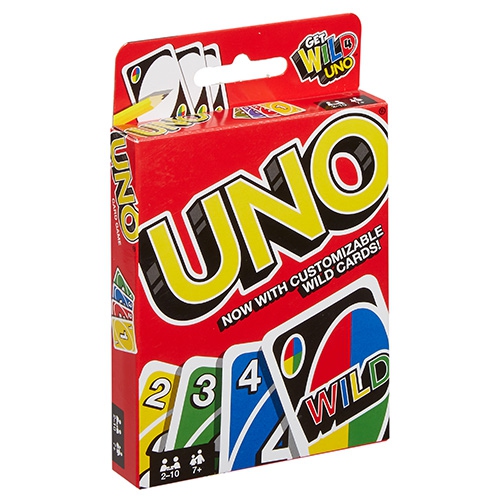 Your price for this item is $14.99
 -
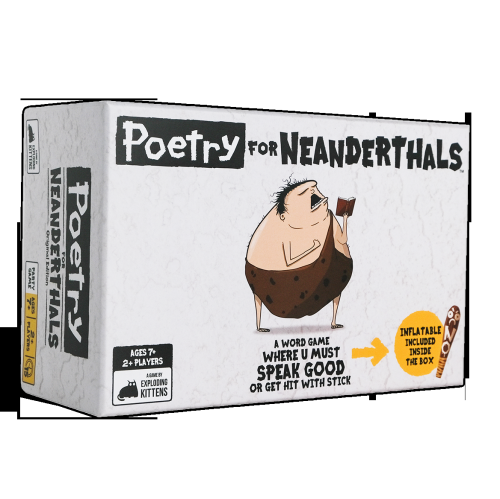 Your price for this item is $34.99
 -
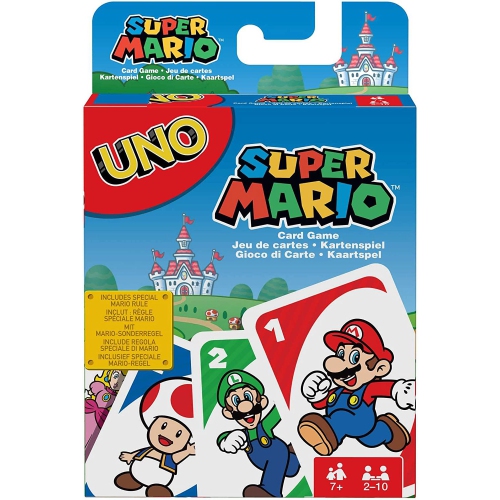 Your price for this item is $15
 -
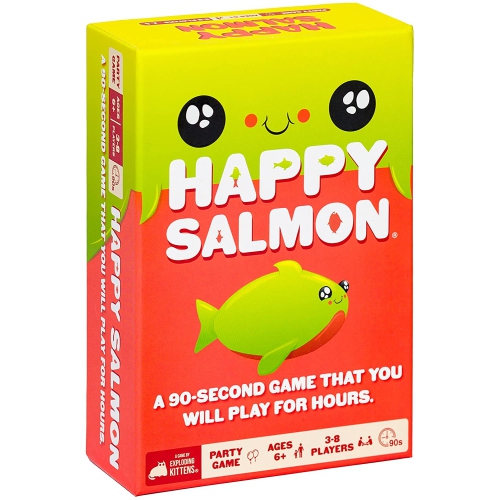 Your price for this item is $21.99
 -
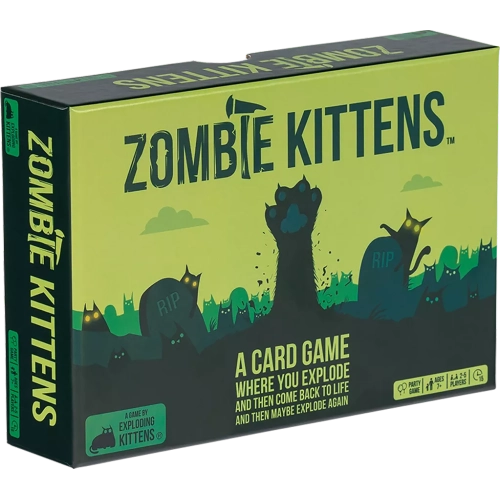 Your price for this item is $34.99
 -
 Your price for this item is $35.59
 -
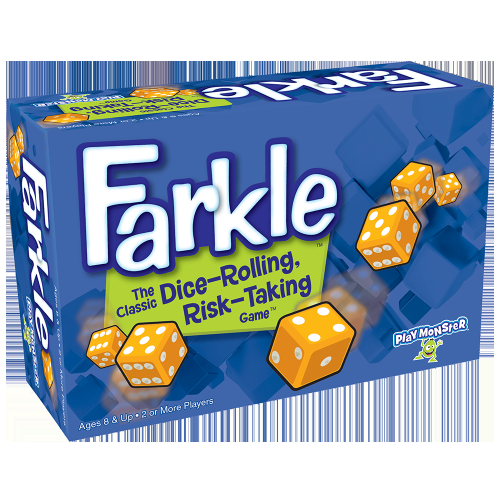 Your price for this item is $20.93
 -
 Your price for this item is $31.99
Discover more categories related to Money Counting Games
Top Collections:
Pokemon Centers, Kindle Devices, Best Budget Office Chairs, Apple iPhones 16, Best Laptops for Writers, iPhone 15 Apple, Canon G7X Cameras, Refurbished Apple Laptops, Alarm Clock, Motorola Razr Phones
Some products may be subject to Environmental Handling Fees
(EHF) depending on your province.
Learn more about EHFs.