40-inch Tvs for Watching FHD Movies
Transform your movie nights with our selection of 40-inch TVs for watching FHD movies, where stunning visuals and immersive experiences await. These TVs offer the perfect balance between size and performance, making them an ideal choice for any room in your home. Whether you're setting up a cozy entertainment corner or enhancing your living room setup, these 40-inch screens deliver crisp images that bring your favorite films to life. Dive into a cinematic adventure and discover how these TVs can elevate your viewing pleasure with every scene.
Sort
Movie picture quality goes beyond screen size
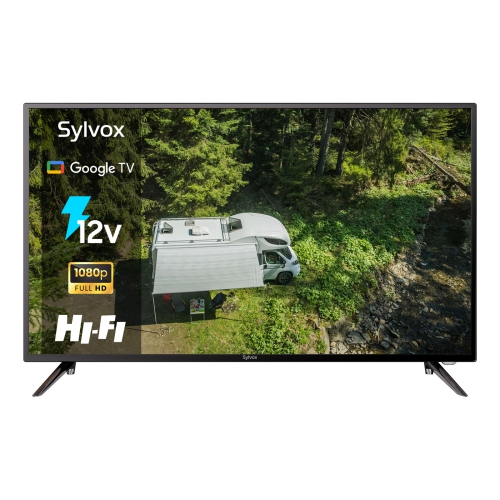
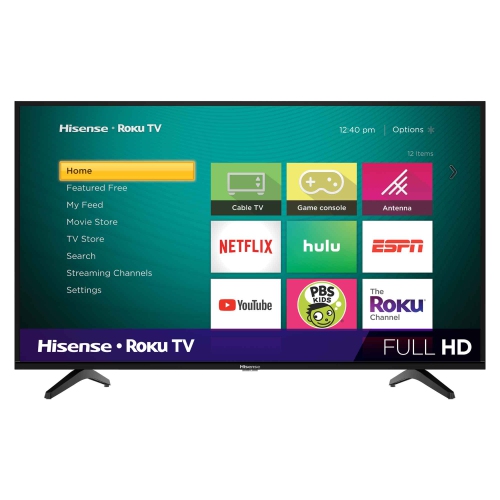
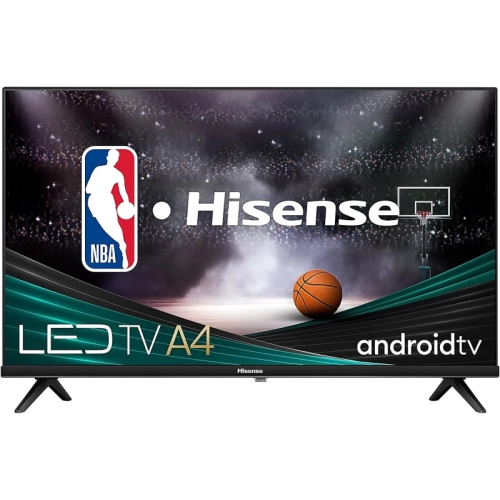
40-inch TVs for watching FHD movies bring a clear, comfortably sized picture to bedrooms, apartment living rooms, dens, and other spaces where a larger screen could dominate the room. Full HD, also called FHD or 1080p, describes a resolution of 1920 × 1080 pixels. On a television with a native 1080p panel, a Full HD movie can display at its original resolution without needing to be enlarged to fit a higher-resolution screen, although picture settings and processing can still affect the result. That makes these TVs a practical match for 1080p streaming, Blu-ray movies, and digital film libraries. Screen size alone does not confirm resolution, so a native Full HD specification is an important distinction within the 40-inch category. Picture quality also depends on contrast, colour accuracy, brightness, and how well the screen handles movement. In a film with dark interiors, stronger contrast helps separate a character’s coat from the shadows behind it; in a bright outdoor scene, balanced colour keeps faces looking natural rather than overly orange. LED-backlit LCD screens are common at this size, while some televisions add quantum dot technology to broaden colour reproduction. The panel designation alone does not guarantee better movie performance, since backlighting and picture processing matter too. A 60Hz refresh rate is common for everyday film viewing, but the handling of movies filmed at 24 frames per second varies between models. Slow camera pans can reveal uneven motion more readily than a still close-up. Where offered, cinema or movie picture modes provide a useful starting point for film viewing, often with less aggressive sharpening than vivid modes. Motion smoothing, if included, is a matter of preference: some viewers enjoy its fluid appearance, while others prefer the familiar cadence of film. A clean, high-quality video source matters throughout, because low-bitrate streaming can leave visible blocks or banding even on a capable Full HD display.
The appeal of a 40-inch television is as much about physical fit as picture detail. The measurement refers to the screen’s diagonal, not the width of the cabinet, and the bezel, stand, and connection layout all affect how neatly it fits into a room. A narrow media unit may accommodate the screen but not widely spaced feet, while a centre-mounted stand can suit a different furniture layout. Published dimensions with the stand attached help establish whether there is enough surface depth and clearance for a secure setup. Seating roughly 1.5 to 2.5 metres from a 40-inch Full HD screen is a reasonable starting range, with personal eyesight, subtitle size, and room layout shaping the most comfortable position. For a film watched from bed, the viewing angle deserves particular attention: an elevated screen can look washed out on some panels when viewed from below. In a shared sitting area, off-centre seating can similarly affect contrast and colour. Placing the screen away from direct reflections makes dark scenes easier to follow without simply turning up the brightness. Wall mounting can free up furniture space, provided the mount matches the television’s VESA pattern and weight, and the wall fixings suit the wall construction. Stand-mounted TVs also benefit from suitable anti-tip restraint, especially around children or pets. Sound deserves space in the setup as well. Slim cabinets leave limited room for speakers, so dialogue clarity can matter more than the stated speaker power. A dialogue mode may help with quiet conversations, while a compatible soundbar can give voices more presence and soundtracks greater weight. HDMI ARC, where supported, allows TV audio to reach a compatible sound system through one HDMI connection; optical audio is another common option. Accessible headphone connections or supported wireless audio can be useful for late viewing without filling the room with sound, though wireless compatibility and audio delay vary by television and headphones.
For everyday movie watching, convenient access to favourite content often determines how enjoyable a television feels to use. A smart TV can bring streaming apps directly to the screen, but app support, account requirements, and software features differ by platform. The presence of an app does not necessarily mean every film will stream in Full HD: the subscription tier, title, connection quality, and playback settings can all influence resolution. Reliable Wi-Fi is helpful, while an Ethernet connection, where available, can provide an alternative when the router is within reach. An external streaming player can also supply a preferred interface or services not supported by the television itself. Enough HDMI inputs make it easier to leave that player, a Blu-ray player, and another entertainment device connected without repeatedly swapping cables. If one HDMI port will serve an ARC soundbar, that connection needs to be accounted for when considering the remaining inputs. USB playback can be handy for compatible personal video files, although supported file formats and storage limits should be checked in the specifications. Practical details such as a clearly labelled remote, responsive menus, adjustable captions, and accessible picture controls make a difference for households with varied viewing habits. These TVs can suit someone furnishing a first apartment, adding a dedicated film screen to a bedroom, or choosing a gift for a movie lover with limited space. If the room and furniture allow a slightly larger display, best 43-inch TVs for watching movies offers a related size to consider without a dramatic jump in scale. For lasting use, the lightweight plastic housing and delicate screen surface need sensible handling rather than heavy-duty cleaning. Follow the manufacturer’s care directions, use a soft microfibre cloth, and avoid spraying liquid directly onto the panel. Clear ventilation openings, gently routed cables, and a stable installation help protect the television during daily use. Together, a well-matched screen, straightforward connections, and comfortable placement create a compact movie setup that is easy to settle into, whether the evening calls for a subtitled drama, an animated favourite, or a familiar film worth watching again.
The appeal of a 40-inch television is as much about physical fit as picture detail. The measurement refers to the screen’s diagonal, not the width of the cabinet, and the bezel, stand, and connection layout all affect how neatly it fits into a room. A narrow media unit may accommodate the screen but not widely spaced feet, while a centre-mounted stand can suit a different furniture layout. Published dimensions with the stand attached help establish whether there is enough surface depth and clearance for a secure setup. Seating roughly 1.5 to 2.5 metres from a 40-inch Full HD screen is a reasonable starting range, with personal eyesight, subtitle size, and room layout shaping the most comfortable position. For a film watched from bed, the viewing angle deserves particular attention: an elevated screen can look washed out on some panels when viewed from below. In a shared sitting area, off-centre seating can similarly affect contrast and colour. Placing the screen away from direct reflections makes dark scenes easier to follow without simply turning up the brightness. Wall mounting can free up furniture space, provided the mount matches the television’s VESA pattern and weight, and the wall fixings suit the wall construction. Stand-mounted TVs also benefit from suitable anti-tip restraint, especially around children or pets. Sound deserves space in the setup as well. Slim cabinets leave limited room for speakers, so dialogue clarity can matter more than the stated speaker power. A dialogue mode may help with quiet conversations, while a compatible soundbar can give voices more presence and soundtracks greater weight. HDMI ARC, where supported, allows TV audio to reach a compatible sound system through one HDMI connection; optical audio is another common option. Accessible headphone connections or supported wireless audio can be useful for late viewing without filling the room with sound, though wireless compatibility and audio delay vary by television and headphones.
For everyday movie watching, convenient access to favourite content often determines how enjoyable a television feels to use. A smart TV can bring streaming apps directly to the screen, but app support, account requirements, and software features differ by platform. The presence of an app does not necessarily mean every film will stream in Full HD: the subscription tier, title, connection quality, and playback settings can all influence resolution. Reliable Wi-Fi is helpful, while an Ethernet connection, where available, can provide an alternative when the router is within reach. An external streaming player can also supply a preferred interface or services not supported by the television itself. Enough HDMI inputs make it easier to leave that player, a Blu-ray player, and another entertainment device connected without repeatedly swapping cables. If one HDMI port will serve an ARC soundbar, that connection needs to be accounted for when considering the remaining inputs. USB playback can be handy for compatible personal video files, although supported file formats and storage limits should be checked in the specifications. Practical details such as a clearly labelled remote, responsive menus, adjustable captions, and accessible picture controls make a difference for households with varied viewing habits. These TVs can suit someone furnishing a first apartment, adding a dedicated film screen to a bedroom, or choosing a gift for a movie lover with limited space. If the room and furniture allow a slightly larger display, best 43-inch TVs for watching movies offers a related size to consider without a dramatic jump in scale. For lasting use, the lightweight plastic housing and delicate screen surface need sensible handling rather than heavy-duty cleaning. Follow the manufacturer’s care directions, use a soft microfibre cloth, and avoid spraying liquid directly onto the panel. Clear ventilation openings, gently routed cables, and a stable installation help protect the television during daily use. Together, a well-matched screen, straightforward connections, and comfortable placement create a compact movie setup that is easy to settle into, whether the evening calls for a subtitled drama, an animated favourite, or a familiar film worth watching again.
Top selling and popular products
-
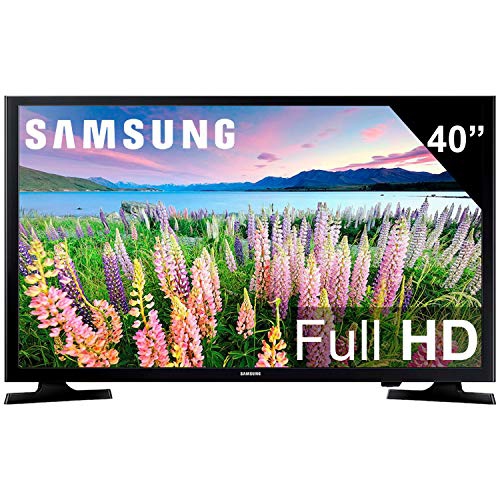 Your price for this item is $449.99
 -
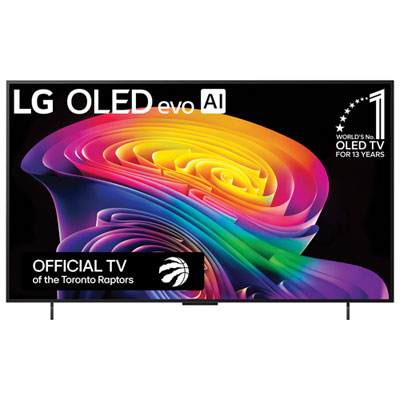 Your price for this item is $1499.99
 -
 Your price for this item is $399.99
 -
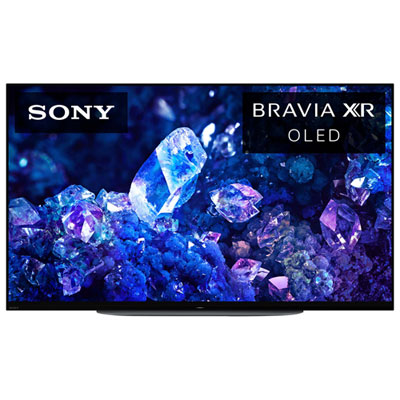 Your price for this item is $1499.99
 -
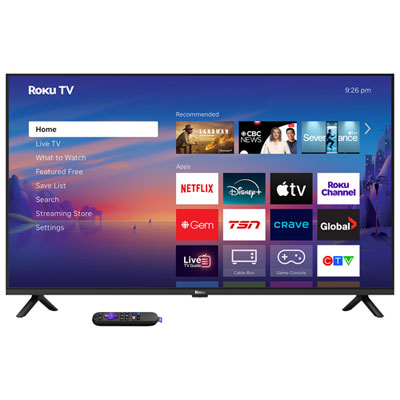 Your price for this item is $199.99
 -
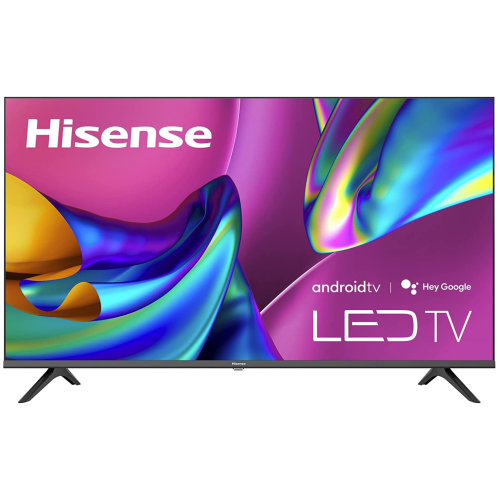 Your price for this item is $479.99
 -
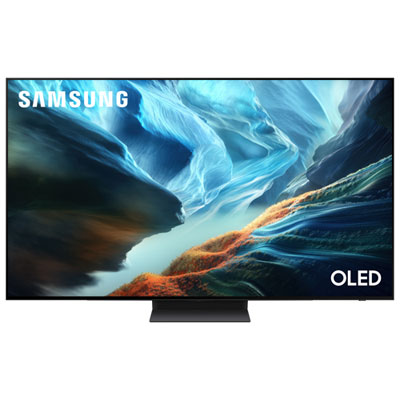 Your price for this item is $1299.99
 -
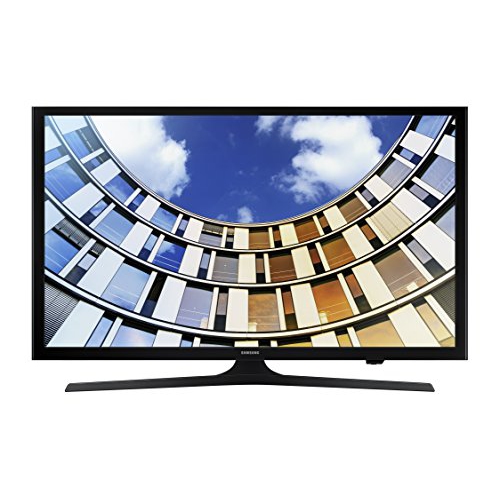 Your price for this item is $449.99
Discover more categories related to 40-inch Tvs for Watching FHD Movies

Top Collections:
Pokemon Centers, Kindle Devices, Best Budget Office Chairs, Apple iPhones 16, Best Laptops for Writers, iPhone 15 Apple, Canon G7X Cameras, Refurbished Apple Laptops, Alarm Clock, Motorola Razr Phones
Some products may be subject to Environmental Handling Fees
(EHF) depending on your province.
Learn more about EHFs.