Downdraft Range Hoods
Enhance your kitchen's functionality and style with downdraft range hoods. Whether you're renovating your kitchen or simply looking for an upgrade, these downdraft range hoods can provide you with a seamless and efficient cooking experience. Discover the benefits of these cutting-edge appliances and find the perfect fit for your culinary haven.
Sort
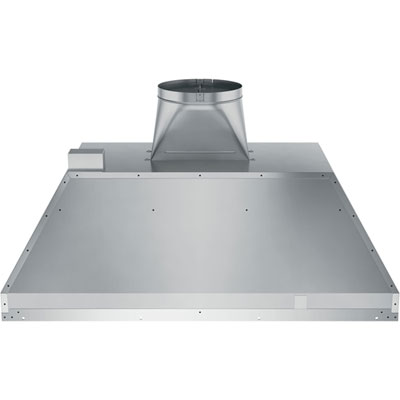


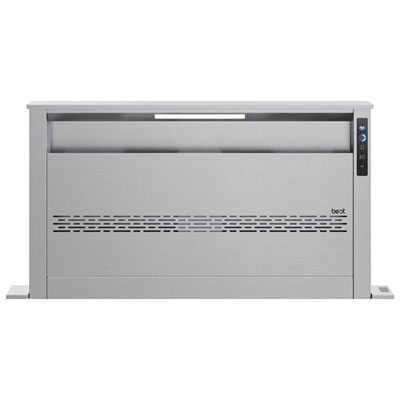
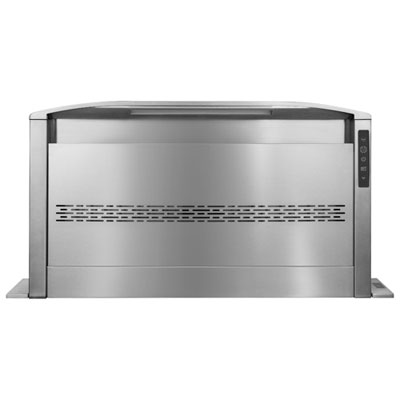
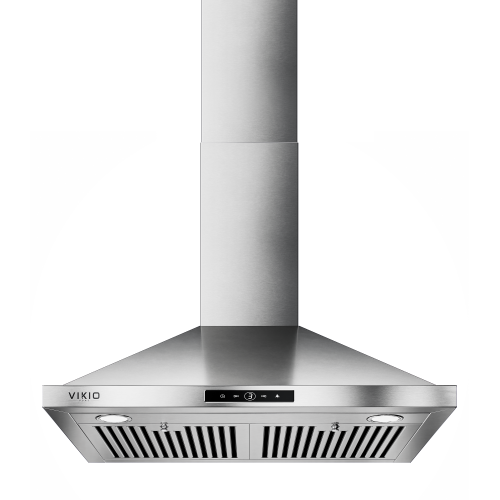
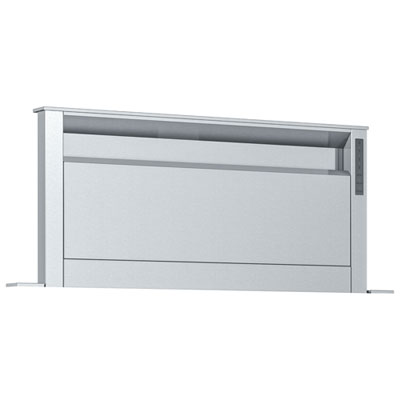
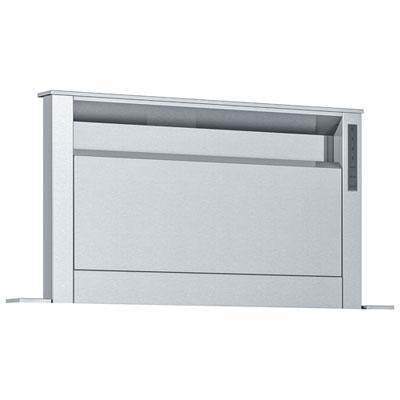
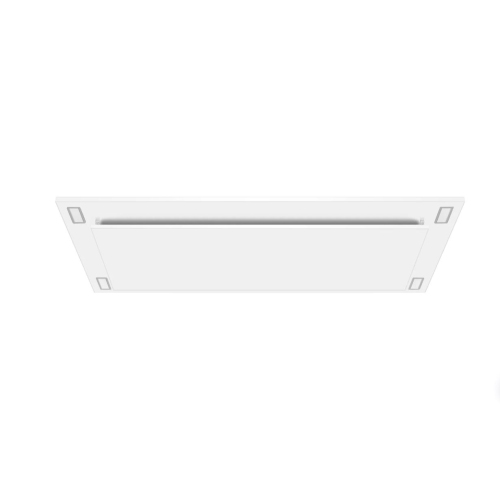

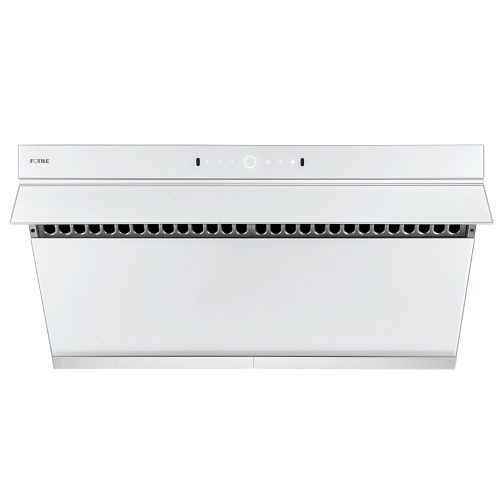

Cooktop ventilation that leaves kitchen sightlines open
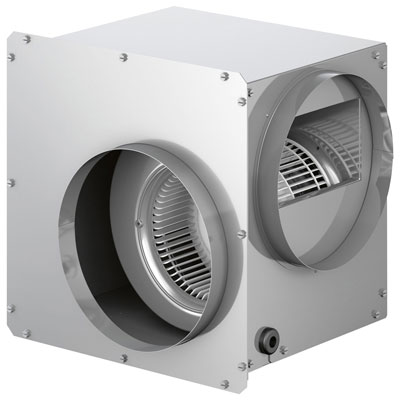
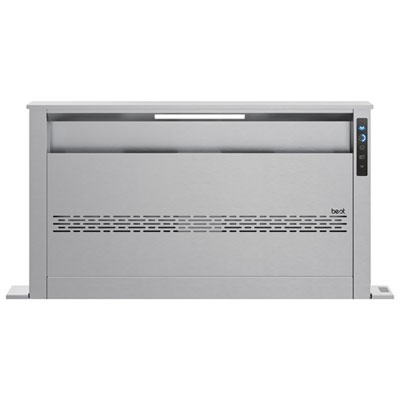
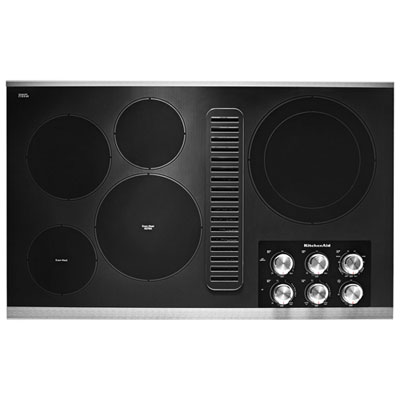
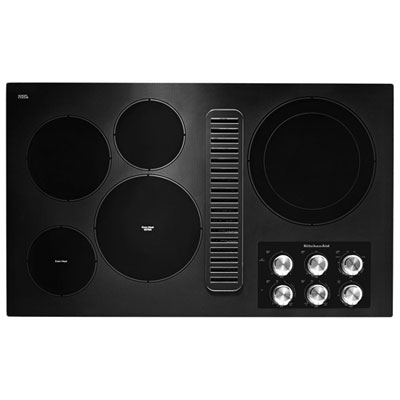
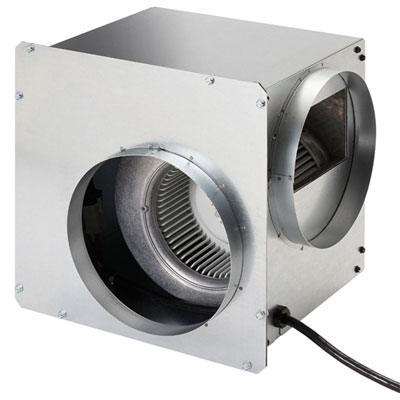
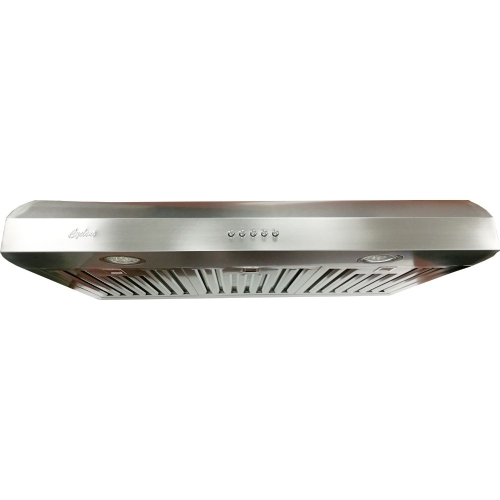
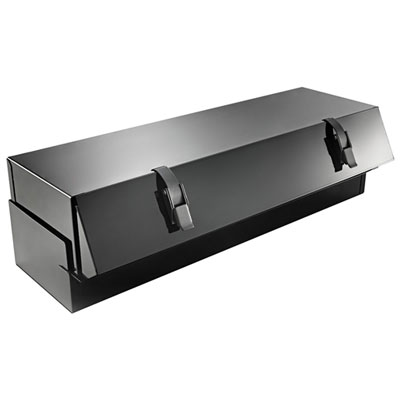
Downdraft range hoods draw cooking fumes, steam, and airborne grease towards an intake at or near the cooking surface, then move the captured air through a ventilation system. Many designs use a retractable panel that rises from behind a compatible cooktop when needed and lowers into the countertop after cooking. Others have a fixed intake integrated into the cooking appliance, so the term “downdraft” describes the direction of extraction rather than a single construction style. For kitchens with an island or peninsula, a separate retractable downdraft can provide ventilation without suspending a hood over the work surface. That leaves sightlines open across a breakfast counter or towards an adjoining living area and keeps the ceiling free of a large canopy. The visible parts are generally limited to a slim countertop trim and the raised intake panel, making this format a natural fit for kitchens with clean lines and uncluttered surfaces. Stainless steel is a common material for exposed panels because it withstands routine kitchen use and can be wiped clean, while the finish and trim shape influence how closely the unit blends with nearby appliances. Within the broader selection of Ventilation Range Hoods, downdraft designs serve a particular purpose: keeping extraction close to the cooktop where overhead ventilation may be visually intrusive or difficult to accommodate. Their discreet appearance does involve a practical trade-off, since the housing, blower arrangement, and duct connections need room beneath the counter. A clear view above the island can therefore mean less space for drawers or deep cookware below it. These systems are especially relevant to homeowners planning a kitchen renovation or replacing an existing compatible downdraft installation. They are built-in appliances rather than simple countertop additions, and their usefulness depends as much on the cabinetry and duct route as on the visible design. A well-matched installation supports everyday meal preparation while preserving the open feel that often motivates the choice in the first place.
Fit involves considerably more than matching the stated width of a downdraft range hood to the width of a cooktop. Nominal widths such as 30-inch and 36-inch help describe the size category, but the required countertop opening, rear clearance, cabinet depth, and space around the cooktop must all suit the installation specifications. The raised height matters too: a taller intake may capture vapours closer to the rim of a stockpot, while a lower opening can be more effective beside shallow pans than beside tall cookware. Below the counter, the cooktop body, gas connection or electrical supply, ventilation housing, and blower must coexist without interference. An oven installed beneath the cooking surface can complicate that arrangement, and a separate downdraft unit should not be assumed to fit behind a freestanding or slide-in range. Compatibility with gas, electric, or induction cooking is specific to the equipment and should be confirmed before cabinetry or stone is cut. For an island, the route to an exterior discharge may need to pass through the floor, which makes the structure below the kitchen part of the planning. Duct diameter, permitted elbows, maximum equivalent duct length, and discharge location all affect whether the system can perform as intended. A short, direct route with correctly sized ductwork generally creates less resistance than a long route with several tight turns. Depending on the design, a blower may be housed within the cabinet, positioned along the duct run, or located outside the living space. These configurations have different space, access, and sound considerations, and a remote blower does not eliminate airflow noise at the intake. Many downdraft installations exhaust outdoors; recirculation is an option only where the system specifically supports it with the appropriate components. Recirculating filtration does not remove moisture or combustion gases in the way outdoor exhaust does. Qualified installation helps address electrical requirements, exterior venting, and any local requirements for replacement air, particularly in homes with other fuel-burning appliances.
Cooking habits shape how satisfying a downdraft range hood will be in daily use. A shallow skillet on a rear burner places cooking vapours close to an intake behind the cooktop, while a tall pasta pot or a pan on a front burner puts more distance between the source and the opening. Because warm cooking plumes naturally rise, downdraft extraction must redirect them sideways and downward rather than collect them from above. Heavy searing, frequent stir-frying, and several steaming pots at once can therefore be more demanding than a small saucepan or a gently simmering meal. An appropriately sized overhead hood often captures these rising plumes more readily, so an unobstructed view should be weighed alongside the intensity and volume of cooking. Airflow ratings, expressed in cubic feet per minute, describe how much air a blower can move under specified conditions; they do not, by themselves, establish how effectively a hood will capture fumes in a finished kitchen. Intake height, burner position, cookware shape, cross-draughts, and duct resistance also matter. Variable fan speeds allow extraction to suit the task, with a lower setting for modest vapours and a higher setting for stronger cooking fumes. Starting ventilation before food begins to smoke helps establish airflow, and allowing it to run briefly after cooking can clear lingering odours and moisture. Accessible controls, readable settings, and removable filters make the system easier to live with, especially during busy meal preparation when hands may be damp or greasy. Grease filters need regular cleaning according to the care instructions, and dishwasher cleaning is appropriate only when expressly permitted. Exposed stainless steel generally benefits from a soft cloth, a suitable non-abrasive cleaner, and wiping in the direction of the grain. Spills around the countertop opening deserve prompt attention so liquid and food debris do not collect near the retracting panel. Keeping utensils, cloths, and cookware clear of moving sections also helps prevent obstruction. Durable materials, accessible service areas, and consistent care all contribute to long-term usability, giving a thoughtfully fitted downdraft system a practical role in a kitchen designed around both cooking and conversation.
Fit involves considerably more than matching the stated width of a downdraft range hood to the width of a cooktop. Nominal widths such as 30-inch and 36-inch help describe the size category, but the required countertop opening, rear clearance, cabinet depth, and space around the cooktop must all suit the installation specifications. The raised height matters too: a taller intake may capture vapours closer to the rim of a stockpot, while a lower opening can be more effective beside shallow pans than beside tall cookware. Below the counter, the cooktop body, gas connection or electrical supply, ventilation housing, and blower must coexist without interference. An oven installed beneath the cooking surface can complicate that arrangement, and a separate downdraft unit should not be assumed to fit behind a freestanding or slide-in range. Compatibility with gas, electric, or induction cooking is specific to the equipment and should be confirmed before cabinetry or stone is cut. For an island, the route to an exterior discharge may need to pass through the floor, which makes the structure below the kitchen part of the planning. Duct diameter, permitted elbows, maximum equivalent duct length, and discharge location all affect whether the system can perform as intended. A short, direct route with correctly sized ductwork generally creates less resistance than a long route with several tight turns. Depending on the design, a blower may be housed within the cabinet, positioned along the duct run, or located outside the living space. These configurations have different space, access, and sound considerations, and a remote blower does not eliminate airflow noise at the intake. Many downdraft installations exhaust outdoors; recirculation is an option only where the system specifically supports it with the appropriate components. Recirculating filtration does not remove moisture or combustion gases in the way outdoor exhaust does. Qualified installation helps address electrical requirements, exterior venting, and any local requirements for replacement air, particularly in homes with other fuel-burning appliances.
Cooking habits shape how satisfying a downdraft range hood will be in daily use. A shallow skillet on a rear burner places cooking vapours close to an intake behind the cooktop, while a tall pasta pot or a pan on a front burner puts more distance between the source and the opening. Because warm cooking plumes naturally rise, downdraft extraction must redirect them sideways and downward rather than collect them from above. Heavy searing, frequent stir-frying, and several steaming pots at once can therefore be more demanding than a small saucepan or a gently simmering meal. An appropriately sized overhead hood often captures these rising plumes more readily, so an unobstructed view should be weighed alongside the intensity and volume of cooking. Airflow ratings, expressed in cubic feet per minute, describe how much air a blower can move under specified conditions; they do not, by themselves, establish how effectively a hood will capture fumes in a finished kitchen. Intake height, burner position, cookware shape, cross-draughts, and duct resistance also matter. Variable fan speeds allow extraction to suit the task, with a lower setting for modest vapours and a higher setting for stronger cooking fumes. Starting ventilation before food begins to smoke helps establish airflow, and allowing it to run briefly after cooking can clear lingering odours and moisture. Accessible controls, readable settings, and removable filters make the system easier to live with, especially during busy meal preparation when hands may be damp or greasy. Grease filters need regular cleaning according to the care instructions, and dishwasher cleaning is appropriate only when expressly permitted. Exposed stainless steel generally benefits from a soft cloth, a suitable non-abrasive cleaner, and wiping in the direction of the grain. Spills around the countertop opening deserve prompt attention so liquid and food debris do not collect near the retracting panel. Keeping utensils, cloths, and cookware clear of moving sections also helps prevent obstruction. Durable materials, accessible service areas, and consistent care all contribute to long-term usability, giving a thoughtfully fitted downdraft system a practical role in a kitchen designed around both cooking and conversation.
Top selling and popular products
-
 Your price for this item is $249.99
 -
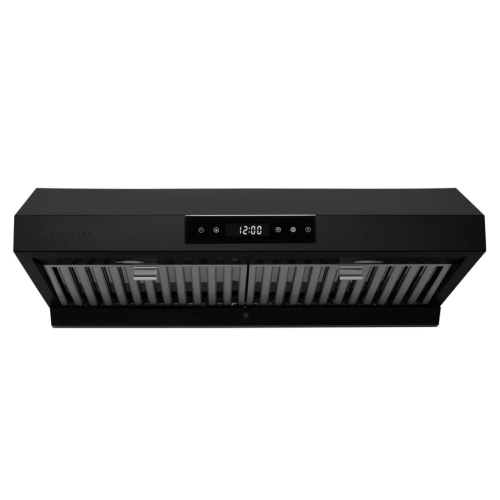 Your price for this item is $598.49
 -
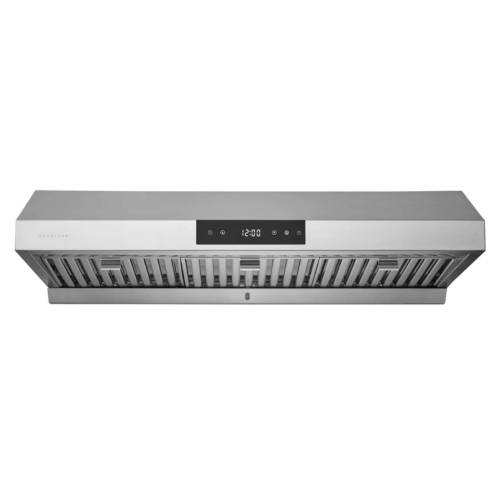 Your price for this item is $645.99
 -
 Your price for this item is $645.99
 -
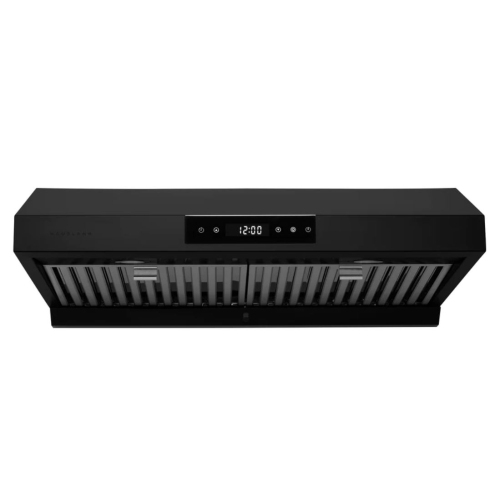 Your price for this item is $645.99
 -
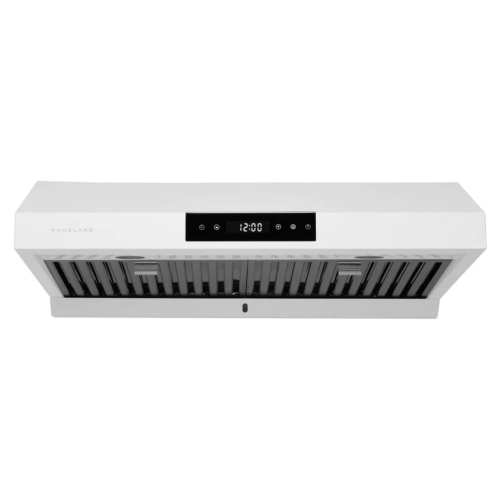 Your price for this item is $598.49
 -
 Your price for this item is $449.99
 -
 Your price for this item is $399.99
Discover more categories related to Downdraft Range Hoods
Top Collections:
Pokemon Centers, Kindle Devices, Best Budget Office Chairs, Apple iPhones 16, Best Laptops for Writers, iPhone 15 Apple, Canon G7X Cameras, Refurbished Apple Laptops, Alarm Clock, Motorola Razr Phones
Some products may be subject to Environmental Handling Fees
(EHF) depending on your province.
Learn more about EHFs.