Pasta Making Accessories
Looking to elevate your pasta-making game? Look no further than our extensive collection of pasta making accessories. From pasta rollers and cutters to drying racks and ravioli stamps, we have everything you need to create homemade pasta that will impress even the most discerning food enthusiasts. Whether you're a seasoned chef or just starting out in the kitchen, our range of high-quality accessories will make the process of crafting delicious pasta dishes a breeze. Get ready to roll, cut, shape, and cook your way to pasta perfection with our top-notch selection of pasta making accessories.
Sort
![Philips Smart Artisan Pasta & Noodle Maker Plus - Black [Employee of philipsglobal] best machine so easy to use make great pasta better than the bought stuff](https://multimedia.bbycastatic.ca/multimedia/products/400x400/179/17914/17914598.jpg)


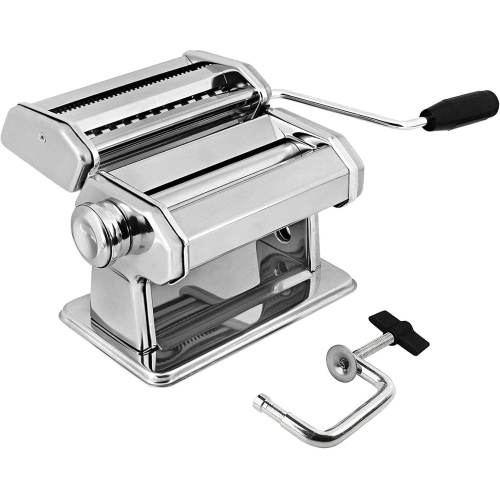

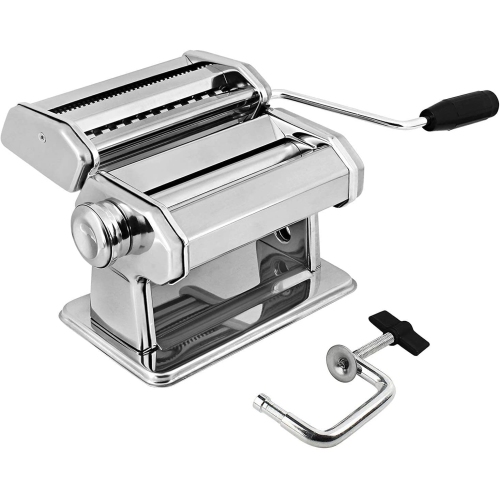
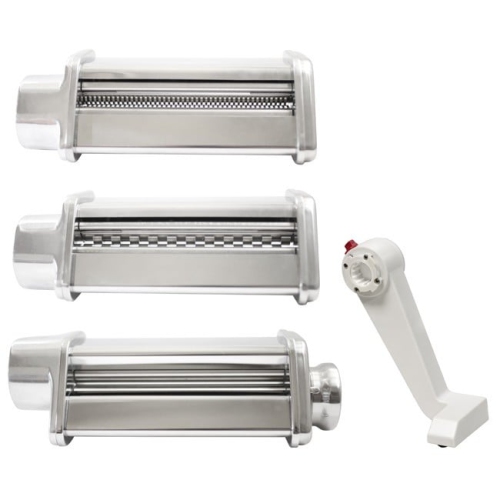
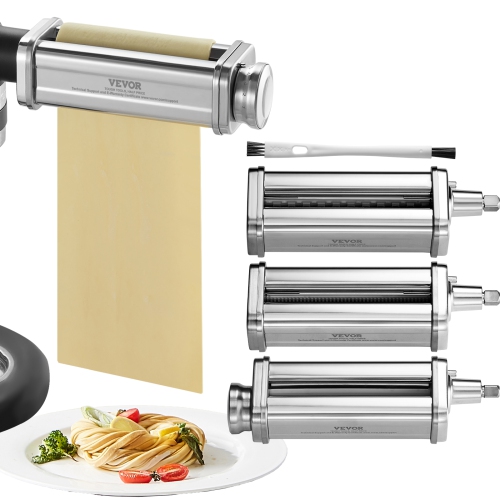
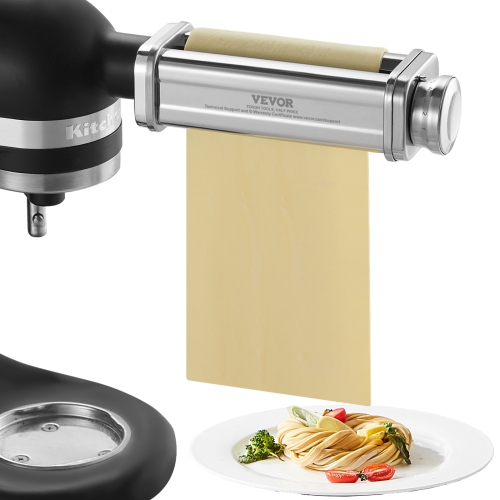
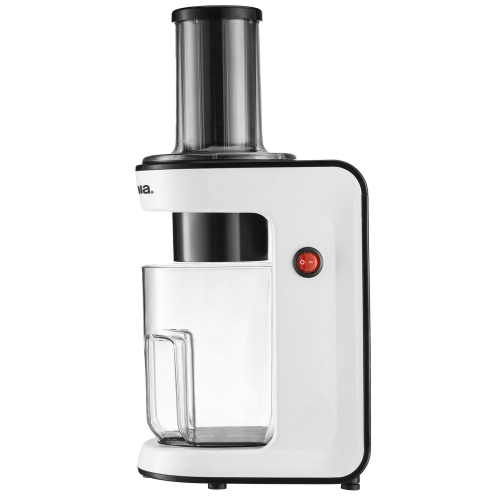
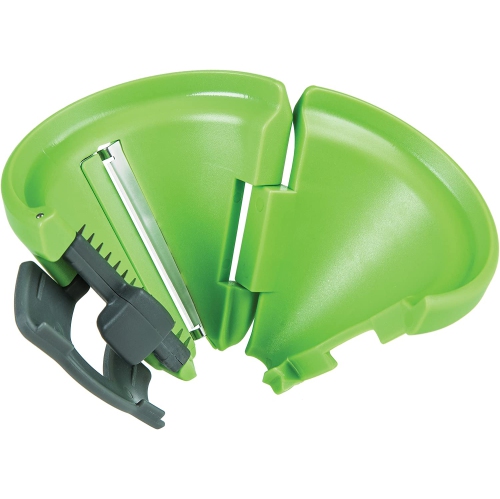

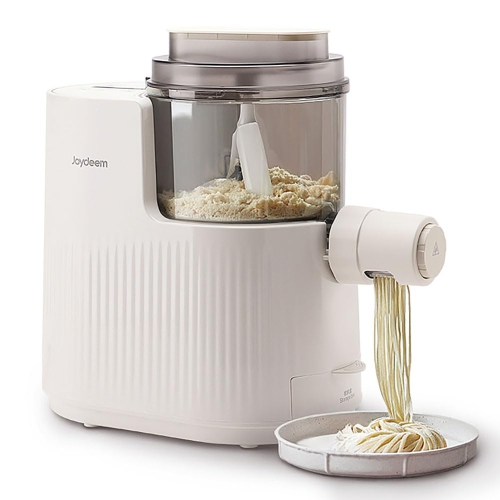
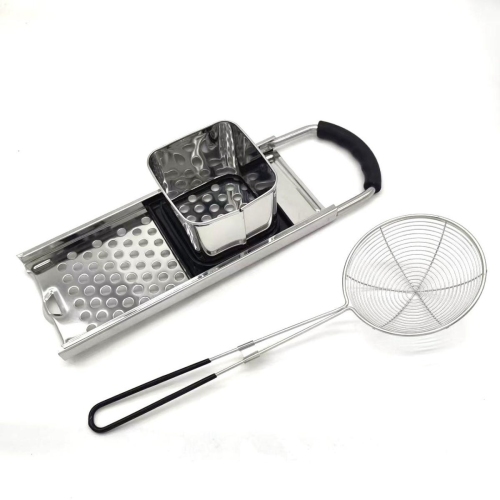
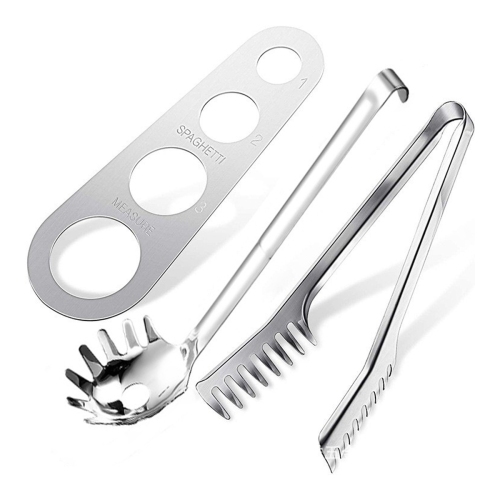
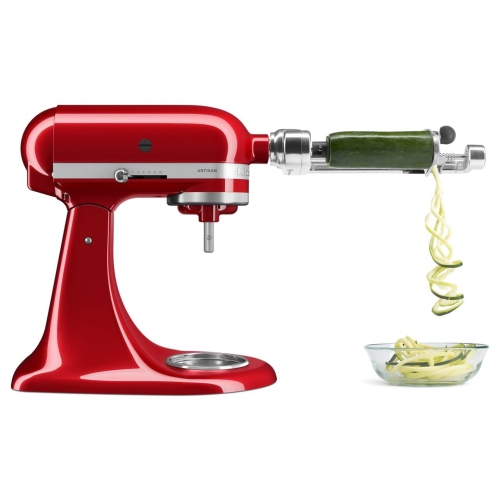
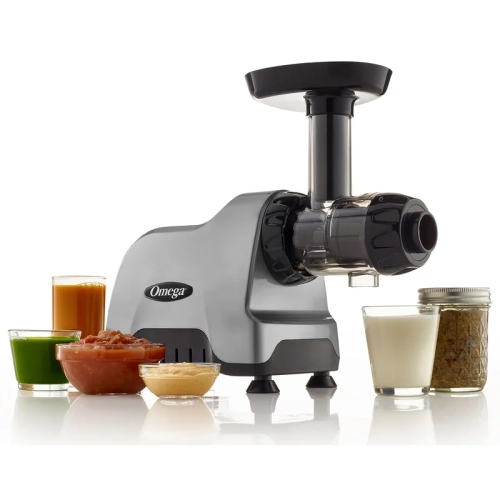
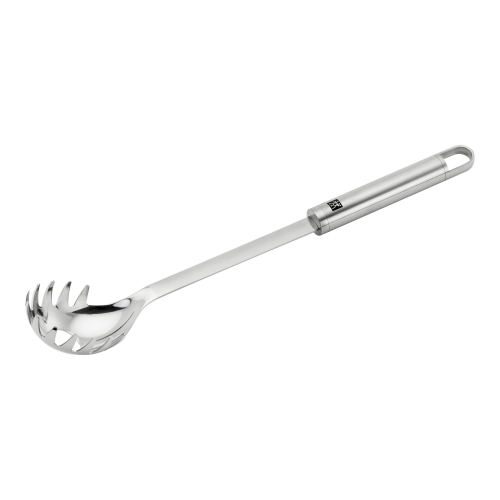
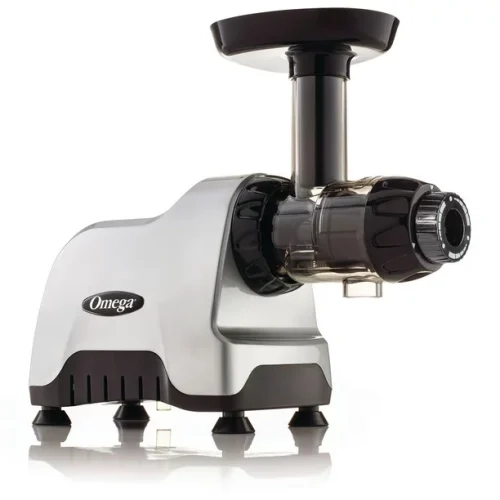
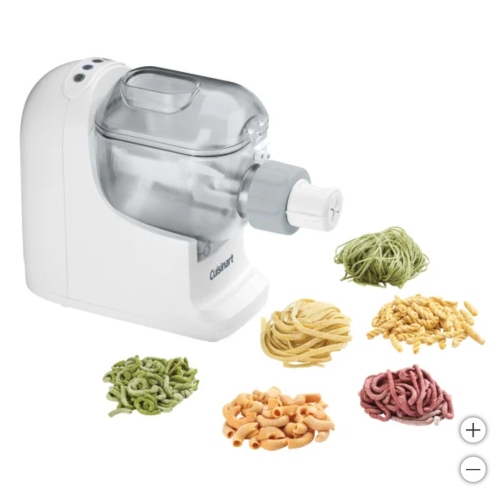
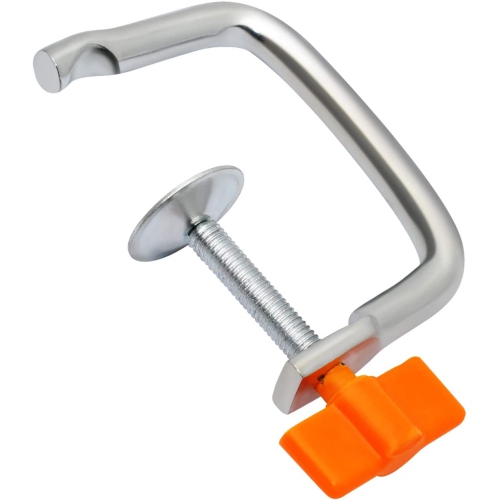
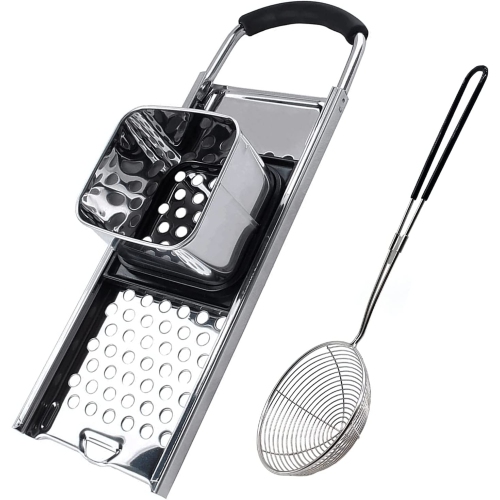

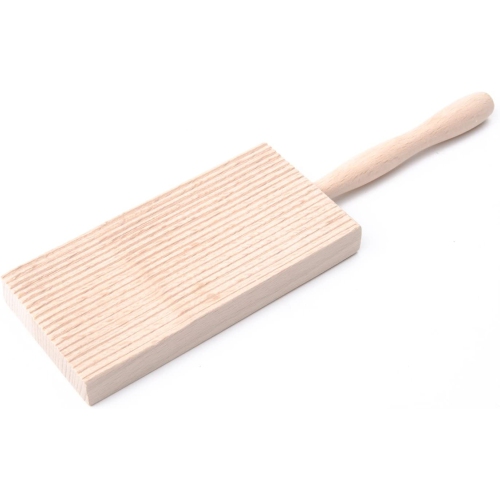
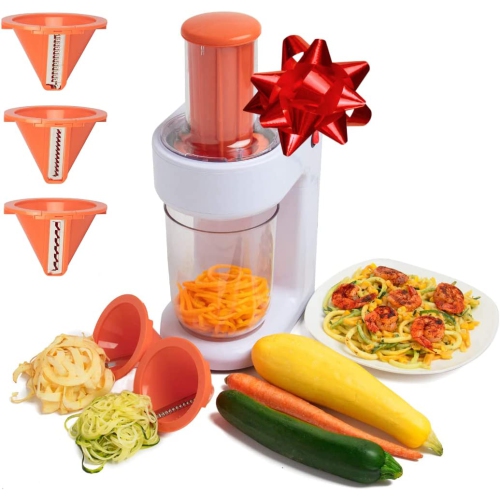
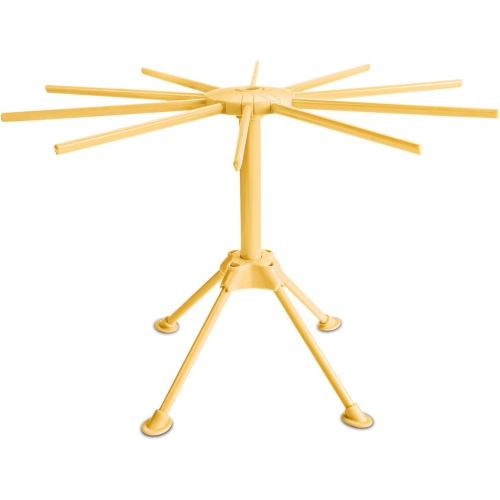
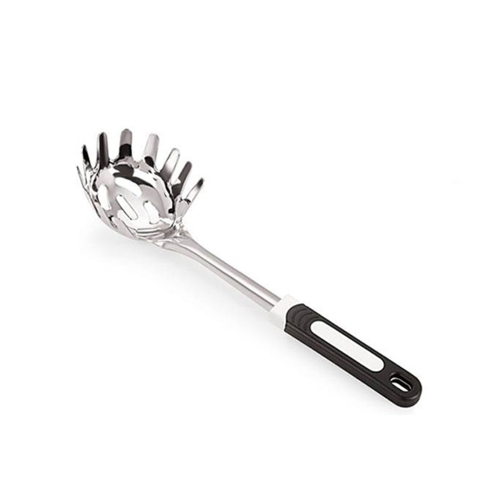
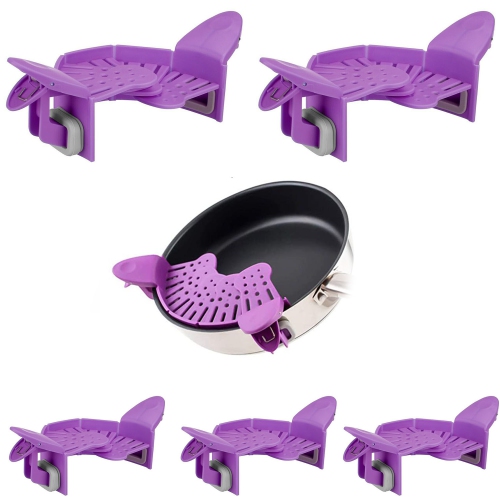
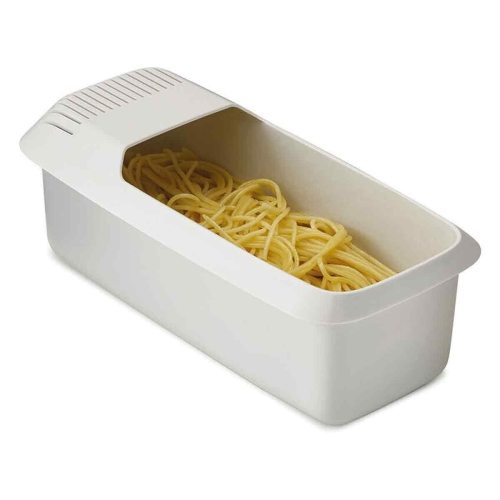
Different pasta shapes call for different tools
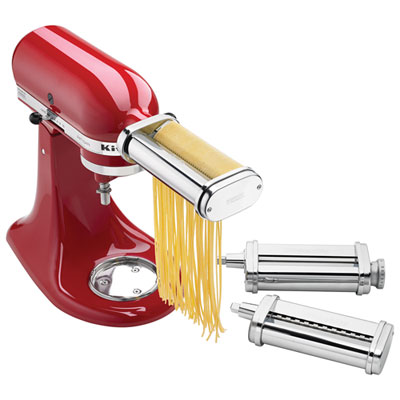
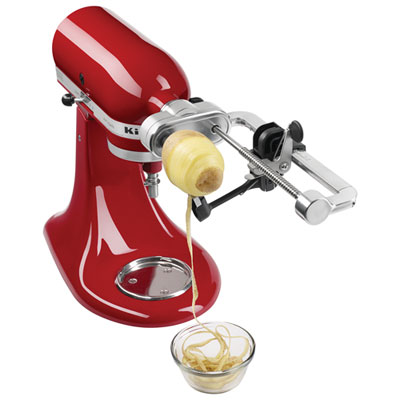
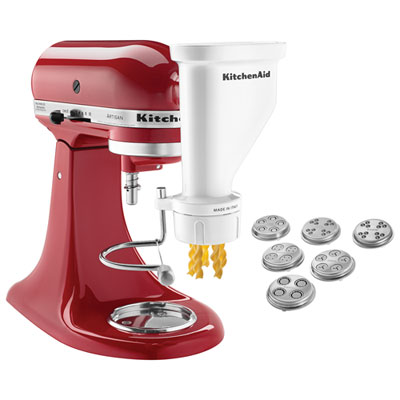
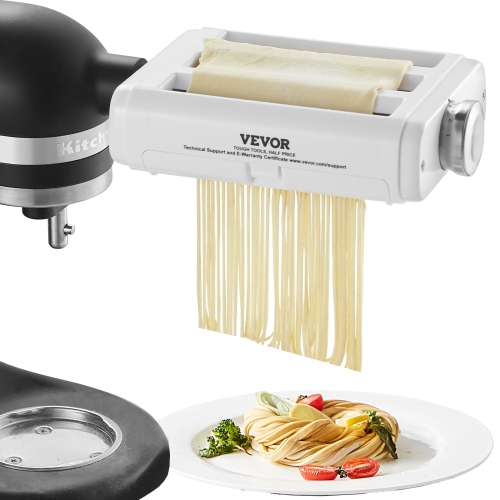
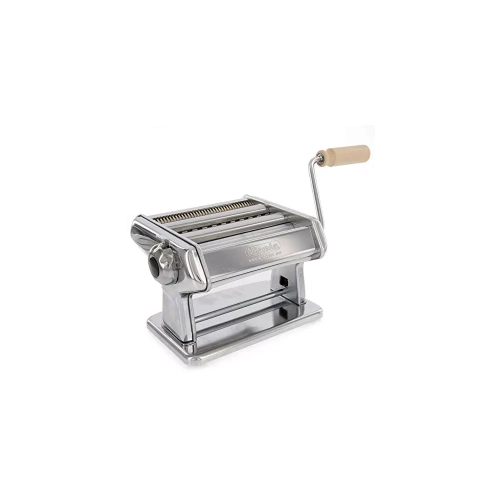
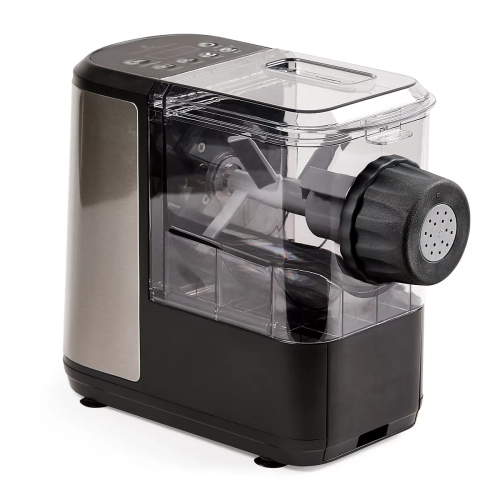
Pasta making accessories support the work between mixing dough and lowering fresh pasta into a pot, from rolling even sheets to cutting ribbons, sealing filled shapes, and keeping portions separated. The most useful assortment depends on the pasta being made: long strands call for rollers, cutters, and space to rest, while ravioli and other filled shapes benefit from stamps, moulds, and tools that portion filling neatly. A roller helps produce sheets with a consistent thickness, giving lasagne layers and folded pasta a more uniform bite. Ribbon cutters divide those sheets into strands, while straight or fluted pastry wheels offer flexibility for cutting squares, trimming edges, and making wider noodles. Ravioli stamps define individual portions and press their edges together, although a reliable seal also depends on the dough’s moisture and keeping filling away from the seam. Multi-cavity moulds help arrange several filled pieces in a regular pattern, making them useful for repeated batches. Ridged boards bring another texture to the work surface, adding grooves to gnocchi and helping form shapes such as garganelli with a suitable dowel. Those grooves and folds give sauces places to settle, whether the finished dish uses a smooth tomato sauce or a rich butter-based coating. For hollow or shaped pasta, an extruder pushes suitable dough through a die rather than cutting it from a flat sheet; the die determines the shape, and the dough requirements differ from those of rolled pasta. These distinctions matter more than assembling a large collection of tools. Someone who enjoys making a small batch of hand-cut noodles may need little beyond a rolling pin, scraper, and cutter, while a household that regularly prepares filled pasta may appreciate portioning bags, moulds, and trays. The right accessories suit the shapes, batch sizes, and hands-on tasks that make pasta preparation enjoyable, whether that means broad ribbons for a family meal or rows of small ravioli for a dinner with friends.
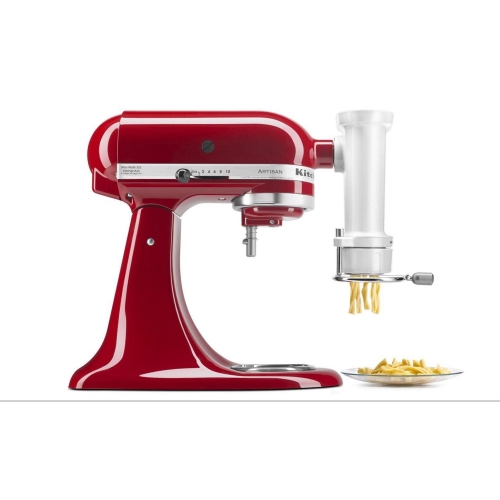
Materials, dimensions, and compatibility influence how comfortably pasta accessories fit into an existing kitchen. Stainless steel is common in rollers, cutting surfaces, and scrapers because it is sturdy and resists corrosion, but a metal finish alone does not mean a tool can go in the dishwasher. Wood provides a traditional working surface for rolling pins and shaping boards, with a texture that helps dough grip during shaping; prolonged soaking can cause swelling or cracking. Food-contact plastic and silicone serve different purposes, including lightweight moulds, flexible work mats, and reusable piping bags. A mat can help define a preparation area, though its grip on the counter and suitability for cutting should match the intended task. With hand tools, a comfortable handle and a balanced weight can make repeated cutting or pressing less tiring. A stamp should feel secure in the hand, and a pastry wheel should turn smoothly without excessive sideways movement. For manual pasta machines, the clamp opening needs to accommodate the counter or table edge, with enough clearance for the crank to turn freely. A thick countertop, rounded edge, or deep apron beneath a table can affect the fit even when there is ample room above. Stand mixer pasta attachments require an equally careful compatibility check: the connection, mixer model, and manufacturer’s stated fit matter, since attachments are not universal. Rollers, ribbon cutters, and extruders also perform different jobs, so matching the attachment to the desired shape helps avoid an unsuitable setup. Sheet width affects the size of dough that can pass through a roller and how easily it will line up with a ravioli mould. Adjustable thickness settings offer flexibility, but the best setting varies with the dough and pasta shape rather than following one fixed measurement. Durability also comes from sound construction: firmly attached handles, stable bases, secure clamps, and cutting edges that retain their shape are practical details for frequent use. Compact kitchens may benefit from folding racks and accessories that store flat, while larger batches need enough clear surface area for sheets, fillings, and finished portions without crowding the rolling station.
Care and storage are especially important for tools that work directly with sticky dough and fine flour. Many pasta rollers and cutter assemblies are designed for dry cleaning with an appropriate brush after dough residue has dried, rather than rinsing or immersion; the manufacturer’s care directions should determine the method. Removable parts may have different cleaning requirements from the main unit, particularly where gears or electrical connections are involved. Narrow grooves in shaping boards, the corners of stamps, and the openings in extruder dies can hold small pieces of dough, so access for cleaning is worth considering alongside the shape a tool produces. Wooden accessories generally need brief cleaning and thorough drying, while washable bags, trays, and moulds should be fully dry before storage. A protected place for cutting wheels and stamps helps prevent damaged edges and accidental contact when reaching into a drawer. During preparation, drying racks give long strands space to hang separately before cooking, reducing crowding on the counter. Arm spacing, stability, and ease of transferring delicate noodles are useful distinctions between rack designs. Filled pasta is usually better supported in a single layer on a lightly dusted tray, where the pieces can rest without being stretched over a rack. A rack is not a substitute for safe food storage: fresh pasta, particularly pasta made with eggs or perishable fillings, should not be assumed shelf-stable simply because its surface feels dry. Beyond preparation, Pasta Cooking Utensils complement the workspace with tools for lifting, draining, and serving the finished shapes. Pasta accessories can also make thoughtful gifts for keen home cooks, bakers interested in working with dough, or hosts who enjoy preparing meals by hand. A simple shaping tool suits someone curious about a new technique, while a compatible attachment is better suited to a recipient whose equipment and preferences are known. Familiar details—a favourite pasta shape, limited drawer space, or a habit of cooking larger batches—help make the gift genuinely useful.
Materials, dimensions, and compatibility influence how comfortably pasta accessories fit into an existing kitchen. Stainless steel is common in rollers, cutting surfaces, and scrapers because it is sturdy and resists corrosion, but a metal finish alone does not mean a tool can go in the dishwasher. Wood provides a traditional working surface for rolling pins and shaping boards, with a texture that helps dough grip during shaping; prolonged soaking can cause swelling or cracking. Food-contact plastic and silicone serve different purposes, including lightweight moulds, flexible work mats, and reusable piping bags. A mat can help define a preparation area, though its grip on the counter and suitability for cutting should match the intended task. With hand tools, a comfortable handle and a balanced weight can make repeated cutting or pressing less tiring. A stamp should feel secure in the hand, and a pastry wheel should turn smoothly without excessive sideways movement. For manual pasta machines, the clamp opening needs to accommodate the counter or table edge, with enough clearance for the crank to turn freely. A thick countertop, rounded edge, or deep apron beneath a table can affect the fit even when there is ample room above. Stand mixer pasta attachments require an equally careful compatibility check: the connection, mixer model, and manufacturer’s stated fit matter, since attachments are not universal. Rollers, ribbon cutters, and extruders also perform different jobs, so matching the attachment to the desired shape helps avoid an unsuitable setup. Sheet width affects the size of dough that can pass through a roller and how easily it will line up with a ravioli mould. Adjustable thickness settings offer flexibility, but the best setting varies with the dough and pasta shape rather than following one fixed measurement. Durability also comes from sound construction: firmly attached handles, stable bases, secure clamps, and cutting edges that retain their shape are practical details for frequent use. Compact kitchens may benefit from folding racks and accessories that store flat, while larger batches need enough clear surface area for sheets, fillings, and finished portions without crowding the rolling station.
Care and storage are especially important for tools that work directly with sticky dough and fine flour. Many pasta rollers and cutter assemblies are designed for dry cleaning with an appropriate brush after dough residue has dried, rather than rinsing or immersion; the manufacturer’s care directions should determine the method. Removable parts may have different cleaning requirements from the main unit, particularly where gears or electrical connections are involved. Narrow grooves in shaping boards, the corners of stamps, and the openings in extruder dies can hold small pieces of dough, so access for cleaning is worth considering alongside the shape a tool produces. Wooden accessories generally need brief cleaning and thorough drying, while washable bags, trays, and moulds should be fully dry before storage. A protected place for cutting wheels and stamps helps prevent damaged edges and accidental contact when reaching into a drawer. During preparation, drying racks give long strands space to hang separately before cooking, reducing crowding on the counter. Arm spacing, stability, and ease of transferring delicate noodles are useful distinctions between rack designs. Filled pasta is usually better supported in a single layer on a lightly dusted tray, where the pieces can rest without being stretched over a rack. A rack is not a substitute for safe food storage: fresh pasta, particularly pasta made with eggs or perishable fillings, should not be assumed shelf-stable simply because its surface feels dry. Beyond preparation, Pasta Cooking Utensils complement the workspace with tools for lifting, draining, and serving the finished shapes. Pasta accessories can also make thoughtful gifts for keen home cooks, bakers interested in working with dough, or hosts who enjoy preparing meals by hand. A simple shaping tool suits someone curious about a new technique, while a compatible attachment is better suited to a recipient whose equipment and preferences are known. Familiar details—a favourite pasta shape, limited drawer space, or a habit of cooking larger batches—help make the gift genuinely useful.
Top selling and popular products
-
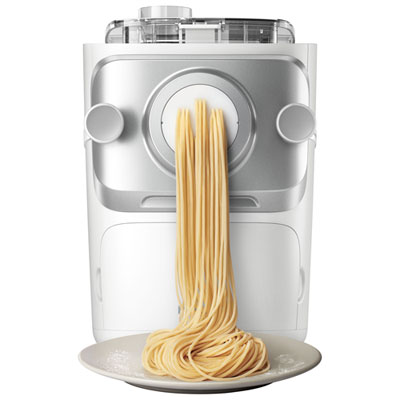 Your price for this item is $349.99
 -
 Your price for this item is $143.87
 -
 Your price for this item is $719.39
 -
 Your price for this item is $313.92
 -
 Your price for this item is $170.54
 -
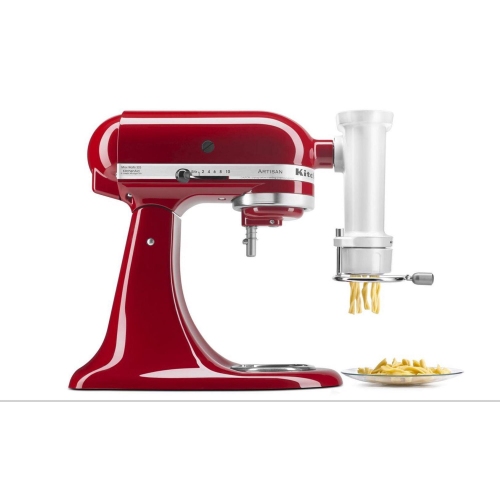 Your price for this item is $313.92
 -
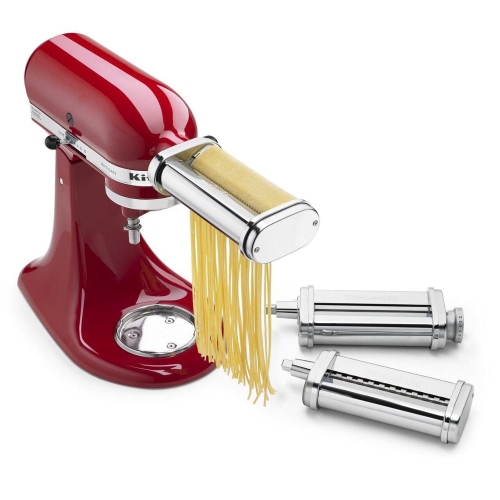 Your price for this item is $313.92
 -
 Your price for this item is $15.4
Discover more categories related to Pasta Making Accessories
Top Collections:
Pokemon Centers, Kindle Devices, Best Budget Office Chairs, Apple iPhones 16, Canon G7X Cameras, iPhone 15 Apple, Alarm Clock, Refurbished Apple Laptops, Flip Phones, Best Laptops for Writers
Some products may be subject to Environmental Handling Fees
(EHF) depending on your province.
Learn more about EHFs.