Best Monitors

Find the best monitors for work, gaming, and everyday use, ranked based on customer review ratings. Whether you need a larger screen for multitasking or a sharper display for movies and games, explore top-rated options to find the right fit for your space and budget.

Read More

What to look for in the best monitors

1. Screen Size and Resolution

Choose a screen size that suits your desk space and viewing distance. A 27-inch QHD monitor offers a balance of workspace and detail, while a 4K monitor can deliver sharper text and images.

2. Panel Type and Image Quality

IPS panels typically offer wide viewing angles and consistent colours, while VA panels generally provide higher contrast. OLED monitors deliver deep blacks and fast pixel response times, but consider the risk of burn-in if you frequently display static content.

3. Refresh Rate and Response Time

A higher refresh rate makes motion look smoother, with 144Hz or higher worth considering for gaming. Look for fast response times and adaptive sync compatibility with your graphics card to help reduce motion blur and screen tearing.

4. Connectivity and Adjustability

Check that the monitor has the HDMI, DisplayPort or USB-C connections your devices need, and confirm support for your desired resolution and refresh rate. USB-C power delivery can simplify a compatible laptop setup, while height, tilt and swivel adjustments help you position the screen comfortably.
Citrus catapult arrow
  1. 1

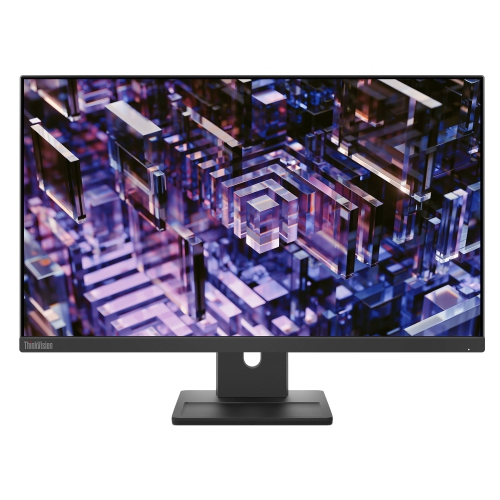
    LENOVO Thinkvision 23.8 Inch Ips Qhd 100Hz Monitor - E24Q-30

    About this product

    A high-resolution 23.8-inch monitor delivering sharp visuals, ideal for work or entertainment setups.

    (3)
    $300.68
    SAVE $30
    Your price for this item is $300.68
  2. 2

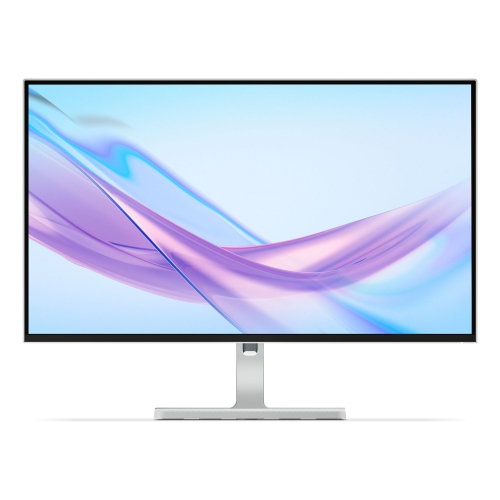
    LENOVO L27Q 27" 1440P Qhd Ips Lcd Monitor (L27Q-4A) - 100Hz - Cloud In Grey

    About this product

    A 27-inch IPS monitor featuring QHD resolution and a smooth 100Hz refresh rate for vibrant visuals.

    What customers like

    • Clear and vibrant display
    • Good built-in speakers
    • Excellent value for the price
    • Adjustable and sturdy design
    • Easy assembly and setup
    (26)
    $265.99
    SAVE $84
    Your price for this item is $265.99
  3. 3

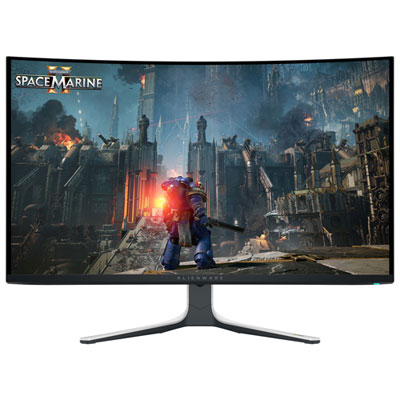
    Alienware 32" Curved 4K UHD QD-OLED Gaming Monitor (AW3225QF) - 0.03ms - 240Hz - HDR - Lunar Light

    About this product

    A curved QD-OLED display delivering 4K UHD visuals, 240Hz refresh rate, and ultra-fast 0.03ms response time.

    What customers like

    • Versatile connectivity and easy setup
    • Ultra-fast 240Hz refresh rate and low response time
    • Immersive curved design with strong build quality
    • Stunning 4K QD-OLED display
    • Exceptional color accuracy and HDR support
    (905)
    $1,199.99
    SAVE $150
    Your price for this item is $1199.99
  4. 4

    LENOVO L27H 27" 1440P Qhd Ips USB-C Monitor (L27H-4A) - Low Light - 100Hz - Cloud Grey In Blue

    About this product

    A 27-inch IPS QHD monitor with 100Hz refresh rate and USB-C connectivity for vibrant, smooth visuals.

    (18)
    $237.99
    SAVE $172
    Your price for this item is $237.99
  5. 5

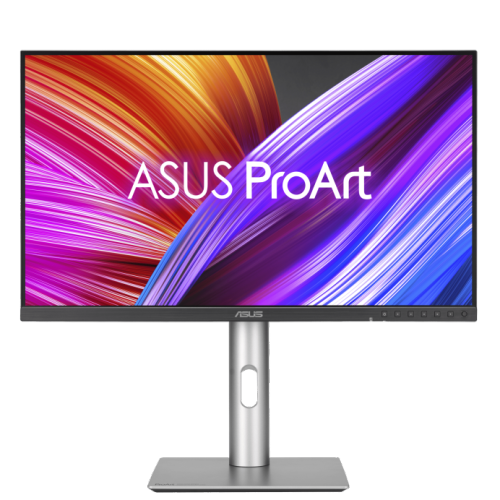
    ASUS Proart 27" 1440P Qhd Ips Creator Monitor (Pa278Cfrv) - Displayhdr 400 - 95% Dci-P3 - 100Hz

    About this product

    A professional 27-inch QHD IPS monitor with 100Hz refresh rate, 95% DCI-P3, and ergonomic stand.

    (3)
    $499.00 Your price for this item is $499
  6. 6

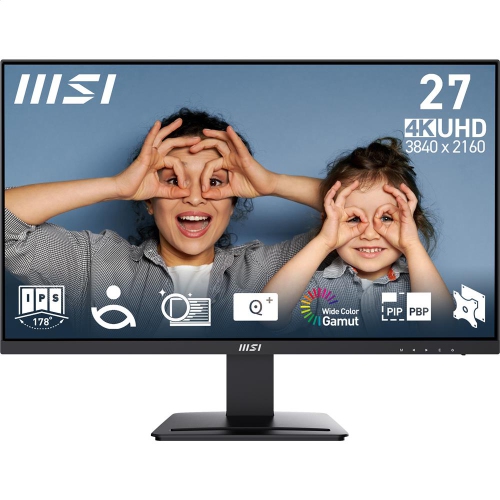
    MSI Pro 27" 4K Uhd Ips Led Monitor (Mp273U) - Flicker-Free - HDr Ready - Adaptive-Sync

    About this product

    A 27-inch UHD IPS monitor with 4ms response time, 60Hz refresh rate, and tilt adjustment.

    (13)
    $279.99 Your price for this item is $279.99
  7. 7

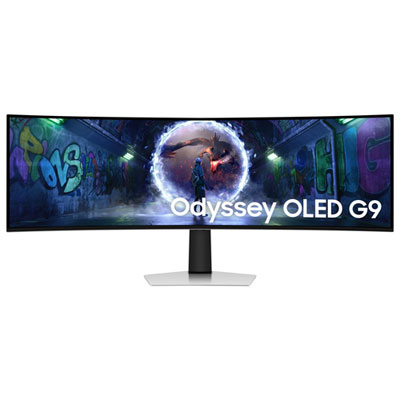
    Samsung Odyssey G9 49" Ultrawide Curved 1440p WQHD OLED Gaming Monitor (LS49DG936SNXGO) - G-Sync/FreeSync - 0.03ms GTG - 240Hz - Silver - Only at Best Buy

    About this product

    An ultra-wide curved OLED gaming monitor in silver with 240Hz refresh rate and G-Sync/FreeSync support.

    (10)
    $1,399.99
    SAVE $700
    Your price for this item is $1399.99
  8. 8

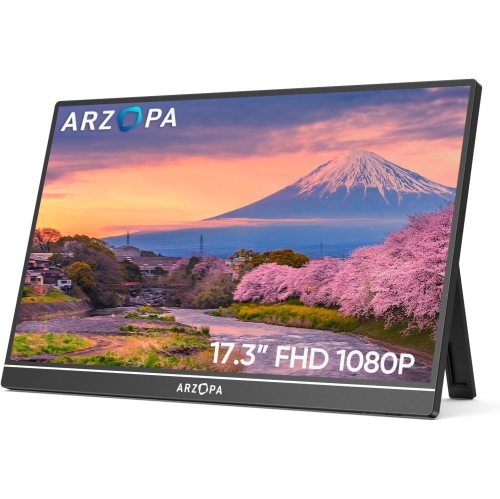
    ARZOPA Portable Monitor 17.3", 1080P Fhd 100% Srgb Ips Laptop Monitor Gaming Monitor Built-In Kickstand HDMI USB C - A1M

    About this product

    A portable 17.3" IPS monitor with 1080P FHD, 100% sRGB, built-in kickstand, HDMI, and USB-C connectivity.

    $164.99
    SAVE $95
    Your price for this item is $164.99
  9. 9

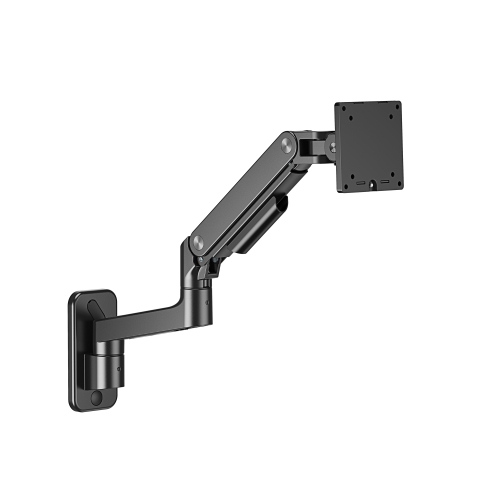
    AMER MOUNTS - Single Hydralift Articulating Monitor Wall Mount w Extension Supports 4.4-44 Lbs Monitors w 100X100MM Or 75X75MM Mounting Patterns

    About this product

    An articulating wall mount with hydralift extension, supporting 4.4-44 lbs monitors and easy topside installation.

    $169.99 Your price for this item is $169.99
  10. 10

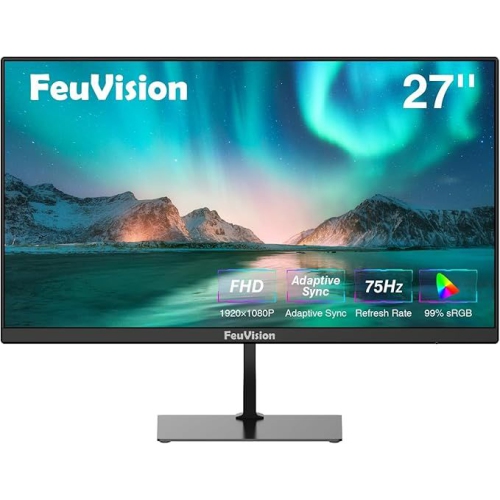
    FEUVISION 27" 1080P HD Led Monitor - 75Hz - Adaptive Sync - Built-In Speakers

    About this product

    A Full HD monitor with 99% sRGB, 75Hz refresh rate, built-in speakers, and wide viewing angles.

    $209.00 Your price for this item is $209

Why screen size alone doesn’t define a great monitor

The best monitors pair clear image quality with a screen size, shape, and feature set that suits the way they will be used. For everyday work, that means readable text, comfortable positioning, and enough space to keep a document open beside a browser. For gaming, smooth motion and responsive performance matter more; for photography and design, colour accuracy and consistent image reproduction take priority. Screen size and resolution work together rather than acting as separate measures of quality. A 24-inch Full HD monitor can suit a compact desk and routine tasks, while a 27-inch QHD monitor offers more room for spreadsheets, research, and side-by-side windows. A 32-inch 4K monitor combines a larger viewing area with fine detail, making it useful for intricate artwork, dense timelines, and high-resolution video. Higher pixel density can make text and edges look sharper, although display scaling may be needed to keep menus and lettering comfortably sized. Ultrawide monitors create a broad, continuous workspace for arranging several applications without a bezel between them. That layout can be especially helpful when comparing source material with a draft or keeping a project timeline visible alongside editing controls. Two separate monitors offer a different kind of flexibility, including the option to turn one screen vertically for code, long documents, or chat. Physical fit matters just as much as the diagonal measurement: the stand’s depth, the screen’s width, and the distance from the chair all affect how naturally a display sits on a desk. A large screen placed too close can require frequent head movement, while a stand with height, tilt, and swivel adjustment makes it easier to find a comfortable position. Curved monitors can bring the edges of a wide display closer to the viewer, though the effect depends on screen size, curve, and seating distance. Flat screens remain a practical fit for shared viewing and work where straight lines need to appear visually consistent across the display.

Panel technology shapes how a monitor looks during both ordinary tasks and demanding visual work. IPS panels generally provide wide viewing angles and consistent colour, making them versatile for office work, creative applications, and shared screens. VA panels typically deliver stronger native contrast, which helps dark scenes retain depth, though motion performance varies between displays. OLED monitors control light at the pixel level, producing deep blacks and very fast pixel transitions that can make games and films look particularly vivid. Their suitability for a workspace also depends on text rendering, room lighting, and usage patterns, since prolonged display of static elements can contribute to permanent image retention. Built-in panel-care features and varied content help manage that risk, but do not eliminate it. Mini-LED backlighting can improve brightness and local contrast on LCD monitors, with results influenced by the number of dimming zones and how effectively they are controlled. For gaming monitors, refresh rate describes how often the screen can update its image, while response time describes how quickly pixels change. A higher refresh rate can make movement look smoother, but the computer must deliver enough frames to take full advantage of it. Adaptive sync can reduce visible tearing when supported by both the monitor and graphics hardware. Advertised response times alone do not capture real-world motion clarity, since aggressive settings may introduce bright or dark trails around moving objects. Fast-paced games place a different demand on a display than slower games with detailed scenery, where contrast, resolution, and colour may carry more weight. Creative work brings another set of priorities. Accurate colour, suitable gamut coverage, and useful calibration controls matter when skin tones, product photos, or illustrations need to look consistent. Wide colour coverage does not automatically mean accurate colour, and an appropriate colour mode helps prevent standard content from appearing oversaturated. HDR performance likewise depends on more than accepting an HDR signal: peak brightness, black levels, dimming behaviour, and colour range determine how convincingly a screen shows bright highlights beside shadow detail. Matte finishes can soften reflections from nearby windows or lamps, while glossy surfaces may appear crisp but reveal reflected objects more clearly.

Connections and construction determine how smoothly a monitor fits into daily life after the screen itself has been chosen. HDMI and DisplayPort are common video connections, but the supported resolution and refresh rate depend on the capabilities of the monitor, computer, port, and cable together. USB-C can simplify a laptop setup by carrying video, data, and charging over one connection when all required functions are supported. Not every USB-C port accepts video or supplies power, and charging capacity needs to suit the connected laptop. A built-in USB hub gives a keyboard, mouse, or external drive a convenient connection point, while a KVM switch can let compatible computers share peripherals through the monitor. This can make moving between a work laptop and a personal desktop less cumbersome. For compatible laptop and desktop setups, Best Monitors for Mac brings the focus to displays suited to that pairing, with connection support, text clarity, and scaling remaining important considerations. Integrated speakers and webcams can reduce desk clutter, although their quality and features vary. The materials around the panel also deserve attention: a rigid housing, stable stand, and well-supported adjustment mechanism help a screen stay steady during typing or repositioning. Compatible mounting points allow some monitors to attach to an arm, freeing desk space, provided the arm supports the display’s weight and mounting pattern. Cable routing helps keep connectors from being pulled when the screen moves. Routine care is straightforward but important for protecting the finish. A clean, soft microfibre cloth removes dust gently; any cleaning solution should be approved for the display and applied to the cloth rather than sprayed directly onto the screen. Excess pressure, abrasive cloths, and harsh household cleaners can damage panel surfaces or coatings. For a student, remote worker, gamer, or creative professional, a well-matched monitor can become one of the most-used parts of a setup. As a gift, it is most useful when its dimensions, connections, and intended role are already understood, whether that role is a focused study space, a detailed editing station, or a comfortable place to play.
Read More

FAQ

Some products may be subject to Environmental Handling Fees (EHF) depending on your province. Learn more about EHFs.