Best Piano Keyboards

Find your rhythm with the best piano keyboards, ranked by customer review ratings to help you compare top-rated options. Whether you’re learning your first chords or refining your technique, explore keyboards with features that suit your playing style, skill level, and space. Consider key feel, sound quality, and built-in learning tools to find the right fit for your musical goals.

Read More

What to look for in piano keyboards

1. Key Count and Feel

An 88-key keyboard offers the full range of an acoustic piano, while 61-key and 76-key models save space. Weighted keys with hammer action provide a more piano-like feel, and touch sensitivity lets you vary the volume through your playing.

2. Sound Quality and Speakers

Listen for realistic piano tones and compare built-in speakers for practising at home. Higher polyphony helps keep notes from cutting off when you play layered sounds or use a sustain pedal.

3. Learning Features and Connectivity

A built-in metronome, recording function, and lesson modes can support regular practice. Check for headphone connections for quiet playing and USB or MIDI connectivity if you want to use compatible music apps or recording software.

4. Size and Included Accessories

Compare dimensions and weight to find a keyboard that fits your space and is easy to move if needed. Check whether a stand, bench, sustain pedal, and power adapter are included or sold separately.
  1. 1

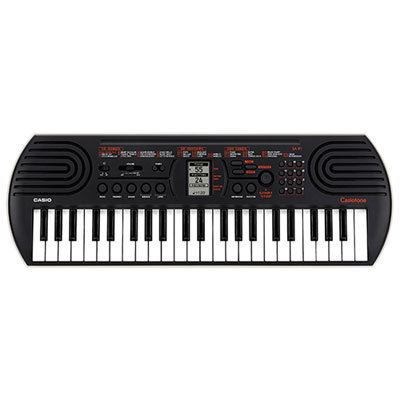
    Casio SA-81H3 44-Key Electric Keyboard - Black

    About this product

    A beginner-friendly electric keyboard in black with 44 mini keys, built-in songs, and dynamic tones.

    (2)
    $119.99 Your price for this item is $119.99
  2. 2

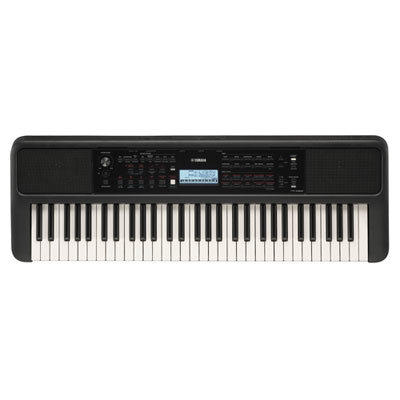
    Yamaha PSRE383 61-Key Portable Electric Keyboard

    About this product

    A versatile black keyboard featuring 61 touch-sensitive keys, 650 voices, and 260 auto accompaniment styles.

    (7)
    $289.99 Your price for this item is $289.99
  3. 3

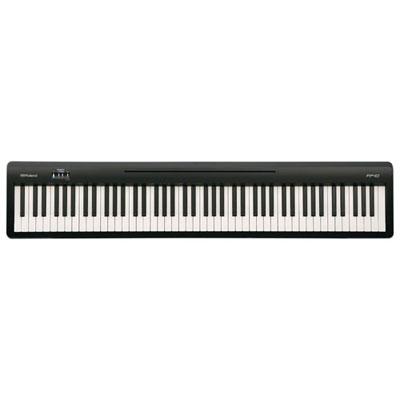
    Roland FP-10 88-Key Weighted Hammer Action Digital Piano - Black

    About this product

    An 88-key digital piano in black with weighted hammer action and Bluetooth connectivity for enhanced learning.

    (15)
    $799.99 Your price for this item is $799.99
  4. 4

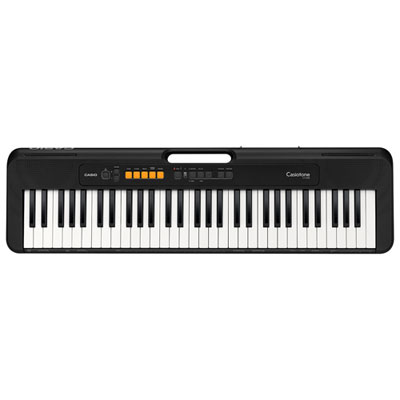
    Casio CT-S100 61-Key Electric Keyboard - Black - Only at Best Buy

    About this product

    A beginner-friendly electric keyboard in black with 61 piano-style keys, 122 tones, and built-in speakers.

    What customers like

    • Great for beginners
    • Good sound quality
    • Affordable price
    • Easy to use
    • Lightweight and portable
    (30)
    $149.99 Your price for this item is $149.99
  5. 5

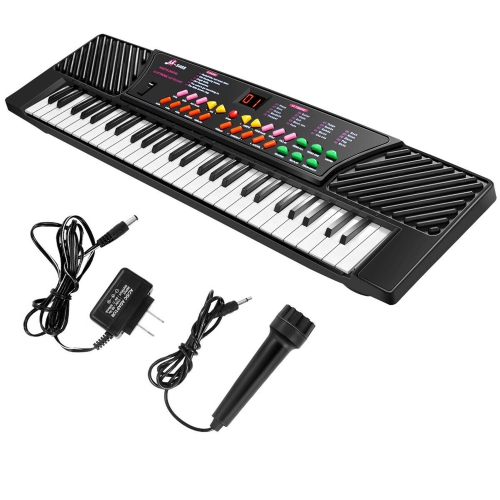
    COSTWAY 54 Keys Music Electronic Keyboard Kid Electric Piano Organ Mic & Adapter

    About this product

    An electronic keyboard with 54 keys, microphone, and adapter, designed to inspire children's musical creativity.

    (11)
    $69.99
    SAVE $50
    Your price for this item is $69.99
  6. 6

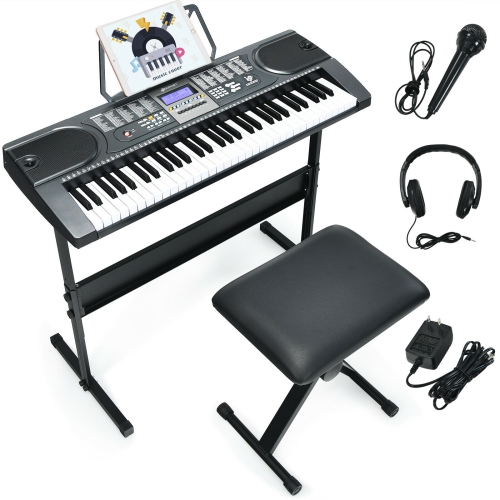
    GYMAX 61-Key Electronic Keyboard Piano Starter Set W/stand Bench Headphones

    About this product

    A complete starter set featuring a 61-key electronic keyboard, stand, bench, and headphones.

    (4)
    $199.99
    SAVE $120
    Your price for this item is $199.99
  7. 7

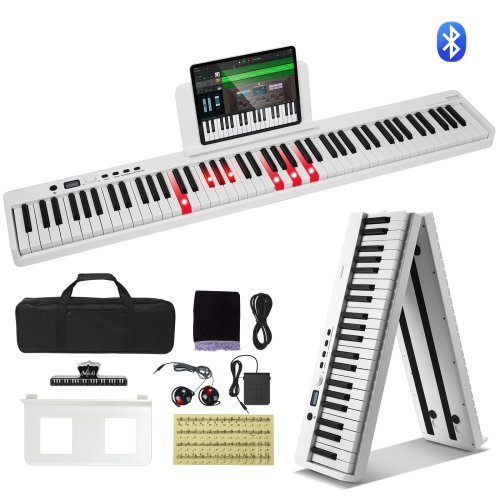
    VEVOR 88 Key Folding Keyboard Piano, Bluetooth & Midi, Portable Electronic Digital Foldable Piano w Sustain Pedal Bag Touch Sensitive Keys

    About this product

    An ultra-slim, foldable keyboard with 88 touch-sensitive keys, Bluetooth, MIDI, stereo speakers, and sustain pedal.

    (1)
    $113.04
    SAVE $106
    Your price for this item is $113.04
  8. 8

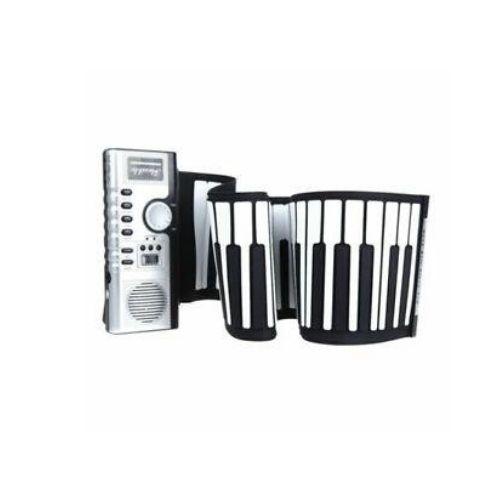
    GNS 61 Keys Roll Up Midi Electronic Keyboard Piano Music Player New

    About this product

    A portable 61-key MIDI keyboard featuring flexible silicone-rubber keys and durable ABS resin construction.

    (1)
    $90.00 Your price for this item is $90
  9. 9

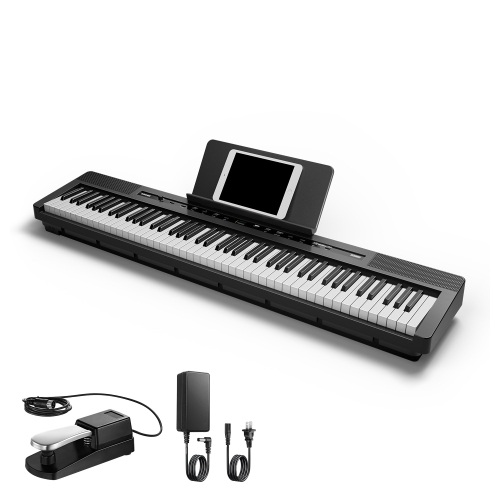
    DONNER Dep-16 Portable 88 Key Weighted Digital Piano

    About this product

    A portable 88-key weighted digital piano perfect for musicians on the go.

    (1)
    $325.99
    SAVE $224
    Your price for this item is $325.99
  10. 10

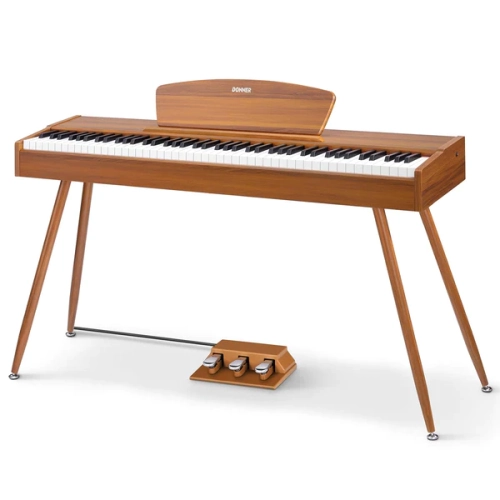
    DONNER Ddp-80 88 Key Wooden Style Weighted Keyboard Digital Piano

    About this product

    A full-weighted 88-key digital piano with wooden style finish, advanced sound source, and triple pedal support.

    (1)
    $599.99
    SAVE $450
    Your price for this item is $599.99

Why key feel matters as much as sound

The best piano keyboards combine a comfortable playing feel, expressive sound, and features that suit the way a musician practises or performs. For someone learning traditional piano technique, an 88-key digital piano with full-size, weighted keys is often the closest practical match to an acoustic instrument. Its full range accommodates everything from simple five-finger exercises to pieces that stretch across the bass and treble registers. Hammer-action mechanisms add resistance beneath the fingers, while graded weighting typically makes the lower keys feel heavier than the higher ones. Touch sensitivity is a separate feature: it allows the sound to respond to how gently or firmly a key is played, helping a melody sing above a quieter accompaniment. A lightweight keyboard can be touch-sensitive without having weighted action, an important distinction for anyone working towards acoustic piano lessons. Compact keyboards with 61 or 76 keys suit casual playing, basic chord practice, and spaces where a full-length instrument would be difficult to position. They can also be easier to carry between a bedroom, rehearsal space, and classroom. Beginners benefit from clear controls, a straightforward piano sound, and a built-in metronome more than a crowded panel of features they may rarely use. Intermediate players may appreciate finer control over dynamics, responsive pedals, and enough range for increasingly demanding music. Experienced musicians often place greater emphasis on action consistency, detailed piano tones, and connections for amplification or studio equipment. The right fit depends on the player rather than a single overall ranking: a portable keyboard for songwriting serves a different purpose from a cabinet-style digital piano intended for daily lessons. As a gift, a piano keyboard can support a child starting lessons, an adult returning to music, or a songwriter developing arrangements. Matching the instrument to the recipient’s lesson requirements, available space, and preferred style of music helps make it something they will use regularly.

Sound quality matters most when it supports expression at ordinary playing levels, whether through built-in speakers or a pair of headphones. Piano tones built from detailed samples or physical modelling can capture differences between a soft phrase and a forceful chord, rather than simply making the same sound louder. Features such as damper resonance and string resonance, where included, add some of the interaction heard in an acoustic piano. Polyphony describes how many notes an instrument can sound at once; additional capacity is useful when sustained notes overlap, two sounds are layered, or accompaniment plays alongside the keyboard part. It is only one part of the sound, however, and a larger number alone does not establish how convincing a piano will feel. Speaker clarity also affects the experience. A balanced sound makes it easier to hear the left-hand accompaniment without losing the melody, while suitable headphone output allows focused practice in a shared home. Headphones reduce the sound others hear, although the physical movement of keys and pedals can still be audible. For lessons and home practice, a music rest that holds a book securely, an accessible volume control, and a metronome with adjustable tempo are useful everyday details. A split mode assigns different sounds to different sections of the keyboard, while a duet mode, when provided, divides the keys into matching ranges so a teacher and student can play side by side. Layering piano with strings offers a fuller texture for ballads, and electric piano or organ sounds give players room to explore other styles. Built-in recording can help a learner hear uneven timing or a melody that needs more shape. USB MIDI connections can link compatible keyboards with notation software, learning applications, or music production programs, but MIDI carries performance information rather than sound. USB audio is a separate capability worth distinguishing when recording directly to a computer. Wireless features also vary: Bluetooth audio playback and Bluetooth MIDI serve different purposes, and neither automatically means that wireless headphones are supported.

Construction, support, and placement influence how comfortable a piano keyboard remains through repeated use. Portable instruments commonly use moulded plastic housings to keep weight manageable, while some stage-oriented designs add metal panels or chassis components for greater rigidity. Furniture-style digital pianos often use engineered-wood cabinets with decorative finishes, giving the instrument a more permanent place in a living room or dedicated practice area. Key surfaces may be smooth or lightly textured, and the most suitable feel is one that lets fingers move comfortably without slipping during longer sessions. A stable stand with the correct weight capacity helps prevent movement during energetic passages; sufficient clearance underneath leaves room for knees and pedals. An adjustable bench supports a seated position with relaxed shoulders and forearms approximately level with the keys. For smaller children, a foot support can help maintain balance instead of leaving their feet dangling. The keyboard’s dimensions should allow space for the stand, bench, music rest, and connected cables, not just the instrument itself. Pedal compatibility deserves attention too. A basic sustain pedal supports held notes, while half-pedalling requires both a compatible pedal and an instrument that can interpret its changing position. Some home pianos support three-pedal units for a playing setup closer to an acoustic piano. Players transporting their instruments benefit from manageable weight, secure connectors, and a padded case sized to the keyboard; heavier-duty cases may be more appropriate for frequent loading and unloading. Day-to-day care is straightforward: clean key surfaces according to the manufacturer’s directions, avoid spraying liquids directly onto the instrument, and keep drinks away from the control panel. A fitted cover helps limit dust between sessions, and cables routed away from walking paths reduce accidental pulls on sockets. Digital instruments do not require acoustic tuning, though keys, pedals, speakers, and connections still benefit from careful handling. Related browsing on the Best Keyboards page can broaden the comparison of keyboard options. For a piano-focused setup, comfortable action, expressive response, and a well-supported playing position remain the essentials that make everyday practice more rewarding.
Read More

FAQ

Some products may be subject to Environmental Handling Fees (EHF) depending on your province. Learn more about EHFs.