Best Wine Coolers

Find the best wine coolers for keeping your favourite reds, whites, and rosés ready to serve. Ranked by customer review ratings, this selection makes it easy to explore top-rated options and narrow your search by bottle capacity, temperature settings, and fit for your space. Whether you’re storing a few favourites or building a larger collection, discover a wine cooler that suits your needs.

Read More

What to look for in wine coolers

1. Bottle Capacity

Choose a wine cooler with room for your current collection and future additions. Listed capacities typically use standard Bordeaux bottles, so wider sparkling wine or Burgundy bottles may reduce the number you can store.

2. Temperature Zones

Single-zone wine coolers maintain one temperature throughout, making them useful for storing wines with similar temperature needs. Dual-zone models let you set separate temperatures for reds and whites, which is helpful when keeping both ready to serve.

3. Installation and Fit

Check the cooler’s dimensions, ventilation requirements and door clearance against your available space. Choose a model rated for built-in installation if it will sit under a counter, as freestanding models need clearance around the cabinet.

4. Wine Storage Features

Look for stable temperature control, low-vibration operation and UV-protective glass to help protect your wine during storage. Adjustable shelves and interior lighting can make it easier to fit different bottle shapes and find what you want.
  1. 1

    Frigidaire Gallery 57-Bottle Freestanding Wine Cooler (GRWE5726AS) - Stainless Steel 

    About this product

    A stainless steel wine cooler with precise temperature control, reversible door, and wood-trim wire racks.

    What customers like

    • Consistent temperature control
    • Spacious 57-bottle capacity
    • Sleek stainless steel design
    • Convenient reversible door and sliding racks
    • Quiet operation
    (20)
    $842.99 Your price for this item is $842.99
  2. 2

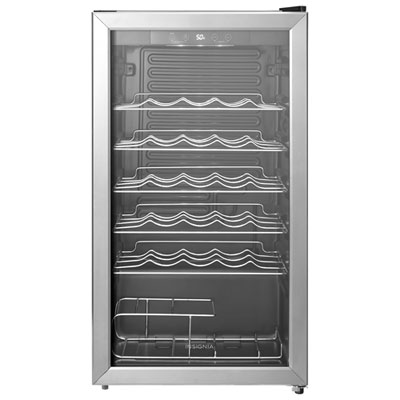
    Insignia 3.2 Cu. Ft. 29-Bottle Freestanding Wine Cooler (NS-WC29SS3-C) - Stainless Steel - Only at Best Buy

    About this product

    A 29-bottle wine cooler with adjustable shelves, glass door, and LED light for easy access and storage.

    What customers like

    • Affordable price point
    • Spacious interior with adjustable shelves
    • Attractive and stylish design
    • Quiet operation
    • Effective temperature control
    (333)
    $299.99
    SAVE $50
    Your price for this item is $299.99
  3. 3

    ZWILLING Sommelier Matted Wine Cooler

    About this product

    A sleek matted stainless steel wine cooler that keeps your wine perfectly chilled for any occasion.

    What customers like

    • Sleek, modern, and elegant design
    • Durable and easy to clean
    • Keeps wine and drinks perfectly chilled
    • Versatile for various bottle sizes and uses
    • No need for ice or refrigeration
    (25)
    $49.99 Your price for this item is $49.99
  4. 4

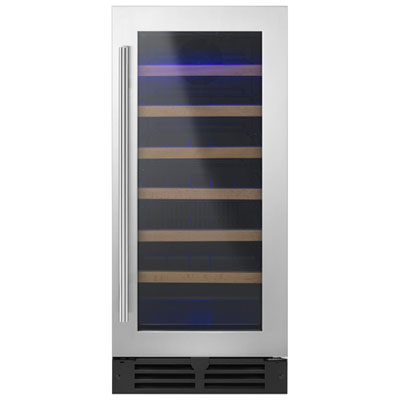
    Whirlpool 34-Bottle Wine Cooler (WUW35X15DS) - Black-on-Stainless

    About this product

    A sleek black-on-stainless wine cooler featuring motion-activated LED lighting and a high temperature alarm.

    What customers like

    • Sleek and attractive design
    • Consistent temperature control
    • Spacious capacity
    • Easy installation
    • Quiet operation
    (114)
    $1,649.99 Your price for this item is $1649.99
  5. 5

    CA'LEFORT -Wine Fridge - 24 Inch 52 Bottle Wine Cooler Refrigerator, 40-65°F Dual Zone Wine Refrigerator Glass Door, 3 Led Built-In Or Freestanding

    About this product

    A dual zone wine cooler with quiet compressor, built-in LED lighting, and flexible installation for home or bar.

    (9)
    $1,012.99
    SAVE $737
    Your price for this item is $1012.99
  6. 6

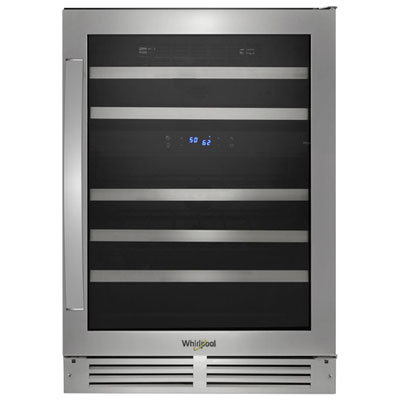
    Whirlpool 46-Bottle Built-In Wine Center (WUW55X24HS) - Stainless Steel

    About this product

    A stainless steel beverage centre with dual temperature zones for storing up to 46 bottles of wine.

    What customers like

    • Easy bottle access
    • Sleek and modern design
    • Spacious wine storage
    • Quiet operation
    • Dual temperature zones
    (36)
    $1,849.99 Your price for this item is $1849.99
  7. 7

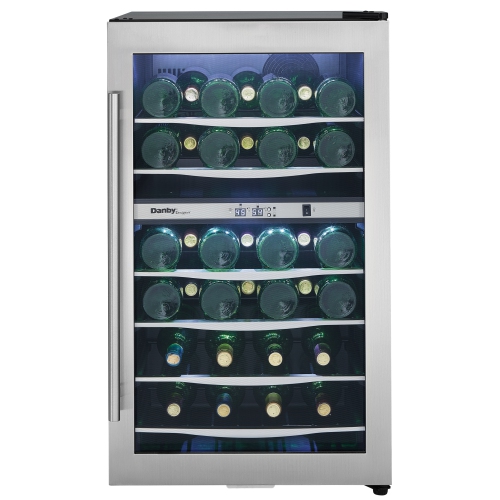
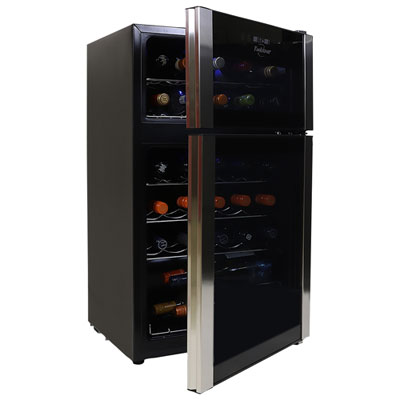
    DANBY Designer 38 Bottle Wine Cooler

    About this product

    A dual-zone wine cooler that chills up to 38 bottles, perfect for stylish kitchen or condo storage.

    What customers like

    • Compact and stylish design
    • Dual temperature zones for red and white wine
    • Spacious yet fits well in small spaces
    • Easy to use with visible temperature readouts
    • Quiet and reliable operation
    (29)
    $749.99 Your price for this item is $749.99
  8. 8

    CA'LEFORT 24 Inch Wine Fridge, 61 Bottle Wine Cooler Refrigerator, 40-65°F Wine Refrigerator Glass Door, 3 Led Wine Fridge, Built-In Or Freestanding

    About this product

    A versatile wine cooler featuring quiet compressor technology, adjustable LED lighting, and built-in or freestanding installation.

    (3)
    $944.99
    SAVE $725
    Your price for this item is $944.99
  9. 9

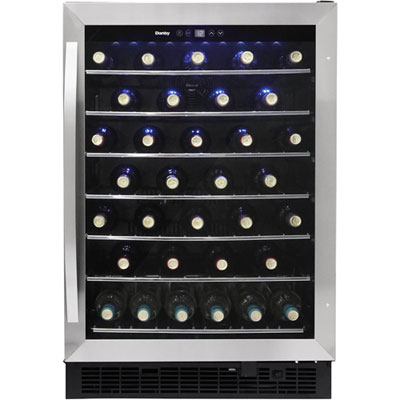
    Danby 60-Bottle Built-In Wine Cooler (DWC057A1BSS) - Stainless

    About this product

    A stainless steel wine cooler with adjustable temperature and digital thermostat, storing up to 60 bottles.

    (3)
    $989.99 Your price for this item is $989.99
  10. 10

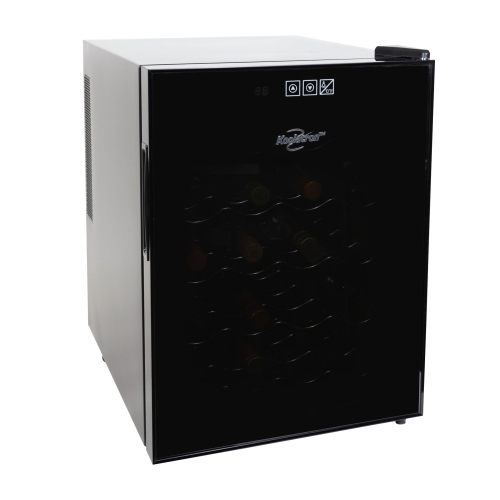
    KOOLATRON 20 Bottle Wine Cooler, Black Dual-Unit Wine Fridge, Freestanding Wine Cellar, Red And Sparkling Wine Storage for Home Bar, Apartment, Condo

    About this product

    A black dual-unit wine cooler with digital touch controls and UV-blocking glass for optimal wine storage.

    (1)
    $319.99
    SAVE $30
    Your price for this item is $319.99

Why wine storage takes more than counting bottles

The best wine coolers provide steady temperature control, practical bottle storage, and a fit that suits the space where they will be used. A dedicated wine fridge keeps bottles organized without taking over the kitchen refrigerator, with shelving designed around wine bottles rather than groceries. For someone who keeps a few favourites for dinner, a compact single-zone cooler can provide straightforward storage with one temperature setting throughout the cabinet. A larger collection may benefit from more shelf space, while a mix of reds and whites intended for serving at different temperatures can make a dual-zone wine cooler useful. These two zones have separate controls, although their temperature ranges and any required difference between settings vary by model. For longer-term storage, many wines can share a stable setting around 12°C to 14°C; separate zones are more useful when the aim is to keep different styles closer to their preferred serving temperatures. Capacity deserves a closer look than the bottle count alone. Published capacities commonly assume standard 750 mL Bordeaux-style bottles, so broad-shouldered Burgundy bottles, tall Riesling bottles, and sparkling wine bottles may reduce the usable total. Shelf spacing matters just as much as cabinet size when a collection includes several bottle shapes. Removable shelves can accommodate larger formats, but taking out a shelf usually means giving up some overall capacity. A household that opens wine occasionally may find a smaller cabinet easier to manage than a tall unit with unused shelves. The Best 12-Bottle Wine Coolers collection is a relevant starting point for modest collections and spaces where a full-height appliance would be excessive. For frequent hosts, extra room can help keep everyday favourites separate from bottles set aside for a special dinner. Some spare capacity also makes it easier to add a few bottles without rearranging every shelf, particularly when the selection changes between familiar labels and gifts from guests.

Wine coolers come in freestanding, countertop, and built-in designs, and those installation types are not interchangeable. A freestanding wine fridge needs the clearances specified by its manufacturer so heat can escape around the cabinet. Placing it tightly inside kitchen cabinetry can interfere with cooling and put unnecessary strain on the appliance. A built-in wine cooler is designed for an approved cabinet opening, typically with ventilation at the front that must remain unobstructed. Countertop models offer a compact footprint, but they still require ventilation, a suitable supporting surface, and enough space above and around the unit for its intended installation. Fit includes more than width, height, and depth: the handle adds projection, the door needs room to swing, and shelves may require the door to open beyond a right angle before they can slide out. In a narrow kitchen aisle, a door that clears a neighbouring cupboard can make the difference between convenient access and an awkward daily reach. Reversible hinges can help with placement when the model supports them. A level floor, an appropriate electrical outlet, and a position away from direct sunlight or heat-producing appliances also support reliable operation. Compressor wine coolers generally offer stronger cooling performance across a wider range of room temperatures, making them useful for larger capacities and homes where indoor conditions vary. Thermoelectric wine coolers often produce less vibration and may operate quietly, but their cooling ability depends more heavily on the surrounding room temperature. Neither design should be assumed silent; compressors, fans, and airflow can all contribute sound. In an open-plan living area, published noise information and the appliance’s operating specifications are worth considering alongside its appearance. Indoor wine coolers are not automatically suitable for an unheated garage or an outdoor kitchen. Their stated room-temperature limits matter, as does any explicit approval for outdoor use. Accessible controls, clear temperature displays, and a door-open alarm, where included, can make a well-positioned cooler easier to live with.

Materials and interior details shape how a wine cooler looks, feels, and holds up to repeated use. Stainless steel doors and trim give a crisp finish that works alongside many kitchen appliances, while black finishes can blend into darker cabinetry or a dining-room drinks area. Fingerprint resistance varies, so handles and frequently touched surfaces may need regular wiping. Glass doors make it easy to see the collection without opening the cabinet; insulated glass and stated UV protection are useful features to compare, although a shaded location remains preferable to direct sunlight. Solid doors offer a more enclosed appearance and keep light away from bottles when closed. Inside, metal shelving can be slim and easy to wipe clean, while wood shelves or wood-fronted racks add a warmer visual detail. The most useful shelves support bottles securely and move smoothly under their intended load. Pull-out racks make it easier to read labels and retrieve a bottle from the back without disturbing the entire row. For bottles sealed with natural cork, horizontal storage helps keep wine in contact with the cork; screw-cap bottles do not require that contact. Interior lighting improves visibility, and a light that can be switched off avoids unnecessary illumination. Day-to-day care is generally simple: wipe spills promptly, clean removable parts according to the manual, keep ventilation openings clear, and check that the door seal is clean and closes evenly. Abrasive cleaners can damage finishes, while excess moisture can affect wood components. A sturdy hinge, well-fitting gasket, and dependable shelf supports are practical signs of construction suited to regular use. For a collector interested in ageing valuable bottles, temperature stability is only part of the picture; not every wine cooler actively manages humidity or offers the monitoring features needed for extended cellaring. For everyday enjoyment, a dedicated unit can keep dinner bottles within easy reach and free up refrigerator space. As a housewarming or wedding gift for an adult wine enthusiast, it is most useful when its dimensions, bottle capacity, and installation needs match the recipient’s home.
Read More

FAQ

Some products may be subject to Environmental Handling Fees (EHF) depending on your province. Learn more about EHFs.