Action Cameras for Motovlogging
Capture every thrilling moment of your ride with an action camera for motovlogging, designed to enhance your vlogging experience with superior video quality and durability. Whether you're hitting the open road or navigating through city traffic, these cameras are built to withstand the elements and deliver stunning footage. Perfect for both amateur and professional vloggers, an action camera for motovlogging ensures you never miss a beat, providing you with the tools to create engaging content that showcases your adventures from every angle. Explore our selection of top-notch action cameras and take your motovlogging to the next level.
Sort
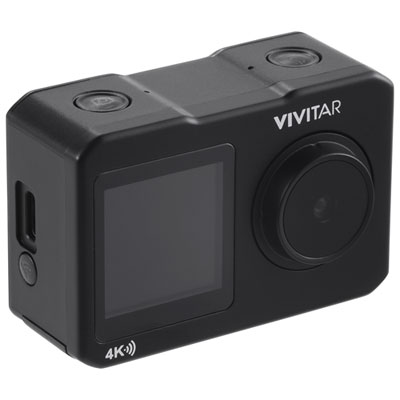
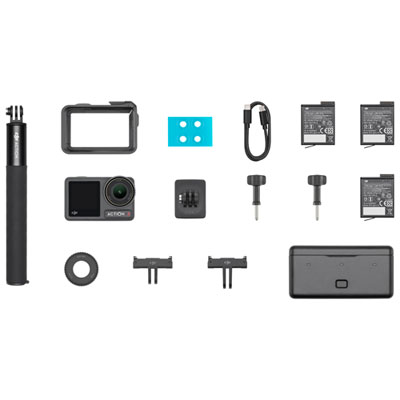
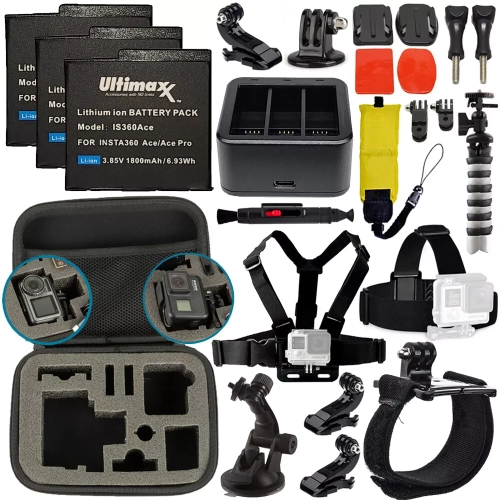
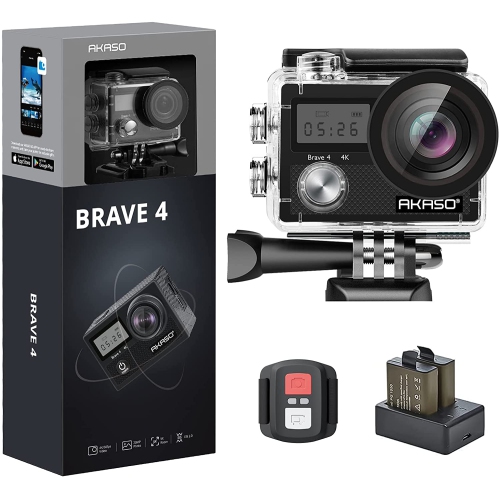
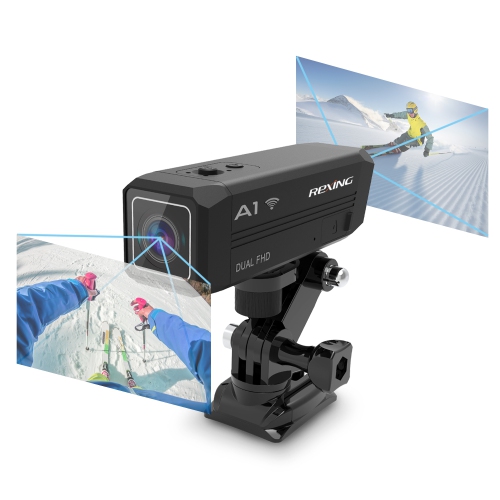
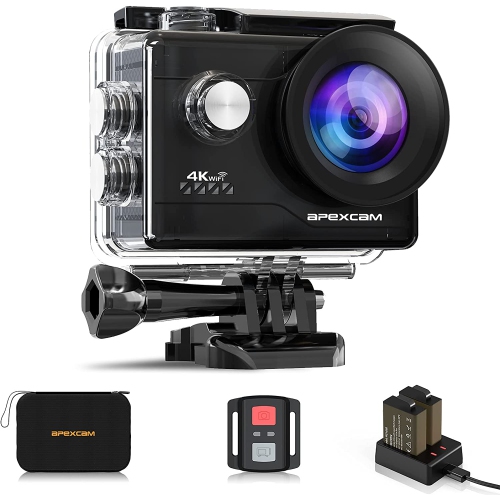
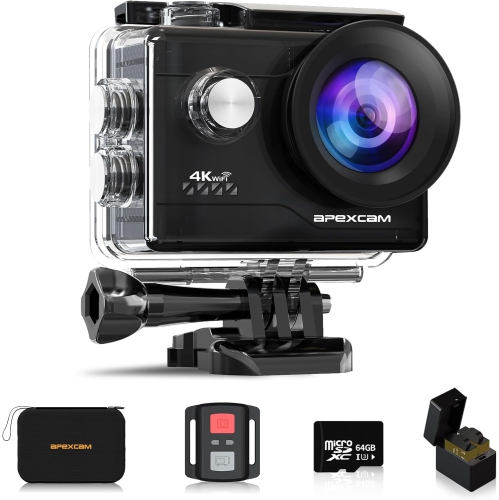
Smoother ride footage starts with a well-matched setup
Action cameras for motovlogging bring a rider’s perspective into focus, pairing compact video capture with mounting options suited to motorcycles and riding gear. Their appeal goes beyond recording the road ahead: a well-positioned camera can capture the sweep of a bend, the view across a bridge, and the spoken observations that give a ride its own story. For this use, the most useful features work together rather than standing alone. Image stabilization helps smooth vibration and small movements, while good low-light performance preserves detail on evening rides and through dimly lit underpasses. Stabilization results depend on the camera, mounting position, lighting, and recording settings; even strong processing cannot fully correct a loose mount or heavily blurred footage. Higher resolutions provide room to crop a frame during editing, and higher frame rates can make fast-moving scenes look smoother or support slow-motion clips. Both can increase storage demands and battery consumption, so the largest specification is not always the most practical setting for a full ride. Sensor size, lens design, and image processing also influence how clearly a camera renders shaded road surfaces, bright skies, and fine details such as dashboard markings. A wide field of view conveys the rider’s surroundings, although very wide settings can stretch objects near the edges of the image. More natural-looking viewing modes may reduce that distortion at the expense of coverage. Traditional forward-facing action cameras offer a straightforward point-of-view recording, while 360-degree cameras capture multiple directions for reframing later with compatible software. That flexibility brings additional editing and storage requirements, along with more exposed lens surfaces to protect. For riders who prefer footage that is quicker to review and share, a conventional action camera can be a simpler fit. Clear menus, visible recording indicators, and dependable start-and-stop feedback matter, too: knowing that a ride was actually recorded is more useful than a feature that rarely gets used.
Mounting and audio are central to how an action camera fits a motovlogging setup. A helmet-mounted camera generally follows the rider’s head movements, while a motorcycle-mounted camera keeps its view tied to the bike. Chin mounting can create a centred perspective that includes the road and a small portion of the cockpit, but compatibility depends on the helmet’s shape, surface finish, vents, and approved attachment options. Side mounting can shift the viewpoint and add an uneven load; a handlebar mount provides a different angle but may transmit more engine vibration. Camera weight, bracket length, and the number of joints in a mount all affect how much leverage the setup places on its attachment point. Short, secure mounting arrangements usually leave fewer opportunities for movement than long chains of adapters. Durable polymer housings keep many cameras compact, while metal mounting components can add rigidity where connections need it. The fit between those components matters as much as the material itself. Helmet manufacturer guidance takes priority, and attachments should never require drilling the shell or interfere with the visor, ventilation, field of vision, or protective function. Any retention tether also needs a suitable attachment point and routing that avoids controls and moving parts. For spoken commentary, microphone support deserves equal attention. Built-in microphones can capture engine sound and surrounding activity, but clear speech inside a helmet often benefits from a compatible external microphone placed near the rider’s mouth without affecting helmet fit. Some cameras accept a wired microphone through an adapter, while others support direct wireless audio from selected helmet communication systems. Wireless connectivity alone does not guarantee headset compatibility or the ability to record every conversation channel. Adapter requirements, connector access, microphone positioning, and cable routing all shape the finished setup. A short sample recording made before setting off can reveal muffled speech, rubbing cables, or audio levels overwhelmed by the engine. Once underway, recording should require as little interaction as possible, with adjustments reserved for a safe stop.
Everyday ownership also depends on power, storage, file handling, and care. Battery runtime varies with resolution, frame rate, screen use, wireless connections, and stabilization, so a quoted maximum may not reflect a rider’s preferred recording mode. Removable batteries can make longer outings easier to manage during stops, while external power requires compatible connections and secure cable placement clear of steering and other controls. Recording while charging is model-dependent, and an open connection cover may reduce the protection provided by the camera’s sealed housing. Memory cards need both the supported capacity and the sustained write speed required by the selected video settings. Reliable card performance becomes especially important with high-resolution footage, where an unsuitable card can interrupt recording even when it has free space. Loop recording, where supported, can reuse storage by replacing older clips, making it important to save wanted footage before it is overwritten. Companion apps and desktop software influence the experience after the ride, from transferring clips to matching separate audio and reframing 360-degree video. Riders who alternate between motorcycle footage, walking clips, and spoken updates may also find relevant crossover features among Action Cameras for Vlogging, particularly front-facing displays and flexible microphone connections. For motovlogging, durability includes the condition of lens covers, battery doors, mounting tabs, and fasteners over repeated use. A soft, clean lens cloth helps remove fingerprints without scratching optical surfaces, and a protective case keeps exposed lenses from rubbing against tools or spare hardware in a riding bag. Adhesive mounts need the specified surface preparation and curing time, followed by regular checks for lifting edges or movement. These cameras suit commuters documenting familiar routes, touring riders keeping a visual travel journal, and creators combining road footage with commentary recorded while parked. They can also make a thoughtful gift for a motorcyclist who already enjoys filming, provided the mounting system and audio connections match the recipient’s gear. Across those uses, a balanced setup puts readable footage, intelligible sound, secure fit, and manageable recording controls ahead of unnecessary bulk.
Mounting and audio are central to how an action camera fits a motovlogging setup. A helmet-mounted camera generally follows the rider’s head movements, while a motorcycle-mounted camera keeps its view tied to the bike. Chin mounting can create a centred perspective that includes the road and a small portion of the cockpit, but compatibility depends on the helmet’s shape, surface finish, vents, and approved attachment options. Side mounting can shift the viewpoint and add an uneven load; a handlebar mount provides a different angle but may transmit more engine vibration. Camera weight, bracket length, and the number of joints in a mount all affect how much leverage the setup places on its attachment point. Short, secure mounting arrangements usually leave fewer opportunities for movement than long chains of adapters. Durable polymer housings keep many cameras compact, while metal mounting components can add rigidity where connections need it. The fit between those components matters as much as the material itself. Helmet manufacturer guidance takes priority, and attachments should never require drilling the shell or interfere with the visor, ventilation, field of vision, or protective function. Any retention tether also needs a suitable attachment point and routing that avoids controls and moving parts. For spoken commentary, microphone support deserves equal attention. Built-in microphones can capture engine sound and surrounding activity, but clear speech inside a helmet often benefits from a compatible external microphone placed near the rider’s mouth without affecting helmet fit. Some cameras accept a wired microphone through an adapter, while others support direct wireless audio from selected helmet communication systems. Wireless connectivity alone does not guarantee headset compatibility or the ability to record every conversation channel. Adapter requirements, connector access, microphone positioning, and cable routing all shape the finished setup. A short sample recording made before setting off can reveal muffled speech, rubbing cables, or audio levels overwhelmed by the engine. Once underway, recording should require as little interaction as possible, with adjustments reserved for a safe stop.
Everyday ownership also depends on power, storage, file handling, and care. Battery runtime varies with resolution, frame rate, screen use, wireless connections, and stabilization, so a quoted maximum may not reflect a rider’s preferred recording mode. Removable batteries can make longer outings easier to manage during stops, while external power requires compatible connections and secure cable placement clear of steering and other controls. Recording while charging is model-dependent, and an open connection cover may reduce the protection provided by the camera’s sealed housing. Memory cards need both the supported capacity and the sustained write speed required by the selected video settings. Reliable card performance becomes especially important with high-resolution footage, where an unsuitable card can interrupt recording even when it has free space. Loop recording, where supported, can reuse storage by replacing older clips, making it important to save wanted footage before it is overwritten. Companion apps and desktop software influence the experience after the ride, from transferring clips to matching separate audio and reframing 360-degree video. Riders who alternate between motorcycle footage, walking clips, and spoken updates may also find relevant crossover features among Action Cameras for Vlogging, particularly front-facing displays and flexible microphone connections. For motovlogging, durability includes the condition of lens covers, battery doors, mounting tabs, and fasteners over repeated use. A soft, clean lens cloth helps remove fingerprints without scratching optical surfaces, and a protective case keeps exposed lenses from rubbing against tools or spare hardware in a riding bag. Adhesive mounts need the specified surface preparation and curing time, followed by regular checks for lifting edges or movement. These cameras suit commuters documenting familiar routes, touring riders keeping a visual travel journal, and creators combining road footage with commentary recorded while parked. They can also make a thoughtful gift for a motorcyclist who already enjoys filming, provided the mounting system and audio connections match the recipient’s gear. Across those uses, a balanced setup puts readable footage, intelligible sound, secure fit, and manageable recording controls ahead of unnecessary bulk.
Top selling and popular products
-
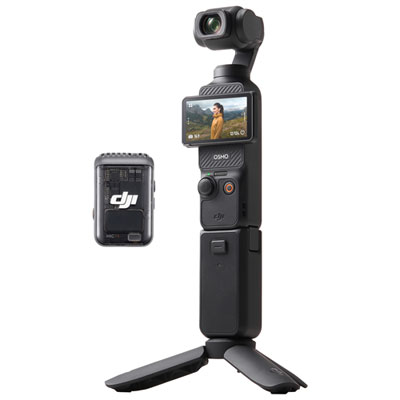 Your price for this item is $649.99
 -
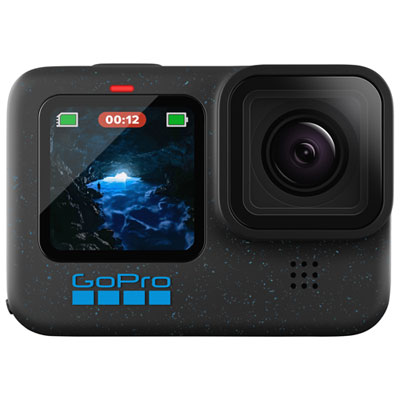 Your price for this item is $479.97
 -
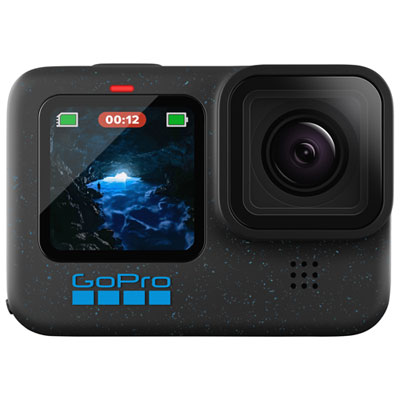 Your price for this item is $399.97
 -
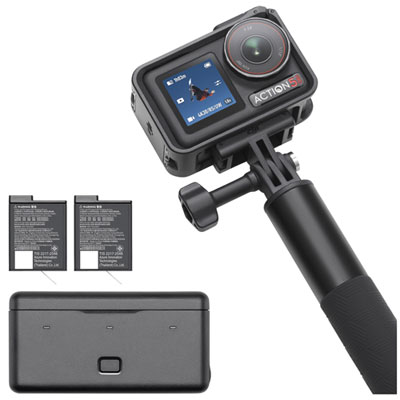 Your price for this item is $585.99
 -
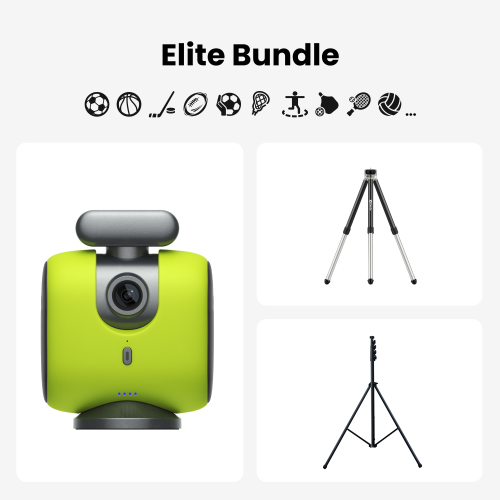 Your price for this item is $719.99
 -
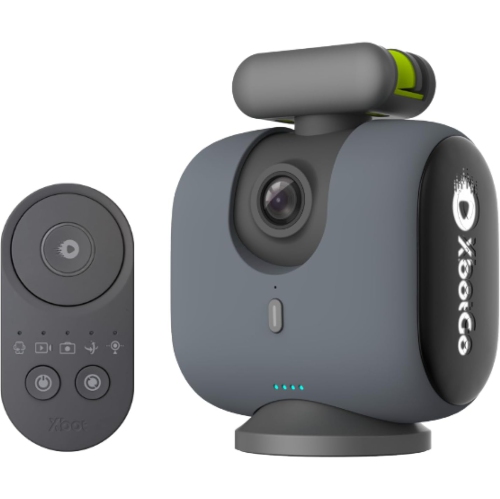 Your price for this item is $439.99
 -
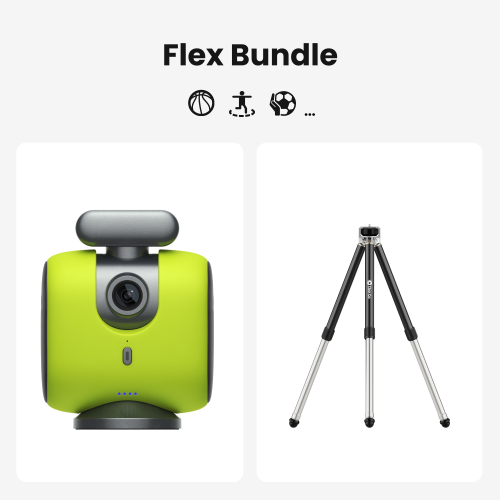 Your price for this item is $499.99
 -
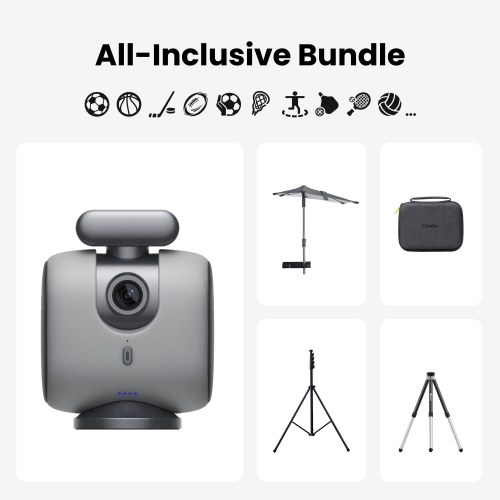 Your price for this item is $859.99
Discover more categories related to Action Cameras for Motovlogging

Top Collections:
Pokemon Centers, Kindle Devices, Best Budget Office Chairs, Apple iPhones 16, Best Laptops for Writers, iPhone 15 Apple, Canon G7X Cameras, Refurbished Apple Laptops, Alarm Clock, Motorola Razr Phones
Some products may be subject to Environmental Handling Fees
(EHF) depending on your province.
Learn more about EHFs.