Cyber Monday Deals Coming Soon
Our Cyber Monday Sale returns in December 2026. In the meantime, shop our current top deals below.

Cyber Monday Deals On Cookware Sets
Get ready to upgrade your kitchen with incredible savings on Cyber Monday! Discover unbeatable deals on cookware sets that will take your culinary skills to the next level. Whether you're a seasoned chef or just starting out, our selection of high-quality cookware sets will help you create delicious meals with ease. From non-stick pans to stainless steel pots, find sets to suit your cooking style and budget. Don't miss out on these limited-time offers. Shop the Cyber Monday deals on cookware sets and get ready to whip up some culinary magic in your kitchen! Remember, our Low Price Guarantee means you can shop confidently knowing that you'll find the best price at Best Buy, all year round. We encourage you to check our website frequently for the most up-to-date information on our latest offers and savings opportunities.
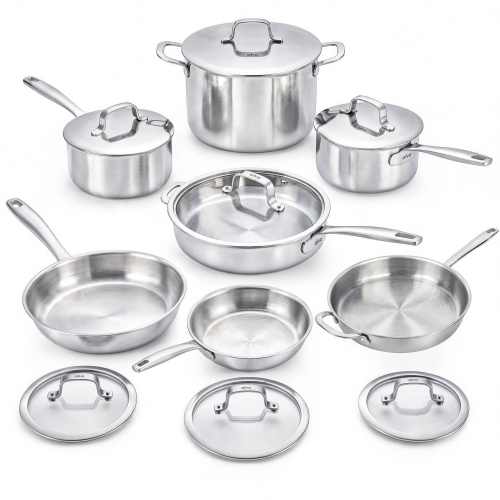


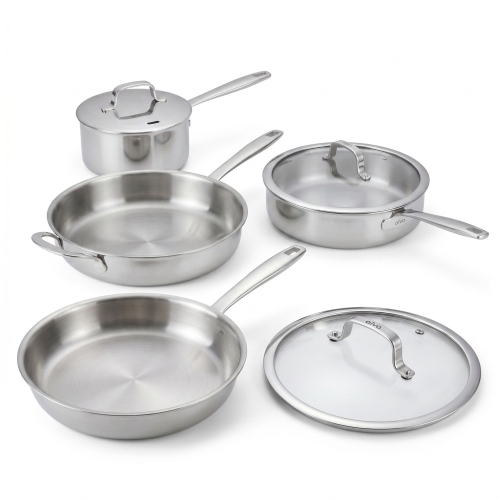
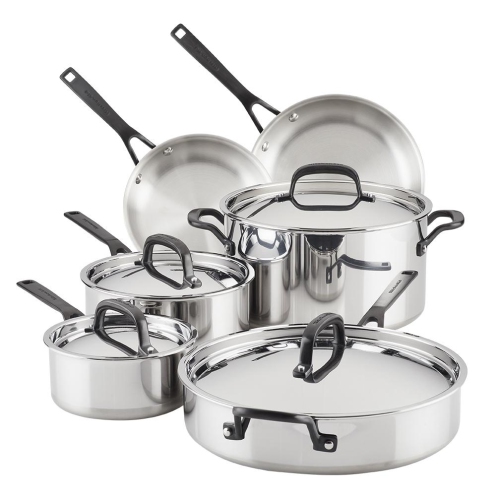






Why cookware piece counts tell only part of the story
Materials influence how cookware heats, how it feels in the hand, and how much attention it needs during cooking and cleaning. Stainless steel is a durable, versatile choice for browning meat, building a pan sauce, and handling acidic ingredients such as tomatoes. Because stainless steel alone does not distribute heat especially well, many designs combine it with an aluminum or copper core. A bonded base distributes heat across the bottom, while fully clad construction extends layered material through the sides; the distinction can matter when sauces simmer against the walls of a pan. Stainless steel is not inherently non-stick, so suitable preheating, a little cooking fat, and allowing browned food to release naturally all affect the cooking experience. Aluminum is relatively light and conducts heat readily, while hard-anodized aluminum has a hardened surface that resists wear. Many aluminum cookware sets also have a non-stick coating, though the base material and cooking surface are separate features. Non-stick surfaces are useful for delicate fish, pancakes, and eggs, particularly when easy food release is a priority. Ceramic-coated cookware also provides a surface designed for food release, but its performance and care requirements depend on the coating and the manufacturer's directions. Neither type should be treated as scratchproof or suitable for every heat level. Cast iron holds heat well for searing and steady cooking, although its weight can be significant when moving a full pan. Bare cast iron requires seasoning and prompt drying, while enamelled cast iron has a coated surface that does not require the same seasoning routine. Enamel still needs protection from knocks and abrupt temperature changes. Cooktop compatibility is another essential distinction. Induction cooking requires a suitable magnetic base; aluminum and copper cookware need an induction-compatible layer to work on that surface. Flat, smooth bases are particularly important on glass cooktops, and matching the pan base to the cooking zone supports efficient heat transfer. Oven suitability must be checked for the entire piece, including its handles and lid, since each component may have a different temperature limit.
The details that become noticeable after a few meals often determine how comfortable a cookware set is to use over time. A handle should offer a secure grip without forcing the wrist into an awkward position, and a helper handle can make a large sauté pan easier to lift with both hands. Metal handles can become hot, especially in the oven, so oven mitts need to be within reach even when a handle stays relatively cool during some stovetop tasks. A well-fitting lid should sit securely, while its knob needs enough clearance for a protected hand. Pouring rims can help direct sauce into a serving dish, and interior measurement markings can be handy when adding liquid, although they do not replace precise measuring tools for recipes that require accuracy. Storage deserves equal attention in a condo kitchen, shared home, or busy family kitchen. Tall stockpots need shelf clearance, long handles can crowd narrow cupboards, and nested pans benefit from protective separators that keep cooking surfaces from rubbing together. Care habits also affect durability. Letting cookware cool before washing helps limit the stress caused by sudden temperature changes, while soft cleaning tools protect finishes from unnecessary abrasion. Dishwasher suitability varies, and handwashing may be advised to preserve coatings or finishes even when some components are dishwasher-safe. Coated pans generally benefit from gentle utensils, moderate heat, and avoiding prolonged heating while empty. Pairing a set with suitable cooking utensils, such as silicone spatulas or wooden spoons where appropriate, helps protect the cooking surface during stirring and serving. For a housewarming, wedding, or practical family gift, the recipient's cooktop, storage space, and preferred recipes matter more than a uniform appearance. Someone who enjoys slow-simmered sauces may appreciate different cookware from someone whose daily routine centres on quick breakfasts and stir-fries. The most fitting assortment gives each vessel a clear purpose, feels comfortable in regular use, and has care requirements that suit the household using it.
Top selling and popular products
-
 Your price for this item is $899
-
 Your price for this item is $189.99
-
 Your price for this item is $807.5
-
 Your price for this item is $1615
-
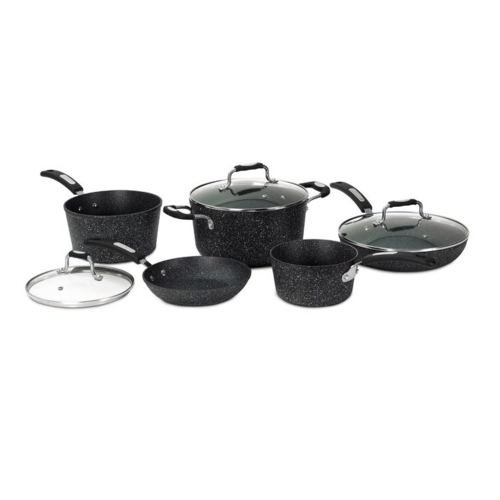 Your price for this item is $129.99
-
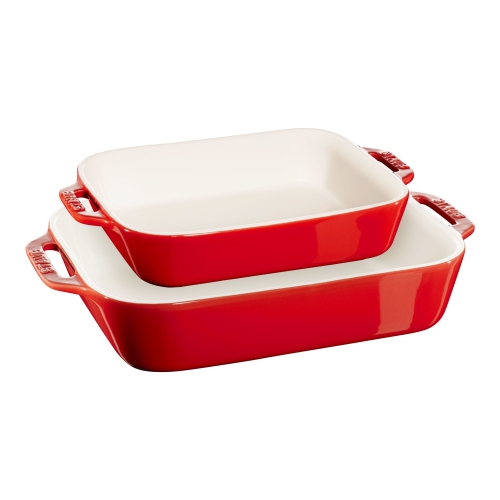 Your price for this item is $109.99
-
 Your price for this item is $239.99
-
 Your price for this item is $591