Drafting Supplies
Whether you're a professional architect, an aspiring artist, or a student working on a design project, having the right tools for drafting is essential. At Best Buy, we understand the importance of precision and creativity in every line you draw. That's why we offer a wide range of drafting supplies to meet your specific needs. From high-quality mechanical pencils and precision erasers to versatile drafting tables and rulers, our selection is designed to empower you to bring your ideas to life with utmost accuracy and efficiency. Explore our comprehensive collection of drafting supplies and elevate your artistic or technical skills to new heights.
Sort
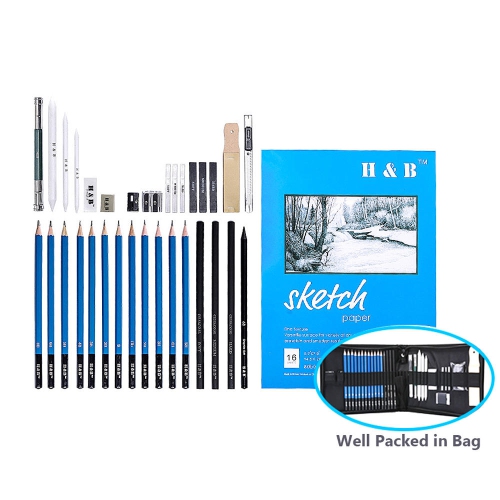
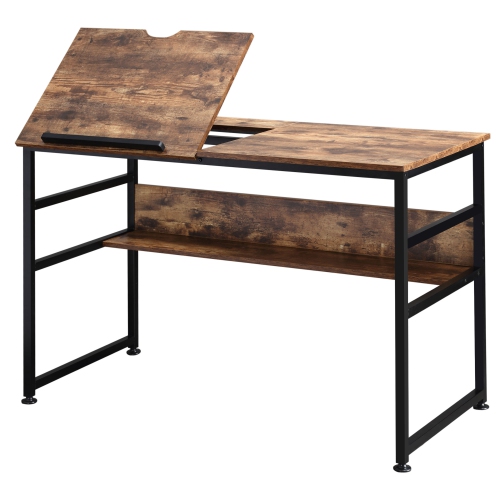

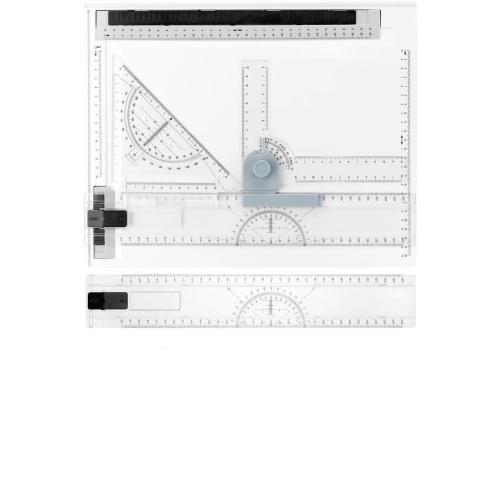
Precision tools for technical drawings, plans, and creative work
Drafting supplies bring structure and accuracy to technical drawing, architectural plans, engineering layouts, product sketches, lettering, and detailed creative work. Unlike freehand sketching, drafting depends on a reliable relationship between measurement, scale, line weight, and placement, so the right tools can make a drawing feel controlled from the first mark to the final detail. A T-square or parallel ruler helps establish clean horizontal lines, while drafting triangles create dependable 30/60-degree, 45-degree, and 90-degree angles without repeated measuring. A straightedge or standard ruler is useful for shorter lines and general layout, while an architectural or triangular scale helps translate measurements into a chosen drawing ratio. Protractors support accurate angle work, and proportional dividers can transfer dimensions or enlarge and reduce features while preserving their relationships. For circles, arcs, and repeated curves, a compass provides a consistent radius, while dividers help compare distances, step off measurements, and move a dimension from one area of a drawing to another. French curves and shaped templates are useful when a smooth curve needs to look intentional rather than approximated by hand. Together, these tools support the careful process behind floor plans, elevations, diagrams, mechanical illustrations, lettering practice, and scale models. When choosing drafting supplies, consider the type of work, the required level of precision, and the amount of space available. A student working at a compact desk may prefer a portable set that can be stored in a case, while an experienced drafter may want individual guides suited to larger sheets and more involved projects. Look for clear markings, easy-to-read graduations, smooth edges, and comfortable handling, since small design details become noticeable during long drawing sessions.
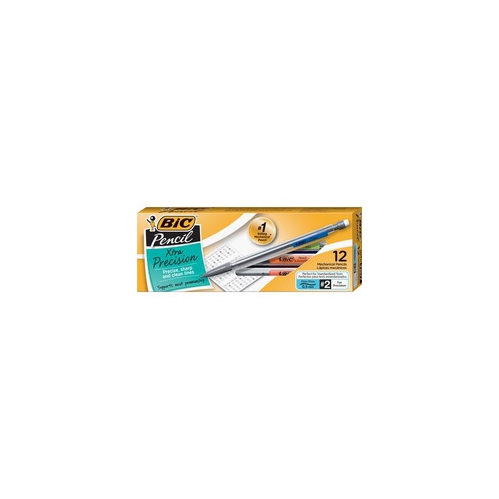
The drawing surface and writing instruments are just as important as the measuring tools. A drafting board or adjustable work surface can help keep paper steady and make it easier to view lines without leaning too far across the page. A cutting mat protects a desk when trimming paper, mounting drawings, or preparing presentation materials, and drafting tape or removable dots can hold a sheet in place without creating the raised edges that ordinary adhesive can leave behind. Bond paper is a practical choice for everyday practice and working drawings, while vellum or other translucent technical paper allows layers, revisions, and underlying construction lines to be viewed together. Mechanical pencils are particularly useful for drafting because they maintain a consistent line without the frequent sharpening required by traditional wooden pencils. Explore Mechanical Pencils for Drafting when selecting a pencil that feels balanced in the hand and suits the line weight you need. Lead hardness affects both appearance and control: harder grades such as 2H or H are suited to light construction lines, HB works well for general-purpose drawing, and softer grades such as 2B through 4B create darker marks for emphasis and sketching. Keep compatible replacement leads nearby so a productive session is not interrupted by an empty barrel. A lead pointer or sharpener can help maintain a fine point, while a soft eraser removes light marks without disturbing the paper. Kneaded erasers can be shaped for small corrections or used to lift graphite gently, and artgum-style erasers are useful for broader clean-up. An erasing shield makes it possible to remove one small line while protecting the surrounding detail. These seemingly modest accessories can have a noticeable effect on a finished drawing, particularly when a plan contains many intersecting lines or when lettering needs to remain crisp and legible.
Drafting supplies can serve a wide range of users, from secondary and post-secondary students learning technical drawing to architects, engineers, designers, makers, artists, and home project planners. Beginners often benefit from a coordinated drafting set containing essential measuring and layout tools, such as a small scale, triangles, a protractor, a compass, and an eraser. A set can make it easier to learn how each instrument works together before adding specialized tools for a particular subject. Students preparing for a design, construction, engineering, or illustration course may appreciate supplies that fit into a backpack and can be used for both classroom exercises and independent practice. More advanced users may prefer to build a personalized collection around their drawing habits, adding templates for circles, lettering, furniture, electrical symbols, or architectural details as their projects become more specific. Drafting supplies can also make a thoughtful gift for someone who enjoys drawing, model building, woodworking plans, sewing patterns, mapmaking, or hands-on design. The appeal is partly practical and partly sensory: the soft drag of graphite across paper, the clean click of a pencil mechanism, and the satisfying alignment of a triangle against a straightedge all make a work session feel deliberate. During the warmer and cooler parts of the year alike, a well-organized drafting area can provide a focused place for coursework, personal projects, and creative practice. Store scales and straightedges flat when possible, keep points protected, and separate clean paper from used sheets to prevent smudging. Whether the goal is a precise technical plan or an exploratory sketch that will become something larger, thoughtfully chosen drafting supplies help turn measurements and ideas into clear, confident lines.
The drawing surface and writing instruments are just as important as the measuring tools. A drafting board or adjustable work surface can help keep paper steady and make it easier to view lines without leaning too far across the page. A cutting mat protects a desk when trimming paper, mounting drawings, or preparing presentation materials, and drafting tape or removable dots can hold a sheet in place without creating the raised edges that ordinary adhesive can leave behind. Bond paper is a practical choice for everyday practice and working drawings, while vellum or other translucent technical paper allows layers, revisions, and underlying construction lines to be viewed together. Mechanical pencils are particularly useful for drafting because they maintain a consistent line without the frequent sharpening required by traditional wooden pencils. Explore Mechanical Pencils for Drafting when selecting a pencil that feels balanced in the hand and suits the line weight you need. Lead hardness affects both appearance and control: harder grades such as 2H or H are suited to light construction lines, HB works well for general-purpose drawing, and softer grades such as 2B through 4B create darker marks for emphasis and sketching. Keep compatible replacement leads nearby so a productive session is not interrupted by an empty barrel. A lead pointer or sharpener can help maintain a fine point, while a soft eraser removes light marks without disturbing the paper. Kneaded erasers can be shaped for small corrections or used to lift graphite gently, and artgum-style erasers are useful for broader clean-up. An erasing shield makes it possible to remove one small line while protecting the surrounding detail. These seemingly modest accessories can have a noticeable effect on a finished drawing, particularly when a plan contains many intersecting lines or when lettering needs to remain crisp and legible.
Drafting supplies can serve a wide range of users, from secondary and post-secondary students learning technical drawing to architects, engineers, designers, makers, artists, and home project planners. Beginners often benefit from a coordinated drafting set containing essential measuring and layout tools, such as a small scale, triangles, a protractor, a compass, and an eraser. A set can make it easier to learn how each instrument works together before adding specialized tools for a particular subject. Students preparing for a design, construction, engineering, or illustration course may appreciate supplies that fit into a backpack and can be used for both classroom exercises and independent practice. More advanced users may prefer to build a personalized collection around their drawing habits, adding templates for circles, lettering, furniture, electrical symbols, or architectural details as their projects become more specific. Drafting supplies can also make a thoughtful gift for someone who enjoys drawing, model building, woodworking plans, sewing patterns, mapmaking, or hands-on design. The appeal is partly practical and partly sensory: the soft drag of graphite across paper, the clean click of a pencil mechanism, and the satisfying alignment of a triangle against a straightedge all make a work session feel deliberate. During the warmer and cooler parts of the year alike, a well-organized drafting area can provide a focused place for coursework, personal projects, and creative practice. Store scales and straightedges flat when possible, keep points protected, and separate clean paper from used sheets to prevent smudging. Whether the goal is a precise technical plan or an exploratory sketch that will become something larger, thoughtfully chosen drafting supplies help turn measurements and ideas into clear, confident lines.
Top selling and popular products
-
 Your price for this item is $119.99
 -
 Your price for this item is $123
 -
 Your price for this item is $139.99
 -
 Your price for this item is $139.99
 -
 Your price for this item is $379.99
 -
 Your price for this item is $379.99
 -
 Your price for this item is $594.99
 -
 Your price for this item is $174.98
Discover more categories related to Drafting Supplies
Top Collections:
Best Laptops for Video Editing, Pokemon Centers, Samsung Z Fold, Kindle Devices, Best Cell Phones Under $300, Best Laptop Computers for Students, iPhone 15 Apple, Best Cell Phones Under $500, Alarm Clock, Canon G7X Cameras
Some products may be subject to Environmental Handling Fees
(EHF) depending on your province.
Learn more about EHFs.