Icing Tips
Elevate your baking creations with a wide selection of icing tips, perfect for decorating cakes, cupcakes, cookies, and more. Whether you're an experienced baker or just starting out, icing tips open up endless possibilities for adding creative designs and professional-looking finishes to your desserts. Explore various shapes and sizes to find the right tools for piping borders, flowers, lettering, and intricate details with ease. Discover how the right icing tips can help you achieve impressive results for any occasion.
Sort

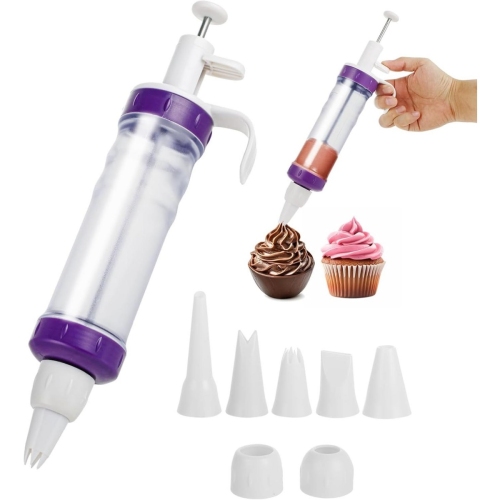
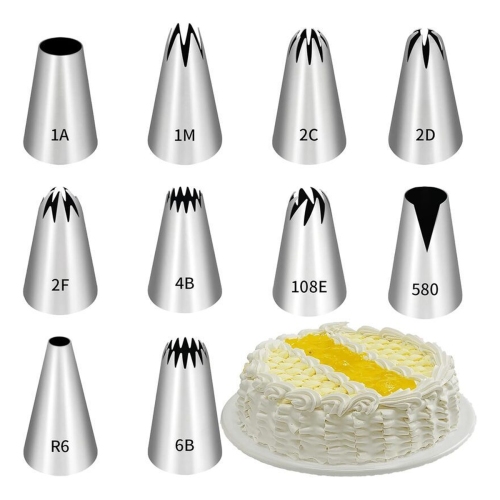
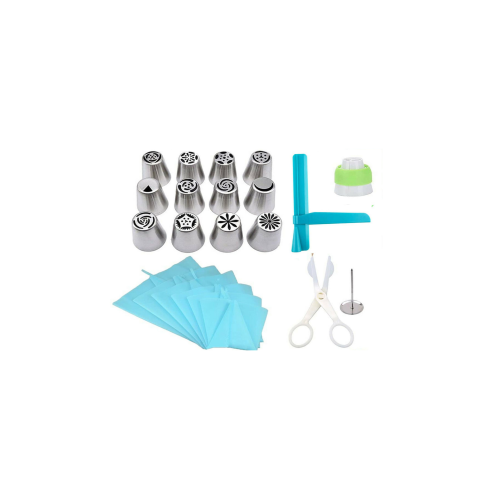
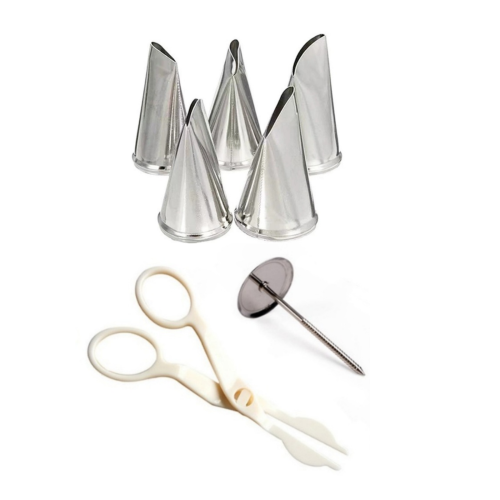
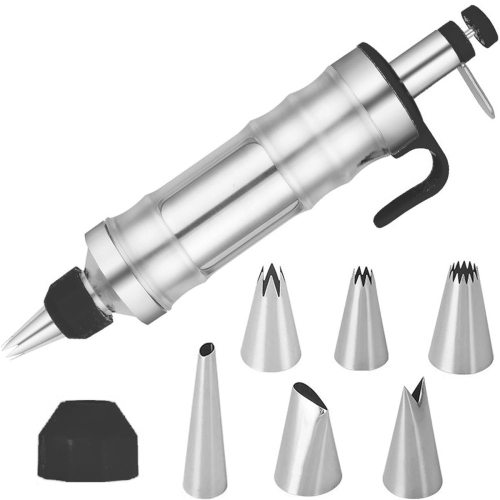
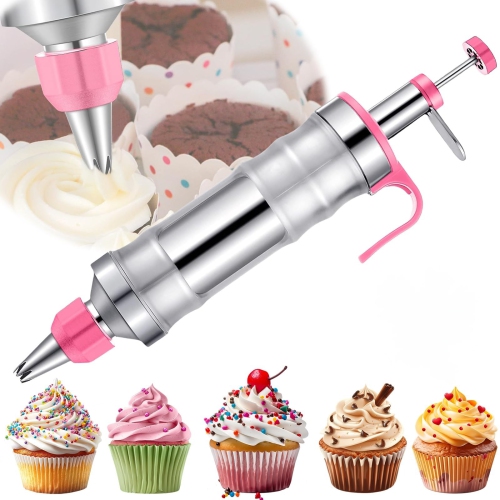

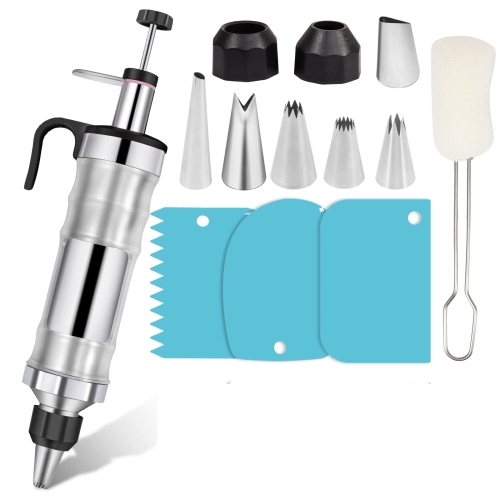
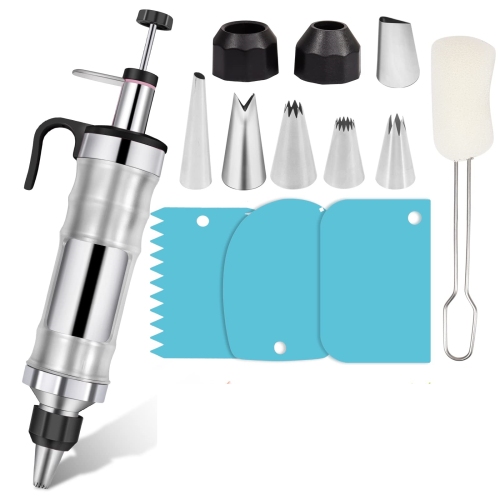

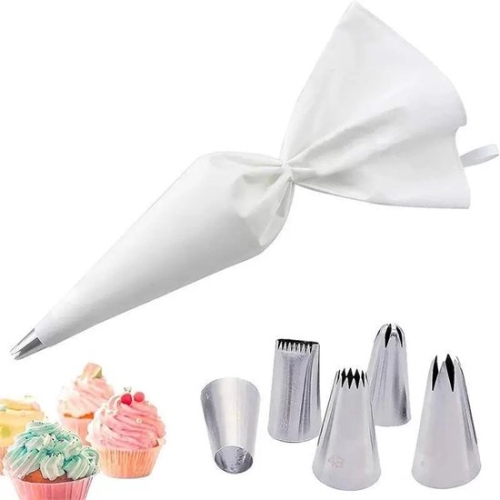

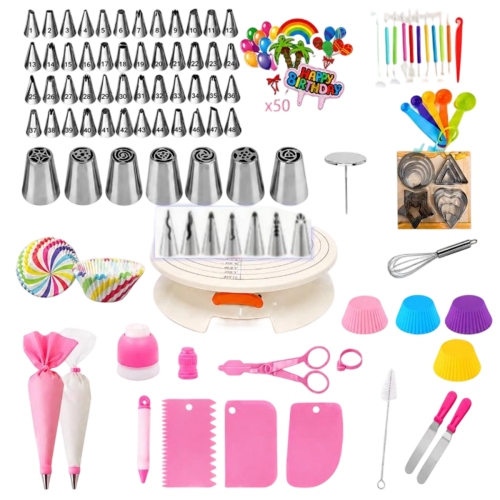
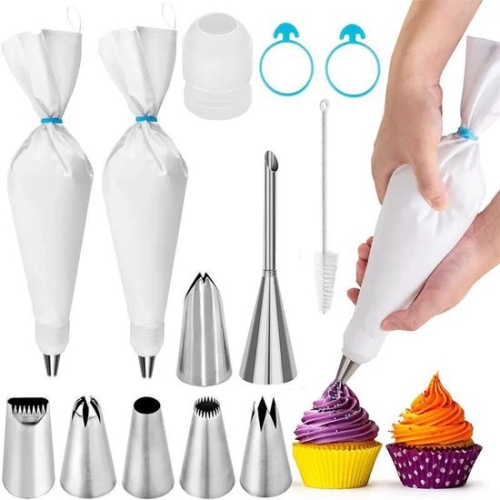
How piping openings shape swirls and fine details
Icing tips, also called piping tips or piping nozzles, fit at the end of a pastry bag and shape frosting as it comes out. The opening determines whether the icing forms a smooth line, a ridged swirl, a flat ribbon or something as small as the pointed end of a leaf. Round tips are useful for lettering, dots and outlines: a fine opening can fit a name across a cookie, while a wider one makes a smooth dollop on a cupcake or pipes an even ring of filling between cake layers. Open star tips create distinct ridges that show up well on cupcake swirls, rosettes and shell borders. Closed star tips have teeth that curve inward, giving the frosting deeper grooves and a more defined edge. A petal tip has a slit that’s wider at one end than the other, so it can pipe a ruffle with a sturdy base and a thin, delicate edge. A leaf tip has a notched opening that forms a crease down the middle and tapers to a point as pressure is released. Multi-opening tips pipe several strands at once for grass or fur textures. Scale matters as much as shape: a star tip suited to a narrow border around a layer cake won’t make the same broad, tall swirl as a larger nozzle. The icing needs to suit the opening, too. Smooth royal icing works well for fine cookie details, but a bit of zest or a lump of sugar can block a small nozzle and make a line break halfway through a letter. Buttercream that holds its shape will show the ridges of a star tip clearly; a softer frosting may settle into a smoother finish even when it’s piped through the same opening. A few practice lines on parchment can show whether a tip will leave enough room for all the letters in a name or whether a shell border will fit along the ledge of a cake stand without crowding the edge of the cake.
Material and fit make a difference when a piping bag is used for several colours or finishes in one session. Stainless steel tips are rigid and hold a crisp opening, a useful quality for fine points and narrow slits. Plastic tips can work well for broader shapes such as dollops and swirls. A smooth rim and a cleanly formed opening matter with either material: a nick on the edge of a round tip can leave a visible track down an otherwise smooth line of icing. Tips can sit directly inside a piping bag, with the narrow end extending through the opening, or attach using a coupler. A coupler has a base that sits inside the bag and a ring that secures the tip on the outside, making it possible to switch shapes without emptying the bag. That’s handy when one colour of buttercream is used for both a shell border and a piped message. Check the diameter at the base of the tip against the coupler as well as the size of the piping opening. Two tips that look similar from the front may not take the same ring, and a large cupcake nozzle may need a larger coupler or a bag cut to fit it directly. With a bag cut to fit, the opening should expose the nozzle without letting its wider base slip through. After use, remove the tip and any coupler parts from the bag so frosting doesn’t stay trapped under the ring. Warm, soapy water helps lift buttercream from the inside of a tip, and a small, soft brush can reach between star points or into a narrow petal slit. A dishwasher is an option when the care directions allow it. Let the pieces dry fully before putting them away, and keep fine tips in a small organizer or separate compartment where heavier utensils won’t bend their edges. Even a slight dent can change the pattern a tip makes, especially when piping several matching rosettes in a row.
A small range of familiar shapes can serve a home baker better than a large assortment of tips with nearly identical openings. A baker who mostly finishes cupcakes might reach for a wide round tip for a soft mound and an open star for a classic swirl, while someone who makes iced cookies may get more use from two round tips in different sizes for outlines and finer accents. A baker who enjoys making layer cakes might favour petal and leaf tips for buttercream flowers, along with a round tip wide enough to build an even ring of icing that keeps a softer filling away from the outside edge. The size of the baking project can change what feels practical: when finishing a tray of mini cupcakes, a smaller star can leave room around the top for a few sprinkles, while a large nozzle can lay down a generous swirl on a full-size cupcake in one pass. For beginners, tips that make visibly different shapes are easier to tell apart and give clearer feedback about how bag angle and pressure affect a line. For a baker who already uses a piping bag regularly, a gift can be more useful when it fills a gap, such as a fine opening for lettering or a wide petal tip for adding ruffles to taller cakes. If the recipient already uses a coupler, checking its fit is more helpful than guessing from the shape of the nozzle. Icing tips handle the raised details, but the surface underneath plays a part in how those details look. A level coat of frosting gives lettering a clean backdrop, and a smooth rim makes it easier to space shells evenly around a cake. The Cake Icing Tools page covers tools that complement piping tips, including those used to spread and smooth the icing before adding a border, a message or a cluster of flowers.
Top selling and popular products
-
 Your price for this item is $26.99
-
 Your price for this item is $24
-
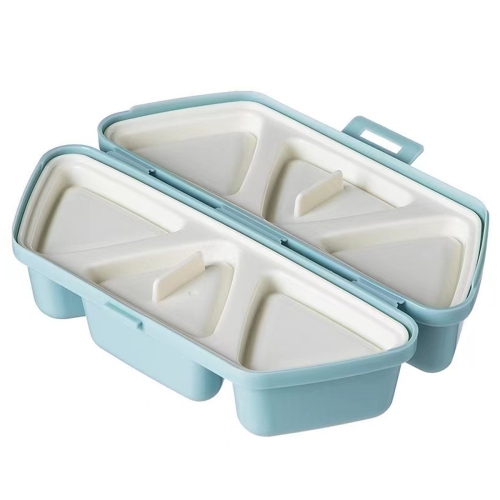 Your price for this item is $21.88
-
 Your price for this item is $23
-
 Your price for this item is $29.78
-
 Your price for this item is $79.6
-
 Your price for this item is $95
-
 Your price for this item is $47.35
Discover more categories related to Icing Tips

Top Collections:
Best Black Friday Deals This Year, Best Black Friday Deals On Electronics, Kindle Devices, Pokemon Centers, Best Black Friday Deals On Apple Products, Best Cameras for Sports Photography, Dyson Airwrap, Pokémon 30th Celebration Cards, Apple iPhone 17 Pro, Canon G7X Cameras
Some products may be subject to Environmental Handling Fees
(EHF) depending on your province.
Learn more about EHFs.