Acoustic Panels
Transform your space into an acoustic haven with high-quality acoustic panels, designed to enhance sound clarity and reduce unwanted noise. Whether you're setting up a home studio, improving your office acoustics, or simply looking to create a serene environment, these panels offer an effective solution. Available in various styles and finishes, they not only serve a functional purpose but also add a touch of aesthetic appeal to any room. Discover how acoustic panels can elevate your audio experience and bring harmony to your living or working space.
Sort
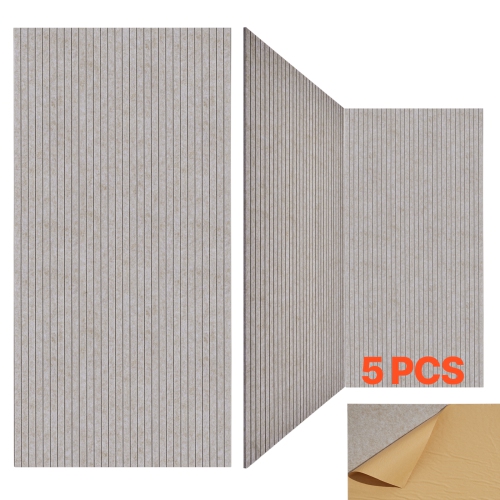
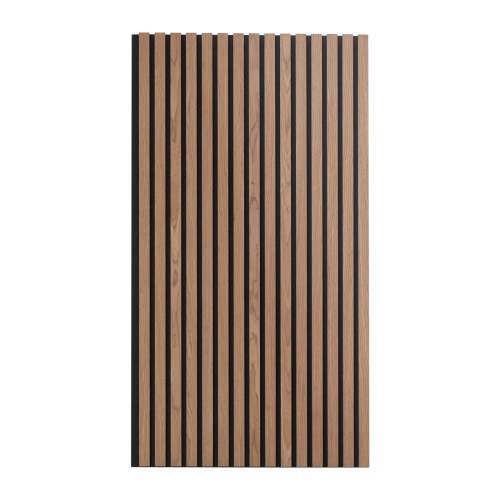
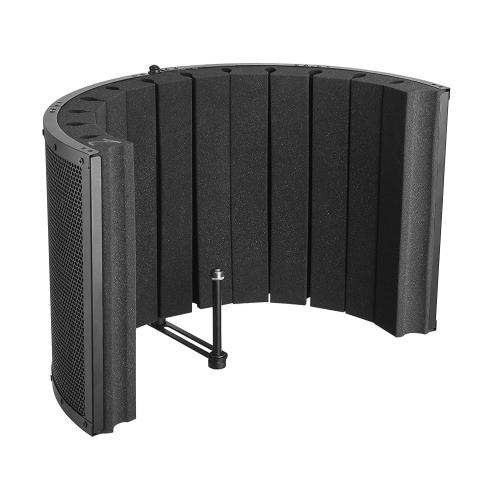
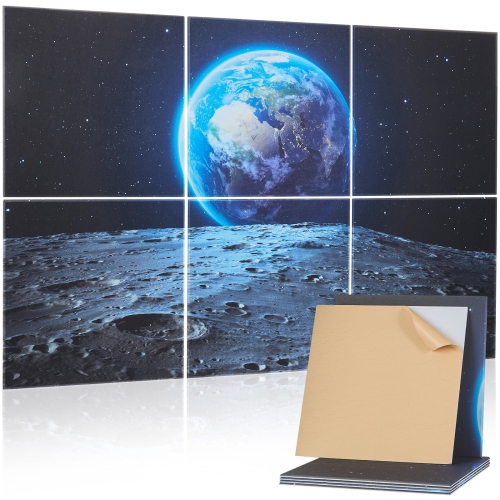
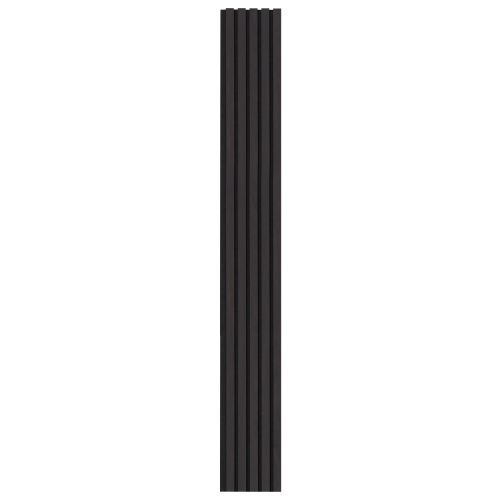
Clearer conversations start with fewer sound reflections
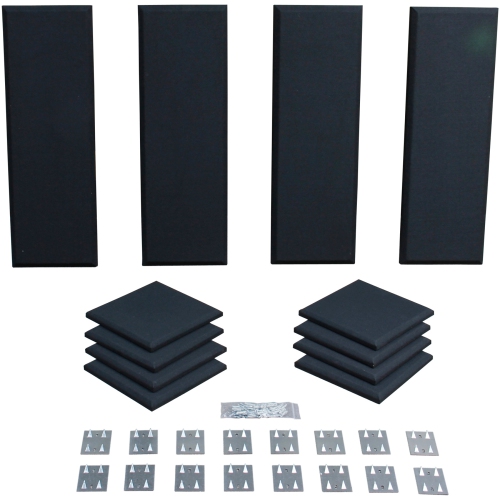
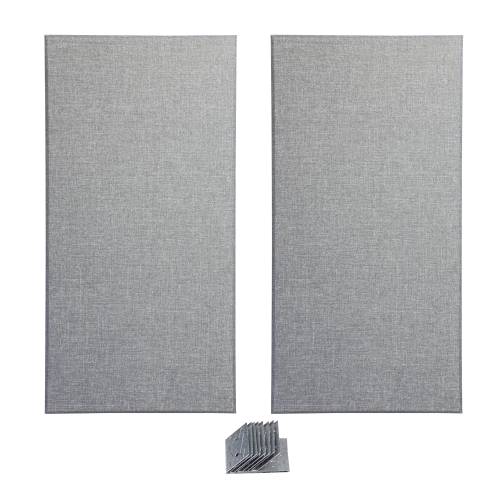
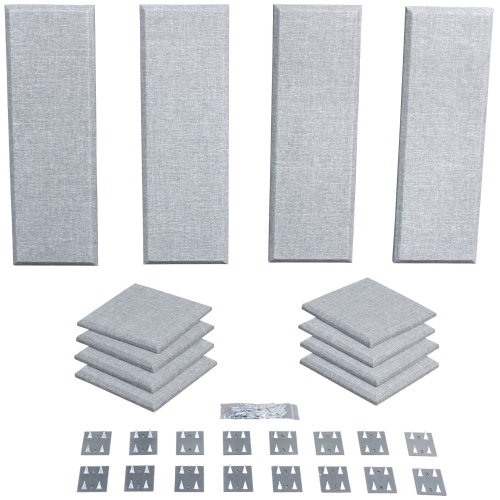
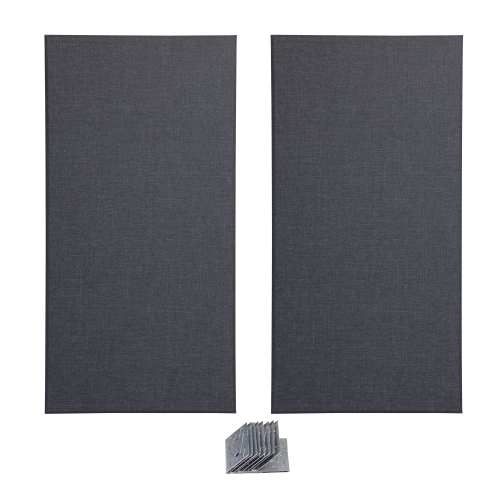
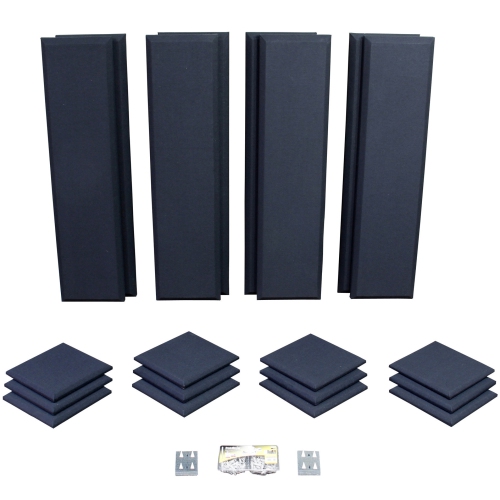
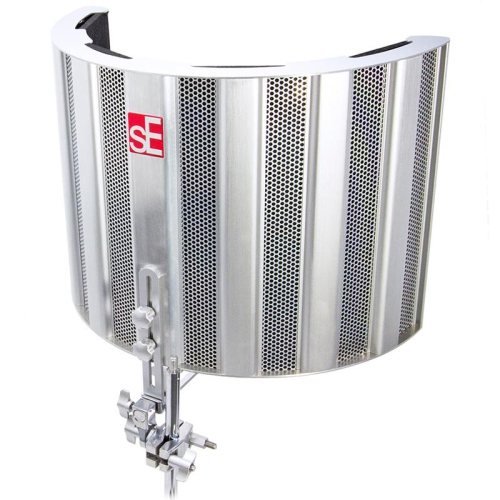
Acoustic panels absorb sound that would otherwise bounce off walls, ceilings, and other hard surfaces, helping reduce echo and reverberation within a room. They can make conversations easier to follow, bring greater clarity to recorded speech, and reduce the lingering ring that makes a sparsely furnished space feel noisy. Their main purpose is sound absorption, not soundproofing: treating a wall with panels does not, by itself, stop voices, music, or traffic noise from travelling through walls, doors, windows, or structural gaps. That distinction matters whether the space is a home office, a gaming room, a music studio, or a shared living area. In an office with bare walls and a large desk, panels can soften the hollow quality picked up by a microphone during video calls. Near a listening area, suitable treatment can reduce reflections that blur dialogue or interfere with the sound from speakers. In a room used for practising an instrument, it can make the sound less overwhelming without needing to cover every surface. Results depend on the room’s size, furnishings, panel placement, and the amount and type of absorption installed. A rug, upholstered sofa, and curtains already absorb some sound, while glass, tile, and exposed wall surfaces tend to reflect more of it. Panels add targeted absorption where those furnishings are not enough. They also vary in the frequencies they absorb most effectively. Thin panels generally work best on higher-frequency reflections; thicker absorbers can address a wider range when their construction and installation support it. Deep bass typically needs more substantial treatment than lightweight wall tiles. For anyone comparing acoustic wall panels, the most useful starting point is the sound problem itself: clearer speech at a desk, more controlled playback around speakers, or less reverberation across an open room. Matching the panel to that purpose is more meaningful than choosing by surface pattern alone.
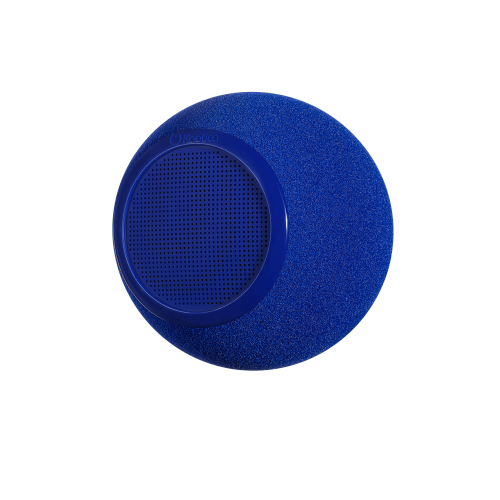
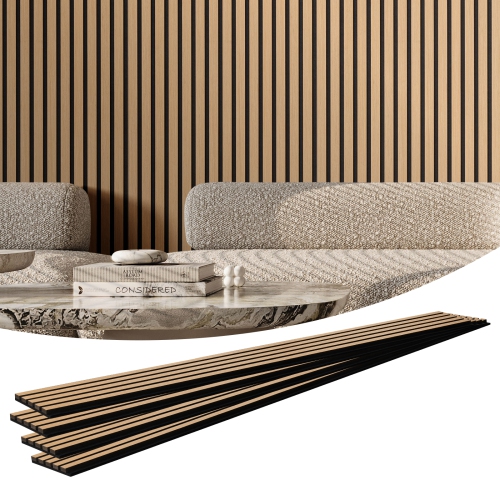
Materials and construction affect both acoustic performance and how panels fit into a finished space. Acoustic foam is lightweight and often formed into wedges, pyramids, or other textured profiles, but the shape alone does not establish how much sound it absorbs. Thickness, material properties, coverage, and tested performance are more useful measures. Polyester felt panels offer a firmer surface and can suit offices, creative workspaces, and rooms where a low-profile wall treatment is preferred. Fabric-wrapped panels commonly contain a porous core, such as mineral wool or fibreglass, enclosed in a frame and covered with acoustically transparent fabric. Depending on their depth and construction, these panels can provide broader absorption than thin surface treatments. Wood slat acoustic panels combine a visible slatted face with an absorptive backing, bringing texture and a furniture-like finish to a wall. Their performance varies with the backing, slat spacing, and mounting method; an installation over battens with an appropriate cavity may perform differently from the same panel fixed directly to a wall. Where published acoustic test data is provided, it offers a firmer basis for comparison than broad noise-reduction claims. The Noise Reduction Coefficient, or NRC, summarizes absorption across several mid-range frequencies, but it is not a soundproofing rating and does not fully describe bass performance. Test results are most relevant when the tested mounting arrangement matches the intended installation. Appearance still plays an important role, particularly in multipurpose rooms. Neutral fabric, coloured felt, or wood finishes can blend with shelving and furniture, while geometric arrangements can make treatment part of the room’s visual design. For a sleeping space that also serves as a reading area, gaming corner, or occasional workspace, Bedroom Acoustic Wall Panels can help narrow the focus to wall treatments suited to that setting. Absorption may make activity within the room sound less reverberant, but it should not be mistaken for a barrier against noise from the next room.
Panel dimensions, mounting requirements, and everyday care deserve as much attention as the finish. Coverage depends on the size and layout of the space rather than a universal number of panels. A small cluster behind a desk may help with nearby reflections, yet leave the rest of a large, hard-surfaced room noticeably reverberant. Spreading treatment across suitable surfaces can be more effective than concentrating it all in one patch, and placement near reflection points between speakers and the listening position can improve playback clarity. Ceiling treatment may also be useful, but overhead installations require secure fixings and hardware rated for the panel weight and ceiling structure. For wall-mounted panels, check the overall dimensions, thickness, weight, and any clearance needed around outlets, switches, doors, or furniture. Adhesive-backed formats can simplify installation on compatible surfaces, although adhesion varies with wall texture, paint condition, and preparation. Adhesive can also lift paint or leave residue when removed, an important consideration in a rental or a room that changes function. Heavier framed panels and slatted sections may need mechanical fixings, and any air gap specified for acoustic performance should be included when assessing how far the finished installation projects from the wall. In shared spaces or areas used by children and pets, secure edges and durable coverings help the treatment stand up to daily contact. Material-specific care instructions take priority: some fabric and felt surfaces allow gentle vacuuming with a soft brush, while wood finishes may need only light dusting or a carefully controlled wipe. Saturating porous materials can damage their shape, backing, or adhesive, and aggressive scrubbing may mark fabric or foam. For commercial or public spaces, documented fire-performance information and applicable building requirements are essential considerations. With suitable materials, secure installation, and realistic expectations, acoustic panels can support clearer calls, more intelligible dialogue, and more controlled music playback while fitting naturally into the room.
Materials and construction affect both acoustic performance and how panels fit into a finished space. Acoustic foam is lightweight and often formed into wedges, pyramids, or other textured profiles, but the shape alone does not establish how much sound it absorbs. Thickness, material properties, coverage, and tested performance are more useful measures. Polyester felt panels offer a firmer surface and can suit offices, creative workspaces, and rooms where a low-profile wall treatment is preferred. Fabric-wrapped panels commonly contain a porous core, such as mineral wool or fibreglass, enclosed in a frame and covered with acoustically transparent fabric. Depending on their depth and construction, these panels can provide broader absorption than thin surface treatments. Wood slat acoustic panels combine a visible slatted face with an absorptive backing, bringing texture and a furniture-like finish to a wall. Their performance varies with the backing, slat spacing, and mounting method; an installation over battens with an appropriate cavity may perform differently from the same panel fixed directly to a wall. Where published acoustic test data is provided, it offers a firmer basis for comparison than broad noise-reduction claims. The Noise Reduction Coefficient, or NRC, summarizes absorption across several mid-range frequencies, but it is not a soundproofing rating and does not fully describe bass performance. Test results are most relevant when the tested mounting arrangement matches the intended installation. Appearance still plays an important role, particularly in multipurpose rooms. Neutral fabric, coloured felt, or wood finishes can blend with shelving and furniture, while geometric arrangements can make treatment part of the room’s visual design. For a sleeping space that also serves as a reading area, gaming corner, or occasional workspace, Bedroom Acoustic Wall Panels can help narrow the focus to wall treatments suited to that setting. Absorption may make activity within the room sound less reverberant, but it should not be mistaken for a barrier against noise from the next room.
Panel dimensions, mounting requirements, and everyday care deserve as much attention as the finish. Coverage depends on the size and layout of the space rather than a universal number of panels. A small cluster behind a desk may help with nearby reflections, yet leave the rest of a large, hard-surfaced room noticeably reverberant. Spreading treatment across suitable surfaces can be more effective than concentrating it all in one patch, and placement near reflection points between speakers and the listening position can improve playback clarity. Ceiling treatment may also be useful, but overhead installations require secure fixings and hardware rated for the panel weight and ceiling structure. For wall-mounted panels, check the overall dimensions, thickness, weight, and any clearance needed around outlets, switches, doors, or furniture. Adhesive-backed formats can simplify installation on compatible surfaces, although adhesion varies with wall texture, paint condition, and preparation. Adhesive can also lift paint or leave residue when removed, an important consideration in a rental or a room that changes function. Heavier framed panels and slatted sections may need mechanical fixings, and any air gap specified for acoustic performance should be included when assessing how far the finished installation projects from the wall. In shared spaces or areas used by children and pets, secure edges and durable coverings help the treatment stand up to daily contact. Material-specific care instructions take priority: some fabric and felt surfaces allow gentle vacuuming with a soft brush, while wood finishes may need only light dusting or a carefully controlled wipe. Saturating porous materials can damage their shape, backing, or adhesive, and aggressive scrubbing may mark fabric or foam. For commercial or public spaces, documented fire-performance information and applicable building requirements are essential considerations. With suitable materials, secure installation, and realistic expectations, acoustic panels can support clearer calls, more intelligible dialogue, and more controlled music playback while fitting naturally into the room.
Top selling and popular products
-
 Your price for this item is $3000
 -
 Your price for this item is $124.45
 -
 Your price for this item is $329.99
 -
 Your price for this item is $139.99
 -
 Your price for this item is $264
 -
 Your price for this item is $217.55
 -
 Your price for this item is $739.99
 -
 Your price for this item is $599.99
Discover more categories related to Acoustic Panels
Top Collections:
Pokemon Centers, Kindle Devices, Best Budget Office Chairs, Apple iPhones 16, Canon G7X Cameras, iPhone 15 Apple, Alarm Clock, Refurbished Apple Laptops, Flip Phones, Best Laptops for Writers
Some products may be subject to Environmental Handling Fees
(EHF) depending on your province.
Learn more about EHFs.