Analogue Drum Machines
Looking to add some vintage flair to your music production setup? Look no further than our collection of analogue drum machines. These timeless devices have been a staple in electronic music for decades, delivering rich and organic sounds that can't be replicated by digital alternatives. Whether you're a seasoned musician or just starting out, our selection of analogue drum machines offers a wide range of options to suit any style or budget. Get ready to bring the rhythmic beats of the past into the present and elevate your music to new heights.
Sort
How analogue circuits give each beat its character
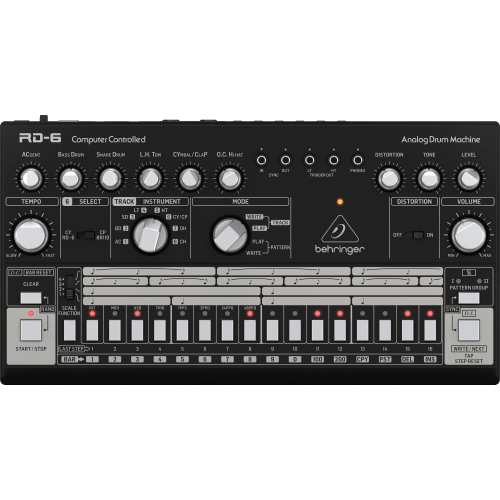
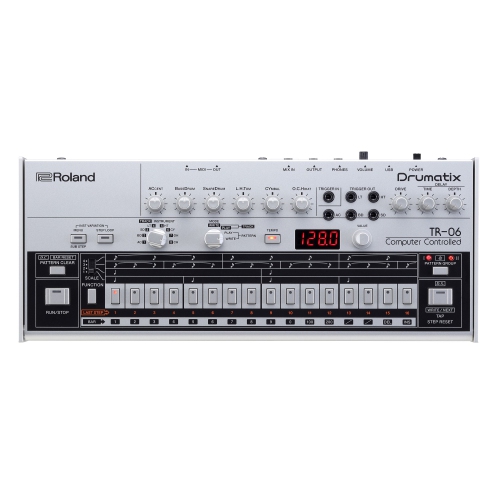
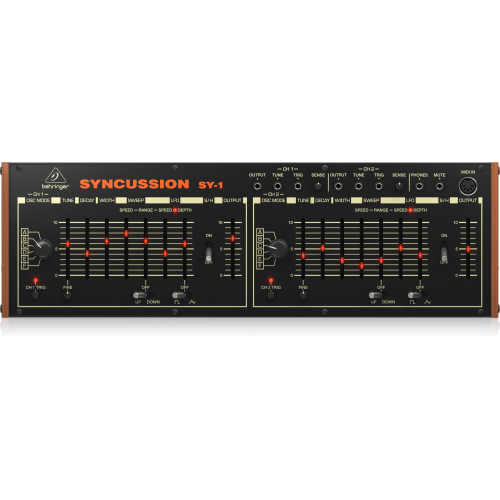
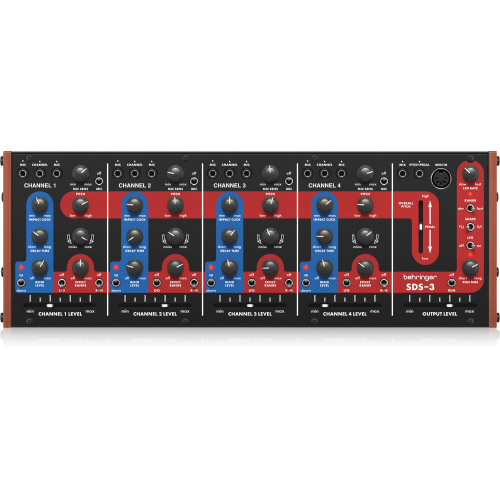
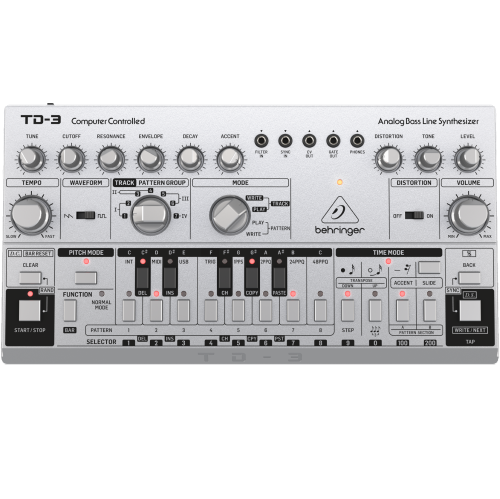
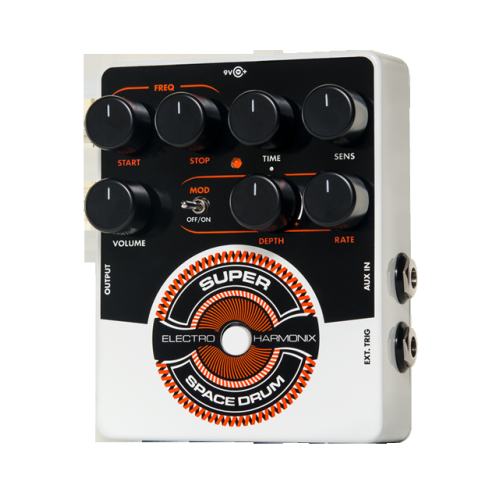
Analogue drum machines are electronic musical instruments that generate percussion sounds with analogue circuits rather than relying solely on playback of recorded digital audio. Their sound engines use combinations of oscillators, noise sources, filters, and envelopes to create bass drums, snares, toms, hi-hats, and other rhythmic voices. An oscillator can supply the low thump of a kick, while a burst of filtered noise adds the snap and rattle associated with a snare. Envelopes shape how each hit begins and fades, giving a sound its sharp attack, rounded body, or lingering tail. This approach makes analogue percussion particularly expressive: a small adjustment to tuning or decay can turn a tight kick into a deep, rolling pulse or move a tom towards a pitched melodic accent. Often described as warm and punchy, the character varies with the circuit design and settings; analogue drums can also sound crisp, metallic, gritty, or deliberately unruly. They are closely associated with house, techno, electro, and hip-hop, but their uses extend to pop songwriting, experimental music, and instrumental performance. A sparse pattern can give a singer a steady foundation for a demo, while a repeating sequence with gradually changing percussion can become the centre of a dance track. Some drum machines combine analogue voices with digitally generated or sampled sounds, so the distinction between fully analogue and hybrid designs matters when comparing sound engines. A digital sequencer or digital pattern memory does not, by itself, make the percussion voices digital. The sound-generation method and the pattern-control system perform different jobs. Unlike an acoustic drum kit, these instruments typically send an audio signal to headphones, speakers, a mixer, or an audio interface, making them practical for desk-based music making and amplified performance. Their appeal is as much about physical interaction as tone: turning a dedicated knob while a beat plays encourages immediate, audible changes without requiring every decision to happen on a computer screen.
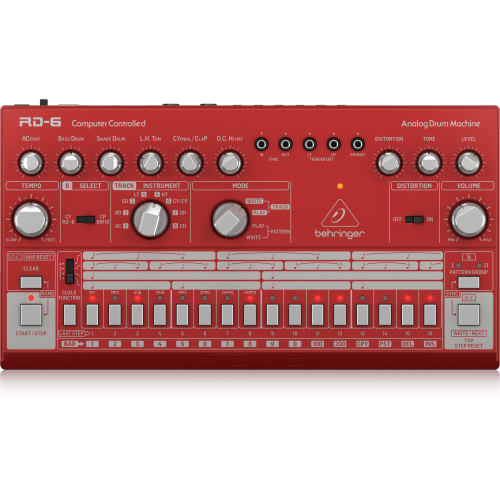
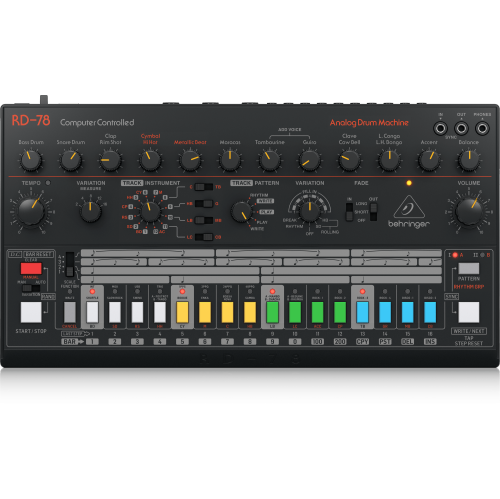
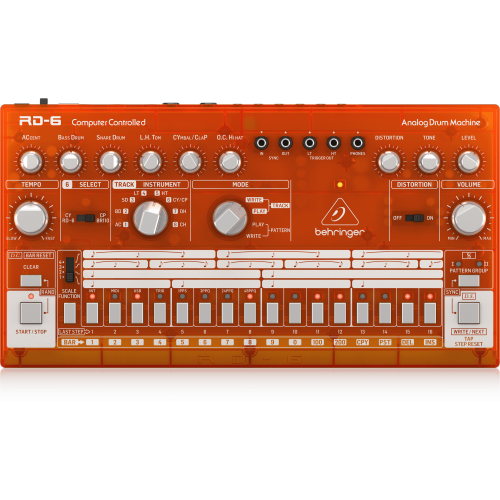
The sequencer is central to how an analogue drum machine feels in everyday use. A familiar 16-step layout presents a repeating pattern as a row of illuminated buttons, with each step commonly representing a sixteenth note in a one-bar phrase. Placing a kick on evenly spaced beats, adding a snare between them, and filling the gaps with hi-hats creates a rhythm that can be heard and adjusted immediately. Pattern lengths, time signatures, and programming methods vary, however, and longer sequences or pattern chaining can support arrangements that move beyond a single repeating bar. Swing changes the timing relationship between subdivisions to create a loping feel, while accent adds emphasis to selected hits. Accent behaviour differs between instruments: it may affect several voices together or provide more detailed control. Where supported, real-time recording, step probability, and per-step parameter changes introduce further variation. For someone building their first hardware setup, clear labels, readable step lights, and direct access to tuning and level controls can matter more than a long list of advanced functions. An experienced performer may place greater value on quick muting, reliable pattern switching, and controls with enough space for confident adjustments during a set. Sound shaping deserves equal attention. Separate decay controls help keep a bass drum short beneath a busy bass line or allow it to ring through a spacious arrangement. Adjustable snare noise, hi-hat brightness, and voice levels can make a small selection of sounds surprisingly versatile. Independent outputs, when included, allow individual voices to receive separate mixing or effects treatment; a stereo or mono mix output offers a simpler connection for a compact setup. Connections also determine how comfortably the instrument works alongside other equipment. MIDI can carry note, clock, or control information, while analogue clock and trigger connections require compatible signal specifications. USB capabilities differ, and a USB socket does not necessarily carry audio. Paired with Analog Synthesizers, an analogue drum machine can anchor a hardware arrangement with percussion while a separate instrument supplies bass lines, chords, or lead melodies.
Physical design, construction, and care influence how well an analogue drum machine fits its intended use. A compact desktop format suits a small production desk or a portable writing setup, while a larger panel may offer more comfortable spacing between knobs and clearer access to performance functions. Dimensions alone do not tell the whole story: audio plugs, power connectors, and MIDI cables need room behind or beside the enclosure. Lightweight plastic housings can be convenient for carrying, while metal panels or chassis can provide a sturdy feel; neither material alone establishes overall durability. Secure sockets, stable feet, responsive buttons, and firmly mounted controls are useful details for equipment that will be handled frequently. For travel between rehearsals, studios, and performances, a padded case with space around protruding knobs helps protect the control panel from pressure and knocks. On a desk, a stable surface and neatly routed cables reduce the chance of a connection being pulled during a session. Routine care is generally straightforward: disconnect power before cleaning, remove dust with a soft, dry cloth, and keep liquids away from buttons, sockets, and seams. Cleaning sprays and solvents can damage finishes or markings, so care should follow the manufacturer’s directions. Power requirements also deserve attention, especially in a setup containing several small instruments; adapters that look similar may have different voltage, polarity, or current specifications. Battery operation is a feature of some portable designs, not a standard characteristic of analogue drum machines. For recording, an appropriate audio interface and compatible cables provide a route into music software, while a suitable monitoring setup makes it easier to judge low bass and sharp percussion accurately. These instruments can suit beatmakers, keyboard players, DJs expanding into live performance, and songwriters who enjoy developing ideas through repetition and hands-on adjustment. As a gift for a musician, the most useful match reflects their existing connections, workspace, and preferred way of creating music. A straightforward machine with immediate controls can invite regular experimentation, while deeper sequencing and routing options can support a more involved studio workflow.
The sequencer is central to how an analogue drum machine feels in everyday use. A familiar 16-step layout presents a repeating pattern as a row of illuminated buttons, with each step commonly representing a sixteenth note in a one-bar phrase. Placing a kick on evenly spaced beats, adding a snare between them, and filling the gaps with hi-hats creates a rhythm that can be heard and adjusted immediately. Pattern lengths, time signatures, and programming methods vary, however, and longer sequences or pattern chaining can support arrangements that move beyond a single repeating bar. Swing changes the timing relationship between subdivisions to create a loping feel, while accent adds emphasis to selected hits. Accent behaviour differs between instruments: it may affect several voices together or provide more detailed control. Where supported, real-time recording, step probability, and per-step parameter changes introduce further variation. For someone building their first hardware setup, clear labels, readable step lights, and direct access to tuning and level controls can matter more than a long list of advanced functions. An experienced performer may place greater value on quick muting, reliable pattern switching, and controls with enough space for confident adjustments during a set. Sound shaping deserves equal attention. Separate decay controls help keep a bass drum short beneath a busy bass line or allow it to ring through a spacious arrangement. Adjustable snare noise, hi-hat brightness, and voice levels can make a small selection of sounds surprisingly versatile. Independent outputs, when included, allow individual voices to receive separate mixing or effects treatment; a stereo or mono mix output offers a simpler connection for a compact setup. Connections also determine how comfortably the instrument works alongside other equipment. MIDI can carry note, clock, or control information, while analogue clock and trigger connections require compatible signal specifications. USB capabilities differ, and a USB socket does not necessarily carry audio. Paired with Analog Synthesizers, an analogue drum machine can anchor a hardware arrangement with percussion while a separate instrument supplies bass lines, chords, or lead melodies.
Physical design, construction, and care influence how well an analogue drum machine fits its intended use. A compact desktop format suits a small production desk or a portable writing setup, while a larger panel may offer more comfortable spacing between knobs and clearer access to performance functions. Dimensions alone do not tell the whole story: audio plugs, power connectors, and MIDI cables need room behind or beside the enclosure. Lightweight plastic housings can be convenient for carrying, while metal panels or chassis can provide a sturdy feel; neither material alone establishes overall durability. Secure sockets, stable feet, responsive buttons, and firmly mounted controls are useful details for equipment that will be handled frequently. For travel between rehearsals, studios, and performances, a padded case with space around protruding knobs helps protect the control panel from pressure and knocks. On a desk, a stable surface and neatly routed cables reduce the chance of a connection being pulled during a session. Routine care is generally straightforward: disconnect power before cleaning, remove dust with a soft, dry cloth, and keep liquids away from buttons, sockets, and seams. Cleaning sprays and solvents can damage finishes or markings, so care should follow the manufacturer’s directions. Power requirements also deserve attention, especially in a setup containing several small instruments; adapters that look similar may have different voltage, polarity, or current specifications. Battery operation is a feature of some portable designs, not a standard characteristic of analogue drum machines. For recording, an appropriate audio interface and compatible cables provide a route into music software, while a suitable monitoring setup makes it easier to judge low bass and sharp percussion accurately. These instruments can suit beatmakers, keyboard players, DJs expanding into live performance, and songwriters who enjoy developing ideas through repetition and hands-on adjustment. As a gift for a musician, the most useful match reflects their existing connections, workspace, and preferred way of creating music. A straightforward machine with immediate controls can invite regular experimentation, while deeper sequencing and routing options can support a more involved studio workflow.
Top selling and popular products
-
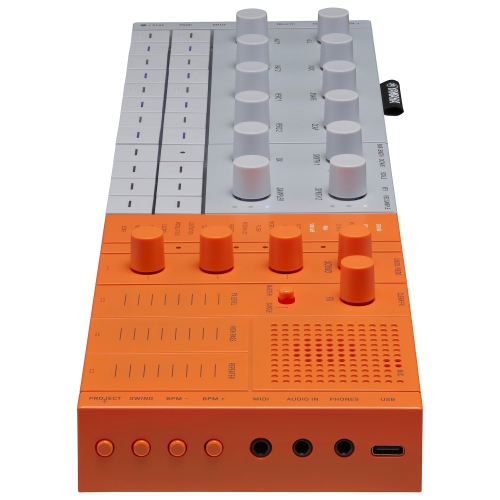 Your price for this item is $599.99
 -
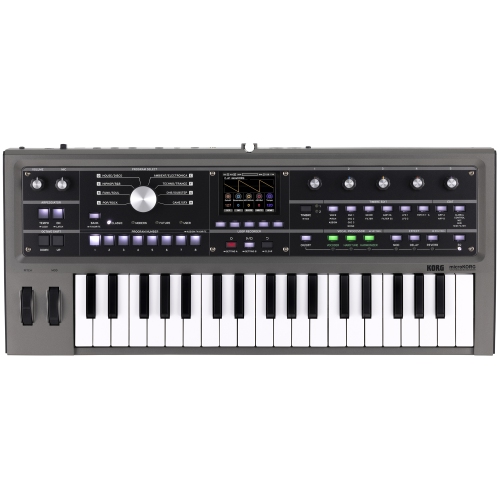 Your price for this item is $849.99
 -
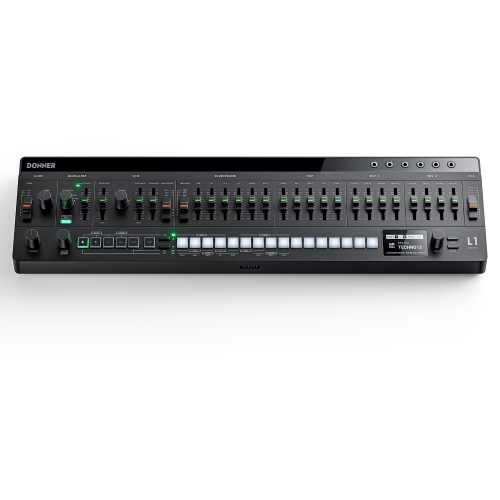 Your price for this item is $259.99
 -
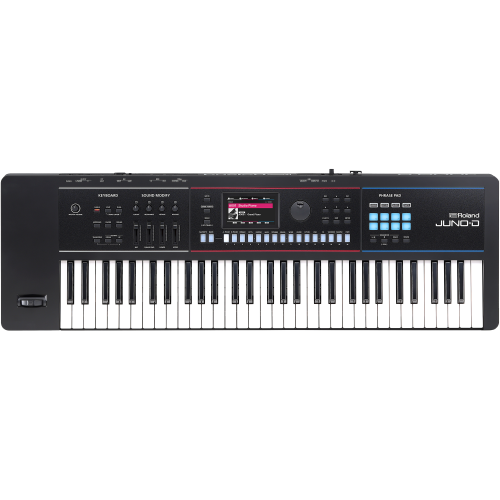 Your price for this item is $1299.99
 -
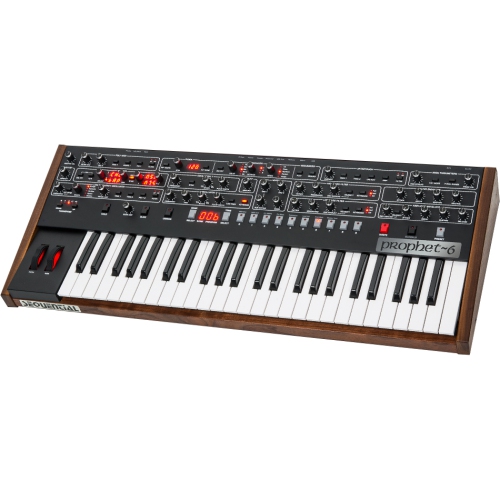 Your price for this item is $5069.99
 -
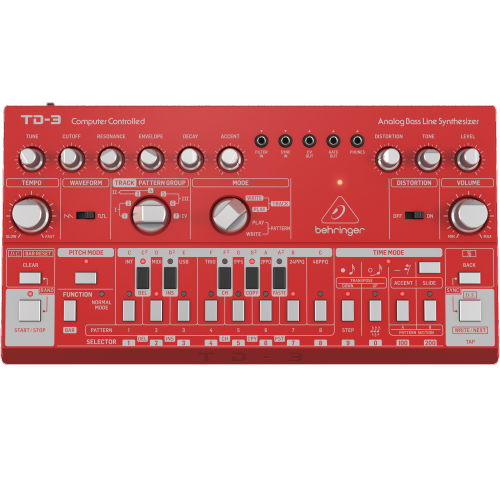 Your price for this item is $169
 -
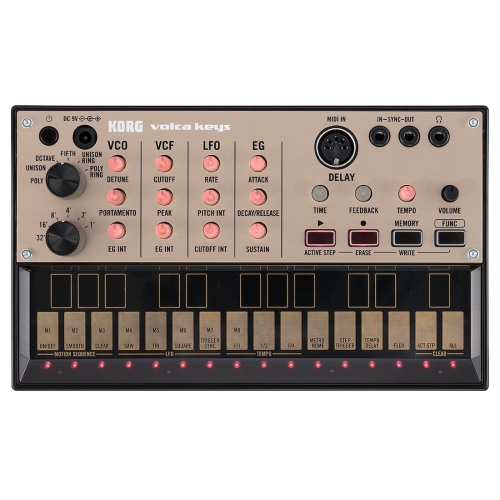 Your price for this item is $225
 -
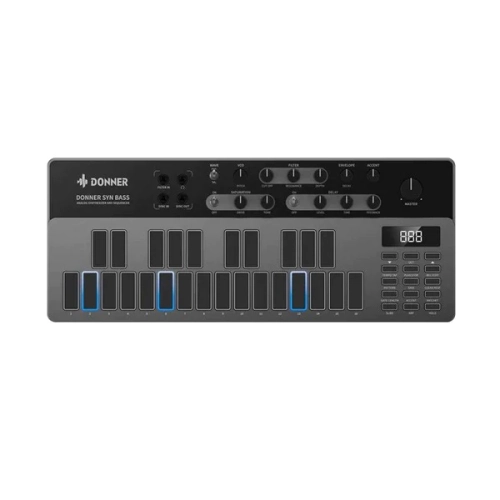 Your price for this item is $149.99
Discover more categories related to Analogue Drum Machines
Top Collections:
Pokemon Centers, Kindle Devices, Best Budget Office Chairs, Apple iPhones 16, Best Laptops for Writers, iPhone 15 Apple, Canon G7X Cameras, Refurbished Apple Laptops, Alarm Clock, Motorola Razr Phones
Some products may be subject to Environmental Handling Fees
(EHF) depending on your province.
Learn more about EHFs.