Back To School Graphing Calculators For Math Students
Find back-to-school graphing calculators for math students preparing for algebra, trigonometry, and calculus. Compare options for plotting functions, solving equations, and exploring data, and check your course requirements and exam rules to choose a model with the features you need.

FAQ
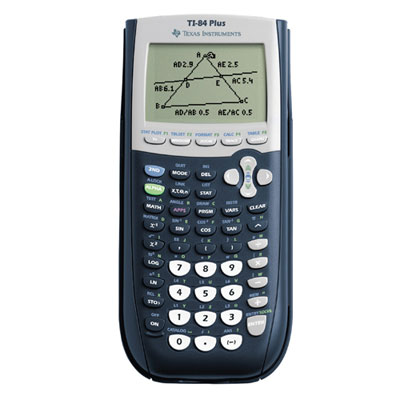
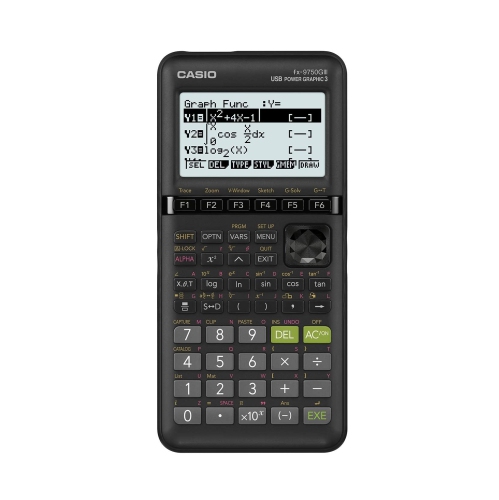
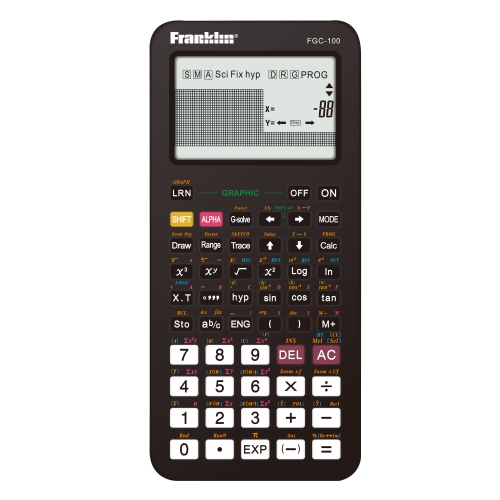
Look for function plotting, table views, equation-solving tools, and statistics functions that match the course syllabus. Students studying advanced topics may also need support for matrices, complex numbers, or calculus. Check the teacher’s requirements before choosing, as some courses restrict certain features.
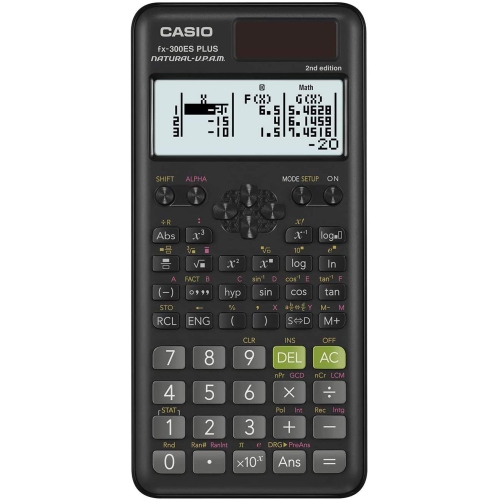
A scientific calculator handles calculations such as fractions, powers, logarithms, and trigonometric functions. A graphing calculator also plots equations and displays tables of values, letting students explore relationships between variables. Many graphing calculators include programming and data-analysis tools.
Graphing calculators are commonly used in secondary-school courses covering functions, advanced functions, calculus, and statistics, as well as some college and university courses. Requirements vary by school, province, and instructor, so consult the course materials to find out whether one is required or permitted.
Calculator rules depend on the teacher, school, or exam provider. Some assessments allow graphing calculators, while others restrict programmable features or computer algebra systems. An exam mode may disable certain functions, but having that mode does not automatically make a calculator approved. Check the rules for each assessment.
A computer algebra system, often called CAS, can manipulate symbolic expressions, such as factoring algebraic equations or finding derivatives in symbolic form. Calculators without CAS generally focus on numerical calculations and graphing, though some also support exact forms such as fractions and radicals. Check whether CAS is permitted in the student’s course and assessments.
Top selling and popular products
Discover more categories related to Back To School Graphing Calculators For Math Students
Some products may be subject to Environmental Handling Fees (EHF) depending on your province. Learn more about EHFs.