Back To School Reliable Graphing Calculators
Find reliable graphing calculators for back to school, with options to compare for maths and science classes. Consider graphing functions, screen readability and ease of use, and check your course requirements and exam rules before choosing a model.
FAQ
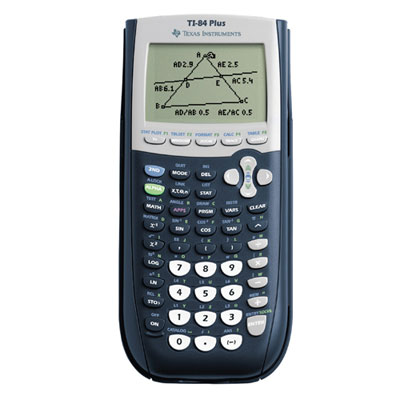
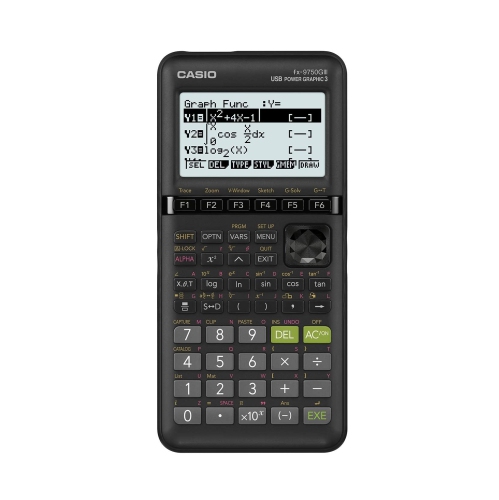
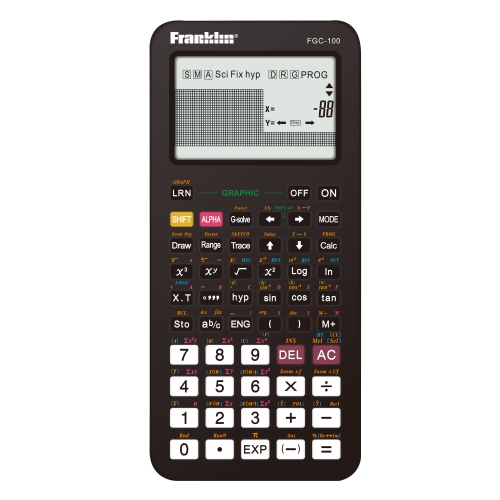
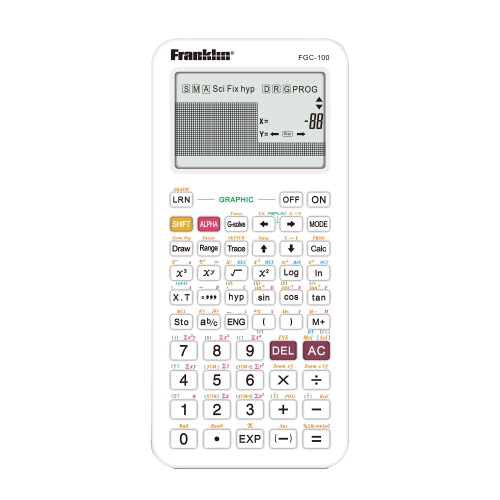
A scientific calculator handles numerical calculations such as fractions, powers, logarithms, and trigonometric functions. A graphing calculator also plots equations, displays tables of values, and supports visual analysis of mathematical relationships. Some graphing calculators include programming tools or a computer algebra system (CAS) for symbolic calculations.
Graphing calculators are commonly used in algebra, functions, trigonometry, calculus, and statistics courses. They may also be used in physics or other science classes for calculations and data analysis. Check your course supply list before choosing one, as requirements vary by school and grade.
Calculator rules depend on the teacher, course, and exam authority. Some assessments allow graphing calculators but restrict models with a computer algebra system (CAS), stored programs, or connectivity features. Others require an exam mode or cleared memory. Confirm the permitted calculator types with your school before the term begins.
Start with the functions listed in your course requirements, such as equation graphing, statistical analysis, matrices, or numerical equation solving. Other features to compare include menu layout, textbook-style equation entry, memory for saved work, and file transfer options. A computer algebra system (CAS) is a separate feature that may not be permitted in every course.
Graphing calculators may use replaceable batteries or a built-in rechargeable battery. Charging methods vary by model, so check whether a cable or charging accessory is required. Review the calculator’s battery indicator and power-saving settings as part of your school-day preparation.
Top selling and popular products
Discover more categories related to Back To School Reliable Graphing Calculators
Some products may be subject to Environmental Handling Fees (EHF) depending on your province. Learn more about EHFs.