Spinal Column Models
Explore our collection of highly detailed and anatomically accurate spinal column models designed to enhance your understanding of the complexities of the human spine. Perfect for medical professionals, educators, and students alike, these models are crafted with precision to showcase the intricate structure of vertebrae, discs, nerves, and more. Whether you are studying spinal anatomy or looking to educate others on the importance of spinal health, our range of models offers a hands-on learning experience like no other. Dive into the world of spinal anatomy with our diverse selection of models that cater to various educational needs and preferences.
Sort
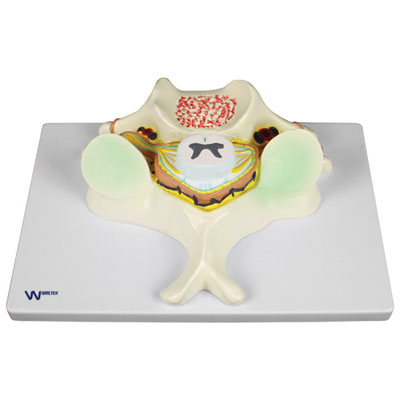
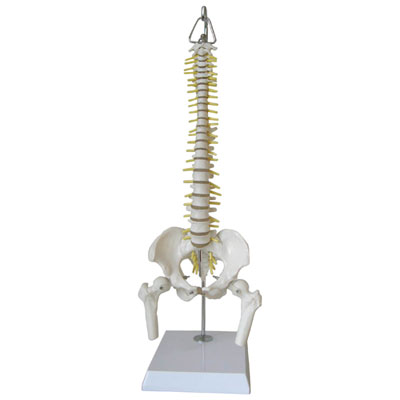
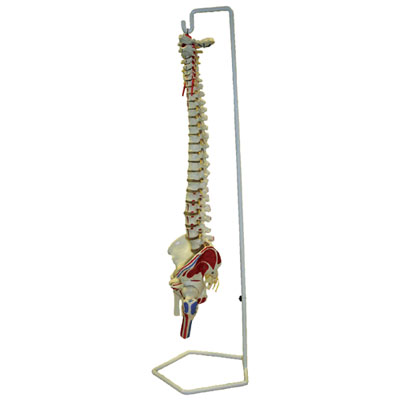
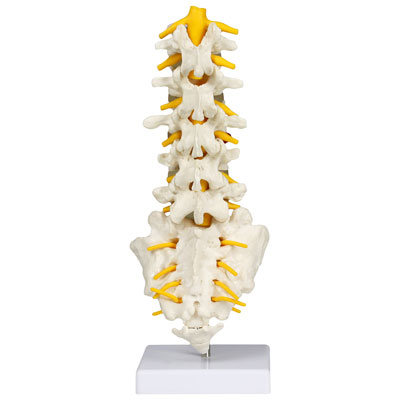
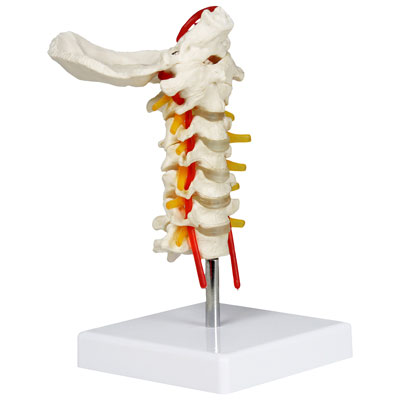
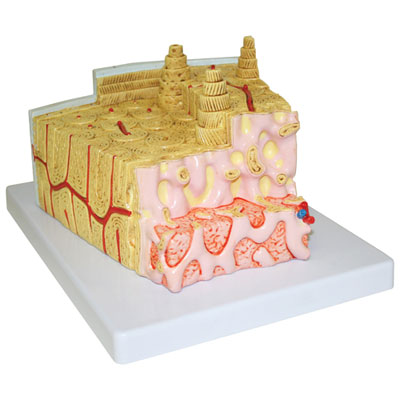
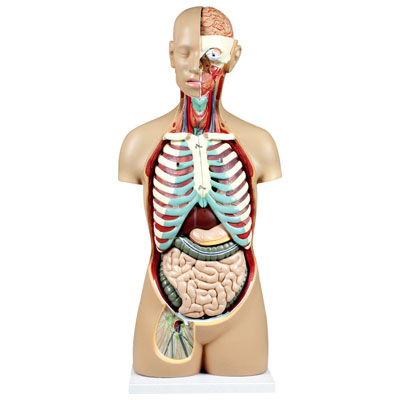
Hands-on tools for learning spinal anatomy and movement
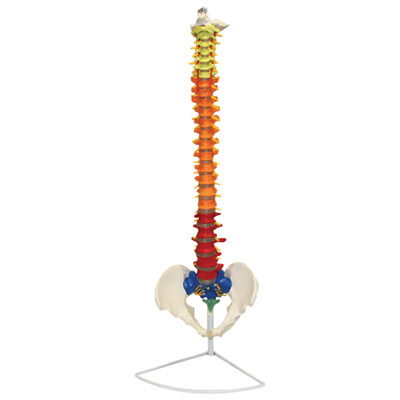
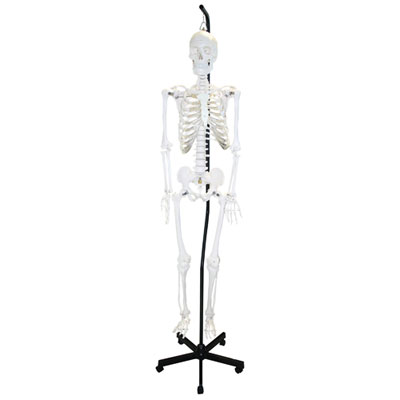
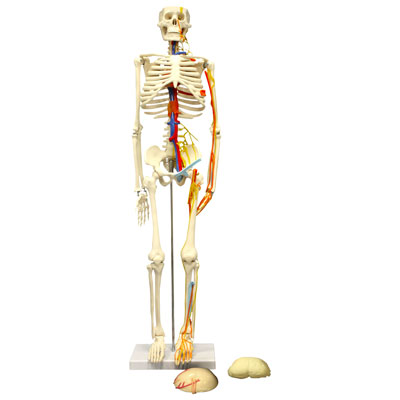
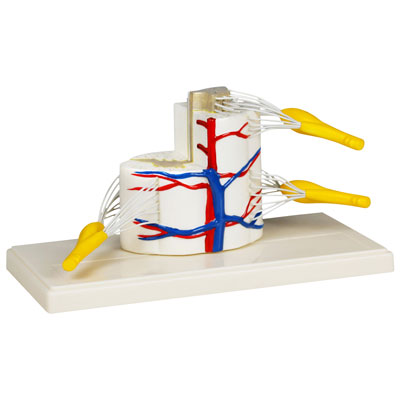
Spinal column models are physical anatomical replicas designed to make the structure and movement of the spine easier to see, handle, and explain. Rather than relying only on diagrams or textbook images, learners can use a model to identify the cervical, thoracic, lumbar, and sacral regions, trace the natural curves of the vertebral column, and understand how the vertebrae connect with the pelvis. Many models are built with articulated sections, allowing the spine to bend and rotate in ways that illustrate flexibility, alignment, and the relationship between individual bones. Some include spinal nerves, intervertebral discs, or other clearly defined features to support more detailed instruction. This makes spinal column models useful in classrooms, anatomy labs, nursing and physiotherapy programs, chiropractic settings, rehabilitation clinics, and healthcare offices where clear visual explanations matter. A compact desktop model can serve as a convenient reference during study sessions or consultations, while a full-size model may be better suited to demonstrations where several people need to see the anatomy at once. For anyone comparing options, begin with the intended audience and setting. A student may benefit from labelled or colour-coded sections that make memorization easier, while an instructor may prefer a more flexible model that demonstrates movement and posture. A healthcare professional speaking with patients may look for a model with visible discs, nerves, or a removable feature that helps explain common spinal concerns in plain language. If the goal is general anatomy education, a straightforward model showing the major regions may be more practical than a highly specialized replica.
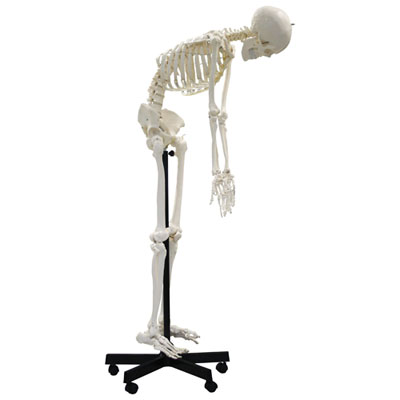
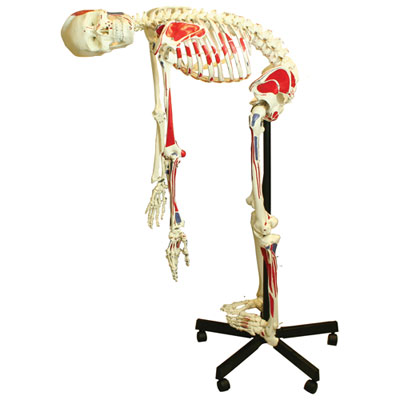
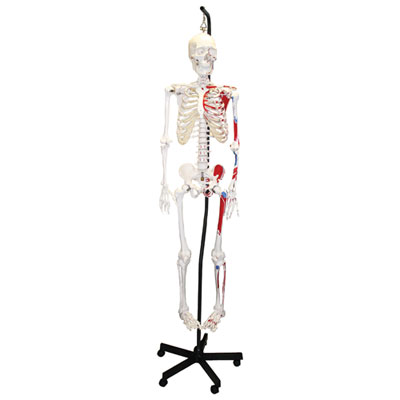
The amount of detail, construction, and flexibility can make a noticeable difference in how a spinal column model is used. Rigid models are often helpful for learning vertebral landmarks, counting sections, and recognizing the overall shape of the spine. Flexible models add another dimension by showing how the vertebral column changes position during bending, twisting, sitting, lifting, and other everyday movements. When selecting one, look for stable support if the model will remain on a desk, shelf, or teaching table, particularly in a busy classroom or shared office. A sturdy base can also make demonstrations smoother by keeping the model upright while attention is directed to a particular region. Check whether the vertebrae are clearly differentiated and whether the discs, sacrum, coccyx, pelvis, or nerve pathways are represented in a way that suits the lesson. Colour coding can help new learners distinguish the cervical, thoracic, and lumbar areas at a glance, whereas more realistic colouring may be preferred in professional education. Size is another practical consideration: a life-size replica offers a strong visual comparison with the human body, but a miniature version can fit neatly beside reference books or in a smaller treatment room. Models with removable or movable components may be especially useful for demonstrating disc placement, spinal curvature, or the general concept of a herniated disc, although they should be used to support qualified instruction rather than replace an assessment or diagnosis. For broader anatomy lessons, shoppers may also wish to explore Human Skeleton Models to compare spinal anatomy with the ribs, pelvis, limbs, and other connected bones.
Spinal column models can support a wide range of learning styles, from hands-on study to patient-friendly demonstrations. A student preparing for an anatomy examination may rotate the model between chapters, using the physical landmarks to reinforce terminology that can otherwise feel abstract on a flat page. An educator can use the same type of model to show why the spine is divided into regions, how the pelvis supports the lower end of the column, or how the natural curves help the body maintain balance. In a clinic, a visible model can make a conversation more approachable by giving patients something concrete to look at while a practitioner explains posture, movement patterns, rehabilitation exercises, or the general location of a concern. The model does not need to be complicated to be effective; clear proportions and well-defined parts are often more useful than decorative detail. These products can also be thoughtful gifts for medical students, anatomy enthusiasts, aspiring physiotherapists, teachers, or anyone building a home study space, especially when the model matches the recipient’s level of experience. Before purchasing, consider where it will be stored, how often it will be handled, and whether it needs to withstand frequent demonstrations. A model used by several learners may benefit from durable joints and a dependable stand, while a personal study aid can prioritize portability and a smaller footprint. During the warmer and cooler parts of the year alike, a well-chosen spinal column model remains a practical educational tool: it can sit in a classroom, office, clinic, or study area and turn the complex structure of the human spine into something visible, familiar, and easier to discuss.
The amount of detail, construction, and flexibility can make a noticeable difference in how a spinal column model is used. Rigid models are often helpful for learning vertebral landmarks, counting sections, and recognizing the overall shape of the spine. Flexible models add another dimension by showing how the vertebral column changes position during bending, twisting, sitting, lifting, and other everyday movements. When selecting one, look for stable support if the model will remain on a desk, shelf, or teaching table, particularly in a busy classroom or shared office. A sturdy base can also make demonstrations smoother by keeping the model upright while attention is directed to a particular region. Check whether the vertebrae are clearly differentiated and whether the discs, sacrum, coccyx, pelvis, or nerve pathways are represented in a way that suits the lesson. Colour coding can help new learners distinguish the cervical, thoracic, and lumbar areas at a glance, whereas more realistic colouring may be preferred in professional education. Size is another practical consideration: a life-size replica offers a strong visual comparison with the human body, but a miniature version can fit neatly beside reference books or in a smaller treatment room. Models with removable or movable components may be especially useful for demonstrating disc placement, spinal curvature, or the general concept of a herniated disc, although they should be used to support qualified instruction rather than replace an assessment or diagnosis. For broader anatomy lessons, shoppers may also wish to explore Human Skeleton Models to compare spinal anatomy with the ribs, pelvis, limbs, and other connected bones.
Spinal column models can support a wide range of learning styles, from hands-on study to patient-friendly demonstrations. A student preparing for an anatomy examination may rotate the model between chapters, using the physical landmarks to reinforce terminology that can otherwise feel abstract on a flat page. An educator can use the same type of model to show why the spine is divided into regions, how the pelvis supports the lower end of the column, or how the natural curves help the body maintain balance. In a clinic, a visible model can make a conversation more approachable by giving patients something concrete to look at while a practitioner explains posture, movement patterns, rehabilitation exercises, or the general location of a concern. The model does not need to be complicated to be effective; clear proportions and well-defined parts are often more useful than decorative detail. These products can also be thoughtful gifts for medical students, anatomy enthusiasts, aspiring physiotherapists, teachers, or anyone building a home study space, especially when the model matches the recipient’s level of experience. Before purchasing, consider where it will be stored, how often it will be handled, and whether it needs to withstand frequent demonstrations. A model used by several learners may benefit from durable joints and a dependable stand, while a personal study aid can prioritize portability and a smaller footprint. During the warmer and cooler parts of the year alike, a well-chosen spinal column model remains a practical educational tool: it can sit in a classroom, office, clinic, or study area and turn the complex structure of the human spine into something visible, familiar, and easier to discuss.
Top selling and popular products
-
 Your price for this item is $123.95
 -
 Your price for this item is $51.99
 -
 Your price for this item is $31.94
 -
 Your price for this item is $82.13
 -
 Your price for this item is $150
 -
 Your price for this item is $225
 -
 Your price for this item is $250
 -
 Your price for this item is $149
Discover more categories related to Spinal Column Models
Top Collections:
Pokemon Centers, Kindle Devices, Best Budget Office Chairs, Apple iPhones 16, Canon G7X Cameras, iPhone 15 Apple, Alarm Clock, Refurbished Apple Laptops, Flip Phones, Best Laptops for Writers
Some products may be subject to Environmental Handling Fees
(EHF) depending on your province.
Learn more about EHFs.