Monocular Compound Microscopes
Explore the world of microscopic wonders with our range of Monocular Compound Microscopes. Perfect for hobbyists, students, or professionals, these monocular microscopes offer high magnification capabilities and precision optics to bring even the tiniest details into sharp focus. Whether you're conducting scientific research, examining specimens, or simply delving into the fascinating realm of microscopy, our selection of monocular compound microscopes is sure to meet your needs. Discover a new perspective on the world around you with these powerful and versatile instruments.
Sort
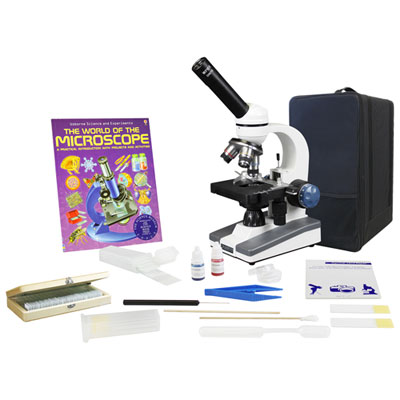
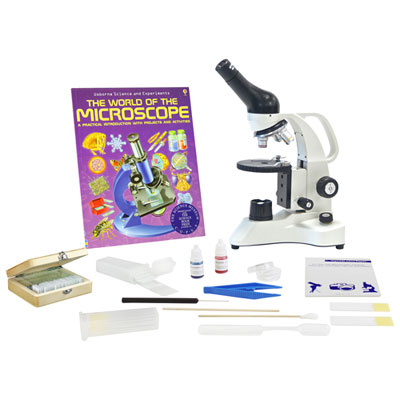
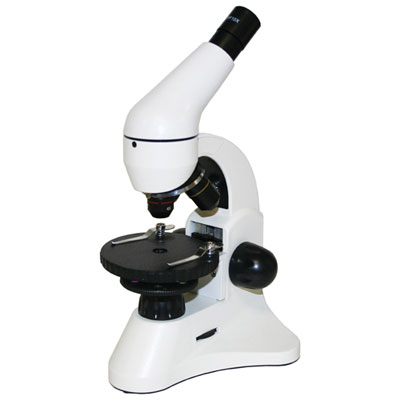
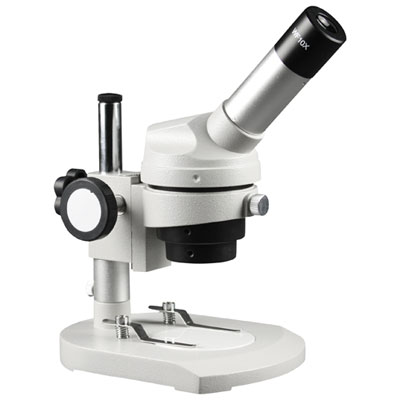

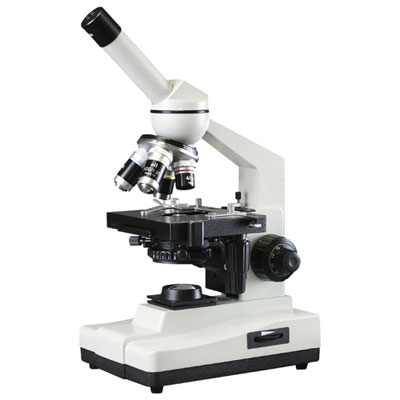
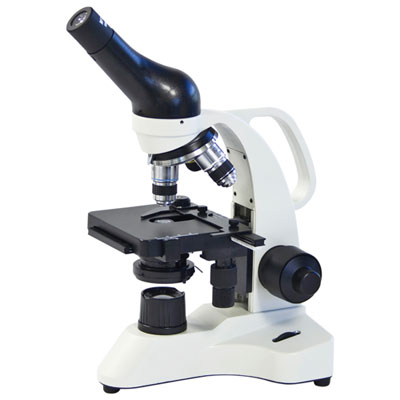
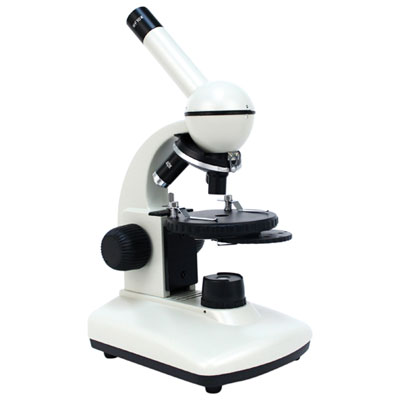
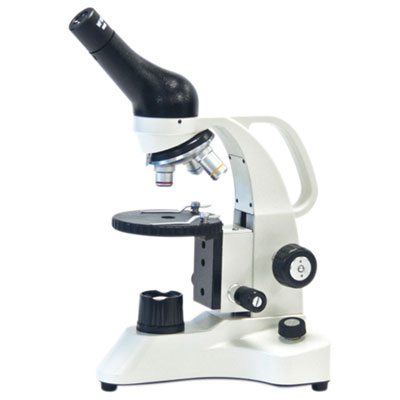
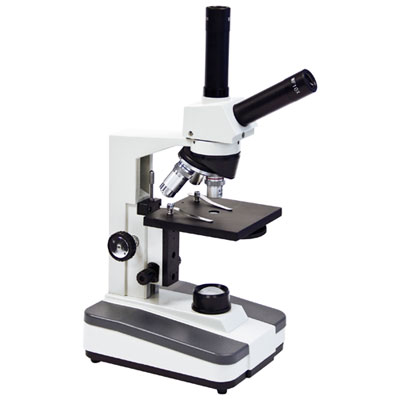
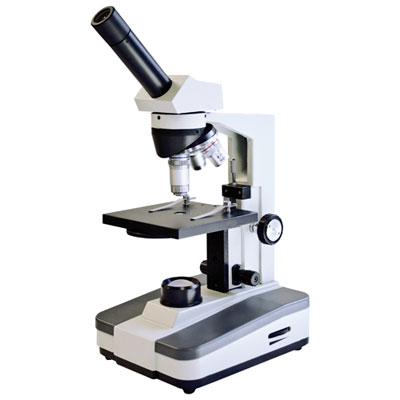
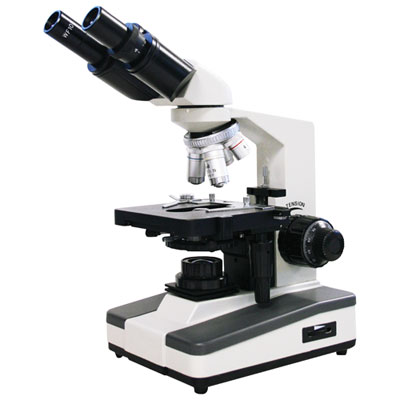

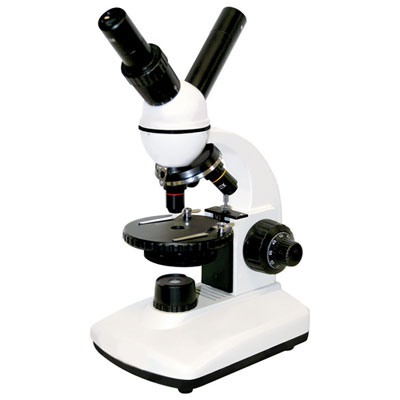
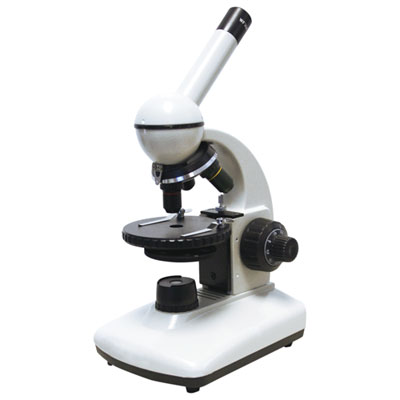
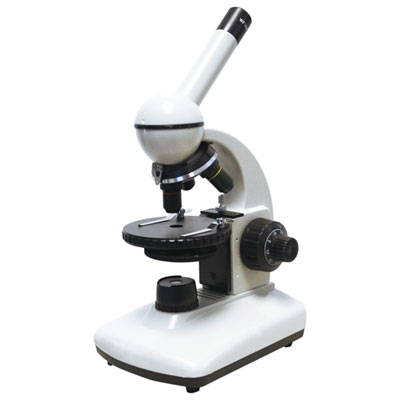
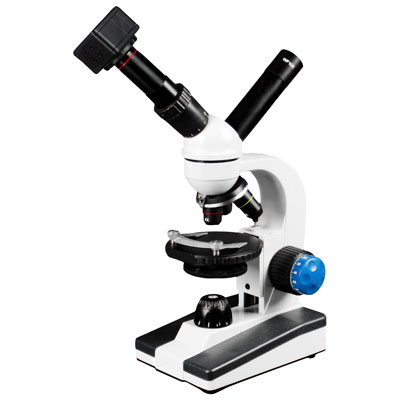
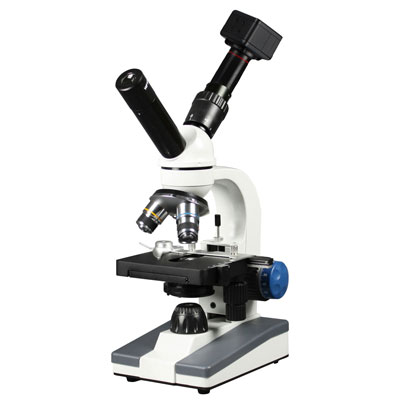

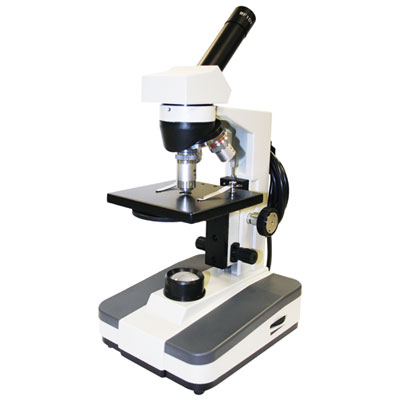
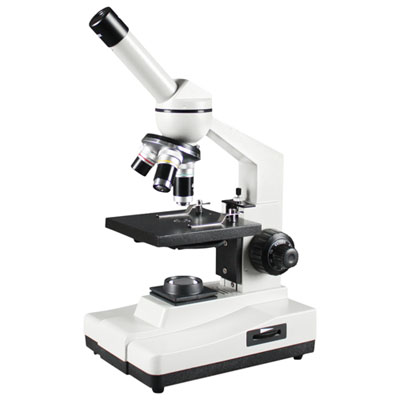
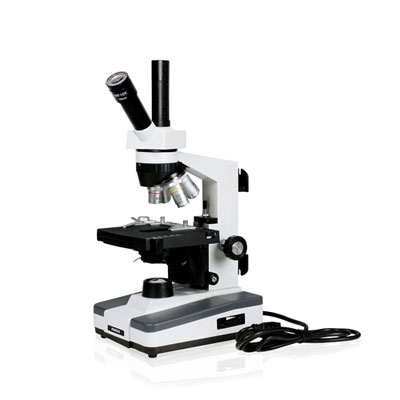
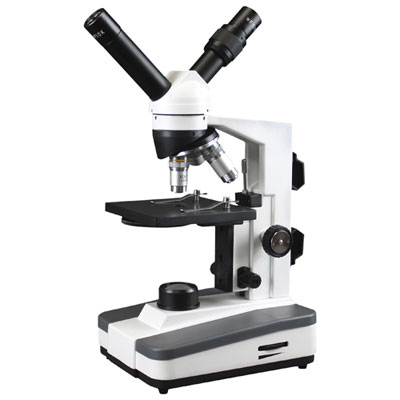
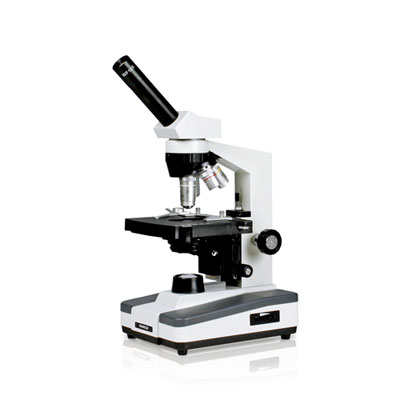
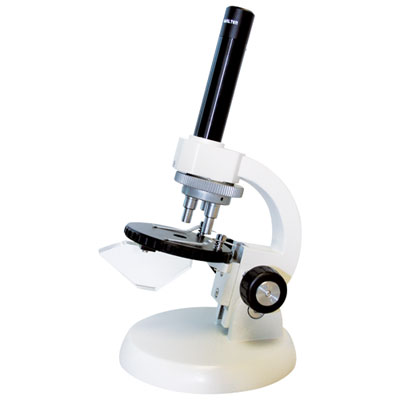
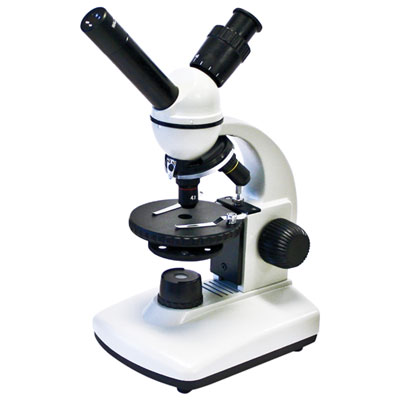

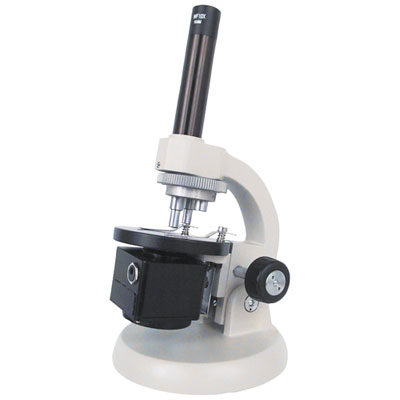
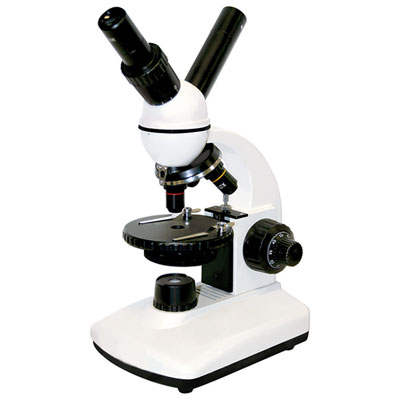
Clear views of cells start with more than magnification
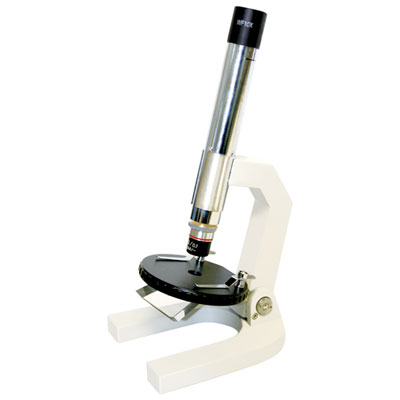
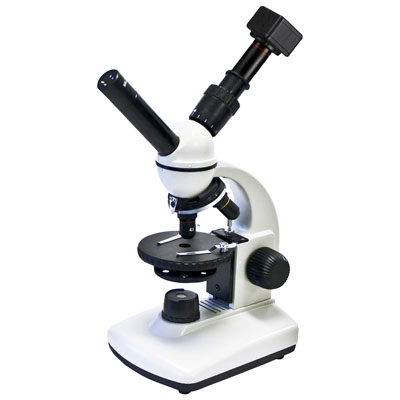
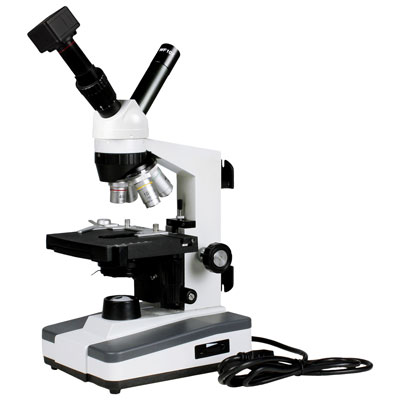
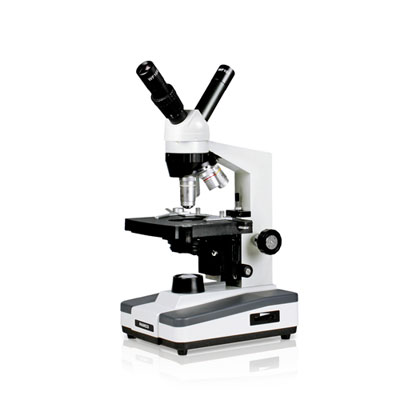
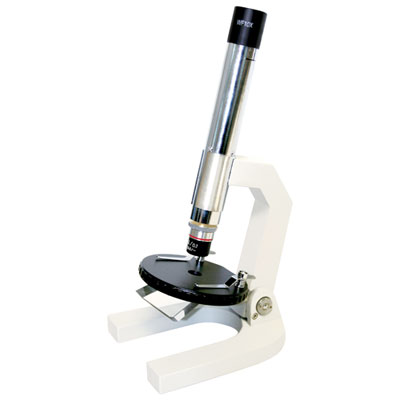
Monocular compound microscopes bring the fine details of thin specimens into view through a single eyepiece and a series of optical lenses. Commonly used for biology lessons, home learning and hobby microscopy, these instruments typically offer total magnifications from 40× to 1000×, depending on their eyepiece and objective lenses. The word “compound” refers to the combined magnification of the objective near the specimen and the eyepiece used for viewing. A 10× eyepiece paired with a 4× objective produces 40× total magnification, while the same eyepiece paired with a 40× objective produces 400×. Several objectives usually sit on a rotating nosepiece, making it possible to move from a broad view of a prepared slide to a closer look at its structure. Light passes upward from beneath the stage and through the specimen, so these microscopes are best suited to thin, translucent samples rather than thick, opaque objects. A carefully prepared onion skin can reveal rows of plant cells, while a prepared tissue slide can show patterns that are invisible to the naked eye. Coins, whole insects and circuit boards generally call for a different style of instrument, such as a stereo microscope, which provides more room beneath the lenses and a lower-magnification view of surfaces. Within the broader selection of Compound Microscopes, a monocular design offers a straightforward viewing arrangement without the need to adjust the spacing between two eyepieces. That simplicity can be useful when several students take turns at the same instrument. It also makes this format approachable for a learner building confidence with slide placement, illumination and focus. Although higher magnification can reveal smaller features, useful detail depends on optical quality, illumination and specimen preparation as much as the magnification number. A crisp, evenly lit view at 100× or 400× is often more valuable for everyday learning than a larger image that lacks definition.
The features that shape daily use are often the ones noticed after the first few slides: how steadily the base sits, how smoothly the focus moves and how easily a specimen stays centred. A sturdy frame, often made from metal, helps limit vibration during focusing, while a broad base supports the instrument on a level desk or laboratory bench. Plastic housings can reduce weight, but the fit of moving parts and the stability of the stage still matter. Optical glass lenses are common in educational instruments; achromatic objectives help reduce colour fringes, and plan objectives are designed to keep more of the image field in focus. Coarse adjustment brings a specimen into approximate focus, while fine adjustment allows smaller, controlled movements that become particularly important at higher magnification. Starting with the lowest-power objective gives a wider field of view and makes it easier to locate a sample before examining a smaller area. Basic stage clips hold a slide in place, whereas a mechanical stage uses controls to move it gradually from side to side and front to back. That extra control is helpful when following a narrow strip of tissue or returning to a particular group of cells. Illumination also affects how much detail is visible. Built-in LED lighting is common, and adjustable brightness helps make viewing comfortable with different slides. A condenser directs light towards the specimen, while a diaphragm controls the illuminating light cone and influences contrast and resolution. These controls serve different purposes from the brightness setting and can make pale structures easier to distinguish when adjusted appropriately. Some instruments use mains power, while others accept batteries, which can be convenient where outlets are limited. For microscopes equipped with a 100× oil-immersion objective, reaching 1000× with a 10× eyepiece generally requires the specified immersion oil and careful handling. Oil should only be used with objectives designed for it; it is not an accessory to add to every lens for a sharper image.
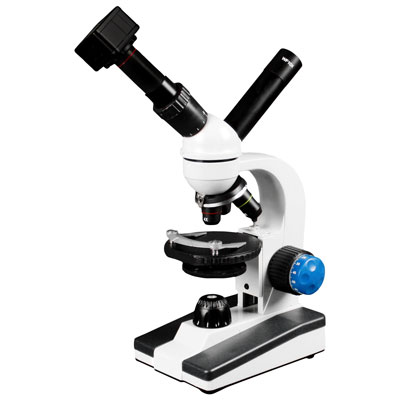
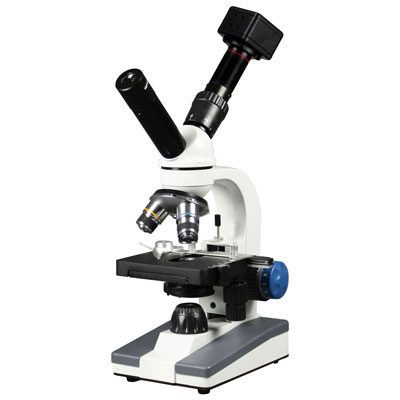
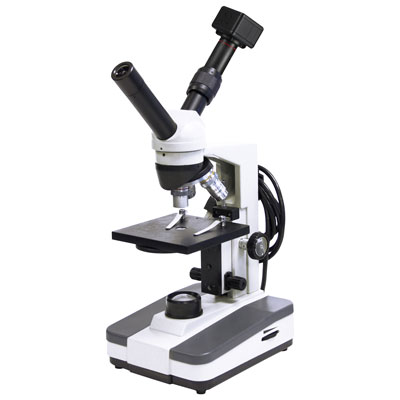
Intended use helps determine which details deserve the most attention. For a child beginning to explore biology, clear controls, a secure stage and adult supervision can matter more than an extensive range of magnifications. Prepared slides provide a practical introduction because the specimen is already mounted and ready for observation. Older students and hobbyists may appreciate a mechanical stage, separate fine focusing and compatibility with additional eyepieces or imaging accessories. A monocular compound microscope can also make a thoughtful gift for a curious learner, especially when paired with age-appropriate prepared slides and suitable cleaning supplies. Fit involves both the instrument and the workspace: an inclined eyepiece can support a more natural viewing posture, but desk height, chair position and room for notebooks also influence comfort. Eyeglass wearers may find an eyepiece with suitable eye relief easier to use, though comfort varies with the optical design. For sharing observations, a compatible eyepiece camera can display or record the view on a computer. Compatibility depends on the eyepiece tube, camera adapter, connection and operating system, and an eyepiece camera may replace the eyepiece rather than allow simultaneous direct viewing. Basic educational microscopes support learning and observation, but clinical testing requires equipment and procedures suited to that purpose. Routine care helps preserve both image quality and smooth operation. A dust cover protects the instrument between sessions, and carrying it with one hand supporting the base and the other holding the arm reduces strain on delicate parts. Lens tissue and manufacturer-approved optical cleaning solution are preferable to household tissues or clothing, which can leave fibres or scratch coatings. Slides and coverslips need careful handling because their edges can cut, and unknown biological samples should not be treated as harmless. Removing slides after use, cleaning immersion oil promptly as directed and storing the microscope in a dry, protected place help keep it ready for the next observation. With an appropriate optical range and dependable controls, everyday study can move naturally from identifying a leaf’s cell walls to comparing the organized structures within prepared animal and plant tissues.
The features that shape daily use are often the ones noticed after the first few slides: how steadily the base sits, how smoothly the focus moves and how easily a specimen stays centred. A sturdy frame, often made from metal, helps limit vibration during focusing, while a broad base supports the instrument on a level desk or laboratory bench. Plastic housings can reduce weight, but the fit of moving parts and the stability of the stage still matter. Optical glass lenses are common in educational instruments; achromatic objectives help reduce colour fringes, and plan objectives are designed to keep more of the image field in focus. Coarse adjustment brings a specimen into approximate focus, while fine adjustment allows smaller, controlled movements that become particularly important at higher magnification. Starting with the lowest-power objective gives a wider field of view and makes it easier to locate a sample before examining a smaller area. Basic stage clips hold a slide in place, whereas a mechanical stage uses controls to move it gradually from side to side and front to back. That extra control is helpful when following a narrow strip of tissue or returning to a particular group of cells. Illumination also affects how much detail is visible. Built-in LED lighting is common, and adjustable brightness helps make viewing comfortable with different slides. A condenser directs light towards the specimen, while a diaphragm controls the illuminating light cone and influences contrast and resolution. These controls serve different purposes from the brightness setting and can make pale structures easier to distinguish when adjusted appropriately. Some instruments use mains power, while others accept batteries, which can be convenient where outlets are limited. For microscopes equipped with a 100× oil-immersion objective, reaching 1000× with a 10× eyepiece generally requires the specified immersion oil and careful handling. Oil should only be used with objectives designed for it; it is not an accessory to add to every lens for a sharper image.
Intended use helps determine which details deserve the most attention. For a child beginning to explore biology, clear controls, a secure stage and adult supervision can matter more than an extensive range of magnifications. Prepared slides provide a practical introduction because the specimen is already mounted and ready for observation. Older students and hobbyists may appreciate a mechanical stage, separate fine focusing and compatibility with additional eyepieces or imaging accessories. A monocular compound microscope can also make a thoughtful gift for a curious learner, especially when paired with age-appropriate prepared slides and suitable cleaning supplies. Fit involves both the instrument and the workspace: an inclined eyepiece can support a more natural viewing posture, but desk height, chair position and room for notebooks also influence comfort. Eyeglass wearers may find an eyepiece with suitable eye relief easier to use, though comfort varies with the optical design. For sharing observations, a compatible eyepiece camera can display or record the view on a computer. Compatibility depends on the eyepiece tube, camera adapter, connection and operating system, and an eyepiece camera may replace the eyepiece rather than allow simultaneous direct viewing. Basic educational microscopes support learning and observation, but clinical testing requires equipment and procedures suited to that purpose. Routine care helps preserve both image quality and smooth operation. A dust cover protects the instrument between sessions, and carrying it with one hand supporting the base and the other holding the arm reduces strain on delicate parts. Lens tissue and manufacturer-approved optical cleaning solution are preferable to household tissues or clothing, which can leave fibres or scratch coatings. Slides and coverslips need careful handling because their edges can cut, and unknown biological samples should not be treated as harmless. Removing slides after use, cleaning immersion oil promptly as directed and storing the microscope in a dry, protected place help keep it ready for the next observation. With an appropriate optical range and dependable controls, everyday study can move naturally from identifying a leaf’s cell walls to comparing the organized structures within prepared animal and plant tissues.
Top selling and popular products
-
 Your price for this item is $328.99
 -
 Your price for this item is $250
 -
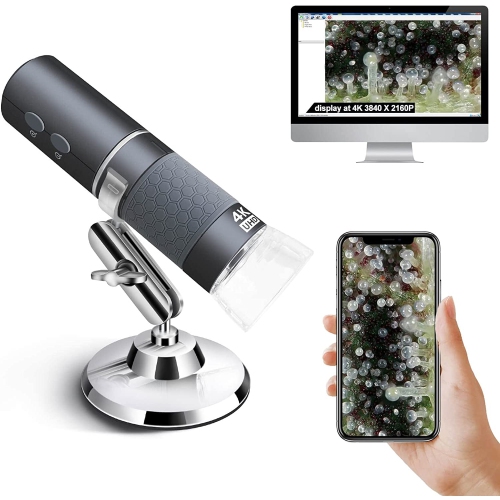 Your price for this item is $74.99
 -
 Your price for this item is $19.99
 -
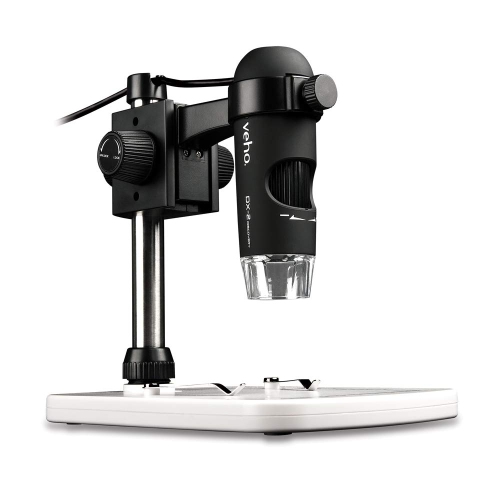 Your price for this item is $189.97
 -
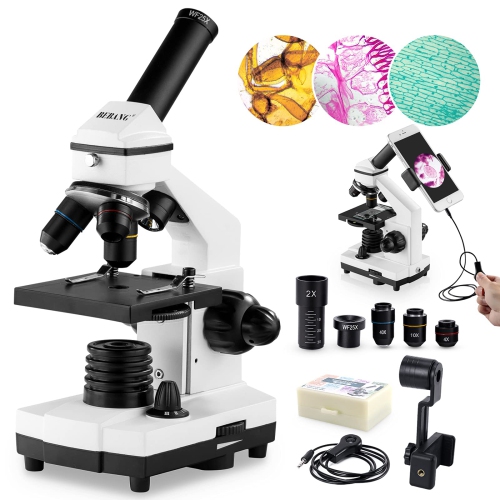 Your price for this item is $150.55
 -
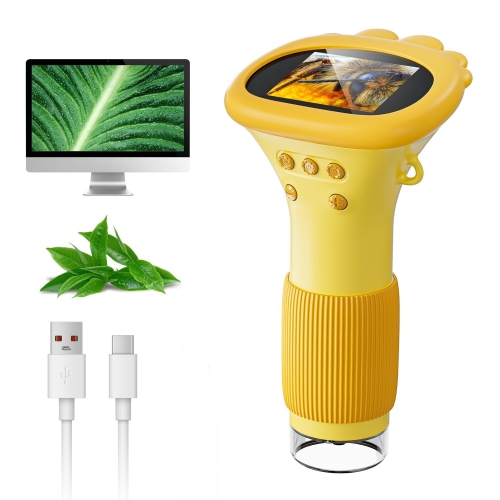 Your price for this item is $58.99
 -
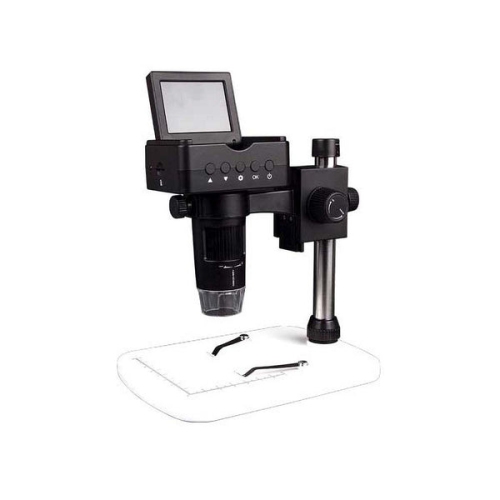 Your price for this item is $399.99
Discover more categories related to Monocular Compound Microscopes
Top Collections:
Pokemon Centers, Kindle Devices, Best Budget Office Chairs, Apple iPhones 16, Best Laptops for Writers, iPhone 15 Apple, Canon G7X Cameras, Refurbished Apple Laptops, Alarm Clock, Motorola Razr Phones
Some products may be subject to Environmental Handling Fees
(EHF) depending on your province.
Learn more about EHFs.