Wooden Toys for Infants
Discover a world of wonder and imagination with this collection of wooden toys for infants. Crafted from natural materials and designed to stimulate young minds, these toys are not only safe and durable, but also eco-friendly. From classic rattles and shape sorters to whimsical animal figures, each toy is thoughtfully created to encourage sensory exploration and cognitive development in your little one.
Sort
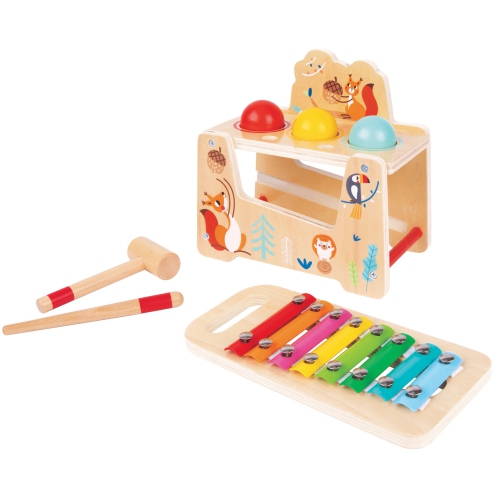
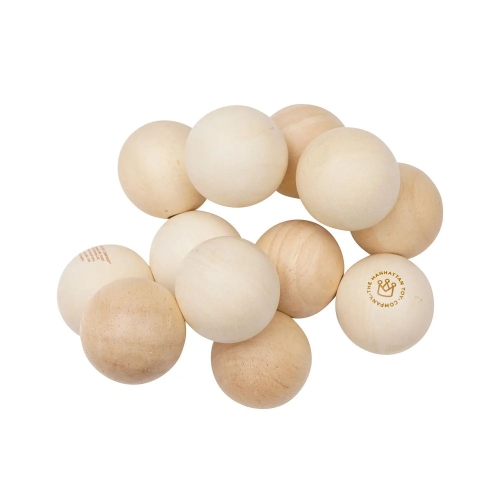
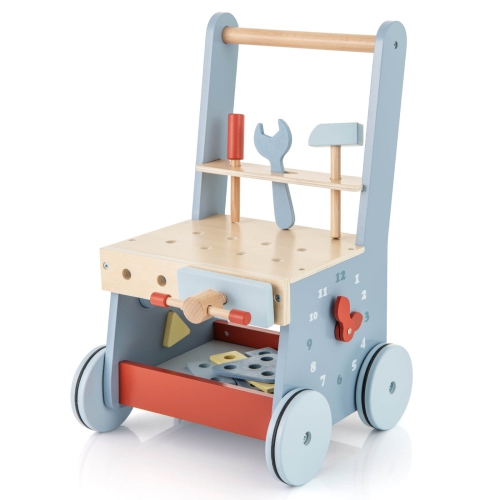
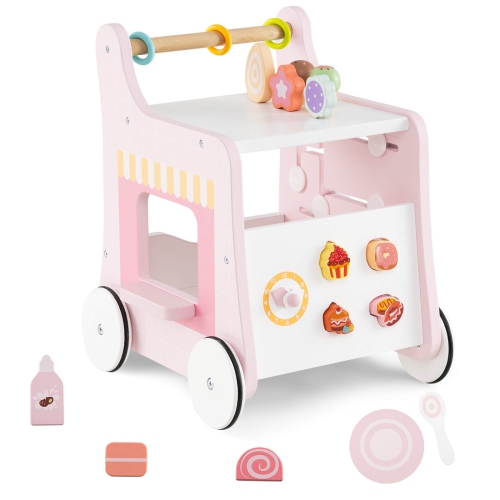
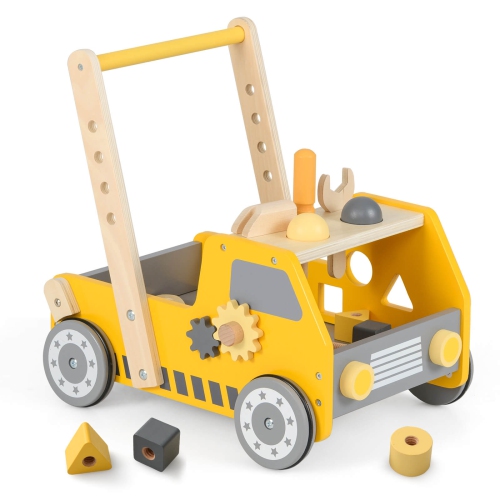
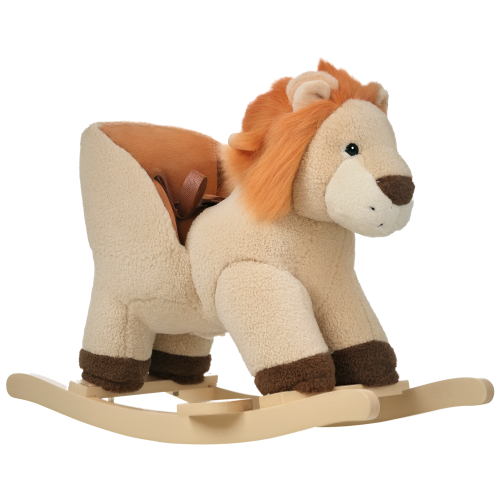
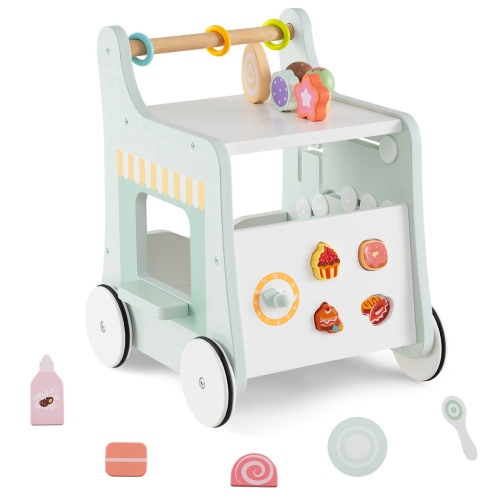
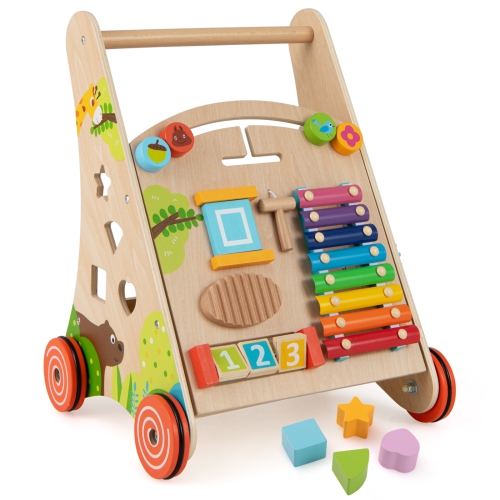
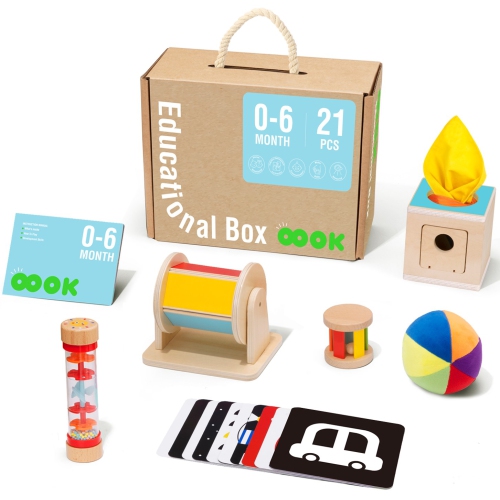
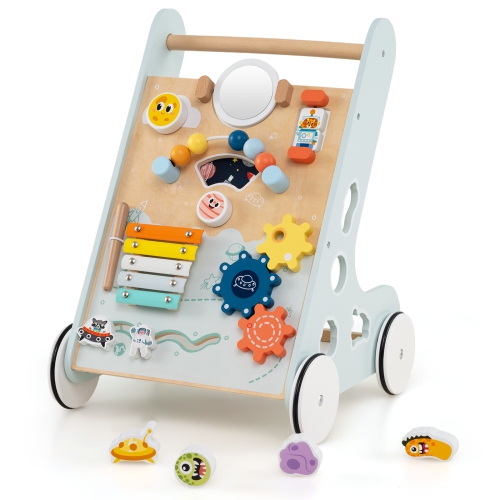
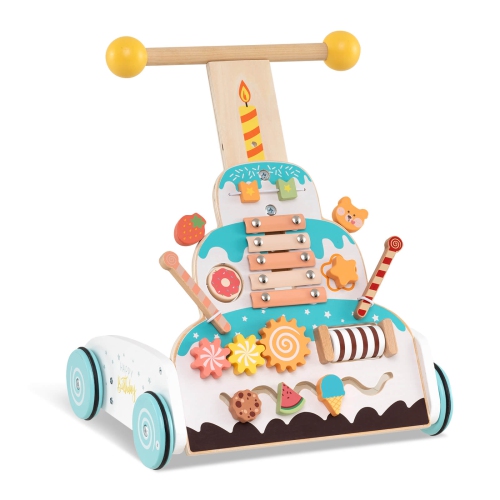
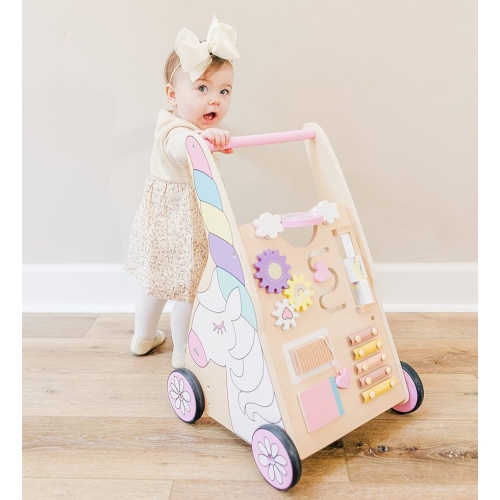
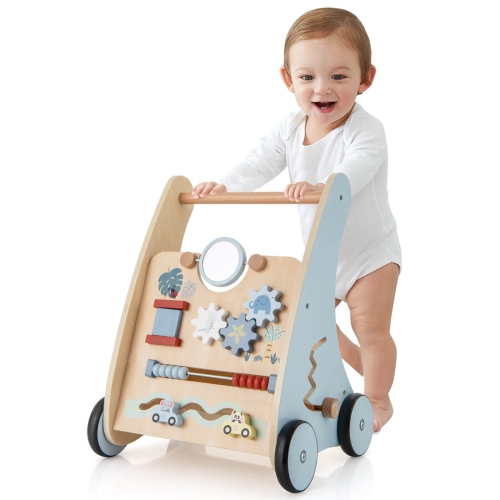

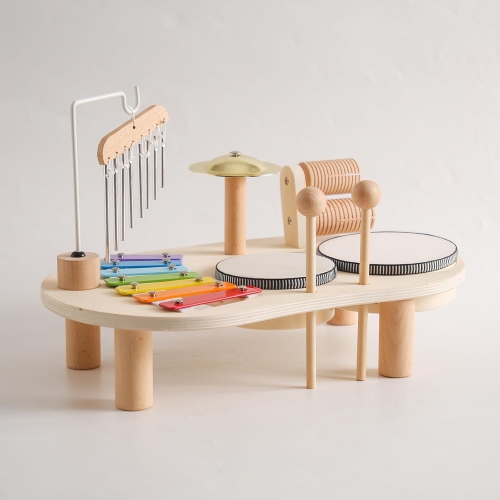
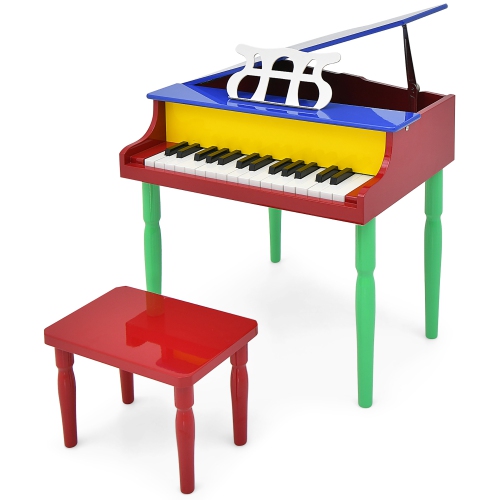
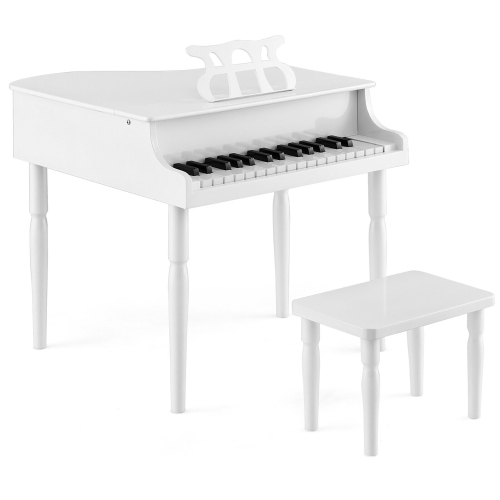
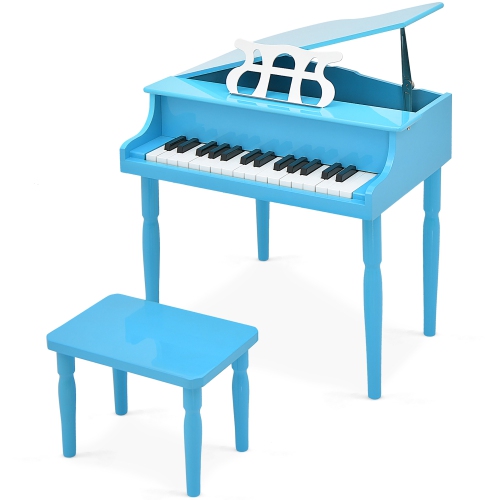
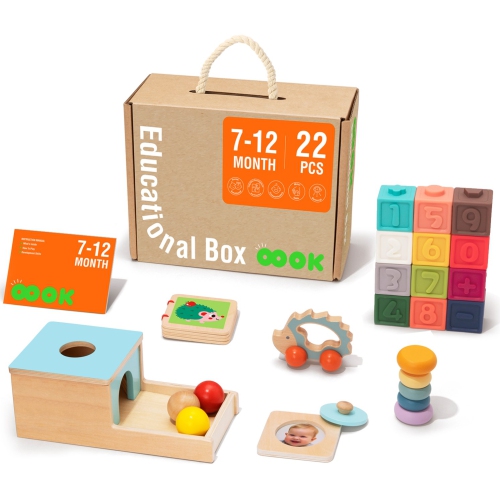
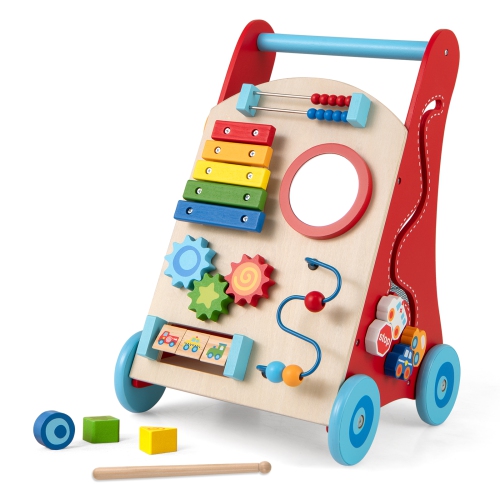
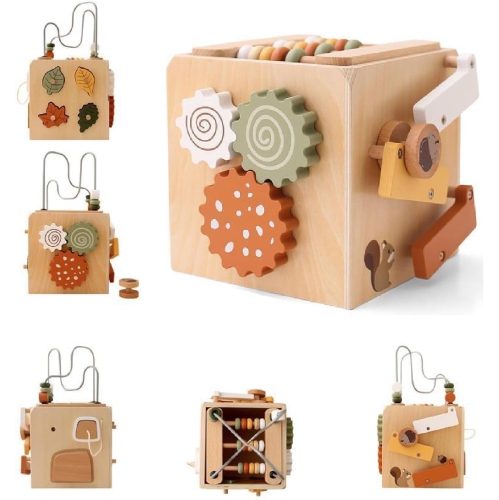
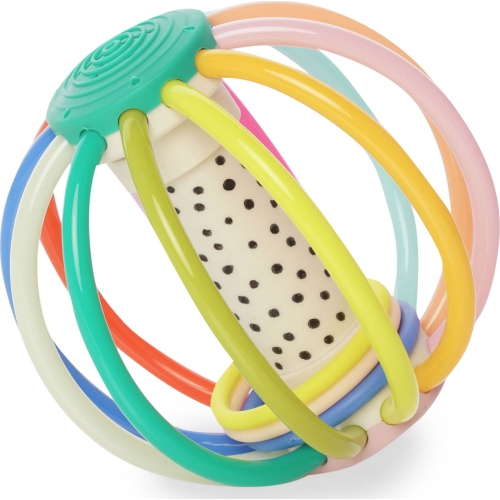
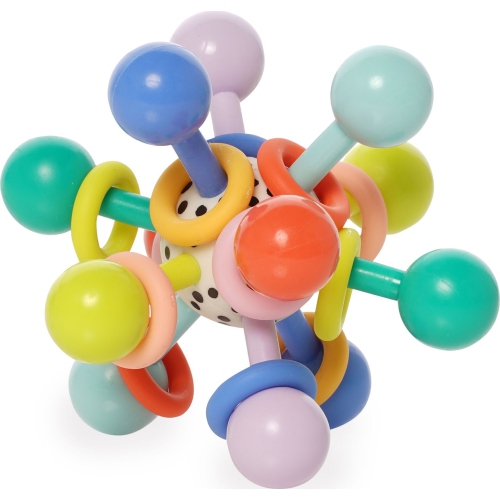
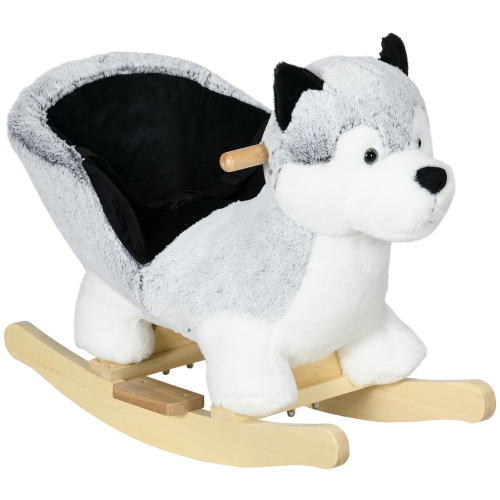
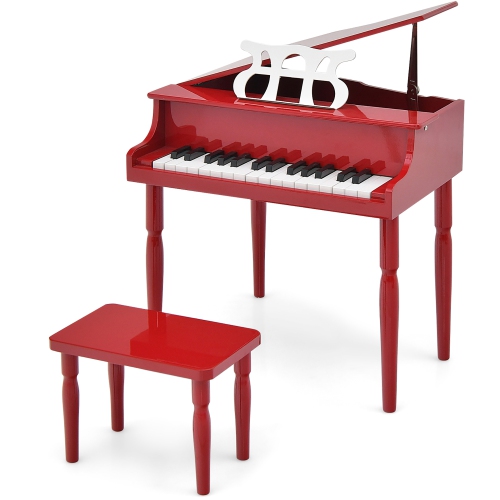
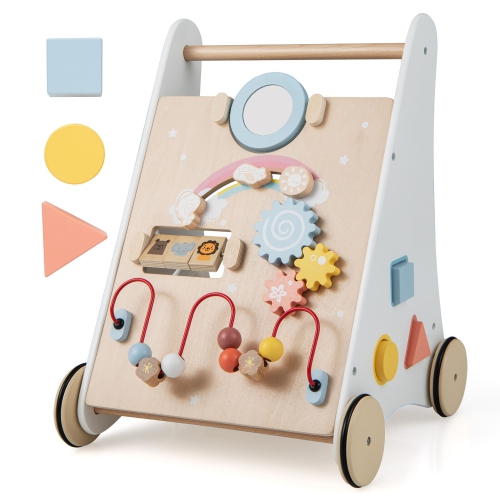

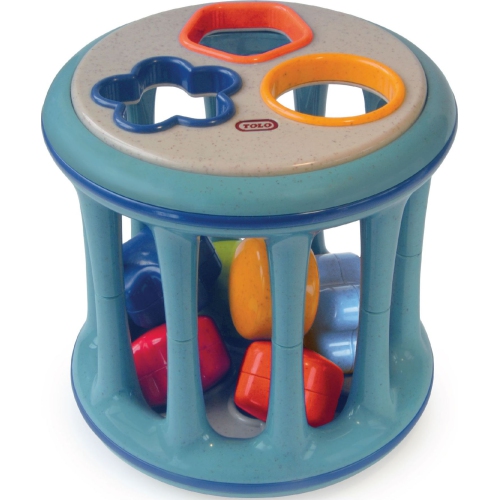
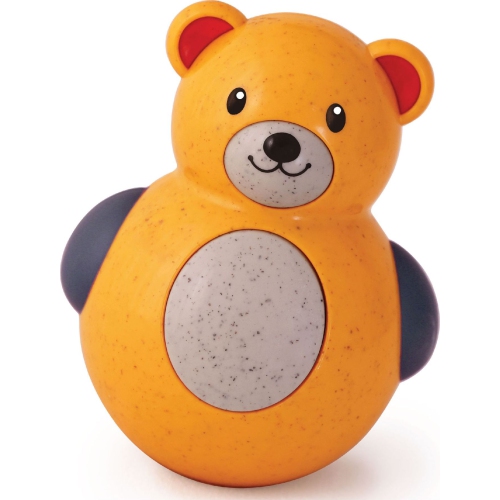
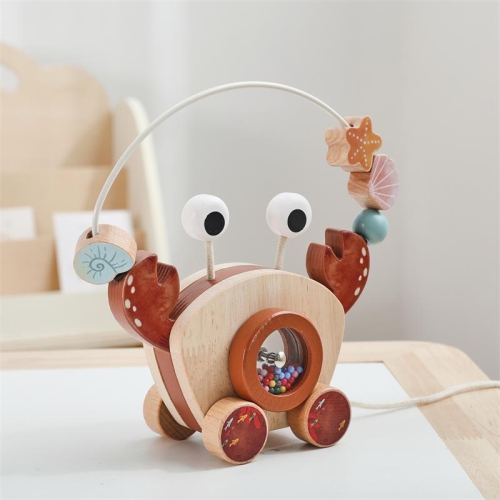
Support early sensory play through every developmental stage
Wooden toys for infants offer a simple, tactile way to support early play and discovery. During the first year, babies learn through their senses: they look closely at contrasting shapes and colours, listen to gentle sounds, reach for objects, and explore safe textures with their hands and mouths. Easy-to-hold wooden rattles, grasping toys, rolling pieces, and teethers can encourage these everyday movements while giving babies something engaging to explore during floor play, tummy time, or a quiet moment in a caregiver’s lap. The weight and firmness of wood can make a toy feel distinct from soft plush items, while rounded edges and smooth surfaces are comfortable for small hands to hold. As with any infant toy, check the recommended age range before purchasing and look for sturdy construction, secure components, and finishes intended for children. Babies often test toys by chewing, dropping, banging, and turning them over, so every piece should be made to withstand typical use without loose parts, sharp edges, peeling coatings, or accessible small components. Teething toys should be specifically designed for teething and should never be substituted with an ordinary wooden object. Always follow the manufacturer’s care instructions, inspect toys regularly for cracks or damage, and supervise infants during play, particularly when a toy includes beads, wheels, cords, or other attached elements.
The most suitable style of wooden toy changes as a baby’s abilities develop. From 0 to 12 months, look for sensory toys that are light enough to grasp and uncomplicated enough for an infant to explore independently with close supervision. Rattles can introduce cause and effect as a baby moves an arm and hears a sound, while textured teethers may provide a satisfying surface during teething periods. Simple rolling toys can encourage a baby to track movement with their eyes and eventually reach, pivot, crawl, or move towards the toy. Between 1 and 2 years, stacking pieces, larger blocks, push toys, and pull-along toys can encourage hand-eye coordination, balance, movement, and early problem-solving. A child may begin by knocking down a small tower, then gradually learn to place one piece on another or understand that pulling a toy brings it along behind them. These play patterns help build fine motor control without requiring formal instruction. Basic shape-sorting toys and simple construction sets are generally better suited to older toddlers, often 2 years and up, depending on the design and the manufacturer’s guidance. For families looking to extend this kind of hands-on play as a child grows, Wooden Puzzles for Toddlers can introduce matching, rotating, fitting, and visual problem-solving at a later stage. Since infants develop at different rates, age ranges should be treated as an important safety guide rather than a strict schedule. A toy that suits one child’s current skills may be frustrating or too advanced for another, so consider whether the child can grasp, mouth, stack, or manipulate the item safely and comfortably.
Wooden toys for infants can be useful additions to a nursery, playroom, daycare space, or grandparent’s home, and they are also thoughtful gifts for a baby shower, first birthday, welcoming celebration, or other family occasion. When choosing a gift, consider the child’s age, the family’s available space, and whether the toy can be used in more than one way as the baby grows. A compact rattle or teether may be practical for a young infant, while a set of larger stacking pieces may provide longer-lasting interest for a child who is beginning to sit, stand, or walk. Gift sets can be convenient when you want to offer several forms of play, but make sure each included piece is appropriate for the recipient’s age and that smaller components will not be accessible to a younger baby. Caregivers may also appreciate toys that are easy to wipe clean and simple to store, especially when play takes place on the floor or travels between rooms. Use a soft, slightly damp cloth when recommended, avoid soaking wooden toys unless the care instructions specifically allow it, and allow any cleaned item to dry fully before returning it to a child. During cooler months, when indoor play often becomes part of the daily routine, a small selection of well-chosen wooden toys can create inviting opportunities for reaching, grasping, rolling, stacking, and exploring. The best choice is one that matches the child’s developmental stage, feels comfortable in small hands, and supports open-ended play without relying on complicated features.
The most suitable style of wooden toy changes as a baby’s abilities develop. From 0 to 12 months, look for sensory toys that are light enough to grasp and uncomplicated enough for an infant to explore independently with close supervision. Rattles can introduce cause and effect as a baby moves an arm and hears a sound, while textured teethers may provide a satisfying surface during teething periods. Simple rolling toys can encourage a baby to track movement with their eyes and eventually reach, pivot, crawl, or move towards the toy. Between 1 and 2 years, stacking pieces, larger blocks, push toys, and pull-along toys can encourage hand-eye coordination, balance, movement, and early problem-solving. A child may begin by knocking down a small tower, then gradually learn to place one piece on another or understand that pulling a toy brings it along behind them. These play patterns help build fine motor control without requiring formal instruction. Basic shape-sorting toys and simple construction sets are generally better suited to older toddlers, often 2 years and up, depending on the design and the manufacturer’s guidance. For families looking to extend this kind of hands-on play as a child grows, Wooden Puzzles for Toddlers can introduce matching, rotating, fitting, and visual problem-solving at a later stage. Since infants develop at different rates, age ranges should be treated as an important safety guide rather than a strict schedule. A toy that suits one child’s current skills may be frustrating or too advanced for another, so consider whether the child can grasp, mouth, stack, or manipulate the item safely and comfortably.
Wooden toys for infants can be useful additions to a nursery, playroom, daycare space, or grandparent’s home, and they are also thoughtful gifts for a baby shower, first birthday, welcoming celebration, or other family occasion. When choosing a gift, consider the child’s age, the family’s available space, and whether the toy can be used in more than one way as the baby grows. A compact rattle or teether may be practical for a young infant, while a set of larger stacking pieces may provide longer-lasting interest for a child who is beginning to sit, stand, or walk. Gift sets can be convenient when you want to offer several forms of play, but make sure each included piece is appropriate for the recipient’s age and that smaller components will not be accessible to a younger baby. Caregivers may also appreciate toys that are easy to wipe clean and simple to store, especially when play takes place on the floor or travels between rooms. Use a soft, slightly damp cloth when recommended, avoid soaking wooden toys unless the care instructions specifically allow it, and allow any cleaned item to dry fully before returning it to a child. During cooler months, when indoor play often becomes part of the daily routine, a small selection of well-chosen wooden toys can create inviting opportunities for reaching, grasping, rolling, stacking, and exploring. The best choice is one that matches the child’s developmental stage, feels comfortable in small hands, and supports open-ended play without relying on complicated features.
Top selling and popular products
-
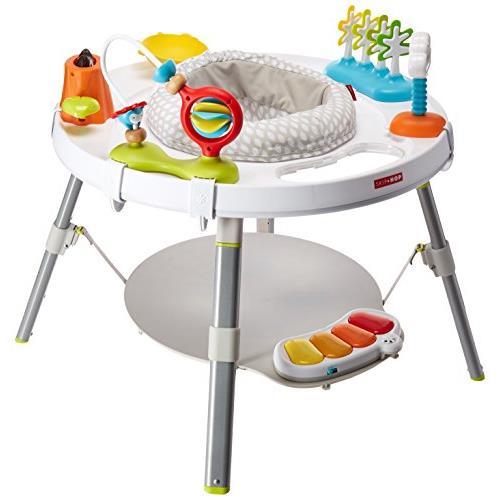 Your price for this item is $299.13
 -
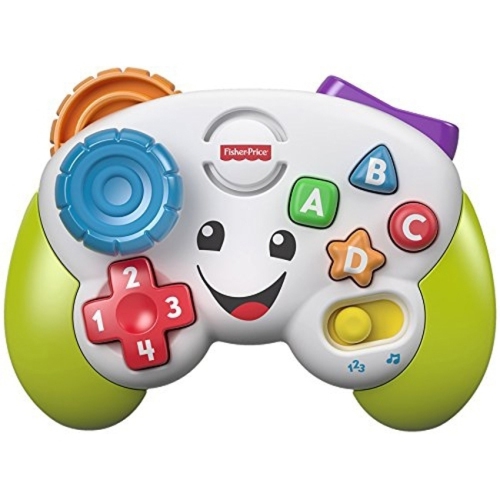 Your price for this item is $24.28
 -
 Your price for this item is $103.27
 -
 Your price for this item is $17.24
 -
 Your price for this item is $56.13
 -
 Your price for this item is $29.99
 -
 Your price for this item is $19.99
 -
 Your price for this item is $39.99
Discover more categories related to Wooden Toys for Infants
Top Collections:
Pokemon Centers, Kindle Devices, Best Budget Office Chairs, Apple iPhones 16, Best Laptops for Writers, iPhone 15 Apple, Canon G7X Cameras, Refurbished Apple Laptops, Alarm Clock, Motorola Razr Phones
Some products may be subject to Environmental Handling Fees
(EHF) depending on your province.
Learn more about EHFs.