Small Gas Range Stoves
If you're looking for a new stove, but want to keep the space on your countertop clear, a small gas range is a way to go. These stoves are compact and take up less space. They also tend to be more affordable. Here are some great options for small gas range stoves.
Sort
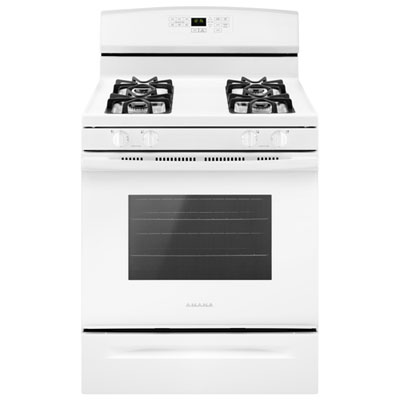
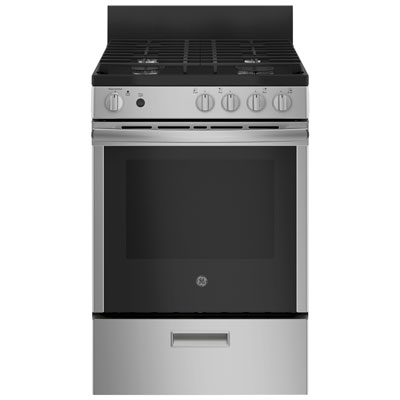
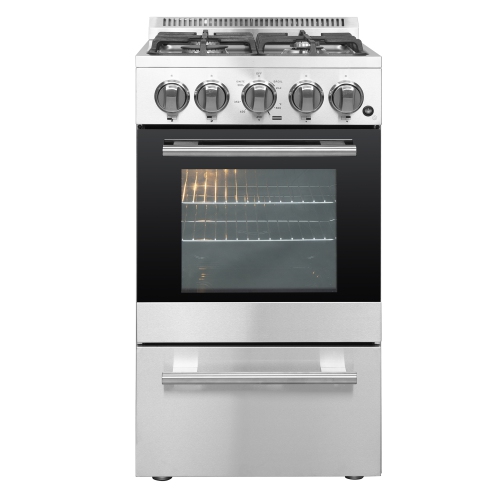
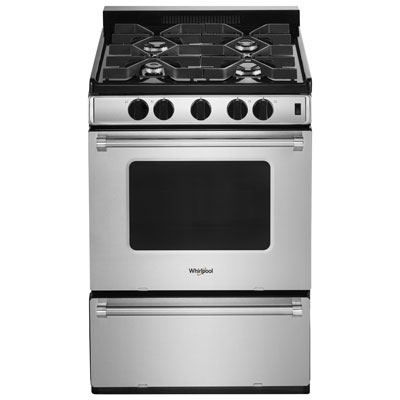
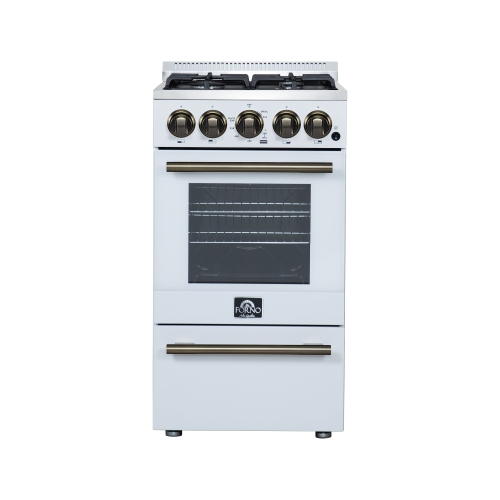
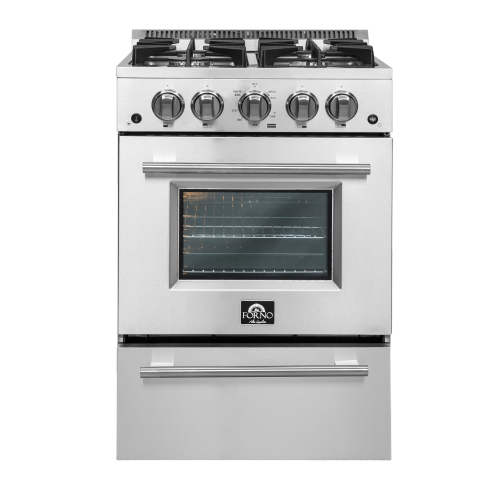
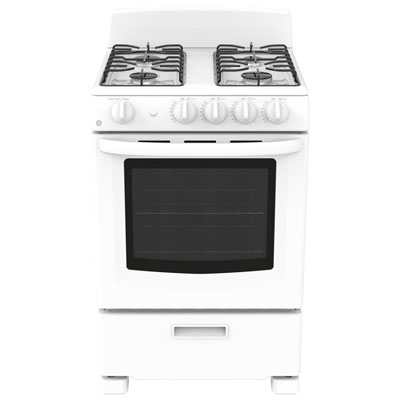

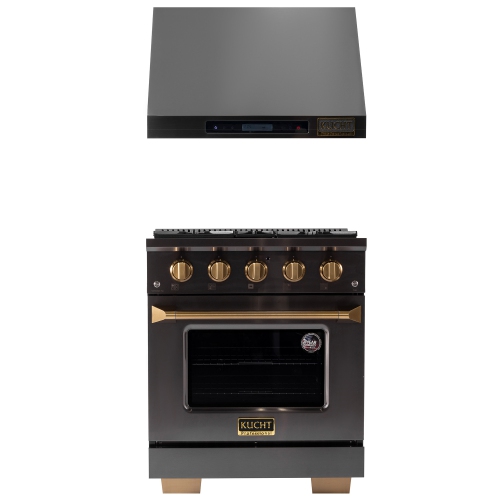
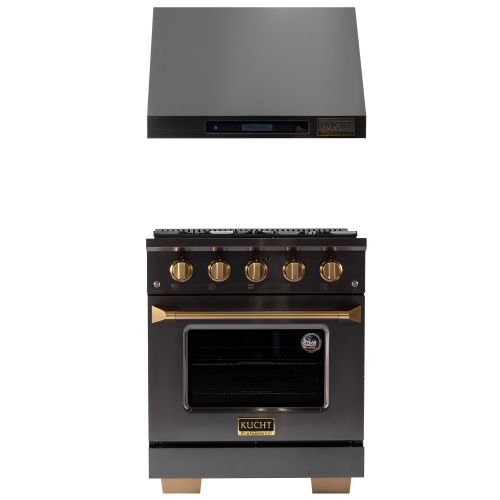
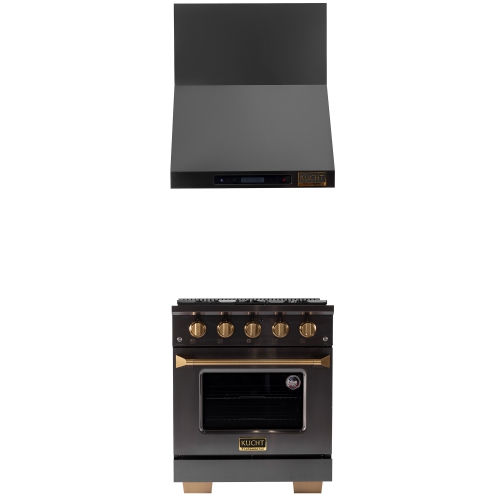

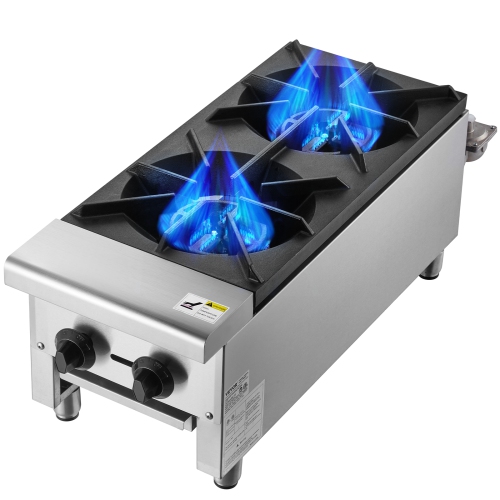
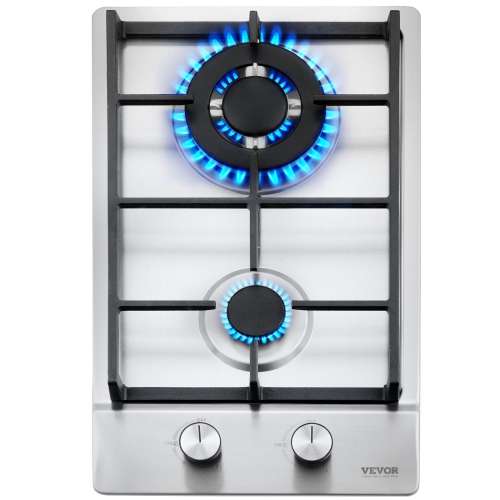
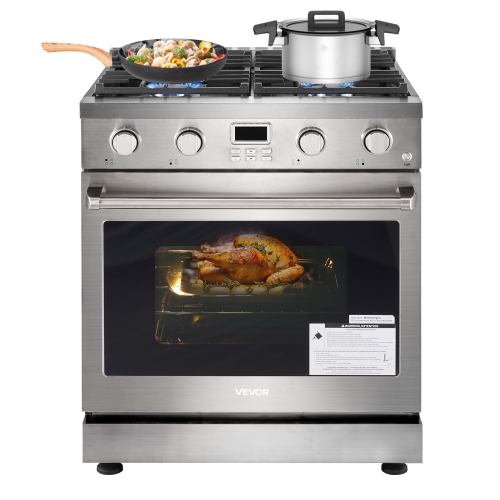
Stovetop cooking and baking in a smaller footprint
Small gas range stoves combine a gas cooktop and an oven in one compact appliance, making them a practical fit for kitchens where every centimetre of counter and cabinet space matters. Common compact widths include 20-inch and 24-inch formats, which can suit apartments, smaller condos, cottages, and some tiny homes when the space, gas connection, and installation requirements allow. Their appeal is straightforward: a narrower range leaves more room for food preparation or storage while keeping stovetop cooking and baking together. Many compact gas ranges have four burners, although burner layout, heat output, and oven capacity vary by model. A smaller footprint does not necessarily mean fewer burners, but it can mean less space between pans. For someone preparing oatmeal and coffee in the morning or cooking rice beside a skillet of vegetables at dinner, that arrangement may be all that is needed. A household that regularly uses a wide sauté pan and a large stockpot at the same time will want to pay particular attention to the usable cooking surface. Gas burners provide a visible flame and respond promptly to control adjustments, which is useful when bringing soup to a boil and then lowering it to a gentle simmer. Higher-output burners can help with larger pots, while a burner designed for low heat may be better suited to sauces and melting butter. Burner output is expressed in British thermal units, or BTUs, but total BTU output alone does not describe how comfortably a range will handle everyday meals. The distribution of heat settings, stability of the grates, and fit of familiar cookware are just as relevant. During the cooler months, a compact range can be the centre of a small kitchen, with a pot of stew on the cooktop and a tray of roasted vegetables in the oven. For shoppers comparing compact layouts with other configurations, Best Gas Range Stoves offers a broader view of the category.
Fit involves more than choosing a nominal width. A 20-inch or 24-inch gas range still needs the clearances specified by its manufacturer, along with enough room for the oven door to open fully and for someone to move safely in front of it. Overall depth, handle projection, countertop height, and the location of the gas supply can all affect how neatly the appliance fits into a narrow kitchen. In a galley layout, a projecting handle can make a walkway feel tighter; beside a corner cabinet, an open oven door may interfere with a cupboard or drawer. The delivery route matters too, particularly in older apartments with narrow doorways, tight stair turns, or limited lift space. Freestanding designs generally have finished sides, but the installation specifications still determine where they can be placed. Gas type is another essential distinction. A range configured for natural gas is not automatically ready for propane, and conversion is appropriate only when the appliance supports it and the required parts and professional installation are used. This is especially relevant for cottages and rural homes where propane may be the fuel source. Many gas ranges also require an electrical connection for ignition, lighting, displays, or other functions, so gas service alone may not meet the appliance’s needs. Installation by a qualified professional, the specified anti-tip restraint, and ventilation that meets manufacturer requirements and local codes are important parts of a suitable setup. Oven capacity deserves the same attention as external dimensions. Compact ovens can handle many everyday baking and roasting tasks, but a favourite baking sheet, casserole dish, or roasting pan may not fit simply because the range has four burners above it. Interior dimensions, rack positions, and clearance around cookware help determine what can cook comfortably. Convection, where included, uses a fan to circulate heated air, while broiler placement varies: some ranges broil inside the oven, and others use a separate lower compartment. A lower drawer should never be assumed to provide storage without checking its intended function.
Materials and construction influence both the feel of a small gas range and the work involved in keeping it clean. Stainless steel brings a crisp, neutral finish that pairs easily with many kitchen fixtures, while enamelled finishes offer a different look and may suit traditional or colourful spaces. Surface care depends on the finish: a soft cloth and a manufacturer-approved cleaner are usually a better starting point than abrasive pads, which can leave scratches. On the cooktop, cast-iron grates provide a substantial surface for cookware, though their weight may make lifting them for cleaning less convenient. Continuous grates, when fitted, can make repositioning a pot easier, but cookware still needs to sit securely over the burner rather than crowding the edge. Sealed burners help limit spills beneath the cooktop, yet burner caps and surrounding surfaces still need regular attention. Once the appliance has cooled, wiping away splashes before they harden makes routine care simpler. Removable parts should be cleaned according to the manufacturer’s directions, dried thoroughly, and returned to their correct positions so that ignition and flame performance are not affected. Oven interiors also differ: some require manual cleaning, while others include a cleaning function with specific operating instructions. Accessible corners, manageable grate sections, and easily removable racks can matter more in daily use than an elaborate control panel. Durability is shaped by sound construction and consistent care, including keeping burner openings clear, protecting door seals, and avoiding foil liners unless expressly permitted by the manufacturer. For everyday comfort, readable controls, a clear oven window, useful interior lighting, and racks that move smoothly are worth considering. Someone cooking mainly for one or two people may value a compact oven and straightforward controls, while a keen baker may place greater importance on rack spacing and even baking performance. In a cottage kitchen, familiar operation and easy-clean surfaces may be especially useful when several people share cooking duties. The most suitable small gas range is one whose dimensions, cookware capacity, fuel requirements, and maintenance needs match the way the kitchen is actually used, from quick breakfasts to a carefully timed roast dinner.
Fit involves more than choosing a nominal width. A 20-inch or 24-inch gas range still needs the clearances specified by its manufacturer, along with enough room for the oven door to open fully and for someone to move safely in front of it. Overall depth, handle projection, countertop height, and the location of the gas supply can all affect how neatly the appliance fits into a narrow kitchen. In a galley layout, a projecting handle can make a walkway feel tighter; beside a corner cabinet, an open oven door may interfere with a cupboard or drawer. The delivery route matters too, particularly in older apartments with narrow doorways, tight stair turns, or limited lift space. Freestanding designs generally have finished sides, but the installation specifications still determine where they can be placed. Gas type is another essential distinction. A range configured for natural gas is not automatically ready for propane, and conversion is appropriate only when the appliance supports it and the required parts and professional installation are used. This is especially relevant for cottages and rural homes where propane may be the fuel source. Many gas ranges also require an electrical connection for ignition, lighting, displays, or other functions, so gas service alone may not meet the appliance’s needs. Installation by a qualified professional, the specified anti-tip restraint, and ventilation that meets manufacturer requirements and local codes are important parts of a suitable setup. Oven capacity deserves the same attention as external dimensions. Compact ovens can handle many everyday baking and roasting tasks, but a favourite baking sheet, casserole dish, or roasting pan may not fit simply because the range has four burners above it. Interior dimensions, rack positions, and clearance around cookware help determine what can cook comfortably. Convection, where included, uses a fan to circulate heated air, while broiler placement varies: some ranges broil inside the oven, and others use a separate lower compartment. A lower drawer should never be assumed to provide storage without checking its intended function.
Materials and construction influence both the feel of a small gas range and the work involved in keeping it clean. Stainless steel brings a crisp, neutral finish that pairs easily with many kitchen fixtures, while enamelled finishes offer a different look and may suit traditional or colourful spaces. Surface care depends on the finish: a soft cloth and a manufacturer-approved cleaner are usually a better starting point than abrasive pads, which can leave scratches. On the cooktop, cast-iron grates provide a substantial surface for cookware, though their weight may make lifting them for cleaning less convenient. Continuous grates, when fitted, can make repositioning a pot easier, but cookware still needs to sit securely over the burner rather than crowding the edge. Sealed burners help limit spills beneath the cooktop, yet burner caps and surrounding surfaces still need regular attention. Once the appliance has cooled, wiping away splashes before they harden makes routine care simpler. Removable parts should be cleaned according to the manufacturer’s directions, dried thoroughly, and returned to their correct positions so that ignition and flame performance are not affected. Oven interiors also differ: some require manual cleaning, while others include a cleaning function with specific operating instructions. Accessible corners, manageable grate sections, and easily removable racks can matter more in daily use than an elaborate control panel. Durability is shaped by sound construction and consistent care, including keeping burner openings clear, protecting door seals, and avoiding foil liners unless expressly permitted by the manufacturer. For everyday comfort, readable controls, a clear oven window, useful interior lighting, and racks that move smoothly are worth considering. Someone cooking mainly for one or two people may value a compact oven and straightforward controls, while a keen baker may place greater importance on rack spacing and even baking performance. In a cottage kitchen, familiar operation and easy-clean surfaces may be especially useful when several people share cooking duties. The most suitable small gas range is one whose dimensions, cookware capacity, fuel requirements, and maintenance needs match the way the kitchen is actually used, from quick breakfasts to a carefully timed roast dinner.
Top selling and popular products
-
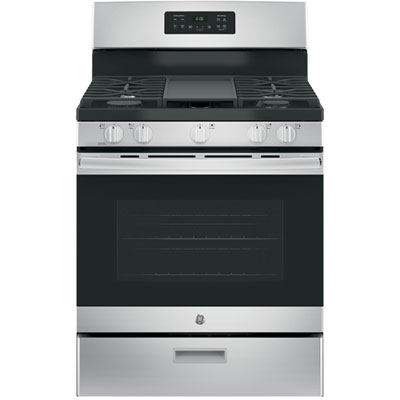 Your price for this item is $949.99
 -
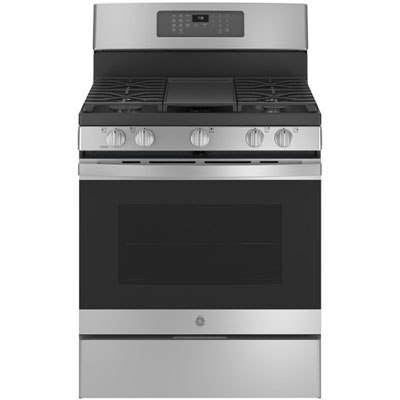 Your price for this item is $2049.99
 -
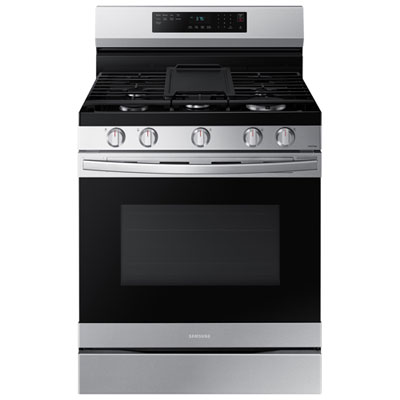 Your price for this item is $1395.99
 -
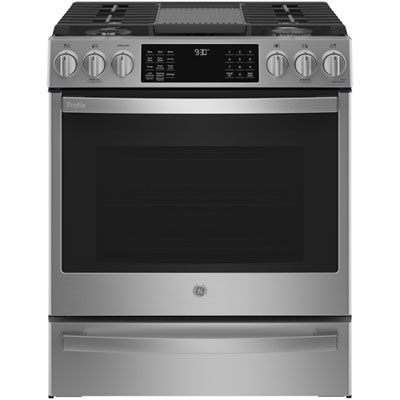 Your price for this item is $3999.99
 -
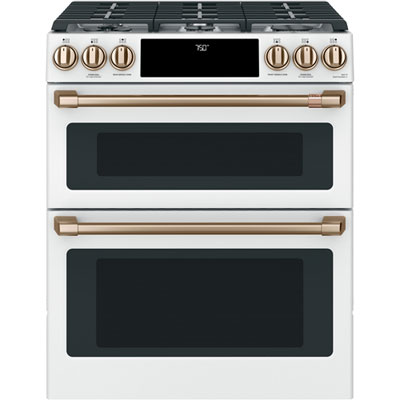 Your price for this item is $5199.99
 -
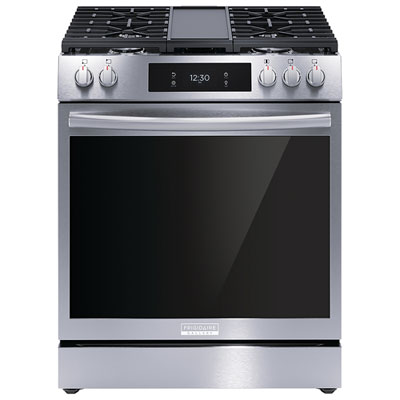 Your price for this item is $1799.99
 -
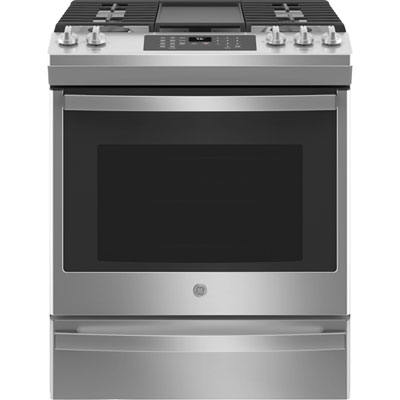 Your price for this item is $1699.99
 -
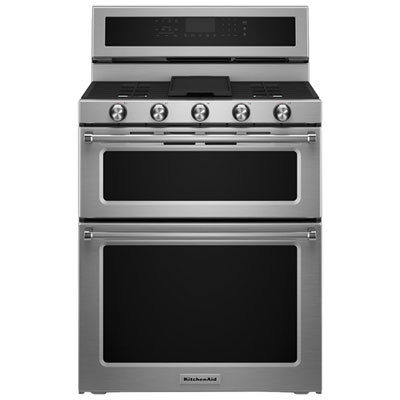 Your price for this item is $3099.99
Discover more categories related to Small Gas Range Stoves
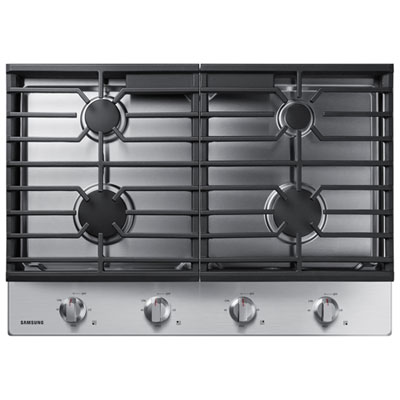
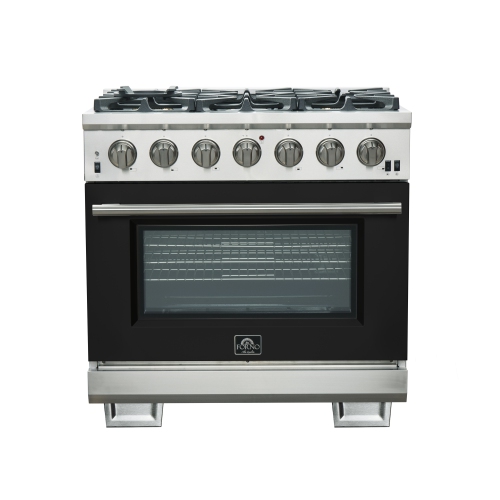
Top Collections:
Pokemon Centers, Kindle Devices, Best Budget Office Chairs, Apple iPhones 16, Best Laptops for Writers, iPhone 15 Apple, Canon G7X Cameras, Refurbished Apple Laptops, Alarm Clock, Motorola Razr Phones
Some products may be subject to Environmental Handling Fees
(EHF) depending on your province.
Learn more about EHFs.