Stove-Top Griddles
Elevate your home cooking experience with a stove-top griddle, the perfect addition to any kitchen for preparing delicious breakfasts, lunches, and dinners. Designed to fit seamlessly over your stove burners, a stove-top griddle offers ample space for making everything from pancakes and eggs to grilled sandwiches and seared meats. Whether you’re cooking for one or feeding a crowd, discover a range of options that make it easy to whip up your favourite meals right at home. Find the ideal stove-top griddle to suit your culinary needs and enjoy versatile cooking every day.
Sort
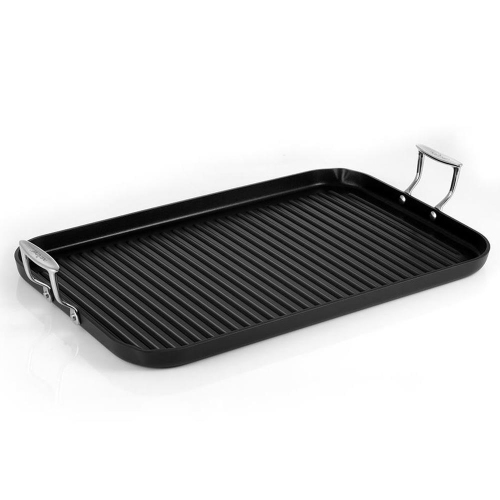


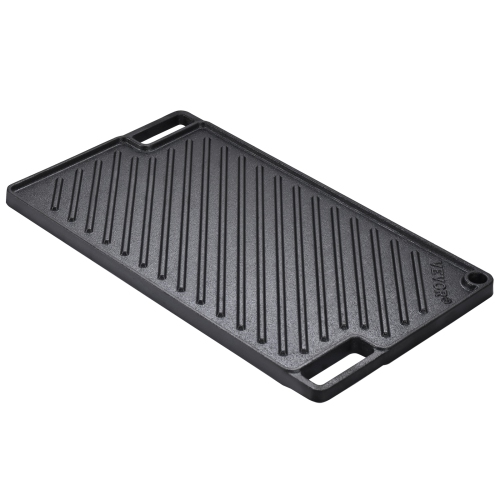


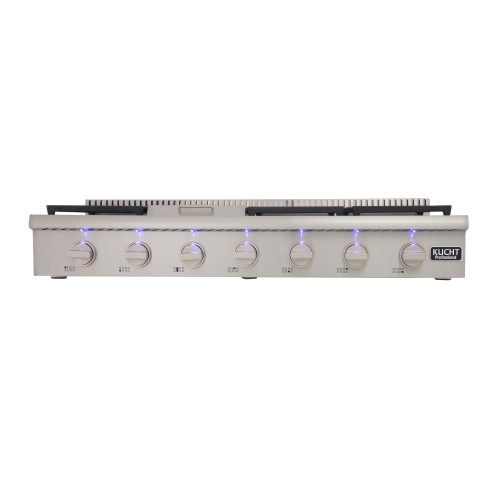
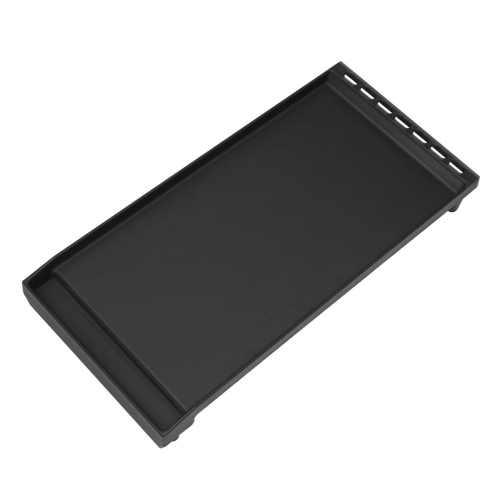
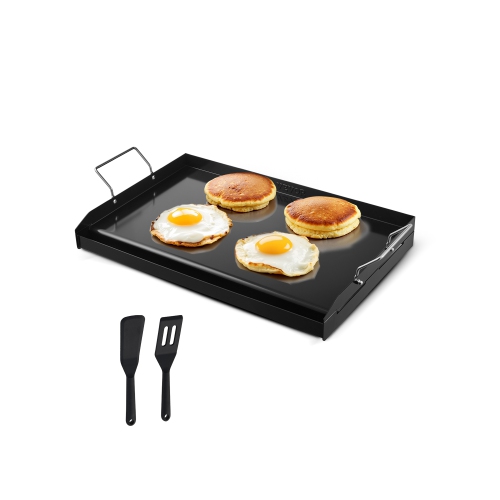
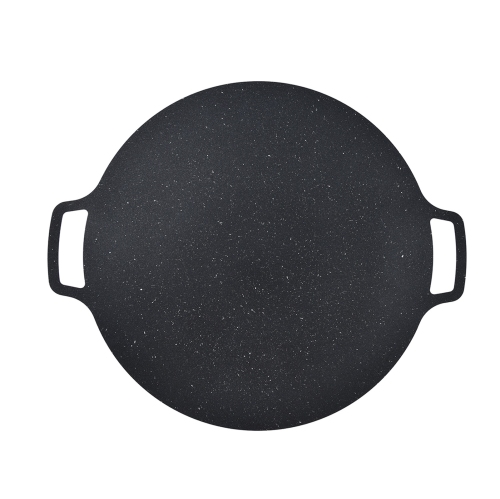
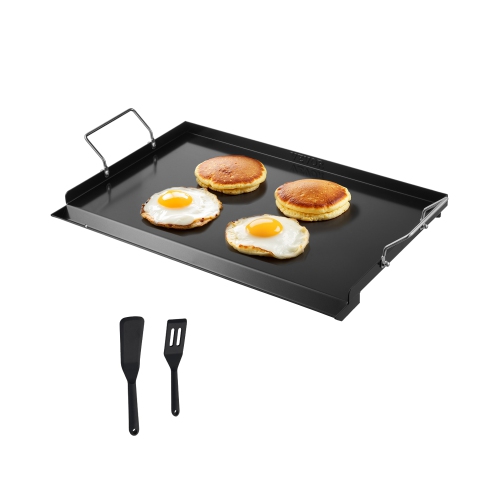
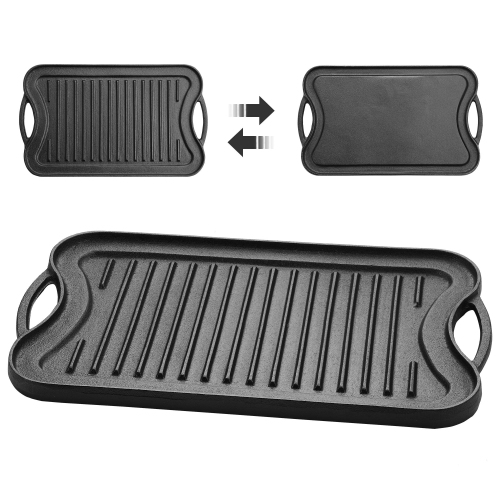
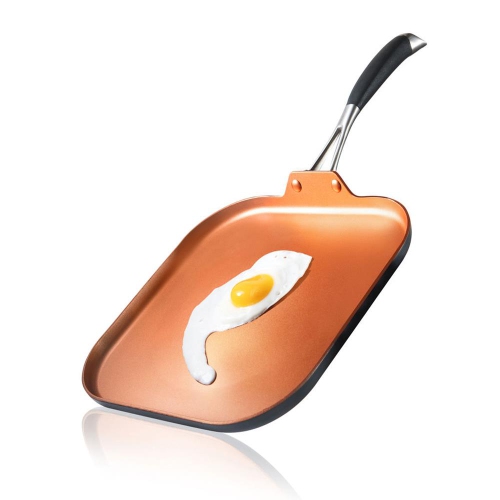
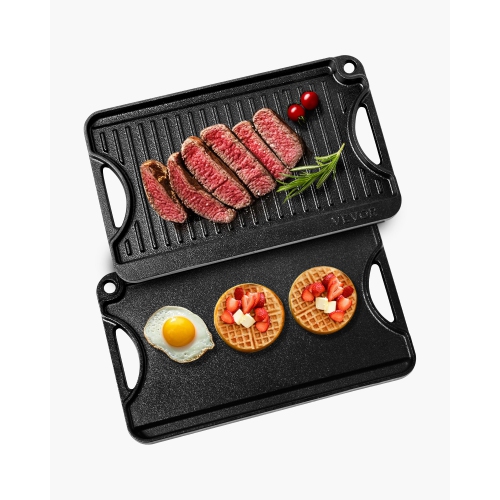
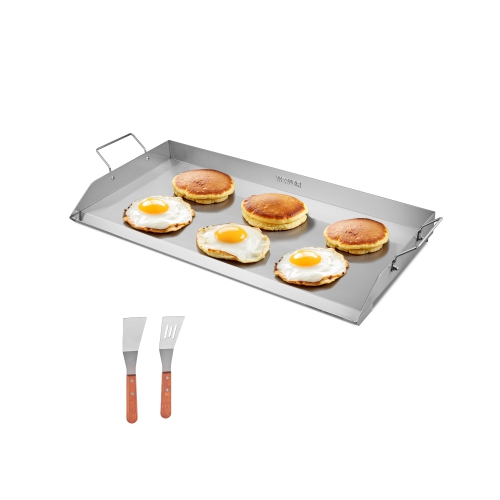
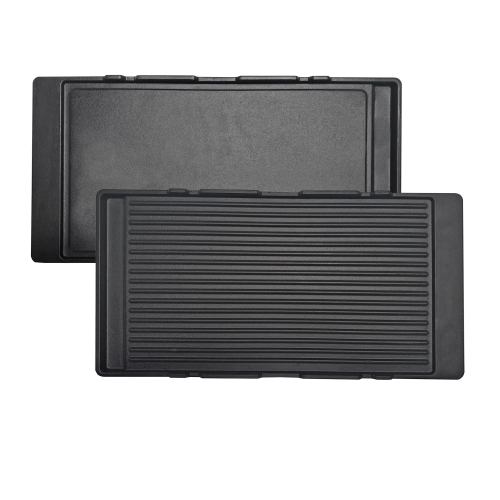
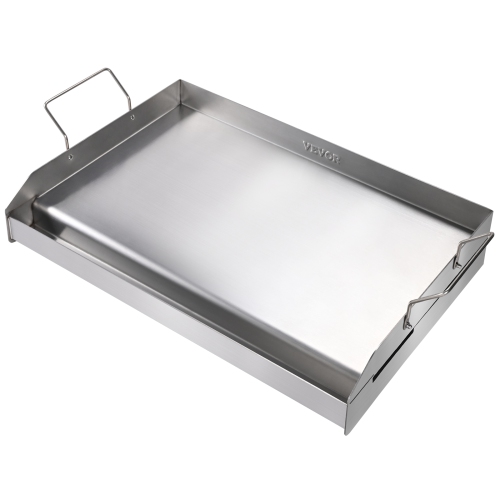
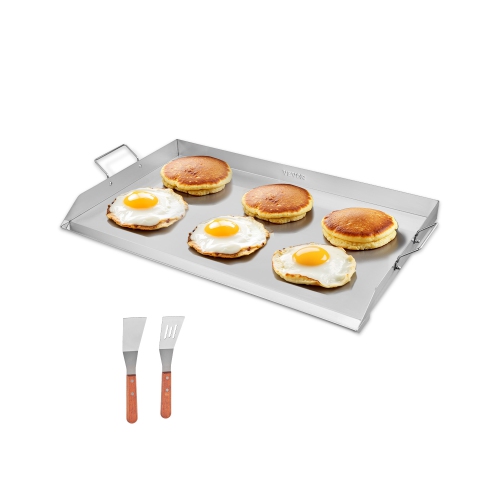
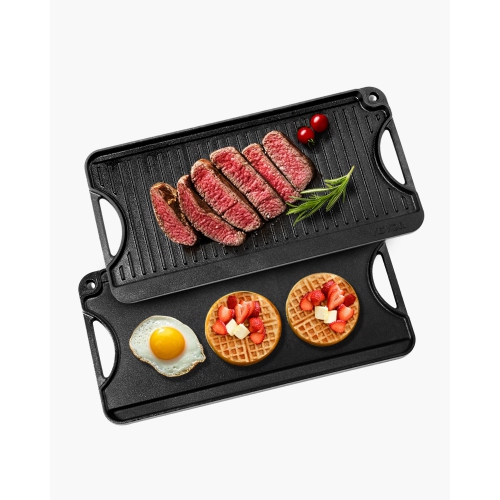
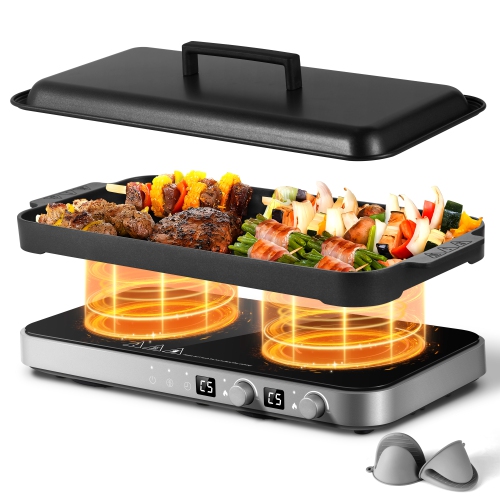
More room to flip pancakes and toast sandwiches
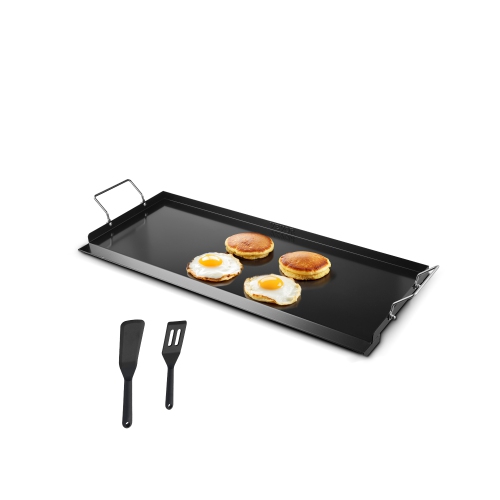
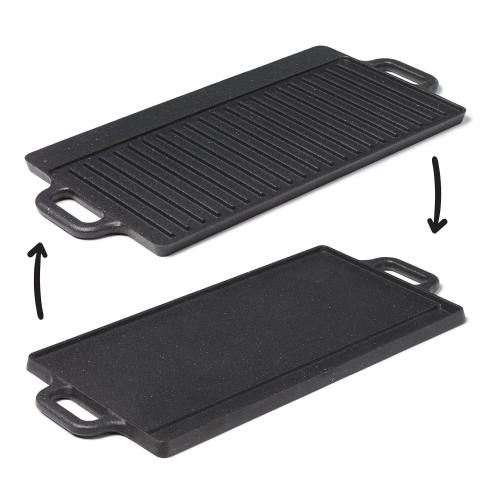
Stove-top griddles are broad, shallow pieces of cookware that sit over one or more stove burners, providing a flat surface for pancakes, eggs, sandwiches, burgers, and vegetables. Their open cooking area makes it easier to turn several portions without working around the tall sides of a frying pan. A single-burner griddle suits smaller batches, while an elongated two-burner design gives a household more room for breakfast pancakes or a spread of toasted sandwiches. Smooth surfaces provide direct contact for evenly browned French toast, crisp quesadillas, and delicate foods that need a spatula slipped underneath. Some reversible griddles pair a smooth side with a ridged side, which creates grill marks and allows some fat and juices to collect between the raised lines. These surfaces serve different purposes: ridges are useful for searing meat or courgette slices, while a flat surface is better suited to loose eggs and pourable batter. The usable cooking area matters more than the outside dimensions alone, since handles, borders, and grease channels can reduce the space left for food. A wide rectangle may accommodate several slices of bread neatly, whereas a compact square can be easier to position on a smaller cooking zone. Low rims help contain crumbs and small amounts of oil without getting in the way of a turner, but a griddle is not intended to hold large quantities of liquid or replace a deep pan for frying. For a family breakfast, the appeal is having room to turn pancakes without their edges touching. For lunch or dinner, that same space can hold folded tortillas or sliced peppers in a single layer. Foods with different cooking times still need attention, and raw meat should remain separate from ready-to-eat ingredients. A generous surface offers flexibility, rather than a promise that every part of a meal will cook at the same speed.
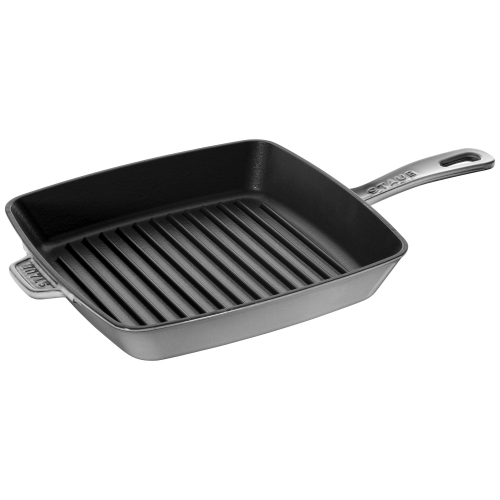
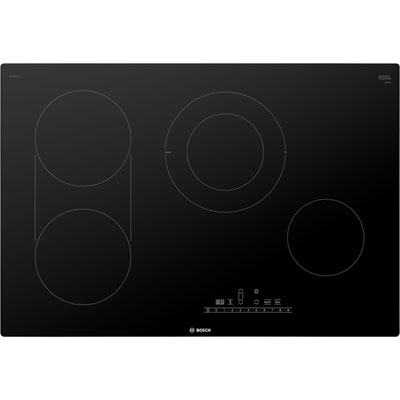
Material affects a stove-top griddle’s weight, heat response, maintenance, and suitability for different cooking surfaces. Cast iron holds heat well once warmed through, making it useful for repeated batches of pancakes or a firm sear, though a large cast iron griddle can be heavy to lift and store. Bare cast iron relies on a maintained layer of seasoning to help protect the metal and improve food release. Carbon steel also develops seasoning and is often lighter than a similarly sized cast iron piece, although thickness makes a considerable difference to both weight and resistance to warping. Aluminium conducts heat readily and is often paired with a non-stick cooking surface for easier release of eggs and other delicate foods. A coating’s care requirements matter as much as its initial convenience: suitable utensils, moderate heat, and gentle cleaning help limit wear. Enamelled surfaces have their own handling requirements and do not call for the same seasoning routine as bare iron. Compatibility is a separate consideration from material preference. An induction cooktop requires cookware with a suitable magnetic base, and the base dimensions must meet the cooking zone’s requirements. A griddle that spans two burners also needs appropriate support and must be permitted by the stove manufacturer; a bridge function should not be assumed on every cooktop. Glass cooking surfaces call for particular attention to the cookware’s base, weight, and handling, including lifting rather than dragging it. On any stove, the distance between burners and the size of their heating areas influence where the griddle gets hottest. A broad piece of metal does not necessarily heat uniformly from edge to edge, so the space between burners may behave differently from the areas directly above them. Overall dimensions should leave access to controls and enough clearance for secure handling. Handles can become hot, especially when positioned near another burner, while oven use depends on the limits specified for the entire piece, including its handles and coating. These details determine whether a griddle fits comfortably into an existing kitchen rather than simply fitting across the stove.
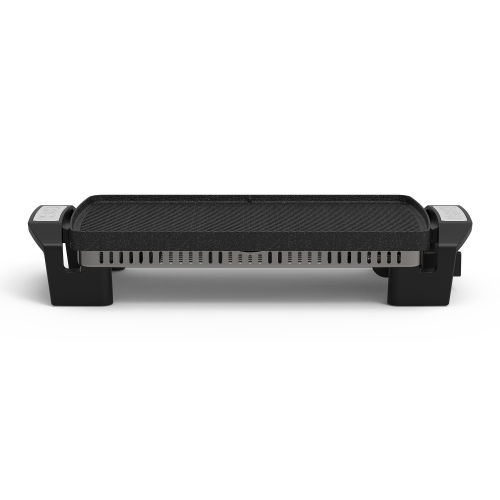
Care and storage have a direct bearing on how well a griddle works over time. Bare cast iron and carbon steel generally need prompt drying after cleaning, along with seasoning care according to the manufacturer’s directions; prolonged soaking can encourage rust. Non-stick and enamelled surfaces benefit from tools and cleaning methods that will not scratch or chip them. Dishwasher suitability varies, so it is not something to assume from the material alone. Allowing hot cookware to cool before washing helps avoid sudden temperature changes that can damage a coating or distort the base. Grease channels and corners deserve attention because residue left there can smoke during later use. A griddle with a flat, stable base, sturdy handles, and a surface that suits its intended cooking tasks can remain useful for many everyday meals, but durability also depends on avoiding overheating and handling it carefully. Storage is worth considering before bringing a large two-burner shape into a compact kitchen: it may need a wide cupboard, a suitable rack, or protective separation from other cookware. Its weight should be manageable for whoever will lift it from the cupboard to the stove and then to the sink. For someone who regularly makes breakfast for several people, the extra cooking space can mean fewer small batches. A sandwich enthusiast may value the uninterrupted flat surface, while a cook who enjoys searing vegetables may prefer a reversible design. As a housewarming or wedding gift, a griddle is most useful when its size, care needs, and cooktop compatibility match the recipient’s kitchen and habits. Many Tabletop Griddles instead have their own electric heating element and temperature control, making them a different option for cooking away from the stove. Stove-top designs rely on the existing burners, with no separate powered base to store. The distinction helps clarify which format suits the available cooking space, whether the routine involves a quiet breakfast for two or several sandwiches ready to serve together.
Top selling and popular products
-
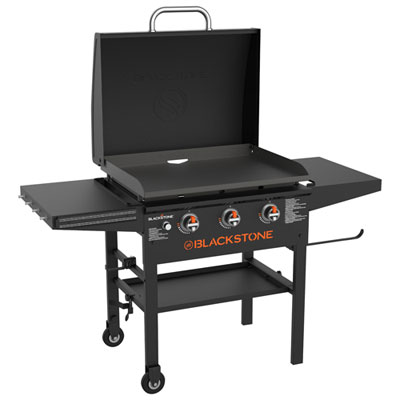 Your price for this item is $619.99
-
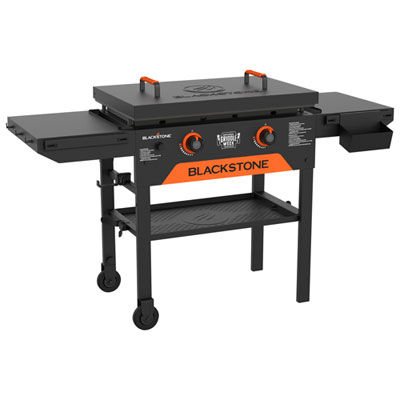 Your price for this item is $599.99
-
 Your price for this item is $272.98
-
 Your price for this item is $317.89
-
 Your price for this item is $639.99
-
 Your price for this item is $913.99
-
 Your price for this item is $80.9
-
 Your price for this item is $65.38
Discover more categories related to Stove-Top Griddles
Top Collections:
Best Black Friday Deals This Year, Best Black Friday Deals On Electronics, Kindle Devices, Pokemon Centers, Best Black Friday Deals On Apple Products, Best Cameras for Sports Photography, Dyson Airwrap, Pokémon 30th Celebration Cards, Apple iPhone 17 Pro, Canon G7X Cameras
Some products may be subject to Environmental Handling Fees
(EHF) depending on your province.
Learn more about EHFs.