Fiber Optic Adapters
Fiber optic adapters are essential components in the world of high-speed data transmission, offering seamless connectivity and enhanced performance for both residential and commercial applications. Whether you're setting up a new network or upgrading an existing one, these adapters play a crucial role in ensuring reliable connections and optimal data flow. At Best Buy Canada, you'll find a diverse selection of fiber optic adapters designed to meet various networking needs, providing you with the flexibility to build a robust and efficient system. Explore options that cater to different configurations and make the most out of your technology investments with the right fiber optic solutions.
Sort



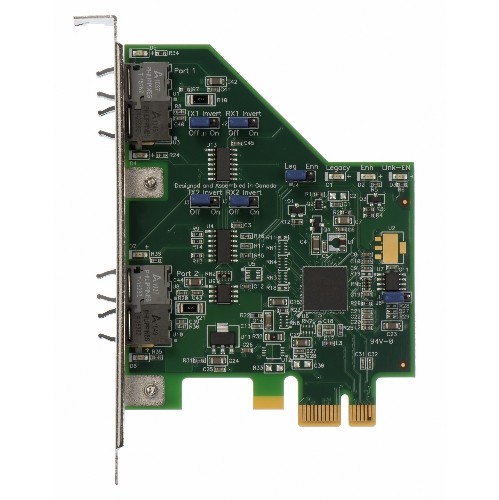


Why precise alignment matters for low-loss fibre connections
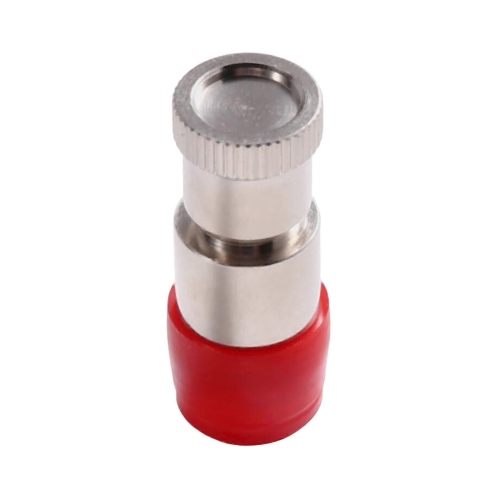
Fibre optic adapters are small mechanical couplers that join two fibre optic connectors, keeping their ends precisely aligned so light can pass from one cable to another with minimal signal loss. They are commonly used in patch panels, wall outlets, distribution boxes, and equipment racks, where separate cable runs need a secure, serviceable connection. Unlike a powered converter, a passive fibre optic adapter does not change an optical signal into an electrical signal, increase network speed, or make incompatible equipment work together. Its job is physical alignment. Inside many adapters, a precision sleeve holds the connectors’ ferrules—the rigid tips surrounding the fibre—in the correct position. Ceramic sleeves, often made from zirconia, provide accurate alignment, while metal sleeves are also used in some designs. The outer housing may be moulded plastic or metal, depending on the connector style and mounting requirements. That small assembly matters because even slight misalignment, contamination, or damage can reduce the light reaching the receiving equipment. Insertion loss describes the optical power lost through a connection and is measured in decibels; lower values are generally preferable. Many adapters specify insertion loss around 0.2 dB or less under stated test conditions, though performance in a finished connection also depends on the connectors, their cleanliness, and the quality of the cable termination. Return loss describes light reflected back towards the source, with a higher return-loss value indicating less reflection. These characteristics make adapters useful to network installers, telecommunications technicians, IT teams, and experienced home-networking users managing optical cabling. In an office cabinet, an adapter can provide the fixed joining point between permanent building cabling and a removable patch cord. At a residential fibre termination point, it can support a neatly arranged connection without requiring the installed cable to be replaced whenever the patch cord changes. The appropriate choice depends less on the adapter’s size or appearance than on the connectors, fibre type, and mounting location it must accommodate.
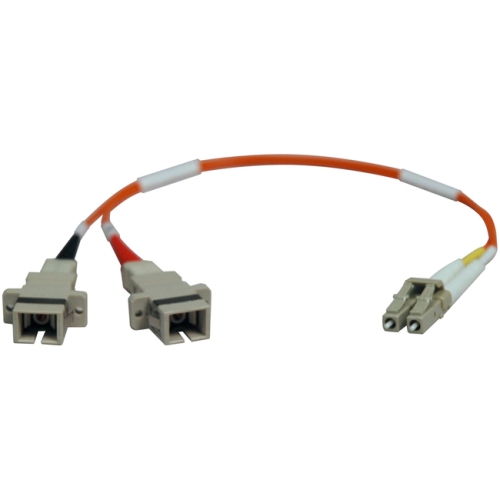
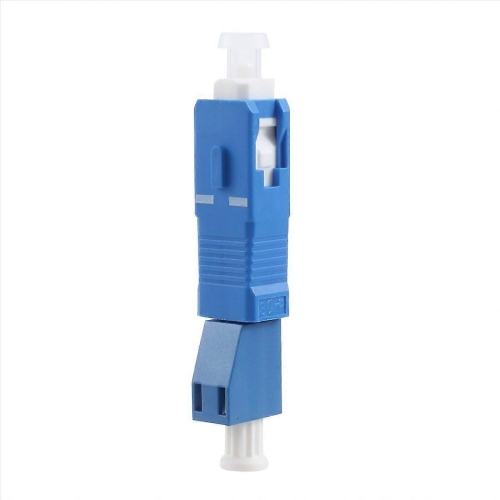
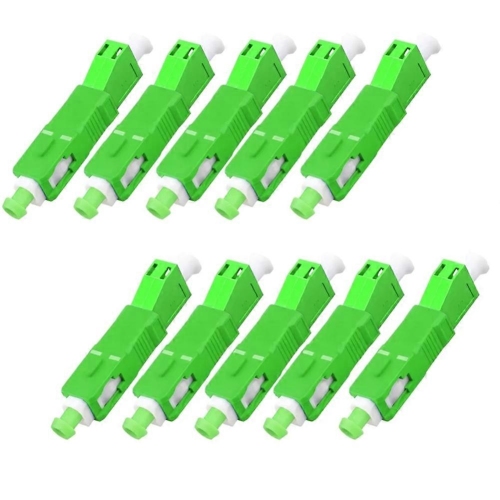
Connector format is one of the most important distinctions among fibre optic adapters. SC adapters accept the familiar square, push-pull connector often found in telecommunications cabling and building distribution points. LC adapters accept a smaller, latched connector commonly used where many connections must fit into limited panel space. ST adapters use a bayonet-style locking connection, while FC adapters accommodate threaded connectors that fasten into place. An SC-to-SC or LC-to-LC adapter joins matching connector formats; a hybrid adapter, such as an SC-to-LC design, joins different formats when its internal construction supports the required connection. Hybrid does not mean universal: the fibre characteristics and connector polish still need to be compatible. For the cable-end components that fit into these couplers, fibre optic connectors provide the related connection hardware. Single-mode and multimode applications also require attention to the adapter’s stated suitability. OS2 identifies a common single-mode fibre category, while OM1 through OM5 identify multimode categories; these are cable classifications rather than speed ratings for the adapter itself. A passive coupler cannot convert single-mode fibre into multimode fibre or resolve a mismatch between connected optical devices. Polish type is equally important. APC connectors have an angled end face designed to reduce back reflection, while UPC connectors use a different end-face geometry. APC and UPC connectors should not be mated to each other, even if their housings appear to fit, because the mismatch can cause excessive loss, reflection, or damage. Green commonly identifies APC connections, and blue commonly identifies single-mode UPC connections, but colour alone is not a substitute for checking specifications. Simplex adapters accommodate one fibre connection. Duplex adapters hold two connections together, often supporting separate transmit and receive paths, while quad arrangements group four connections into a compact assembly. Duplex and higher-density layouts also need consistent fibre routing so each transmit path reaches the intended receive path. Keeping connector format, polish, and fibre requirements aligned helps preserve the performance of the complete optical link.
Physical fit becomes especially noticeable when an adapter is installed beside a full row of existing connections. Panel cut-out dimensions, flange shape, retaining clips, screw positions, and space behind the panel can all determine whether it sits securely without crowding adjacent ports. An adapter described by connector type alone may not have the same mounting arrangement as another adapter accepting that connector. Flanged housings can provide screw-mounting points, while other designs use clips for panel retention. Inline couplers suit cable-to-cable joining where a panel mount is not needed, although the joined cables still require support rather than being left to pull against the connection. In a compact cabinet, accessible latches and enough room for fingers or appropriate servicing tools make routine changes less awkward. The cable also needs a gentle route into and away from the adapter, respecting its specified minimum bend radius instead of being sharply folded against a door or rack rail. Durability comes from a combination of precise internal alignment, a sound housing, secure retention, and handling suited to repeated connection cycles. Published mating-cycle ratings can help distinguish designs intended for frequent patching from those used mainly for fixed connections. Dust caps help protect unused ports, but they do not guarantee that an optical surface is clean. Suitable fibre inspection and cleaning equipment is important because particles too small to see easily can interrupt the light path or scratch a connector end face. Household cloths, fingers, and improvised cleaning materials can leave residue or damage delicate surfaces. Inspection should use equipment intended for fibre work, and an active fibre connection should never be viewed directly because its light may be invisible. Clear port labels, orderly cable routing, and protected spare connections make later maintenance more straightforward, whether the installation serves a small business, a shared building, or a home equipment cabinet. A well-matched fibre optic adapter provides a dependable joining point while leaving the surrounding cabling organized, accessible, and ready for routine servicing.
Top selling and popular products
-
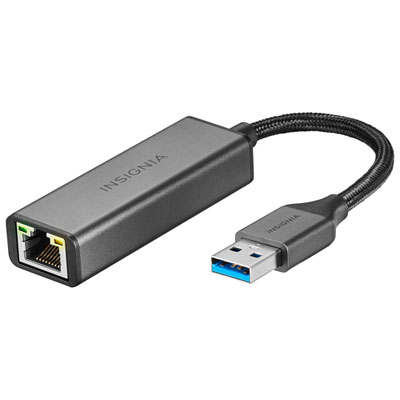 Your price for this item is $39.99
-
 Your price for this item is $19.99
-
 Your price for this item is $88.68
-
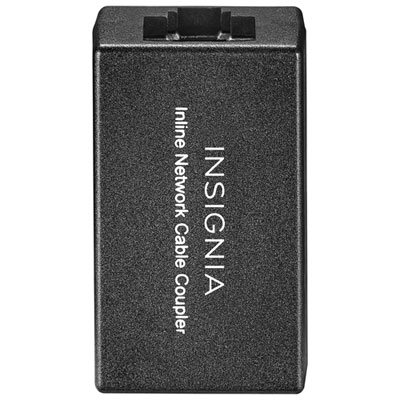 Your price for this item is $14.99
-
 Your price for this item is $108.68
-
 Your price for this item is $40.99
-
 Your price for this item is $65.32
-
 Your price for this item is $78.49
Discover more categories related to Fiber Optic Adapters
Top Collections:
Pokemon Centers, Kindle Devices, Best Cameras for Sports Photography, Pokémon 30th Celebration Cards, Apple iPhones 16, Canon G7X Cameras, iPhone 15 Apple, Flip Phones, Samsung Galaxy Phones, Alarm Clock
Some products may be subject to Environmental Handling Fees
(EHF) depending on your province.
Learn more about EHFs.