Acacia Wood Decking Tiles
Transform your outdoor living spaces with Acacia Wood Decking Tiles, a stylish and versatile solution for patios, balconies, and garden pathways. These tiles offer an easy way to refresh your exterior areas, providing a natural look that complements any décor. Ideal for both small and large spaces, Acacia Wood Decking Tiles make it simple to create a warm, inviting atmosphere for relaxing or entertaining outdoors. Explore a range of options to find the perfect fit for your next project.
Sort
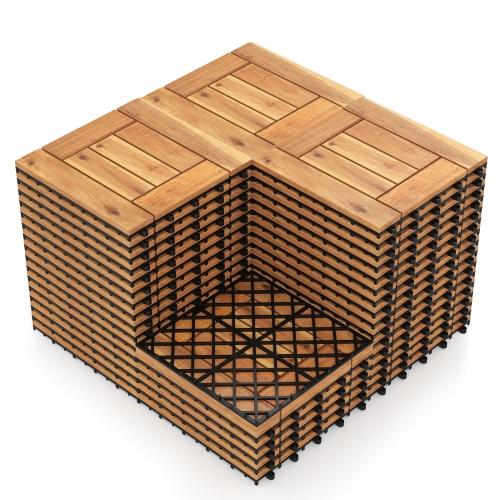
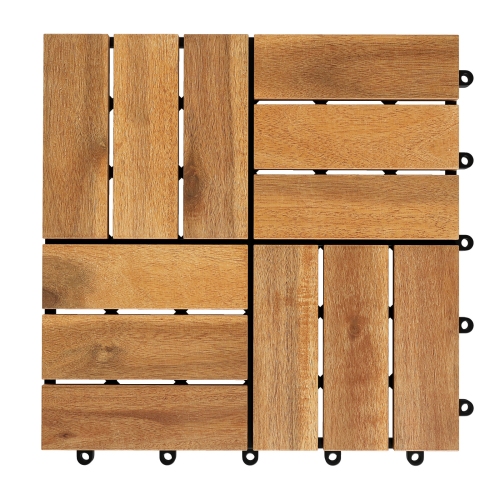
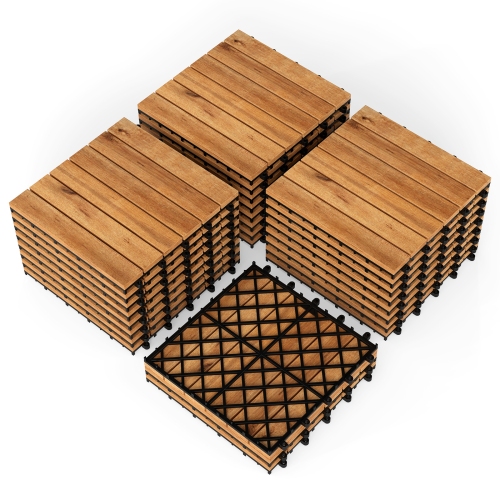
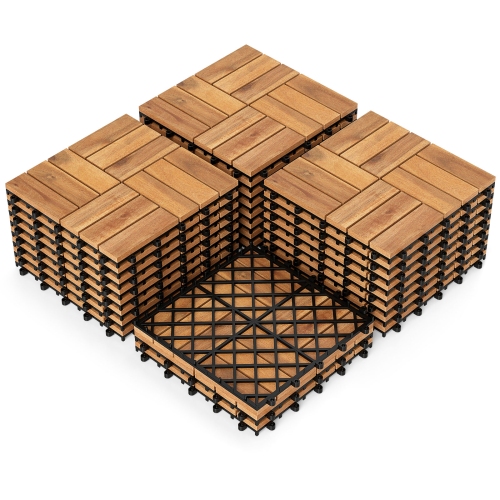
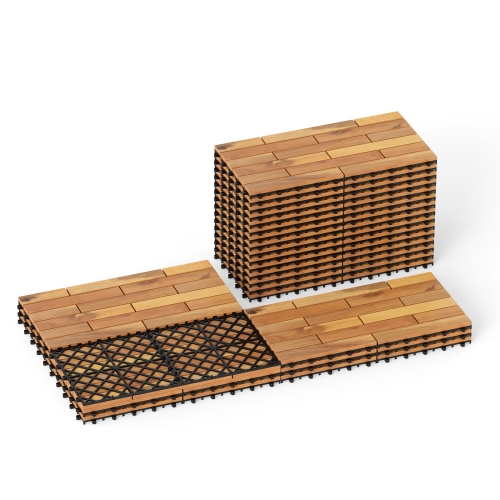
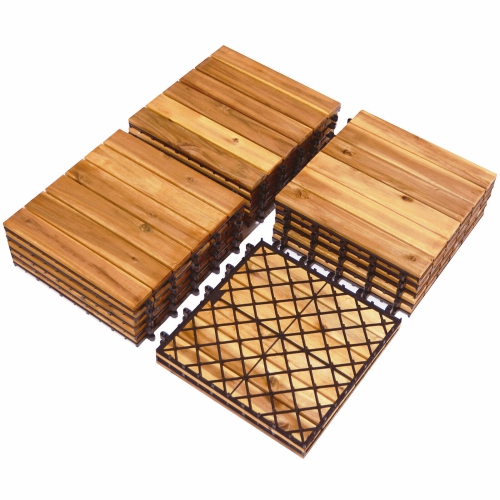
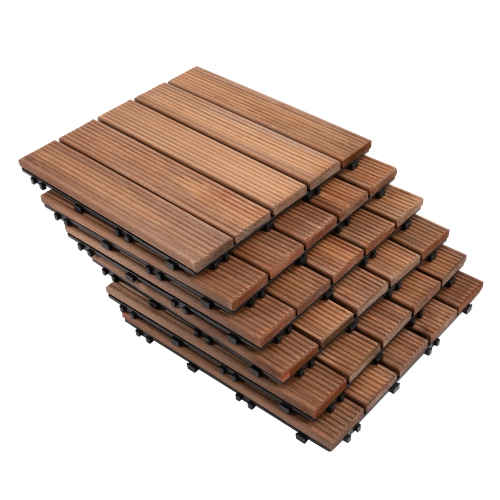

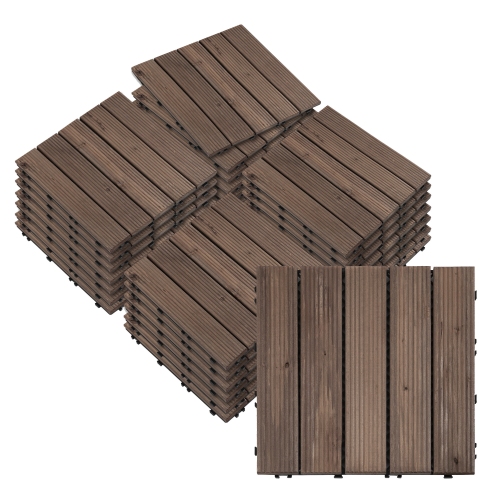
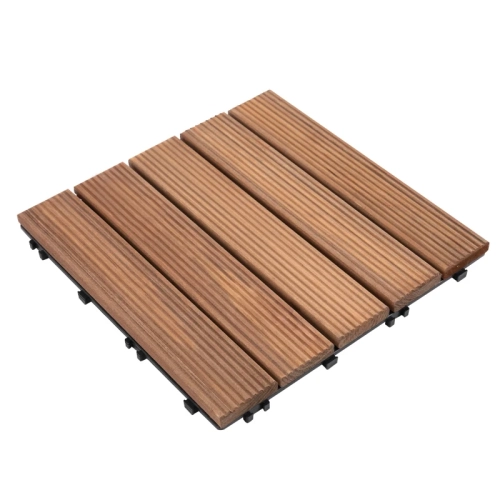
Real wood character without building a new deck
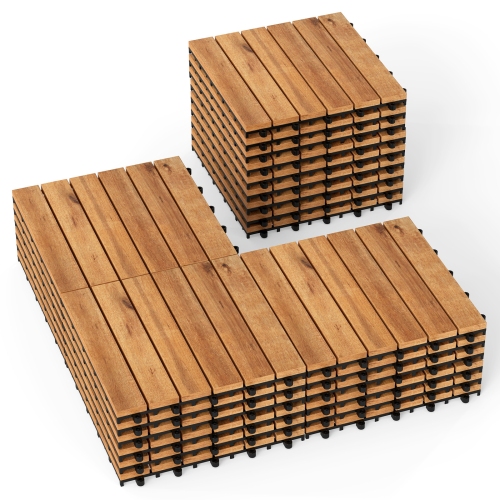
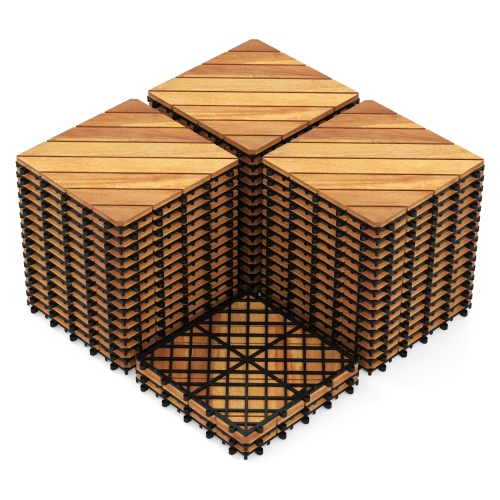
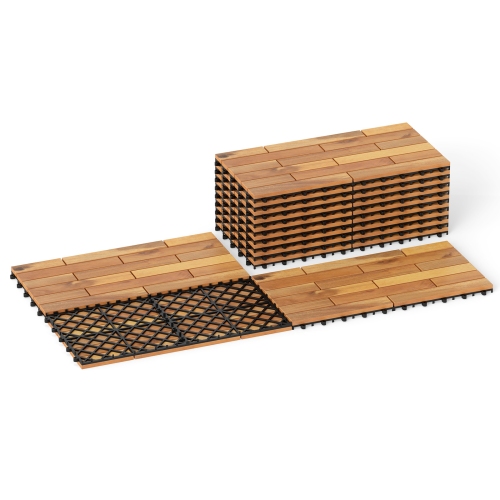
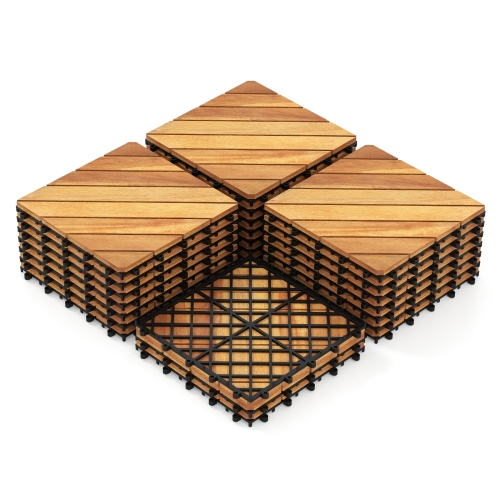
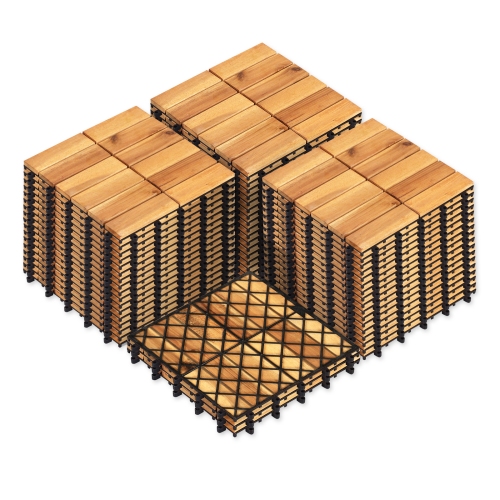
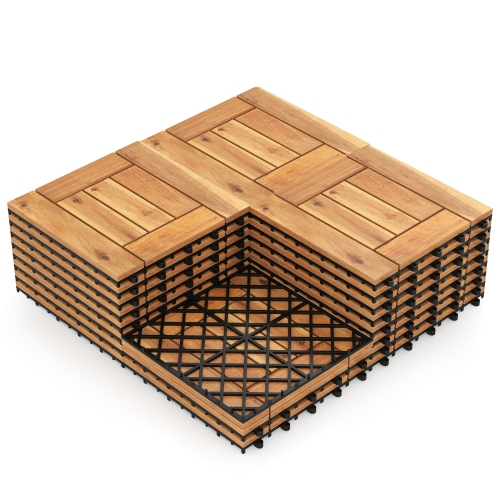
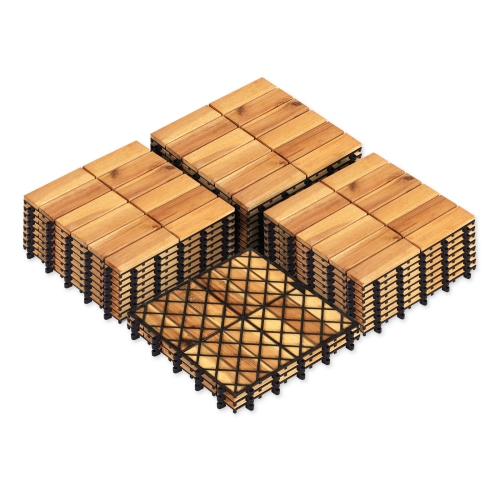
Acacia wood decking tiles are modular flooring pieces that bring the grain, colour, and texture of hardwood to patios, balconies, and other suitable outdoor living spaces. Typically made with acacia slats attached to a raised plastic base, they form a finished walking surface over an existing firm, level foundation. Many designs have interlocking connectors that join neighbouring tiles by hand, making them a practical option for refreshing a concrete balcony or a plain paved seating area without building a new deck. Acacia is a dense hardwood valued for its distinctive grain and natural resistance to wear. Its tones can range from golden brown to deeper reddish brown, with variations between slats giving the finished floor a less uniform appearance than printed wood-look materials. The surface finish also influences the result: an oiled surface may highlight grain and colour, while other coatings can create a different sheen or feel. Natural durability does not make the wood waterproof or maintenance-free, so the quality of the construction, the finish, and the conditions beneath the tiles all matter. For a compact apartment balcony, a wood tile floor can visually connect a small table, two chairs, and a few planters into a comfortable sitting area. Across a larger patio, the same modular format can help define a dining space without covering the entire paved surface. Slat direction offers another design choice, with compatible tiles sometimes allowing a continuous linear layout or an alternating pattern. Shoppers comparing connection styles can explore Interlocking Acacia Deck Tiles for this type of modular flooring. Beyond appearance, the appeal lies in a relatively approachable installation and the possibility of lifting individual sections for access or cleaning, where the connector design permits. That flexibility can suit homeowners planning a modest patio refresh and renters considering a removable floor covering, provided the property rules allow it.
A successful fit starts with the surface underneath the acacia wood decking tiles. Concrete, suitable paving, or a structurally sound existing deck may provide an appropriate base, but the tile manufacturer's requirements should determine which surfaces are acceptable. Loose gravel, bare soil, and grass generally do not offer the firm, even support that snap-together bases need unless the system is specifically designed for them. Tiles follow the foundation rather than correcting it: dips can collect water, high spots can cause rocking, and unsupported corners can place strain on the connectors. A raised grid base allows space for air movement and water to pass beneath the wood, but it does not create drainage where none exists or replace a waterproof membrane. Balcony drains, access points, and the original drainage slope need to remain functional. Before choosing a tile thickness, measure the clearance under outward-opening doors and consider the added height at thresholds. A door that clears bare concrete may catch once both the wood slats and their backing are in place. Measuring the usable area also helps establish coverage, although the stated coverage per package is more useful than assuming every tile has the same dimensions. Narrow edges, angled walls, railing posts, and changes in direction can increase the amount of cutting and leave offcuts that cannot be used elsewhere. Many interlocking tiles connect without tools across an open area, but fitting the perimeter may require a suitable saw and careful attention to the backing, fasteners, and connector positions. Compatible edge pieces, where supported by the design, can give exposed boundaries a neater finish and reduce abrupt transitions. For everyday use, consider how furniture sits on the slats and how chairs move across the joints. Broad, smooth furniture feet are less likely to concentrate pressure than narrow metal legs, while suitable protective pads can help limit scratches. Heavy planters, storage furniture, and other substantial loads must remain within both the tile system's limits and the structural limits of the underlying balcony or deck.
Care is part of keeping an acacia deck tile floor comfortable and attractive over time. Grit carried under shoes or caught beneath chair feet can abrade the finish, so regular sweeping is a useful first step. For routine cleaning, mild soap and water may be suitable when permitted by the care instructions; rinse away residue without allowing water to pool underneath. Harsh cleaners, stiff wire brushes, and high-pressure washing can damage wood fibres or remove a protective finish, making a gentle approach preferable unless the manufacturer specifies otherwise. Leaves, soil, and other debris can accumulate between slats or beneath the base, particularly beside planters. If the tiles are designed to be lifted, occasional access underneath helps keep drainage paths clear. Planter feet or suitable supports can also reduce prolonged damp contact, though they should distribute weight without damaging the slats. Acacia's natural oils contribute to its resistance to moisture and decay, but repeated wetting, sunlight, and exposure can still lead to fading, surface checking, or changes in texture. An unfinished or weathered surface may gradually develop a silvery tone; maintaining a richer brown colour usually requires a compatible exterior wood oil or protective finish. Follow the tile manufacturer's guidance on preparation, application, and drying time rather than treating every coating as interchangeable. The refinishing interval depends on exposure and use, so inspecting the surface is more useful than relying on a fixed schedule alone. In areas subject to freezing conditions, trapped moisture and ice deserve particular attention, and some tile systems may require lifting or sheltered storage. Wet wood can also be slippery, which makes verified suitability important for poolside areas or other frequently wet locations. These tiles are a surface covering, not a structural repair, and should never conceal damaged boards or an unstable foundation. With an appropriate base, clear drainage, and care suited to the finish, acacia wood decking tiles offer a tactile hardwood surface for outdoor meals, quiet reading, and everyday use of a patio or balcony.
Top selling and popular products
-
 Your price for this item is $699.99
-
 Your price for this item is $339.99
-
 Your price for this item is $899
-
 Your price for this item is $269.99
-
 Your price for this item is $79.99
-
 Your price for this item is $103.99
-
 Your price for this item is $508.99
-
 Your price for this item is $604.99
Discover more categories related to Acacia Wood Decking Tiles

Top Collections:
Best Black Friday Deals This Year, Best Black Friday Deals On Electronics, Kindle Devices, Dyson Airwrap, Best Cameras for Sports Photography, Best Black Friday Deals On Apple Products, PS5 Pro Consoles, Portable Snow Blowers, Canon G7X Cameras, Pokémon 30th Celebration Cards
Some products may be subject to Environmental Handling Fees
(EHF) depending on your province.
Learn more about EHFs.