Acacia Wood Patio Tiles
Acacia Wood Patio Tiles offer a stylish and versatile solution for enhancing outdoor spaces. Perfect for patios, balconies, decks, and poolside areas, these tiles bring a natural look that complements a variety of exterior designs. With their easy-to-install format, Acacia Wood Patio Tiles make it simple to refresh your outdoor living area and create an inviting atmosphere for relaxing or entertaining. Explore a wide selection to find the ideal match for your home’s aesthetic and your unique needs.
Sort
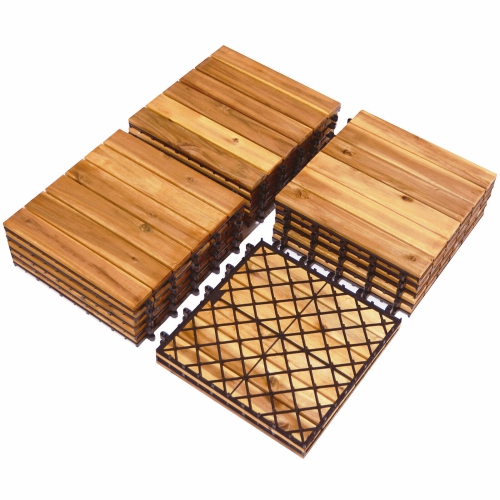
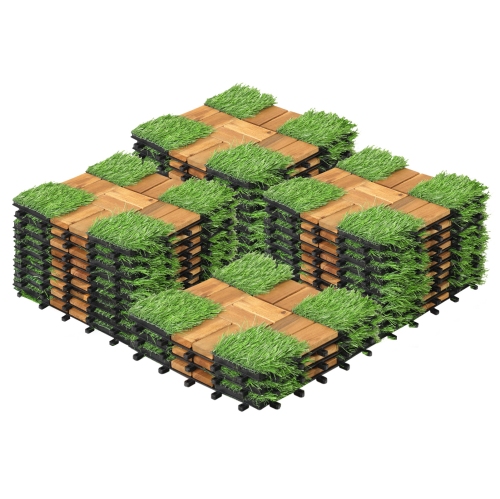
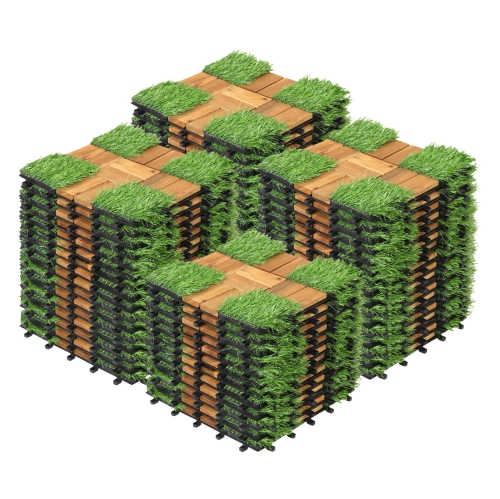
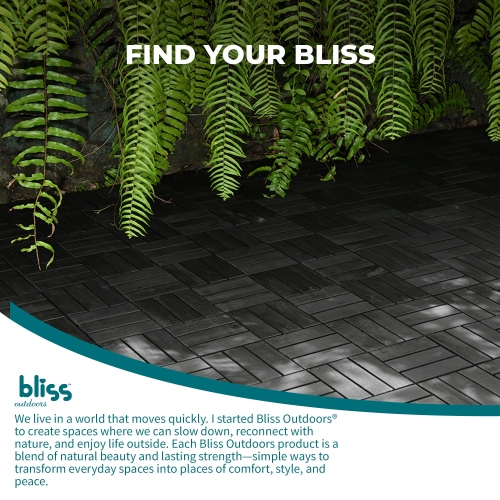
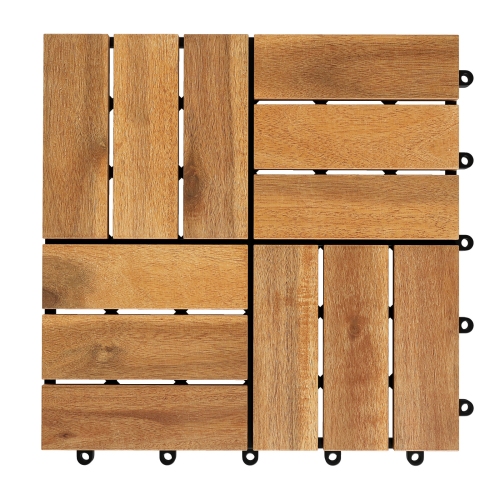
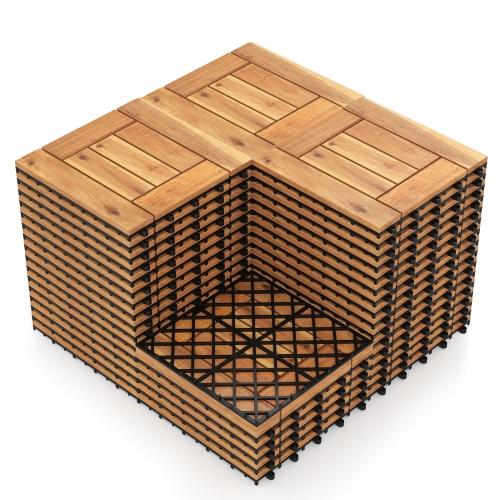
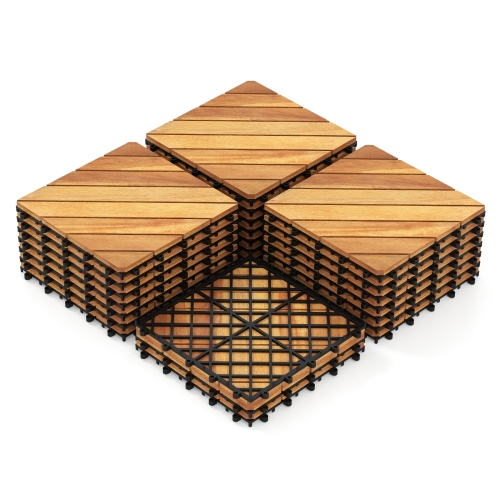
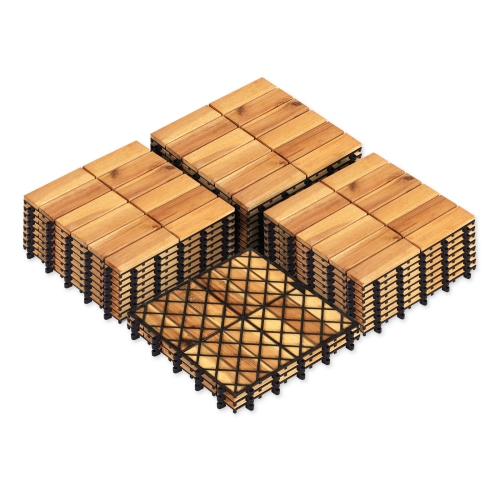
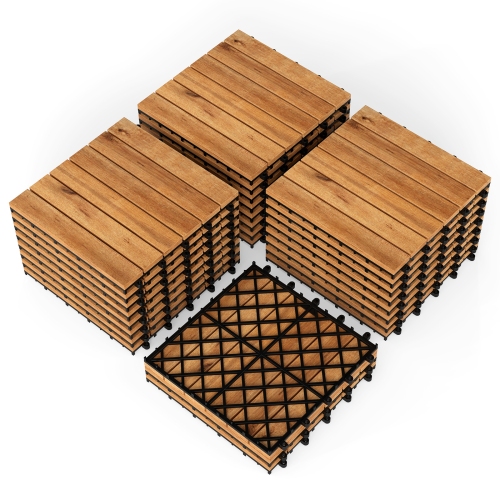
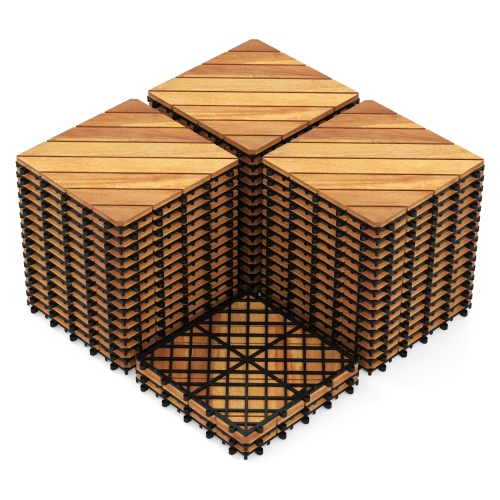
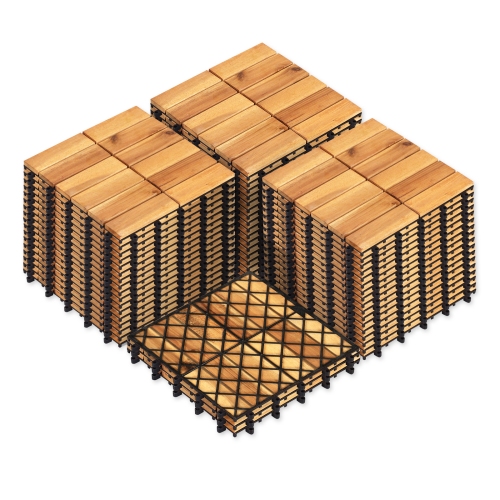
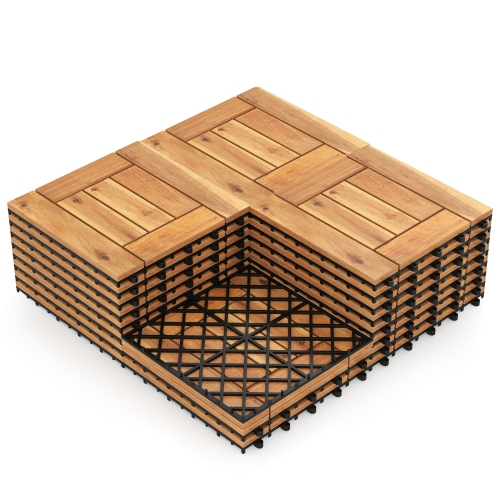
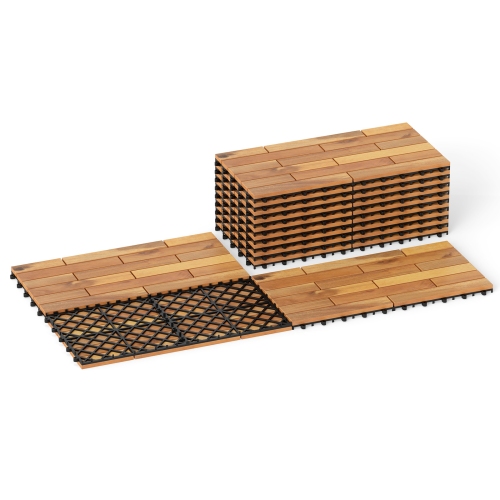
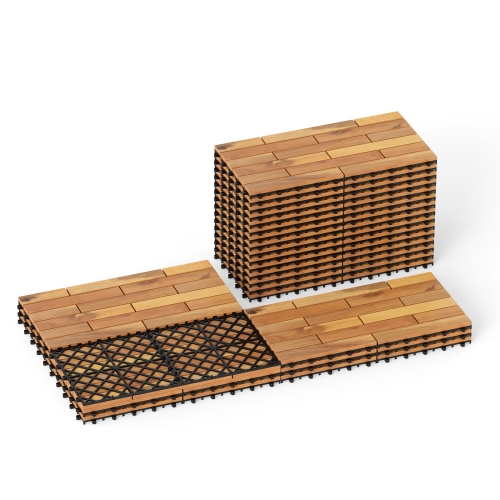
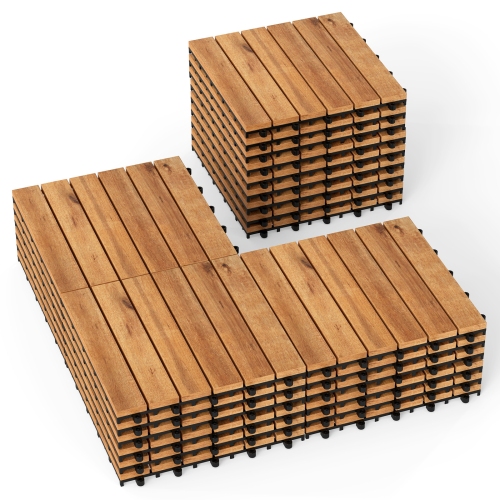
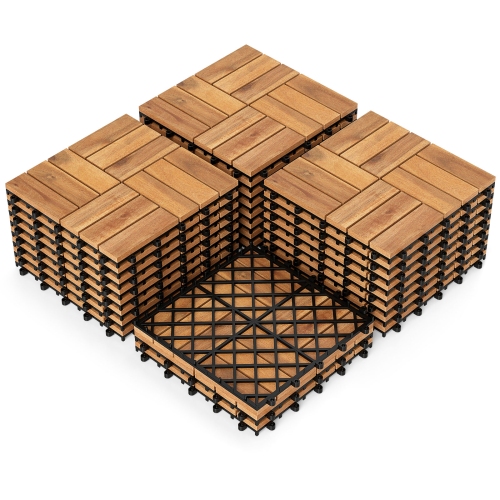
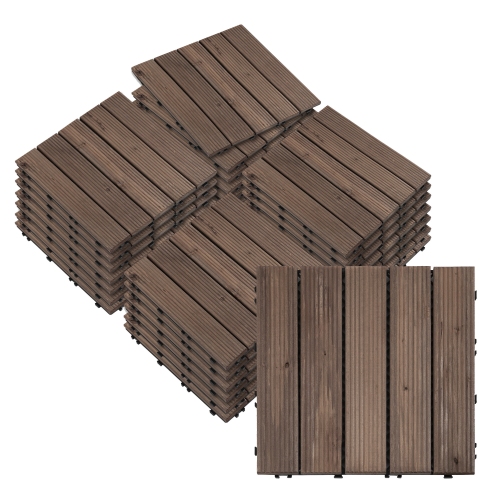
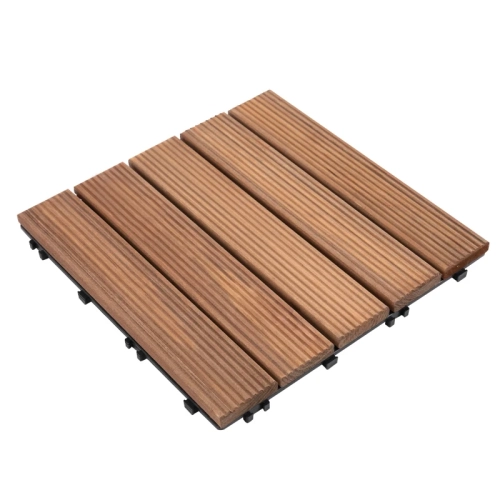
Real wood texture with a layout that clicks together
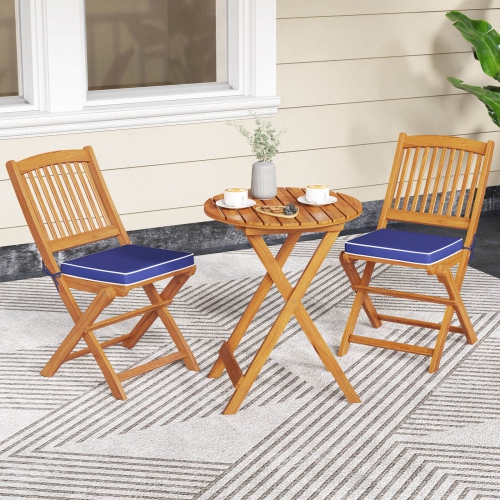
Acacia wood patio tiles are modular hardwood flooring pieces designed to create a finished walking surface on patios, balconies, and other suitable outdoor spaces. Many feature wooden slats attached to an interlocking backing, allowing neighbouring tiles to connect without nails or adhesive. This construction can make them a practical option for refreshing a plain concrete balcony or covering an older, structurally sound deck without replacing the underlying surface. Acacia is valued for its distinctive grain, natural colour variation, and dense wood structure. Depending on the wood and finish, its appearance can range from honey brown and golden tan to deeper reddish or chocolate tones, sometimes within the same tile. Those differences give a tiled area a more varied, natural appearance than a uniformly coloured floor. Slat direction also affects the overall look: aligned rows create a continuous pattern, while alternating tile orientations can produce a checkerboard effect when the connector design allows it. The backing is often plastic, with spaces between the slats that allow water to pass through to the surface below. That open construction supports drainage, but it does not make the flooring waterproof or eliminate the need for a properly draining base. Tile quality depends on more than the wood species alone; slat thickness, fastening, backing strength, connector design, and the suitability of the finish all influence performance. A compact balcony with a bistro set has different demands from a larger patio where dining chairs move across the floor every day. For either setting, these tiles offer a way to introduce the texture of real wood while retaining a modular layout. Their appeal is especially clear where a small seating area needs a more defined footprint, or where the appearance of the existing surface does not suit the furniture and décor around it.
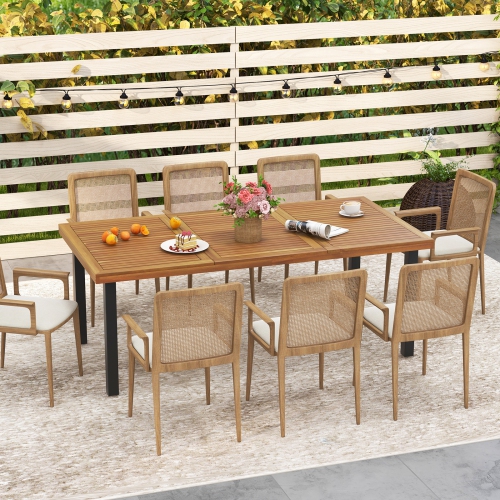
The fit of acacia wood patio tiles depends on the surface beneath them as much as the dimensions of the space. Interlocking designs generally need a firm, stable, reasonably level base, rather than loose soil, grass, or an uneven bed of gravel. They cannot correct structural damage, significant dips, or drainage problems, and covering a deteriorating deck does not make it safe. On balconies and rooftop terraces, building rules, permitted loads, and the protection of any waterproof membrane are important considerations. A removable floor covering may suit some rental spaces, but permission and surface compatibility still matter. The combined height of the wood and backing also needs to work with door clearance, thresholds, drains, and access panels. A door that opens freely over bare concrete may catch once tiles are added, while a raised perimeter can create an awkward edge along a walking route. Compatible edge pieces, where offered for the tile system, can provide a neater transition, although the finished height still deserves attention. Coverage measurements are most useful when considered alongside the actual shape of the area: narrow balconies, angled corners, railing posts, and recesses can leave gaps or require cut pieces. Although many tiles snap together by hand, a fitted perimeter may require tools and a backing design that can be trimmed as directed by the manufacturer. Tiles from different systems are not necessarily compatible, even when their stated dimensions match. Furniture placement adds another layer of planning. Small chair feet need stable contact rather than landing in wide slat gaps, and furniture pads suited to outdoor use can help limit scuffs. A dining arrangement paired with Acacia Wood Patio Dining Tables can carry similar wood tones across the space without requiring every piece to match exactly. Leaving enough room to pull out chairs and walk around the table helps the finished area feel comfortable rather than crowded. For a lounge setting, a consistent tile pattern beneath the seating can create a similar sense of definition without adding walls or permanent fixtures.
Acacia is a durable hardwood, but patio tiles made from it still need care appropriate to outdoor wood. Repeated wetting, strong sunlight, and prolonged dampness can affect the colour, surface finish, and movement of the slats. Wood naturally expands and contracts as its moisture content changes, so some variation over time is expected. An existing factory finish should not be assumed to provide permanent protection, and care requirements vary between unfinished, oiled, and coated surfaces. Where the manufacturer recommends a maintenance oil or another treatment, compatibility matters: an unsuitable coating can change the appearance or interfere with later upkeep. Without a maintained protective finish, exposed acacia may gradually develop a greyer tone. Some people appreciate that weathered appearance, while others prefer to preserve the warmer original colour. Routine care usually centres on removing grit, leaves, and spilled food, then cleaning with a mild product approved for the finish. Aggressive scrubbing, harsh cleaners, or pressure washing can damage wood fibres or coatings. The spaces below the tiles also deserve attention because trapped debris can obstruct water flow and hold moisture against the base. Liftable sections can make that area easier to inspect, provided the connectors are handled as intended. Planters with suitable feet or stands can help reduce persistent wet patches, while an outdoor rug should be compatible with both the finish and drainage needs of the tiled surface. Wet wood, accumulated residue, and ice can all affect footing; textured slats should not be treated as a guarantee against slipping. In areas exposed to snow and freezing conditions, the manufacturer's recommendations for winter exposure, removal, and storage are particularly relevant. Stored tiles should be clean and dry, and connectors should not be forced apart when brittle from cold. With a suitable base and realistic maintenance expectations, acacia wood patio tiles can bring a warm, tactile finish to an outdoor dining corner, a reading nook, or a balcony arranged around everyday use.
Top selling and popular products
-
 Your price for this item is $699.99
-
 Your price for this item is $339.99
-
 Your price for this item is $899
-
 Your price for this item is $269.99
-
 Your price for this item is $79.99
-
 Your price for this item is $103.99
-
 Your price for this item is $508.99
-
 Your price for this item is $604.99
Discover more categories related to Acacia Wood Patio Tiles

Top Collections:
Best Black Friday Deals This Year, Best Black Friday Deals On Electronics, Kindle Devices, Dyson Airwrap, Best Cameras for Sports Photography, Best Black Friday Deals On Apple Products, PS5 Pro Consoles, Portable Snow Blowers, Canon G7X Cameras, Pokémon 30th Celebration Cards
Some products may be subject to Environmental Handling Fees
(EHF) depending on your province.
Learn more about EHFs.