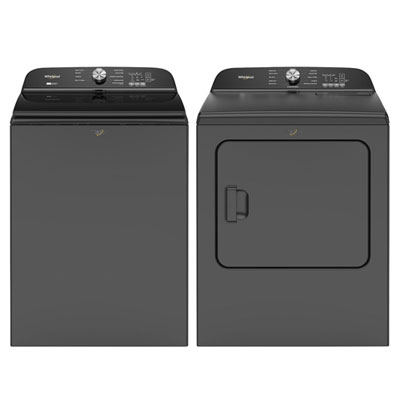
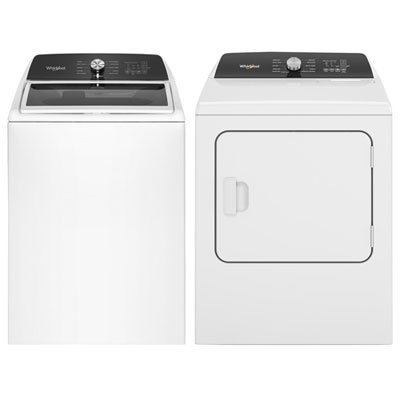
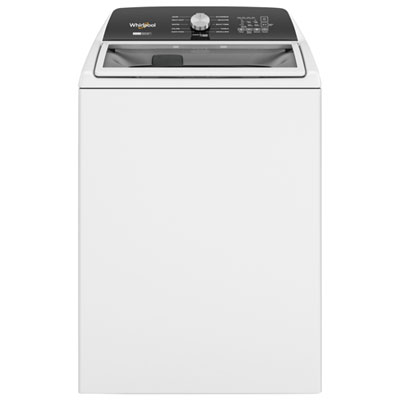
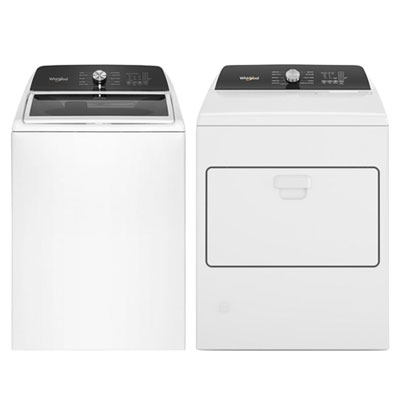
Whirlpool Top Load Washing Machines and Prices

Compare Whirlpool top load washing machines and prices to find a washer that suits your budget and laundry needs. Review each model’s capacity, dimensions, and wash settings to narrow your choices and find the right fit for your laundry space and routine.
Sort

Why washer capacity is only part of the story

Top load washing machines offer a familiar approach to everyday laundry, with a lid that opens from above and a wash basket accessed while standing. They suit households that prefer loading from the top rather than reaching into a front-opening drum, whether the regular wash includes school clothes, work shirts, bath towels, or bedding. Within this category, the wash action is an important distinction. An agitator uses a raised centre post to move clothing through the water, while an impeller uses a low-profile disc at the bottom of the basket. An impeller design leaves more unobstructed space inside the basket, although usable capacity still depends on the washer’s specifications and the load being washed. Some designs have a removable agitator, allowing the basket configuration to change for different loads when used as directed. Capacity is usually expressed in cubic feet, but the number alone does not tell the whole story: basket depth, the size of the opening, and the bulk of the laundry all affect how practical a machine feels. A household washing several small loads may value straightforward controls and flexible cycle settings more than the largest possible basket. A family handling frequent towel loads may prefer extra room, provided the laundry can move freely rather than being packed down. For comforters and other bulky textiles, both the washer’s capacity guidance and the fabric care label matter; fitting through the opening does not necessarily mean an item can be washed properly. Deep baskets can also make small garments harder to retrieve from the bottom, so comfortable reach deserves as much attention as overall size. Cycle choices round out the everyday experience. Normal, delicate, bulky-item, and heavy-duty settings serve different fabric and soil needs, where offered, while options such as an extra rinse or adjustable soil level can help tailor a load. Features such as a built-in faucet, a pretreating area, or connected controls are design-dependent conveniences rather than standard equipment across all top load washers.

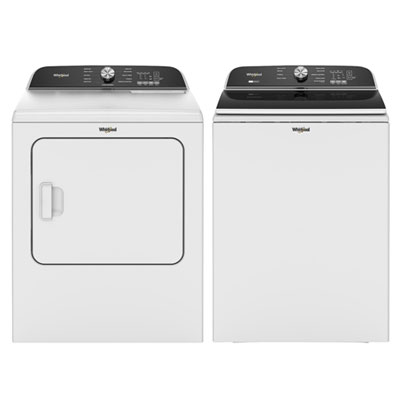
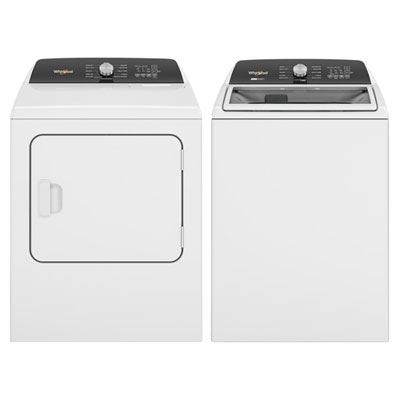
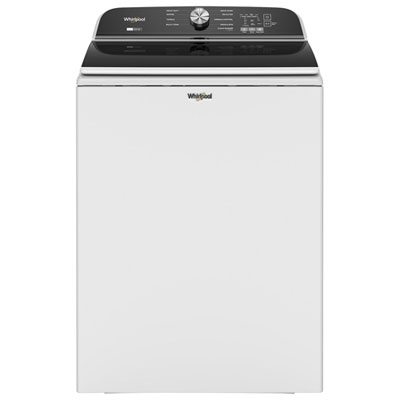
The fit of a top load washer involves more than its width. The lid needs enough clearance to open fully, which can affect the placement of shelves, cupboards, and hanging rails above the machine. Unlike a front-opening washer, a top load design cannot sit beneath a fixed countertop that blocks access to the lid. Its position beside a dryer also influences how easily wet laundry can be transferred without carrying it across the room. In a narrow laundry area, room to stand comfortably in front of the controls and lift out a basket of towels can make a noticeable difference. Overall height, depth, hose space, and the clearance specified by the manufacturer all belong in the fit assessment, along with the delivery route through doorways, stairs, and tight corners. Installation requirements include suitable water connections, drainage, and an electrical supply that matches the appliance specifications. A firm, level floor and correctly adjusted feet help support stable operation, while an uneven load can still cause vibration even when the installation is sound. An upper-floor laundry room may need particular attention to floor support and vibration control. The laundry area also benefits from accessible shut-off valves and enough space to inspect the hoses without moving surrounding furniture. Appearance matters in a room that shares space with storage, a bathroom, or a kitchen. With their neutral finish, Whirlpool White Washing Machines can complement white cabinetry or a coordinating dryer. Inside the appliance, wash baskets may use stainless steel or a coated material, depending on the design. Stainless steel is valued for its resistance to corrosion, while any basket surface benefits from being kept free of sharp objects and trapped debris. Smooth edges, an accessible detergent dispenser, and clearly marked controls are practical details that can be just as useful as the exterior finish. A large display is not essential for every household; legible labels, easy-to-operate buttons, and a layout that makes sense to everyone using the machine can be more important.

Day-to-day results depend on matching the load, detergent, and cycle rather than relying on a single setting for everything. Sorting by colour, fabric weight, and care requirements helps keep lightweight shirts from being washed as though they were sturdy towels. Pockets need checking for coins, screws, tissues, and other loose objects that can mark clothing or become trapped in the washer. Zips and hooks should be secured as directed by the garment label, and small or delicate pieces may benefit from a suitable mesh laundry bag. Loading technique also matters. Clothing should have space to move, with items distributed according to the washer’s directions rather than wound tightly around an agitator or pushed into a dense bundle. A single absorbent item can become heavy when wet and contribute to an unbalanced load, especially during the spin cycle. Detergent deserves the same care: high-efficiency machines require detergent marked HE, and the amount should reflect the detergent label, load size, soil level, and water conditions. More detergent does not automatically mean cleaner clothing; excess suds and residue can interfere with washing and rinsing. Pretreating a stained cuff or a splash on a tea towel before washing may be more useful than choosing a more intensive cycle for the entire load. Routine care supports dependable use over time. That includes cleaning the dispensers, wiping accessible surfaces, and running the washer-cleaning cycle at the interval specified in the manual, using only suitable cleaning products. After laundry is removed, allowing the basket to dry as directed can help limit lingering odours, while keeping laundry products safely stored is especially important in homes with children or pets. Hoses, connections, and the area beneath the machine also warrant periodic checks for moisture or wear. For busy households, durability is not only about the basket material or cabinet construction; correct installation, sensible loading, prompt attention to leaks, and consistent maintenance all contribute to a washer that remains useful through repeated loads. The most practical combination is comfortable access, sufficient capacity, appropriate wash settings, and care requirements that fit the household’s routine.

FAQ

Some products may be subject to Environmental Handling Fees (EHF) depending on your province. Learn more about EHFs.