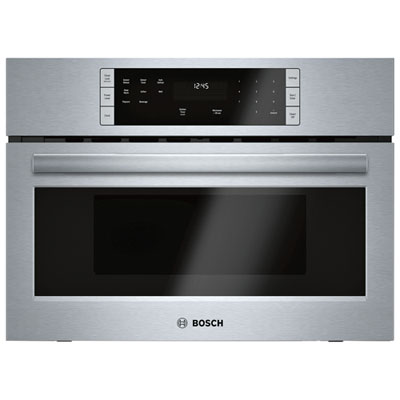
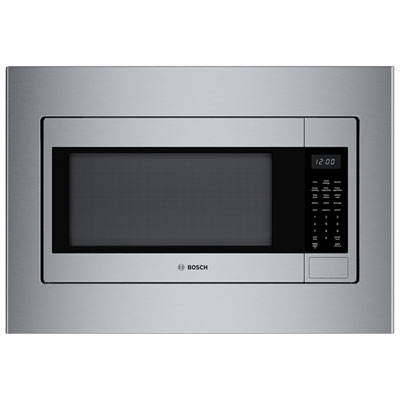
Bosch Built-in Combination Microwave Ovens

Shop Bosch built-in combination microwave ovens with your kitchen layout and cooking needs in mind. Compare available models by dimensions, capacity and cooking functions, and check cabinet cutout measurements and installation requirements to help you choose an appliance that fits your space.
Sort

Two cooking spaces without sacrificing your counter space

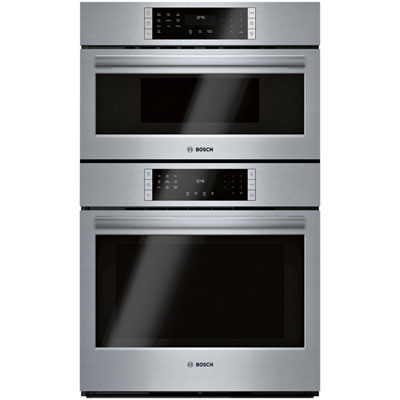
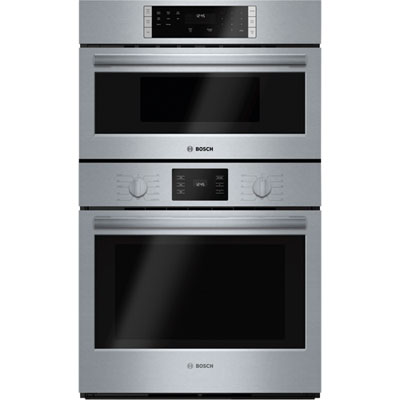
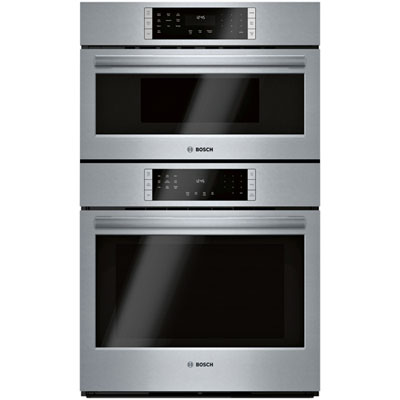
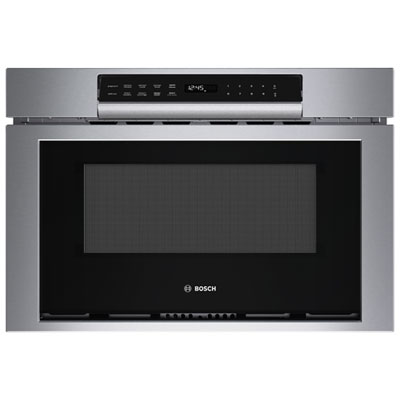
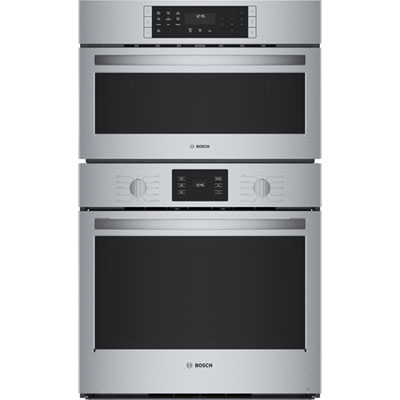
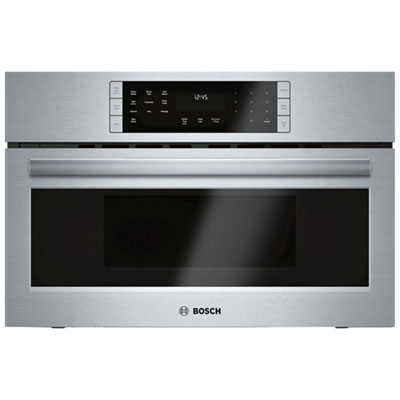
Built-in combination microwave ovens pair an upper microwave or speed oven with a separate, full-size lower wall oven in a vertically stacked appliance. A common configuration uses a 30-inch-wide format with convection cooking in the lower oven, while the upper cavity’s capabilities vary by design. Some upper ovens handle microwave reheating and defrosting; others also offer convection or combination cooking, which brings microwave heating together with another cooking method. This distinction matters because a combination wall oven is not simply a microwave with extra settings: it provides two separate cooking spaces within one built-in installation. The arrangement suits households that want everyday microwave convenience alongside room for baking, roasting, and preparing larger meals without dedicating counter space to a separate appliance. A casserole can bake below while vegetables heat above, or the lower oven can hold a tray of roasted potatoes while the upper cavity warms a sauce in an appropriate container. Where the upper oven supports convection cooking, it may also accommodate smaller baking tasks, subject to its capacity and the cookware requirements for that mode. The related category of Bosch Microwave Convection Ovens is worth distinguishing from a complete stacked appliance, since microwave and convection functions do not necessarily mean that a separate lower oven is included. For a combination unit, useful comparisons include the cooking methods available in each cavity, the usable interior dimensions, and how the controls manage the two spaces. A household that frequently reheats individual portions may place more value on straightforward microwave settings, while someone who bakes regularly may focus on lower-oven rack positions and convection options. The ability to accommodate familiar cookware matters just as much as the stated capacity. A wide roasting pan, a tall covered dish, and a favourite baking sheet each place different demands on the interior, so cavity dimensions provide practical context beyond a volume measurement alone.

The built-in format creates a fitted appearance, with the appliance face sitting within a planned wall of cabinetry rather than occupying a countertop or standing beneath a cooktop. That arrangement can work well in a kitchen renovation or as a replacement for an existing combination wall oven, but the fit depends on more than the nominal appliance width. A 30-inch designation describes a size category, not a universal cabinet opening. Required cutout width, height, and depth, cabinet support, electrical specifications, and ventilation clearances all need to match the installation requirements for the particular appliance. An existing opening may require alterations even when the replacement has the same stated width. Handles, trim, and open doors also affect how the unit fits into the room, especially near an island, a narrow walkway, or an adjoining cabinet door. Installation height deserves equal attention: the upper cavity should remain practical to reach, and the lower oven should allow hot cookware to be lifted out with a secure grip. A nearby heat-resistant landing area makes it easier to transfer a dish without carrying it across the kitchen. Qualified installation helps address the electrical connection and the support needed for a large built-in appliance. Materials and finishes influence both appearance and everyday upkeep. Stainless steel surfaces can coordinate with other kitchen appliances, while glass doors and control panels give the front a distinct mix of textures. Finish names alone do not establish resistance to fingerprints or scratches, so any stated surface treatment should be considered separately. Inside, cavity finishes and rack materials vary, affecting which cleaning methods and accessories are appropriate. Door construction, handle placement, readable controls, and the movement of racks are details that become noticeable during regular use. A layout that looks balanced within the cabinetry should also feel manageable when a heavy dish needs to move safely from an oven rack to the counter.

Everyday care helps preserve the finish and keeps cooking spaces ready for the next meal. Food splashes in an upper microwave cavity are generally easier to address before they dry onto the surface, using the cleaning method specified for its interior. Lower-oven spills need attention too, particularly around the door seal and areas where residue can interfere with a close fit. Cleaning features differ between cavities, and an automatic cleaning cycle intended for the lower oven should never be assumed to apply to the upper one. Racks, trays, and other accessories may also need to be removed before certain cleaning programs, according to the appliance instructions. Soft cloths and suitable cleaners help protect exterior surfaces; abrasive pads and unsuitable chemicals can mark finishes or damage printed controls. Cookware selection is especially important in an appliance that brings several cooking methods together. A dish suitable for microwave reheating is not necessarily suitable for convection heat, and an oven-safe metal pan is not automatically appropriate for a microwave setting. Combination modes can have their own restrictions, making the approved cookware and accessory guidance essential. Clear labelling and a consistent place for microwave-safe containers can make shared kitchen routines simpler. For households preparing several components of a meal, the separate cavities offer flexibility, but cooking results still depend on suitable dishes, rack placement, portion size, and the chosen setting. Convection can support air circulation around food, yet pans packed tightly together may limit that airflow. Practical routines also matter for durability: keeping vents unobstructed, avoiding excess weight on open doors, and using handles and racks as intended help prevent unnecessary strain. These appliances are particularly relevant to households that cook regularly, entertain, or want a microwave integrated into a coordinated wall-oven layout. Their appeal rests in that combination of a fitted installation and two useful cooking spaces, with the best match depending on the kitchen’s dimensions, the household’s cookware, and the meals prepared most often.

FAQ

Some products may be subject to Environmental Handling Fees (EHF) depending on your province. Learn more about EHFs.