Best Telephoto Lenses for Birding

Capture distant birds in striking detail with the best telephoto lenses for birding, ranked by user review ratings. Whether you’re photographing birds in flight or perched among the branches, the right lens can help bring your subject closer while keeping your distance. Compare focal lengths, autofocus features, image stabilization, and camera compatibility to find a lens that suits your bird photography adventures.

Read More

What to look for in telephoto lenses for birding

1. Focal Length and Reach

A focal length of 400mm or longer is a useful starting point for photographing small or distant birds. Telephoto zoom lenses offer flexible framing as birds move, while prime lenses provide a fixed focal length and may offer a wider maximum aperture.

2. Autofocus and Camera Compatibility

Choose a lens that fits your camera’s mount and supports its autofocus features, including bird-detection autofocus if available. Fast, accurate focus tracking helps keep birds sharp in flight, while a focus limiter can reduce time spent searching for focus.

3. Aperture and Image Stabilization

A wider maximum aperture lets in more light, helping you use fast shutter speeds at dawn or dusk. Image stabilization reduces blur from camera shake when shooting handheld, but fast shutter speeds are still needed to freeze a bird’s movement.

4. Weight and Weather Resistance

Consider how comfortably you can carry and hold the lens during long walks or extended viewing sessions. Weather-resistant construction adds protection against dust and moisture, while a tripod collar can help balance a heavy lens on a monopod or tripod.
Citrus catapult arrow
  1. 1

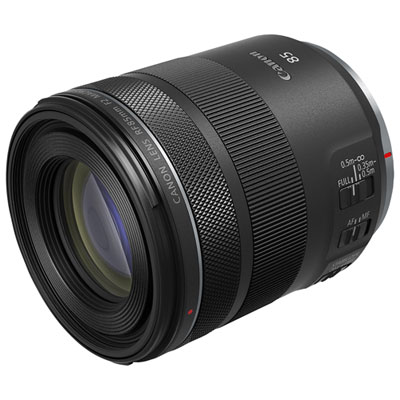
    Canon RF 85mm f/2 Macro IS STM Telephoto Lens

    About this product

    A versatile black telephoto lens offering f/2 aperture, image stabilization, and macro capabilities for stunning portraits.

    What customers like

    • Effective image stabilization
    • Excellent image and portrait quality
    • Impressive macro capabilities
    • Great value for the price
    • Lightweight and versatile design
    (185)
    $829.99
    SAVE $40
    Your price for this item is $829.99
  2. 2

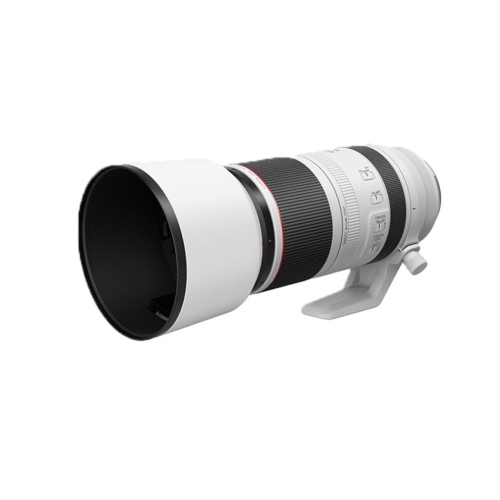
    CANON Rf100-500MM F4.5-7.1 L Is Usm Lens, Super-Telephoto Zoom Lens, Compatible With Eos R Series Mirrorless Cameras In White

    About this product

    A versatile super-telephoto zoom lens with image stabilization, ideal for sports, wildlife, and aviation photography.

    What customers like

    • Effective image stabilization
    • Versatile zoom range ideal for wildlife and sports
    • Exceptional sharpness and image quality
    • Lightweight and ergonomic design
    • Fast and accurate autofocus
    (210)
    $3,898.98 Your price for this item is $3898.98
  3. 3

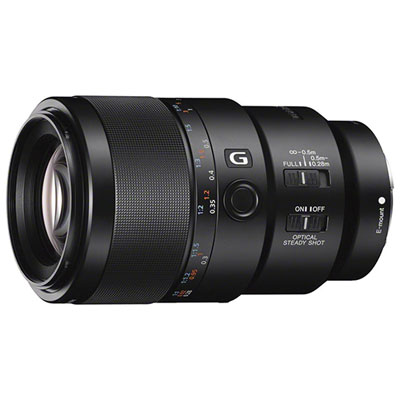
    Sony E-Mount Full-Frame FE 90mm f/2.8 Telephoto Close-Up Macro OSS G Lens

    About this product

    A black Sony telephoto lens with a constant f/2.8 aperture for detailed close-up photography.

    What customers like

    • Sharpness and image quality
    • Versatile for macro and distance photography
    • Good value for money
    • Solid build quality and elegant design
    • Fast and accurate autofocus system
    (411)
    $1,249.99
    SAVE $100
    Your price for this item is $1249.99
  4. 4

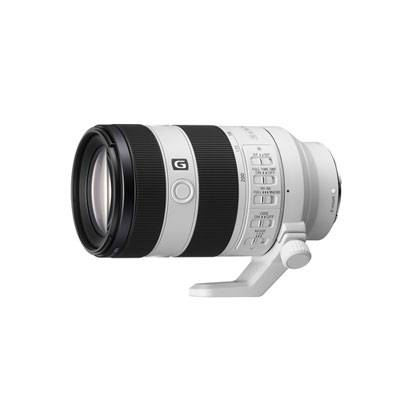
    Sony E-Mount Full-Frame FE 70-200mm f/4 MacroG OSS Telephoto Zoom G Lens

    About this product

    A white telephoto zoom lens delivering sharp images, fast autofocus, and smooth bokeh for versatile photography.

    What customers like

    • Versatile zoom and macro capabilities
    • Great value for the price
    • Lightweight and compact design
    • Exceptional sharpness and image quality
    • Fast and accurate autofocus
    (28)
    $2,299.99 Your price for this item is $2299.99
  5. 5

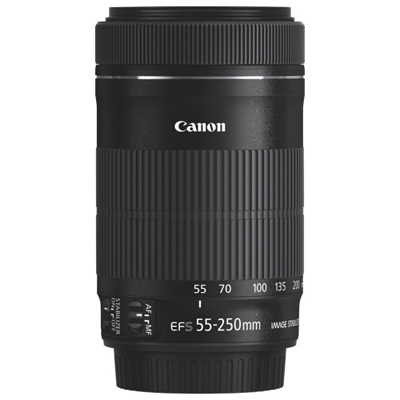
    Canon EF-S 55-250mm f/4-5.6 IS STM Lens

    About this product

    A compact black telephoto zoom lens offering sharp, distant shots with smooth, quiet autofocus performance.

    What customers like

    • Lightweight and compact
    • Sharp, clear image quality
    • Affordable and budget-friendly
    • Smooth, quiet autofocus with image stabilization
    • Excellent zoom and telephoto capabilities
    (1,104)
    $399.99 Your price for this item is $399.99
  6. 6

    Open Box - Canon EF 75-300mm f/4-5.6 DC Zoom Lens

    About this product

    An open box telephoto zoom lens in black featuring a DC motor for autofocus performance.

    What customers like

    • Lightweight and compact
    • Great value for the price
    • Easy to use for beginners and amateurs
    • Good image quality and sharpness
    • Versatile zoom range
    (892)
    $174.99 Your price for this item is $174.99
  7. 7

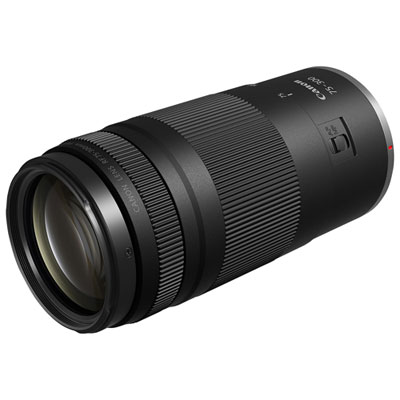
    Canon RF 75-300mm f/4–5.6 DC Motor Lens - Black

    About this product

    A lightweight black telephoto lens offering smooth background blur and sharp, immersive shots for distant subjects.

    What customers like

    • Lightweight and easy to handle
    • Versatile for both close-up and long-distance shots
    • Affordable and good value for money
    • Sharp picture quality with nice background blur
    • Great zoom capability
    (34)
    $269.99
    SAVE $40
    Your price for this item is $269.99
  8. 8

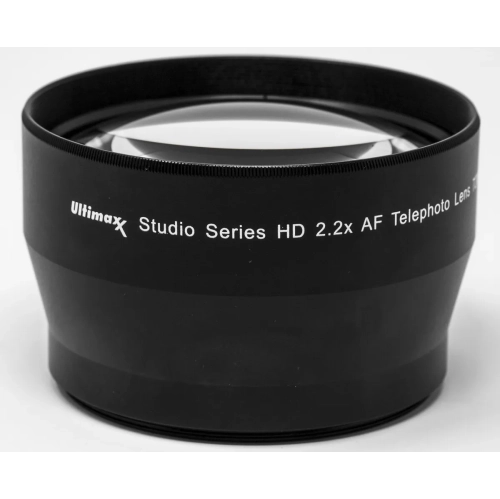
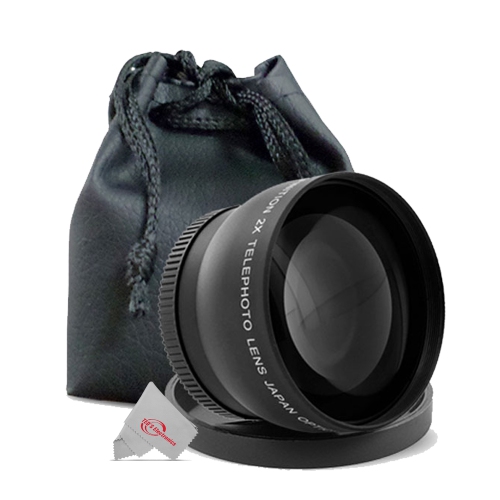
    ULTIMAXX 2.2X High Definition Auto Focus 62MM Telephoto Lens

    About this product

    A high-definition 2.2X telephoto lens with multi-coated glass, steel barrel, and ultra-fast autofocus.

    $96.95
    SAVE $23
    Your price for this item is $96.95
  9. 9

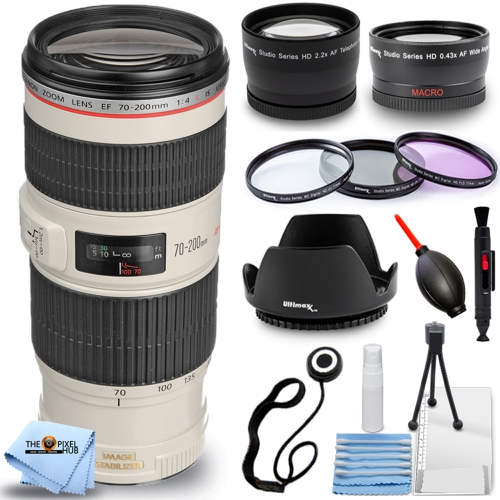
    CANON Ef 70-200MM F/4L Is Usm Lens + Telephoto And Wide Angle Lenses Bundle

    About this product

    A versatile lens bundle featuring optical image stabilisation, ultrasonic autofocus, and weather-resistant sealing for sharp photography.

    $1,899.90 Your price for this item is $1899.90
  10. 10

    VIVITAR 46MM HD Multi-Coated 2.2X Professional Telephoto Lens

    About this product

    A multi-coated telephoto lens offering 2.2x magnification for capturing distant subjects with enhanced clarity.

    $50.99 Your price for this item is $50.99

Why more reach isn’t always better for bird photography

The best telephoto lenses for birding combine enough reach to capture distant subjects with responsive autofocus, clear optical detail, and a weight that suits the way a photographer works. Focal lengths between 400mm and 600mm are useful for many bird photography situations, while 800mm can help fill the frame with smaller or more distant birds. Longer is not always better: a heron beside a walking path may need less magnification than a songbird perched across a clearing, and an exceptionally narrow field of view can make a flying bird harder to locate. Telephoto zoom lenses offer flexibility when the distance changes, allowing wider framing for a bird with outstretched wings and tighter framing for feather patterns or a catchlight in the eye. Prime lenses have a fixed focal length and can offer advantages in aperture, weight, or optical performance, depending on their design. Neither type is automatically sharper or easier to carry; those qualities depend on the individual lens. For photographers following swallows above a pond, quick focusing and manageable handling may matter more than maximum reach. For someone photographing a perched owl from a respectful distance, greater magnification and a stable support can take priority. A lens with a shorter minimum focusing distance also has value when a small bird lands nearby, since long focal length alone does not guarantee the ability to focus on a close subject. The most suitable birding lenses balance these characteristics rather than excelling at only one. They serve casual birdwatchers documenting sightings, photographers building a wildlife portfolio, and experienced enthusiasts interested in behaviour as much as identification. Good reach helps show the curve of a beak, the layered texture of flight feathers, or the tiny movements of a bird feeding, without requiring the photographer to crowd the subject. It also leaves room for different compositions, from a close portrait against a soft background to a wider image that includes the branch, reeds, or shoreline around the bird.

Camera compatibility is central to choosing a telephoto lens for bird photography. The lens mount must match the camera body, or the combination must support a suitable adapter; even then, autofocus features and performance can vary. Sensor format also changes framing. A 400mm lens on a camera with a 1.5× crop factor provides an angle of view similar to a 600mm lens on a full-frame camera, although its actual focal length remains 400mm. This narrower view can be helpful for distant birds, but it does not by itself guarantee more captured detail. Sensor resolution, focus accuracy, lens quality, and subject movement all influence the result. Photographers comparing options within that camera system can explore Canon Lenses for Bird Photography, with attention to the mount and sensor coverage required by their camera. Maximum aperture is another important distinction. A wider aperture admits more light, helping support the fast shutter speeds needed to freeze wingbeats or a sudden hop between branches. It can also soften a distracting background, although depth of field becomes shallow at long focal lengths and close distances. Lenses with smaller maximum apertures can still deliver detailed bird photographs with sufficient light and appropriate camera settings. Optical image stabilization helps reduce blur from camera shake during handheld shooting, but it does not freeze a moving bird. Autofocus performance depends on the lens and camera working together, including support for continuous tracking and bird or animal detection where the camera provides it. A focus limiter can reduce unnecessary searching by keeping autofocus within a selected distance range, which is useful when the subject is well beyond nearby foliage. Compatible teleconverters provide another way to increase focal length, typically at the cost of light transmission and sometimes focusing speed or image quality. Compatibility needs checking for the exact lens, camera, and converter combination, since not every telephoto lens accepts one. These differences help explain why two lenses with similar focal ranges can suit quite different approaches to birding.

Handling and construction become especially noticeable during a long walk or an extended wait beside a favourite perch. A lighter telephoto lens can be easier to raise quickly when a bird appears, while a larger lens may feel more comfortable on a monopod or tripod than held at eye level for several minutes. Overall balance matters as much as the weight listed for the lens alone: the attached camera, tripod collar, hood, and carrying strap all affect how the setup feels. Internal zoom designs maintain their physical length while zooming, whereas extending designs change length and can alter the balance as the focal length increases. Well-placed focus and zoom rings, accessible switches, and a secure tripod collar can make small adjustments easier without looking away from the viewfinder. Lens barrels may use metal alloys, engineering plastics, or a combination of materials; rigidity, fit, and thoughtful construction are more meaningful than assuming one material always makes a better lens. Inside, specialized optical elements can help control colour fringing and maintain contrast around fine details, such as dark feathers against a bright sky. A properly fitted lens hood helps shield the front element from stray light and incidental contact. For transport, a padded case with enough room for the lens and its caps helps prevent knocks and keeps loose accessories from rubbing against the barrel. Routine care is straightforward: remove loose grit with a blower before wiping optical surfaces, use a suitable lens cloth or cleaning solution when needed, and keep the rear cap fitted whenever the lens is off the camera. A secure carrying system should support the combined equipment appropriately, especially with heavier lenses. For a gift, knowing the recipient’s exact camera mount and preference for handheld or supported shooting is far more useful than choosing by focal length alone. A compact zoom may suit someone who enjoys walking trails with a camera ready, while a longer lens may appeal to a patient photographer working from a fixed position. In either case, comfortable handling and dependable compatibility help turn impressive specifications into more successful bird photographs.
Read More

FAQ

Some products may be subject to Environmental Handling Fees (EHF) depending on your province. Learn more about EHFs.